
Overview
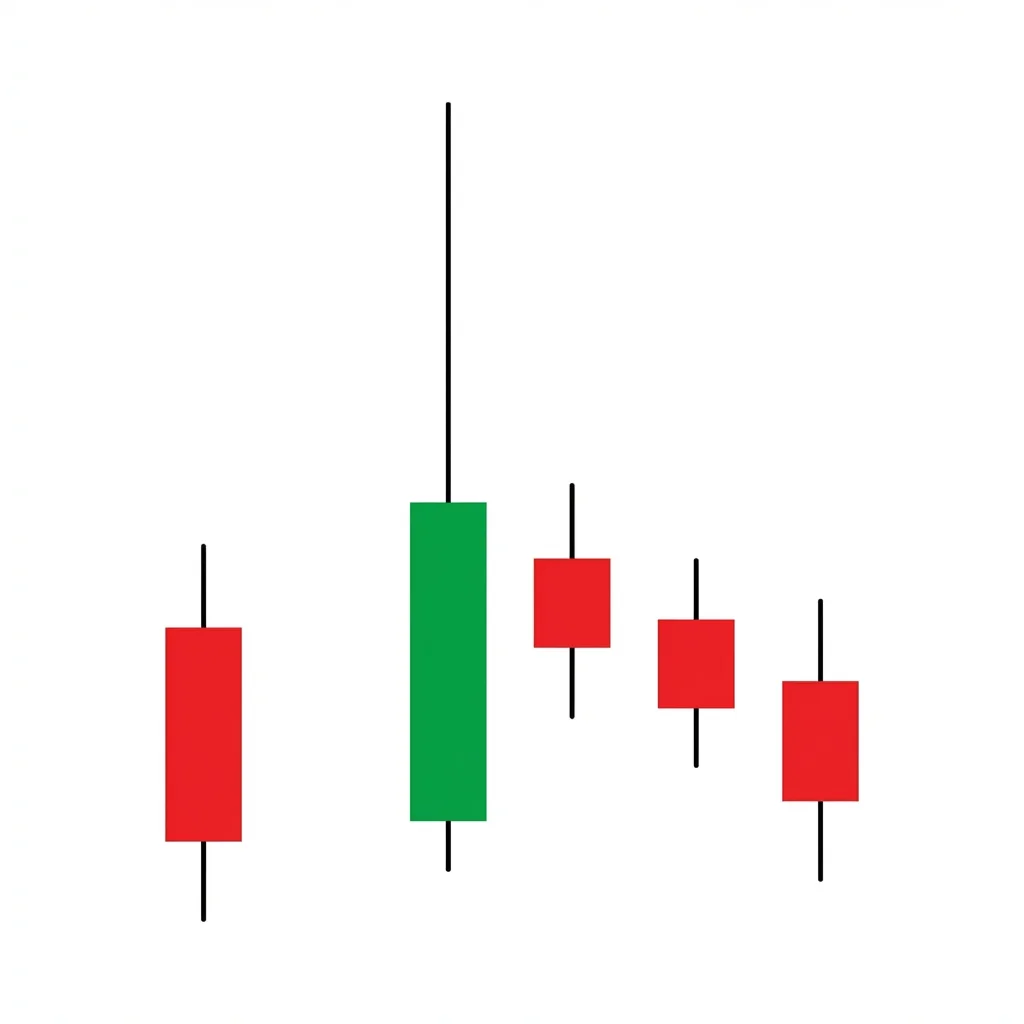
Bearish Gap Up Fade
Also known as: Fade the Gap, Gap Up Reversal, Opening Gap Sell, Gap Fade
The gap up fade occurs when price gaps higher at the open but fails to maintain the gains, reversing downward to fill the gap and often closing below the prior day's close. It signals that the gap lacked conviction.
Gap up fades exploit the statistical tendency for many gaps to fill, particularly those not backed by strong fundamental catalysts. When a stock gaps up on speculative buying, pre-market hype, or thin liquidity, the gap often represents unsustainable prices. Once the regular session opens and real liquidity enters the market, the gap collapses. Traders who recognize early signs of a failing gap can profit by shorting the reversal. The pattern is especially powerful when it occurs at resistance levels or during a broader downtrend.
History & Etymology
Gap fading has been a popular day trading strategy since the advent of electronic markets. The 'fade the gap' strategy gained prominence in the early 2000s as statistical studies showed that a majority of small-to-medium gaps fill within the first trading session.
'Fading' in trading means to trade against a move. A 'gap up fade' literally means selling (fading) a gap up, betting that the upward gap will reverse and fail.
How It Forms
Formation Steps
- 1Price gaps up significantly at the open
- 2Initial buying pressure fades quickly
- 3Price reverses and fills the gap downward
- 4Price closes below the previous close or at the lows of the day
Prerequisites
- Gap up at the open of at least 0.5-1%
- No strong fundamental catalyst justifying the gap
Confirmation Signals
- Price fails to hold above the opening price within the first 30 minutes
- Volume increases as price reverses downward
- Price fills the gap completely and trades below the prior close
Invalidation Signals
- Price holds above the gap level for more than 1 hour with strong volume
- New highs are made after the initial gap
- Sector and market are strongly bullish
Candle Breakdown
Gap Up Reversal Candle
Opens above the prior close (gap up) but closes at or below the prior close. The candle has a long upper shadow showing rejection of higher prices.
Early buyers get trapped as selling overwhelms the gap. The long upper shadow shows failed buying attempts.
Psychology
Gap up fades reveal a mismatch between pre-market optimism and regular-session reality. The gap attracts buyers, but when institutional selling overwhelms the speculative demand, the gap collapses.
Buyer Perspective
Buyers who chased the gap up are immediately underwater as price reverses. Their panic selling adds to the downward momentum, turning the initial gap into a bull trap.
Seller Perspective
Smart sellers recognize the gap as an opportunity to sell at elevated prices. They patiently wait for the opening range to fail, then press shorts aggressively.
Smart Money Action
Institutions use the gap up as an exit opportunity for existing long positions. They sell into retail FOMO buying, creating the reversal. Some may initiate short positions at the gap's high.
Retail Trader Trap
Retail traders buy the gap up at the open, driven by pre-market hype and FOMO. The reversal traps them immediately, and their stop-losses accelerate the downside.
Emotional Cycle
Trading Strategy
Aggressive Entry
Short when price breaks below the opening candle's low (first 5-minute candle) with increasing volume.
Conservative Entry
Wait for the gap to fill 50% before entering, confirming that the fade is genuine and not a brief pullback.
Gap fill level (prior day's close).
Below the prior day's close by the gap size.
Prior day's low.
Best Conditions
- Timeframe: 5m
- Timeframe: 15m
- Timeframe: 1h
- Timeframe: daily
- overextended rallies
- resistance zones
- bearish market context
- Asset: stocks
- Asset: indices
- Asset: crypto
Avoid When
- Timeframe: weekly
- Timeframe: monthly
- strong bull market
- breakout rallies
- earnings gap ups with strong results
Confluence Factors
- Gap up into a known resistance level
- Gap occurs on no meaningful catalyst
- Broader market or sector is weak
- RSI was already overbought before the gap
- Pre-market volume is low relative to the gap size
Scale In Strategy
Enter 50% on opening range breakdown, add 50% when the gap fills 50%.
Scale Out Strategy
Take 50% at the gap fill, trail the rest below the prior close.
Risk Management
Volume Analysis
Volume Confirmation
Volume should increase on the reversal candle(s), confirming institutional selling. Low volume fades are less reliable.
Volume Profile
Developing volume profile should show rejection at higher prices with value area developing near or below the gap fill level.
Volume Divergence
High volume on the gap up but even higher volume on the reversal is the ideal confirmation.
Technical Confluence
Support Resistance
If the gap opens into a known resistance zone, the fade probability increases dramatically. Check daily and weekly resistance levels.
Fibonacci Levels
Gap ups that reach the 61.8% or 78.6% Fibonacci retracement of a prior decline are prime fade candidates.
Moving Averages
Gap ups into the 50 or 200 SMA from below often fade. These moving averages act as dynamic resistance.
Rsi Confirmation
RSI above 70 on the gap up confirms overbought conditions. RSI turning down from overbought territory confirms the fade.
Macd Confirmation
MACD histogram making a lower high despite the gap up (divergence) is a strong fade signal.
Bollinger Bands
Gap up that pierces the upper Bollinger Band and reverses back inside is a classic fade setup.
Vwap
Price falling below VWAP after the gap up is one of the strongest intraday fade confirmations.
Ichimoku Cloud
A gap up into the Kumo cloud that fails to break through is a high-probability fade setup.
Elliott Wave
Gap up fades often occur at the terminus of Wave 5 or Wave C, marking exhaustion.
Wyckoff Phase
Gap up fades are classic upthrust after distribution (UTAD) patterns in Wyckoff methodology.
Market Profile
The gap creates a thin profile ledge that typically gets revisited. Initial balance developing below the gap suggests acceptance of lower prices.
Order Flow
Watch for large passive sell orders absorbing the gap buying. Delta turning negative confirms the fade.
Open Interest
Call open interest at the gap level can act as a magnet that initially pulls price up, then acts as a ceiling.
Multi-Timeframe Analysis
Higher Timeframe Alignment
A gap up fade is most powerful when the daily or weekly trend is bearish. The gap up is then a counter-trend move destined to fail.
Lower Timeframe Entry
Use the 1-minute or 5-minute chart to time the entry precisely, looking for reversal candles near the gap high.
Timeframe Confluence
If the gap up stalls at resistance visible on both the daily and weekly charts, the fade is highly probable.
Top-Down Approach
Weekly bearish → Daily resistance at gap level → 15m opening range failure → 5m short entry.
Statistics
Historical Examples
GameStop Gap Up Fade 2021
successGME gapped up 40% at the open during the meme stock rally, then reversed dramatically, falling over 50% from the high in a single session. The gap up was pure speculative excess.
Lesson: The most extreme gap up fades occur in overhyped speculative assets. The bigger the gap without fundamental backing, the harder the fade.
Tesla Analyst Upgrade Fade
partialTSLA gapped up 3% on an analyst upgrade but faded throughout the day, closing near flat. The gap was fully filled but no significant move below the prior close materialized.
Lesson: Analyst-driven gaps often fade to the prior close but may not provide continuation beyond the fill.
Variations
Full Gap Fill Fade
Price fills the gap completely and closes near the prior close.
Gap Fill and Continue
Price fills the gap and continues selling below the prior close.
Partial Gap Fade
Price fades part of the gap but holds above the prior close.
Confusion Matrix
Patterns commonly confused with Bearish Gap Up Fade and how to distinguish them.
Bearish Shooting Star
70% similarIf there is a clear gap between the prior close and the current open that then reverses, it is a gap up fade. If the long upper wick forms without a gap, it is a shooting star.
Key Differences
- Gap up fade specifically requires a gap at the open
- Shooting star can form without a gap
- Gap up fade focuses on intraday reversal dynamics
Bearish Gap Momentum
30% similarCheck the gap direction: gap up fade starts with a gap UP; gap momentum starts with a gap DOWN.
Key Differences
- Gap up fade involves a gap UP that reverses; gap momentum involves a gap DOWN that continues
- Gap fade is reversal; gap momentum is continuation
- Completely opposite gap directions
The Bearish Engulfing is one of the most powerful and commonly traded two-candle reversal patterns. A large bearish candle completely engulfs the prior bullish candle, demonstrating a decisive shift from buying to selling dominance.
The bearish gap momentum pattern occurs when price gaps down on high volume and continues selling throughout the session without filling the gap, indicating powerful one-directional selling pressure.
The gravestone doji is a single-candle reversal pattern with the open, close, and low at the same level and a long upper shadow, resembling a gravestone. It signals that buyers pushed price higher but sellers reclaimed all gains by the close.
The shooting star is a single-candle bearish reversal pattern with a small body near the low and a long upper shadow. It shows that buyers pushed price significantly higher during the session but sellers drove it back down, signaling a potential top.
The bearish upthrust is a Wyckoff concept where price briefly breaks above a trading range's resistance before reversing sharply back inside. This false breakout traps breakout buyers and signals that institutional sellers are using the higher prices to distribute, leading to a subsequent decline.
A falling window is a Japanese candlestick term for a gap down in price where the high of the current candle is below the low of the previous candle, signaling strong bearish continuation momentum.
Pro Tips & Common Mistakes
Pro Tips
- The best gap up fades occur when there is no meaningful catalyst for the gap — pure speculative or technical gaps fade most reliably.
- Never fade a gap up on strong earnings with raised guidance — those gaps tend to hold.
- VWAP rejection is the most reliable intraday signal for confirming a gap up fade.
- Pre-market volume tells the story: low pre-market volume gaps are the most likely to fade.
Common Mistakes
- Fading every gap up without assessing the catalyst — strong fundamental gaps often hold.
- Entering too early before the fade is confirmed — wait for the opening range to break.
- Not accounting for the increased volatility at the open when sizing positions.
- Holding fade trades too long when the gap shows signs of holding.
Advanced Techniques
- Use options implied volatility — if IV drops after the gap up, institutions are not buying protection, suggesting the gap may hold.
- Monitor pre-market order flow for large institutional sells at the gap level — this confirms smart money fading.
- Combine with sector relative strength: if the stock gaps up but its sector is weak, the fade is more likely.
- Use market depth analysis to identify thin bids below the gap price, suggesting limited support.
Institutional Perspective
Institutions frequently use gap-up opens as optimal exit points for existing long positions. The high liquidity and eager retail buying at the open provides excellent fill quality for large sell orders.
Fun Facts
- Gap fading was one of the first strategies to be backtested by early quantitative traders in the 1990s.
- Professional floor traders had a saying: 'Buy the gap down, sell the gap up' — the simplest gap fade strategy.
- Some hedge funds specialize almost exclusively in gap fade strategies, particularly in pre-market news-driven gaps.
Frequently Asked Questions
A gap up fade occurs when price gaps higher at the open but fails to hold the gain, reversing downward to fill the gap. It signals that the buying behind the gap lacked conviction.
No. Only fade gaps that lack strong fundamental catalysts, occur at resistance levels, or form in a broader bearish context. Never fade gap ups driven by strong earnings, mergers, or significant positive catalysts.
Studies suggest approximately 60-70% of small-to-medium gaps fill within the first trading session. However, large catalyst-driven gaps have a much lower fill rate.