
Overview
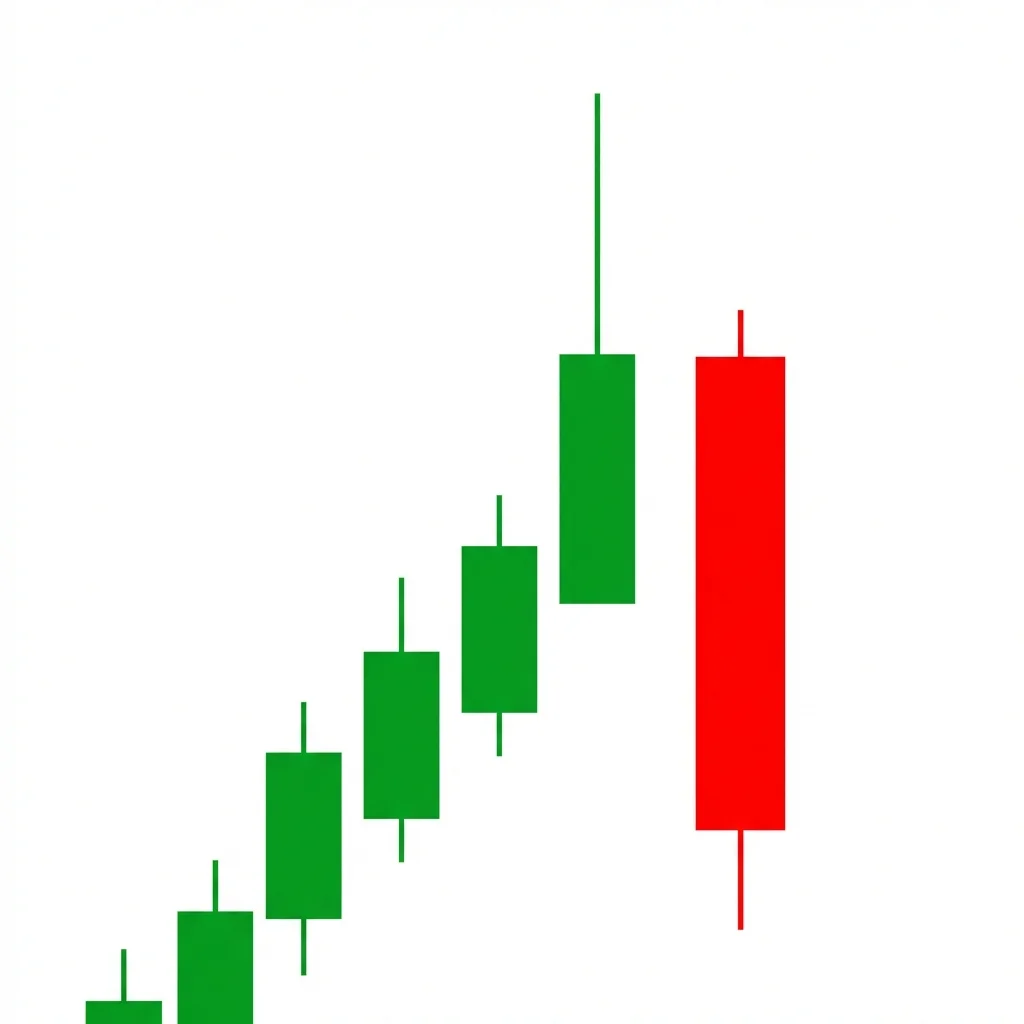
Bearish Upthrust
Also known as: Upthrust After Distribution, UTAD, False Breakout Above Resistance, Wyckoff Upthrust
The bearish upthrust is a Wyckoff concept where price briefly breaks above a trading range's resistance before reversing sharply back inside. This false breakout traps breakout buyers and signals that institutional sellers are using the higher prices to distribute, leading to a subsequent decline.
The upthrust is one of the most important concepts in Wyckoff methodology. It occurs when price breaks above the upper boundary of a trading range (resistance) but quickly reverses back inside the range or below it. In Wyckoff's framework, the upthrust represents the final test of supply and demand. The composite man (institutions) briefly pushes price above resistance to trigger buy stops and attract breakout traders, creating the liquidity needed to sell their final positions. The key characteristic is that the breakout occurs on light volume (indicating it is not supported by genuine buying) and the reversal occurs on heavy volume (indicating aggressive selling). The upthrust after distribution (UTAD) is particularly significant because it marks the last major event before the markdown phase begins. Once the upthrust fails, the sign of weakness (SOW) and last point of supply (LPSY) follow, leading to a sustained decline.
History & Etymology
The upthrust was described by Richard D. Wyckoff in his market methodology in the 1930s. Wyckoff observed that large operators would push price above resistance to trigger buying interest, then use this manufactured demand to complete their distribution. The concept is central to the Wyckoff Stock Market Institute's curriculum.
'Upthrust' literally means a thrust upward—price is pushed (thrust) above resistance. 'After distribution' (UTAD) specifies that this upthrust occurs after the composite man has been distributing shares within the trading range.
How It Forms
Formation Steps
- 1Price trades within a defined range (consolidation or distribution)
- 2A breakout occurs above the range's resistance level
- 3The breakout fails quickly—price reverses back into or below the range
- 4The failed breakout traps breakout buyers and signals distribution
Prerequisites
- A defined trading range with clear resistance
- The upthrust should occur after a period of distribution or consolidation
Confirmation Signals
- Price closes back below the resistance level within 1-3 candles
- Volume on the upthrust is low (no genuine buying interest)
- Strong bearish candle on the reversal back into the range
Invalidation Signals
- Price holds above resistance with sustained volume
- Continued bullish momentum after the breakout
- Multiple candles accepting above resistance
Candle Breakdown
Breakout Candle
Price breaks above the range's resistance, often with a long upper shadow showing the thrust above.
The breakout appears convincing but lacks volume conviction. Smart money is allowing the breakout to trigger retail buy stops.
Reversal Candle
A strong bearish candle that closes back below the resistance level, confirming the upthrust has failed.
Institutional sellers use the breakout liquidity to fill their remaining sell orders. The high volume on the reversal confirms genuine selling.
Confirmation Candle
A follow-through bearish candle that pushes price deeper into the range, confirming the upthrust failure.
The breakout buyers are now trapped. Their stop losses below the range trigger, adding to selling pressure.
Psychology
The upthrust exploits the predictable behavior of breakout traders. By pushing price above resistance, institutions create the liquidity they need to complete distribution before the markdown phase.
Buyer Perspective
Breakout traders buy above resistance with stops just below it, confident in the breakout. The reversal traps them, and their stops add to the selling pressure.
Seller Perspective
Institutional sellers orchestrate the upthrust to trigger buy stops, providing the counterparty liquidity needed to fill their remaining sell orders.
Smart Money Action
The composite man pushes price above resistance to trigger buy stops. The resulting buy orders provide the liquidity needed to fill institutional sell orders at premium prices.
Retail Trader Trap
Retail traders buy the breakout and place stops below the range. The upthrust failure triggers these stops, creating a cascade of selling.
Emotional Cycle
Trading Strategy
Aggressive Entry
Enter short when price reverses back below the resistance level after the upthrust.
Conservative Entry
Wait for the sign of weakness (break below the range's support) before entering short.
The bottom of the trading range (support)
The sign of weakness level (below the range)
Measured move equal to the range height projected below support
Best Conditions
- Timeframe: 1D
- Timeframe: 4h
- Timeframe: 1h
- After distribution phases
- At known resistance levels
- Before markdown phases
- Asset: Stocks
- Asset: Indices
- Asset: Crypto
- Asset: Forex
Avoid When
- Timeframe: 1m
- Timeframe: 5m
- Strong trending bull markets
- Low-volatility environments
Confluence Factors
- Low volume on the breakout (critical)
- High volume on the reversal
- Long upper shadow on the breakout candle
- RSI overbought divergence at the range top
- Wyckoff distribution context confirmed
Scale In Strategy
Enter initial position on the upthrust failure, add on the SOW break below support.
Scale Out Strategy
Take 50% at the range low, trail the rest to the measured move target.
Risk Management
Volume Analysis
Volume Confirmation
The upthrust should occur on LOW volume (no genuine buying). The reversal should occur on HIGH volume (genuine selling).
Volume Profile
Low volume breakout + high volume reversal is the signature upthrust volume pattern.
Volume Divergence
If the breakout has high volume, it may be a genuine breakout rather than an upthrust—exercise caution.
Technical Confluence
Support Resistance
The upthrust defines the failed breakout level above resistance. The range's support becomes the first target.
Fibonacci Levels
The upthrust often extends 1-3% above resistance, frequently aligning with Fibonacci extension levels.
Moving Averages
An upthrust above a flat 200 SMA that fails is a powerful Wyckoff signal.
Rsi Confirmation
RSI making a lower high on the upthrust (vs. prior peaks) confirms bearish divergence.
Macd Confirmation
MACD divergence at the upthrust confirms weakening momentum despite the higher price.
Bollinger Bands
The upthrust often pierces the upper Bollinger Band before reversing inside, a classic failed breakout signal.
Vwap
The upthrust above VWAP that reverses back below confirms that the breakout was rejected at premium prices.
Ichimoku Cloud
An upthrust above the Kumo cloud that reverses back through it is a powerful bearish Ichimoku signal.
Elliott Wave
Upthrusts often occur as truncated fifth waves or throw-overs in Elliott Wave patterns.
Wyckoff Phase
This IS a core Wyckoff event—the UTAD (Upthrust After Distribution) marks the final test before markdown.
Market Profile
The upthrust represents a brief excursion above the value area high that is immediately rejected—a failed auction.
Order Flow
Buy-stop triggers create a momentary surge in buying that is absorbed by resting institutional sell orders, visible as a delta reversal.
Open Interest
Rising open interest during the upthrust failure suggests new short positions being established by institutions.
Multi-Timeframe Analysis
Higher Timeframe Alignment
A daily upthrust at weekly resistance within a monthly distribution range is the highest conviction setup.
Lower Timeframe Entry
Use the 1H chart to identify the exact reversal within the daily upthrust for a precise entry.
Timeframe Confluence
Weekly distribution range > Daily upthrust > 4H reversal confirmation > 1H entry.
Top-Down Approach
Monthly trend context > Weekly distribution range > Daily upthrust > Intraday entry.
Statistics
Historical Examples
S&P 500 Upthrust January 2022
successThe S&P 500 made a new all-time high on the first trading day of 2022 (the upthrust) before immediately reversing. The false breakout above the prior range's high preceded a 25% decline.
Lesson: Upthrusts at all-time highs with low volume are among the most powerful Wyckoff reversal signals.
Bitcoin Upthrust at $64,000
successBitcoin briefly surpassed its prior high of $61,800 to reach $64,000 on the Coinbase listing day before reversing. This upthrust preceded a 55% decline.
Lesson: Upthrusts timed with euphoric events (IPOs, listings) are classic institutional selling opportunities.
Variations
Minor Upthrust
A brief intraday push above resistance that reverses within the same session.
UTAD (Upthrust After Distribution)
An upthrust that specifically follows a recognized Wyckoff distribution phase.
Confusion Matrix
Patterns commonly confused with Bearish Upthrust and how to distinguish them.
Bearish Bull Trap
8000% similarIf the false breakout occurs within a recognized Wyckoff distribution trading range with proper volume characteristics, it is an upthrust. A generic false breakout above any resistance is a bull trap.
Key Differences
- Upthrust is a specific Wyckoff concept within a distribution phase
- Bull trap is a broader term for any false breakout above resistance
- Upthrust has specific volume requirements (low volume breakout, high volume reversal)
A Bull Trap is a false breakout above resistance that lures buyers in before immediately reversing, trapping them at elevated prices and triggering a sharp sell-off as trapped longs are forced to exit.
The Distribution phase is a Wyckoff concept where institutional investors systematically sell (distribute) their holdings to the public within a trading range at a market top, before the subsequent markdown (decline) begins.
The bearish power of three (PO3) is a smart money concept describing a three-phase intraday process: accumulation (consolidation), manipulation (false breakout above the range), and distribution (sharp reversal downward). It represents how institutions engineer liquidity to fill sell orders.
The Bullish Spring is a Wyckoff pattern where price briefly breaks below trading range support to trigger stop losses, then immediately reverses back above support, trapping shorts and initiating a markup phase.
Bearish redistribution is a Wyckoff concept describing a trading range that forms during a downtrend, where institutional sellers redistribute their remaining positions before the markdown resumes. It mirrors distribution but occurs mid-trend rather than at a top.
Bullish Accumulation is a Wyckoff-based pattern where institutional investors quietly build large positions over an extended period, creating a trading range before a powerful markup phase begins.
Pro Tips & Common Mistakes
Pro Tips
- Volume is THE most important factor: the breakout should have LOW volume, the reversal should have HIGH volume.
- The best upthrusts occur within a clear Wyckoff distribution trading range—know your Wyckoff phases.
- The upthrust high becomes a permanent resistance level. If price ever reclaims it with volume, the distribution thesis is invalidated.
- Use the upthrust as a final signal to close any remaining long positions.
- The time between the upthrust and the sign of weakness can range from days to weeks—be patient.
Common Mistakes
- Calling every false breakout an upthrust without Wyckoff context
- Ignoring the volume characteristic—high-volume breakouts are genuine, not upthrusts
- Entering short on the breakout before the reversal is confirmed
- Not waiting for the full upthrust sequence to complete
Advanced Techniques
- Track the percentage of the breakout above resistance—upthrusts typically extend 1-5% above before failing.
- Use cumulative delta analysis to see institutional selling during the breakout candle despite rising price.
- Combine with the Wyckoff absorption analysis: the upthrust should show effort (volume) without result (no sustained breakout).
- Track relative strength: an upthrust on a stock that is underperforming its sector is more reliable.
Institutional Perspective
The upthrust is a deliberate institutional tactic. Market makers and large institutions push price above resistance to trigger buy-stop orders, which provide the liquidity they need to complete their distribution. The resulting buy orders are matched against resting institutional sell orders.
Fun Facts
- Richard Wyckoff described the upthrust as one of the composite man's 'tricks'—a deliberate manipulation designed to generate liquidity for distribution.
- The concept of the upthrust predates the modern term 'bull trap' by several decades, showing that false breakouts have been recognized as institutional tactics for over a century.
- Some studies estimate that 60-70% of breakouts above resistance in trading ranges are upthrusts rather than genuine breakouts.
Frequently Asked Questions
An upthrust is a brief breakout above a trading range's resistance that quickly fails and reverses back inside the range. In Wyckoff methodology, it represents institutional sellers using the higher prices to complete their distribution.
Volume is the key differentiator. An upthrust occurs on LOW volume (no genuine buying support) with the reversal on HIGH volume (aggressive selling). A genuine breakout occurs on HIGH volume with sustained acceptance above the level.
In Wyckoff methodology, the upthrust (UTAD) is typically followed by the Sign of Weakness (SOW) - a break below the range's support - and then the Last Point of Supply (LPSY) before the markdown phase begins.