
Overview
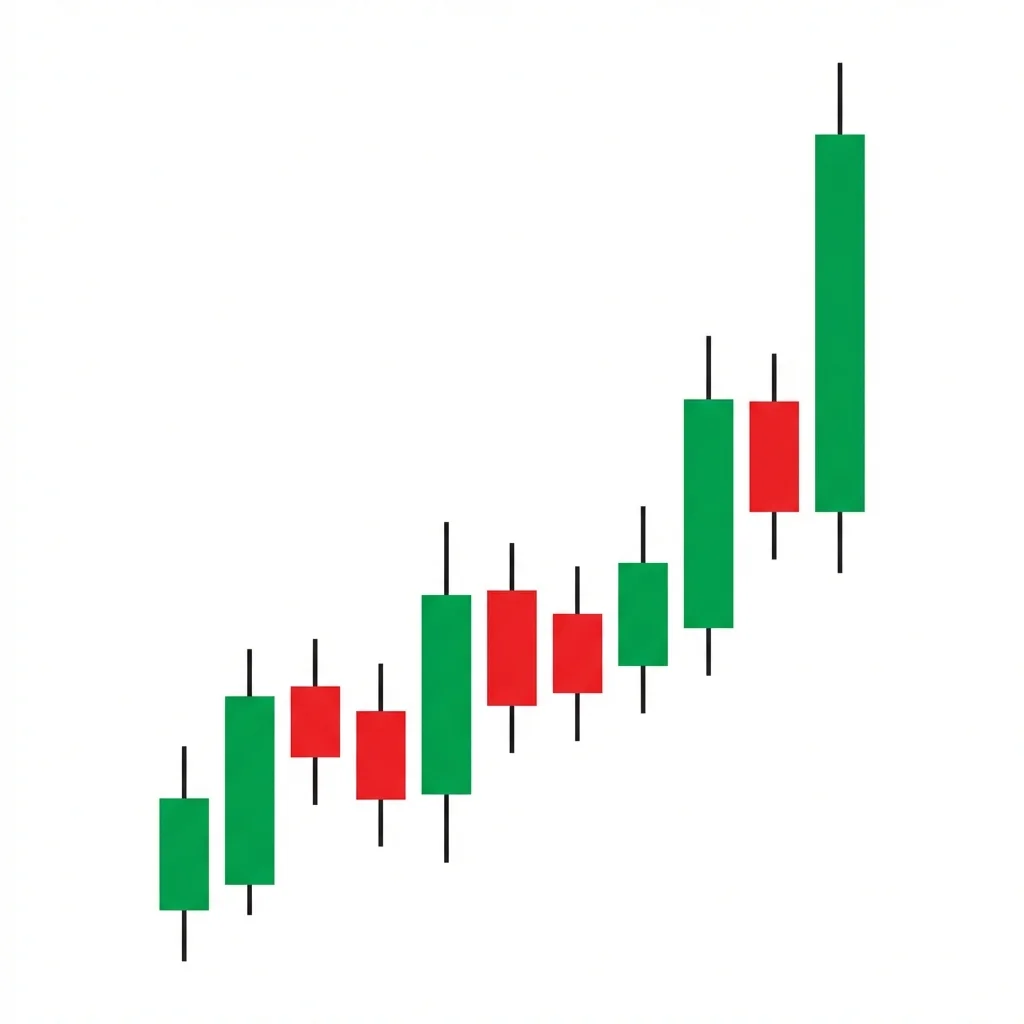
Bearish Last Engulfing Top
Also known as: Last Engulfing Pattern, Final Engulfing Top
The last engulfing top is a deceptive pattern where a bullish engulfing appears at the top of an uptrend, but rather than signaling continuation, it represents the last gasp of buying before a reversal.
This pattern is counterintuitive because a bullish engulfing normally signals strength. However, when it appears at the very top of an extended uptrend and is followed by a decline, it represents the final burst of buying enthusiasm — the 'last' engulfing before the trend reverses. The key is what happens after: if price fails to continue higher and instead breaks below the engulfing candle's low, the bullish engulfing was actually the market's final attempt to sustain the uptrend. This pattern is a favorite of smart money concepts because it represents a liquidity grab followed by reversal.
History & Etymology
The last engulfing top is a pattern recognized in advanced Japanese candlestick analysis. It challenges the conventional reading of engulfing patterns by demonstrating that context and follow-through matter more than the individual pattern's traditional meaning.
Named 'last engulfing' because it is the final (last) bullish engulfing pattern before the trend reverses. The 'top' designation indicates it appears at a price top.
How It Forms
Formation Steps
- 1First candle: a bearish candle that appears during an uptrend
- 2Second candle: a bullish candle that engulfs the first bearish candle
- 3Despite the bullish engulfing, this is the LAST bullish effort before a decline
- 4Price subsequently fails and drops below the bullish candle's low
Prerequisites
- Uptrend in progress
- Bearish candle followed by bullish engulfing at the top
Confirmation Signals
- Price drops below the bullish candle's low within 2-3 sessions
- Volume decreases on the engulfing candle
- Follow-through selling confirms the reversal
Invalidation Signals
- Price continues higher after the engulfing candle
- Strong volume supports the bullish engulfing
- No break below the engulfing candle's low
Candle Breakdown
Bearish Warning Candle
A bearish candle within the uptrend, showing the first sign of selling pressure.
Initial selling appears. This candle creates a dip that attracts buyers.
Last Engulfing Candle
A bullish candle that engulfs the bearish candle, appearing to negate the selling signal.
Buyers make one final aggressive push, engulfing the prior selling. This is the trap — it looks bullish but represents exhaustion.
Psychology
The last engulfing top exploits the conventional reading of bullish engulfing patterns. Traders see the engulfing and expect continuation, but smart money uses this buying enthusiasm to distribute final positions.
Buyer Perspective
Buyers see the bullish engulfing as a continuation signal and buy confidently. When the subsequent decline begins, they are trapped by their own bullish reading of the pattern.
Seller Perspective
Sellers recognize the engulfing as the final buying effort. They wait for the failure and enter short when price breaks below the engulfing candle's low.
Smart Money Action
Institutions use the bullish engulfing as the perfect cover for distribution. The strong buying attracts retail participation, providing the liquidity institutions need to exit their long positions.
Retail Trader Trap
Retail traders buy the engulfing as a textbook continuation signal. The subsequent failure is a classic smart money trap.
Emotional Cycle
Trading Strategy
Aggressive Entry
Short when price fails to make a new high above the engulfing candle within 2 sessions.
Conservative Entry
Short when price closes below the engulfing candle's low.
Engulfing candle's range projected downward.
Prior support level.
2x the engulfing range.
Best Conditions
- Timeframe: daily
- Timeframe: 4h
- end of uptrend
- overbought
- at resistance
- Asset: stocks
- Asset: forex
- Asset: indices
Avoid When
- Timeframe: 1m
- Timeframe: 5m
- strong bull market
- early uptrend
Confluence Factors
- At resistance
- RSI overbought with divergence
- Volume anomaly on engulfing
- MACD declining
- Smart money concept levels
Scale In Strategy
Enter 50% on failure signal, add 50% on break below engulfing low.
Scale Out Strategy
Take 50% at TP1, trail rest.
Risk Management
Volume Analysis
Volume Confirmation
Declining volume on the engulfing candle (vs the trend) suggests exhaustion rather than genuine buying.
Volume Profile
High volume on the engulfing that fails to push price higher on subsequent sessions is bearish.
Volume Divergence
If volume on the engulfing is the highest in several sessions but price fails, the engulfing was a distribution event.
Technical Confluence
Support Resistance
The engulfing candle's high becomes the definitive resistance level. The pattern is strongest at existing resistance.
Fibonacci Levels
Last engulfing top at a Fibonacci extension confirms the reversal.
Moving Averages
Pattern at or above extended moving averages increases reversal probability.
Rsi Confirmation
RSI bearish divergence on the engulfing candle (price higher, RSI lower) is the strongest confirmation.
Macd Confirmation
MACD declining despite the bullish engulfing confirms hidden weakness.
Bollinger Bands
Engulfing at the upper Bollinger Band that fails to continue is bearish.
Vwap
Engulfing above VWAP that subsequently falls below it confirms the trap.
Ichimoku Cloud
Pattern at the top of the Kumo cloud is a strong reversal setup.
Elliott Wave
Often marks the end of Wave 5 or Wave C — the final thrust.
Wyckoff Phase
Represents the upthrust after distribution (UTAD) — the final bull trap.
Market Profile
The engulfing creates a buying tail excess that gets quickly rejected.
Order Flow
High positive delta on the engulfing absorbed by passive selling. Delta turns negative subsequently.
Open Interest
Call OI peaking and put OI increasing confirms the trap.
Multi-Timeframe Analysis
Higher Timeframe Alignment
Last engulfing on weekly is very powerful.
Lower Timeframe Entry
Use 4H to confirm the failure pattern.
Timeframe Confluence
Pattern confirmed on both daily and 4H.
Top-Down Approach
Weekly resistance → Daily last engulfing → 4H failure confirmation → Enter.
Statistics
Historical Examples
SPY Last Engulfing Top
successSPY formed a bullish engulfing at a rally high that looked like continuation. Price failed within 3 sessions and dropped 8% over the next month.
Lesson: Bullish engulfing patterns at the top of bear market rallies are often last engulfing tops.
Variations
High-Volume Last Engulfing
Engulfing on very high volume that fails.
Confusion Matrix
Patterns commonly confused with Bearish Last Engulfing Top and how to distinguish them.
Bullish Engulfing
90% similarYou can only determine it is a 'last engulfing' after the failure. If the engulfing is at the top of an extended trend with divergences and the subsequent candles fail to follow through, it is a last engulfing top.
Key Differences
- Same visual pattern but different outcome
- Last engulfing fails; standard engulfing succeeds
- Context and follow-through determine which one it is
A Bull Trap is a false breakout above resistance that lures buyers in before immediately reversing, trapping them at elevated prices and triggering a sharp sell-off as trapped longs are forced to exit.
The Bearish Engulfing is one of the most powerful and commonly traded two-candle reversal patterns. A large bearish candle completely engulfs the prior bullish candle, demonstrating a decisive shift from buying to selling dominance.
The bearish upthrust is a Wyckoff concept where price briefly breaks above a trading range's resistance before reversing sharply back inside. This false breakout traps breakout buyers and signals that institutional sellers are using the higher prices to distribute, leading to a subsequent decline.
The Last Engulfing Bottom is a contrarian pattern where a bearish engulfing candle at the bottom of a downtrend turns out to be the final bearish push before a reversal — the bears' 'last gasp.'
The Confirmed Shooting Star adds a bearish confirmation candle to the classic shooting star, eliminating the ambiguity of the standalone pattern and creating a higher-probability reversal signal at the top of uptrends.
The Bearish Counterattack Line features a bullish candle followed by a bearish candle that gaps up at the open but closes back to the same level as the first candle's close, signaling that sellers 'counterattacked' the bullish advance.
Pro Tips & Common Mistakes
Pro Tips
- The key indicator is what happens AFTER the bullish engulfing — failure to follow through turns it into a last engulfing.
- Look for RSI or MACD divergence during the engulfing — divergence suggests it is a last engulfing rather than genuine strength.
- The pattern is identified retroactively — wait for the failure before entering.
- Smart money concepts frame this as a 'liquidity sweep' above the bearish candle's high.
Common Mistakes
- Trying to predict a last engulfing before the failure occurs — you must wait for confirmation.
- Buying every bullish engulfing at tops without checking for divergence and exhaustion signs.
- Setting stops too tight — the pattern needs room to confirm the failure.
Advanced Techniques
- Use order flow to identify whether the engulfing buying was absorbed by passive selling — this distinguishes genuine engulfing from last engulfing in real-time.
- Combine with smart money concepts: the engulfing sweeps liquidity above the bearish candle, then reverses.
- Monitor dark pool prints during the engulfing — large institutional sells during 'bullish' candles confirm distribution.
Institutional Perspective
Institutions create last engulfing patterns by selling into buying enthusiasm. The bullish engulfing provides the perfect cover for their distribution.
Fun Facts
- The last engulfing top challenges one of the most basic rules of candlestick analysis — that bullish engulfing patterns are bullish.
- Smart money concept traders call this pattern a 'stop hunt' or 'liquidity sweep' above the prior candle.
- The pattern demonstrates why context is more important than individual candlestick patterns in trading.
Frequently Asked Questions
A last engulfing top occurs when a bullish engulfing pattern at the top of an uptrend fails to produce continuation. Instead, it marks the final buying effort before a reversal, trapping buyers who expected continuation.
You can only confirm it retroactively when price fails to follow through and breaks below the engulfing candle's low. Look for divergences, overbought conditions, and declining volume as early clues.