
Overview
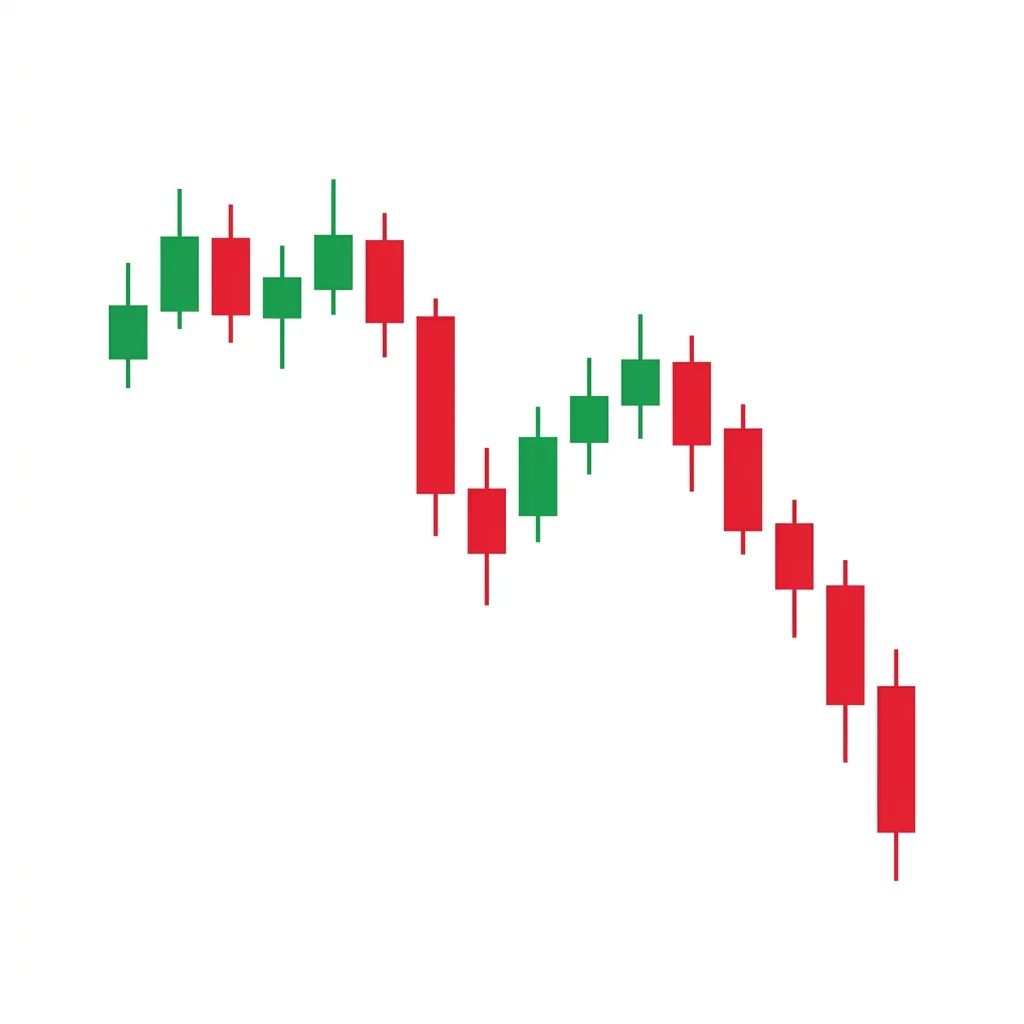
Bearish Last Kiss
Also known as: Kiss of Death, Broken Support Retest, Support-to-Resistance Retest
The last kiss occurs when price breaks below support, rallies back to 'kiss' the broken level from below, and is rejected. The old support now acts as resistance, confirming the breakdown and offering an optimal short entry.
The last kiss is one of the most elegant and reliable patterns in technical analysis, based on the polarity principle — that broken support becomes resistance. After price breaks below a significant support level, it often rallies back to retest that level from below. This retest, or 'last kiss,' provides a second chance to enter short at a favorable price with a clearly defined risk level (above the broken support). The rejection at the level confirms that the polarity shift has occurred and the downtrend will continue. The pattern is widely used by institutional and retail traders alike because of its clear logic and excellent risk-reward.
History & Etymology
The support-becomes-resistance principle has been a cornerstone of technical analysis since the early 20th century. The 'last kiss' terminology was popularized by modern traders to describe the poetic nature of price saying goodbye to a level it may never return to.
The 'last kiss' metaphor describes price returning to a broken support level one final time — like a goodbye kiss — before departing permanently. Also known as 'kiss of death' due to the bearish implications.
How It Forms
Formation Steps
- 1Established support level holds for multiple touches
- 2Price breaks below the support level with conviction
- 3Price rallies back up to retest the broken support from below
- 4The broken support acts as resistance and rejects price
- 5Price declines from the rejection, continuing the downtrend
Prerequisites
- Well-established support level
- Decisive break below support
Confirmation Signals
- Bearish rejection candle at the broken support level
- Volume declines on the retest and increases on the rejection
- RSI fails to reach overbought on the retest
Invalidation Signals
- Price closes above the broken support for multiple sessions
- Volume increases strongly on the retest rally
- Price reclaims the support level and holds
Candle Breakdown
Breakdown Candle(s)
Strong bearish candle(s) breaking below the support level.
Decisive selling breaks the support. Stops are triggered and panic sets in.
Retest Rally Candle(s)
Weaker bullish candles rallying back toward the broken support on declining volume.
Short-covering and bargain hunting create a weak rally back to the level.
Rejection Candle
A bearish candle rejecting off the broken support (now resistance).
Sellers defend the level aggressively. The polarity shift is confirmed.
Psychology
The last kiss is a powerful demonstration of market memory and the polarity principle. Traders who bought at support now become sellers at the same level, creating natural resistance exactly where support used to be.
Buyer Perspective
Buyers who previously relied on the support level see the retest as a chance to exit at breakeven or a small loss. Their selling at the level creates the resistance.
Seller Perspective
Sellers use the retest as an ideal entry point. The broken support provides a clear resistance level and tight stop, creating an excellent risk-reward trade.
Smart Money Action
Institutions use the retest rally as an opportunity to add to short positions at better prices. The broken support level is a key reference for institutional order placement.
Retail Trader Trap
Retail traders buy the retest, believing the support will hold again. The rejection traps them with losses.
Emotional Cycle
Trading Strategy
Aggressive Entry
Short as price touches the broken support level from below.
Conservative Entry
Wait for a clear rejection candle at the level before entering short.
Distance from the broken support to the post-breakdown low.
Measured move: distance of the range that preceded the breakdown, projected down.
Next major support level.
Best Conditions
- Timeframe: daily
- Timeframe: 4h
- Timeframe: 1h
- Timeframe: weekly
- trending down
- post-breakdown
- bear market
- Asset: stocks
- Asset: forex
- Asset: indices
- Asset: crypto
Avoid When
- Timeframe: 1m
- V-bottom recovery
- strong reversal
Confluence Factors
- Broken support aligns with a moving average
- RSI stays below 50 on the retest
- MACD negative during retest
- Multiple broken support levels cluster
- Broader market bearish
Scale In Strategy
Enter 50% on the rejection, add 50% on break below the post-breakdown low.
Scale Out Strategy
Take 33% at the recent low, 33% at the measured move, trail rest.
Risk Management
Volume Analysis
Volume Confirmation
Volume should decline on the retest and expand on the rejection.
Volume Profile
The broken support area shows a high-volume node from prior trading. This area creates natural resistance.
Volume Divergence
High volume on the retest suggests genuine buying — the level may be reclaimed.
Technical Confluence
Support Resistance
The entire pattern is based on the polarity principle — broken support becomes resistance.
Fibonacci Levels
The retest often coincides with a 38.2% or 50% retracement of the breakdown leg.
Moving Averages
If the broken support aligns with the 20 or 50 EMA, the resistance is doubled.
Rsi Confirmation
RSI should stay below 55-60 during the retest. Reaching above 60 suggests potential reclaim.
Macd Confirmation
MACD remaining negative during the retest confirms the bearish bias.
Bollinger Bands
Retest reaching the middle Bollinger Band and rejecting is a common setup.
Vwap
Retest reaching VWAP and rejecting on intraday charts is the ideal intraday last kiss.
Ichimoku Cloud
Broken Kijun-Sen or Senkou Span acting as resistance on the retest.
Elliott Wave
The retest is often a corrective Wave 2 or Wave B within a new downtrend.
Wyckoff Phase
The last kiss is the 'back-up to the edge of the creek' (BUEC) in Wyckoff markdown.
Market Profile
The broken support area represents a high-volume node that creates the resistance for the retest.
Order Flow
Former support holders placing limit sell orders at breakeven create the wall of supply.
Open Interest
Put OI increasing at the broken support level confirms institutional bearish positioning.
Multi-Timeframe Analysis
Higher Timeframe Alignment
A weekly broken support retested on the daily provides the strongest setup.
Lower Timeframe Entry
Use 1H or 4H charts to identify precise rejection candles at the level.
Timeframe Confluence
Broken support visible on weekly being retested on the daily is ideal.
Top-Down Approach
Monthly support → Weekly breakdown → Daily retest → 4H rejection entry.
Statistics
Historical Examples
Bitcoin Last Kiss at $30K
successBitcoin broke below $30K support, rallied back to test $30K from below, was rejected, and continued declining to $15.5K.
Lesson: Major psychological levels make excellent last kiss setups in crypto.
SPY Last Kiss at 200 SMA
successSPY broke below its 200-day SMA, rallied to retest it from below, and was rejected. The decline continued to bear market lows.
Lesson: Moving average last kiss setups combine two powerful concepts: polarity and dynamic resistance.
Variations
Clean Touch Retest
Price touches the exact level and rejects immediately.
Zone Retest
Price enters the former support zone but doesn't reach the exact level.
Overshoot Retest
Price briefly penetrates above the broken support before rejecting.
Confusion Matrix
Patterns commonly confused with Bearish Last Kiss and how to distinguish them.
Bearish Hs Neckline Retest
80% similarIf the broken support is the neckline of an H&S pattern, it is a neckline retest. If it is any other support level, it is a last kiss.
Key Differences
- Neckline retest follows an H&S pattern specifically
- Last kiss applies to any broken support level
- Neckline retest has H&S measured move targets
The bearish gap fill rejection occurs when price rallies to fill a prior gap down but is rejected at or within the gap zone, confirming the gap as resistance and signaling continuation of the downtrend.
The H&S neckline retest occurs when price pulls back to retest the broken neckline from below (throwback), gets rejected, and continues the measured move decline. It provides a second entry opportunity for traders who missed the original breakdown.
A bearish resistance rejection occurs when price rallies into a well-established resistance level and is met with selling pressure, producing bearish candles with long upper wicks. The repeated failure to break through resistance signals a reversal.
The Last Kiss is a breakout pullback pattern where price returns to test a broken resistance level as new support one final time before continuing the advance — the 'last kiss goodbye' before leaving the old range behind.
The Broadening Top (Megaphone) is a chart formation characterized by expanding price swings that create higher highs and lower lows, reflecting increasing volatility and instability at market tops before a bearish breakdown.
The Descending Channel is a chart formation where price trends lower within two parallel downward-sloping trendlines, making consistent lower highs and lower lows in an orderly bearish progression.
Pro Tips & Common Mistakes
Pro Tips
- The cleaner and more defined the original support level, the more powerful the last kiss rejection will be.
- Declining volume on the retest and expanding volume on the rejection is the ideal signature.
- About 60-65% of breakdowns produce a retest — be patient and use limit orders at the level.
- The last kiss is one of the best risk-reward setups in all of trading because the invalidation (reclaim) is clear.
Common Mistakes
- Buying the retest expecting support to hold again — the polarity has shifted.
- Being impatient and entering on the breakdown instead of waiting for the retest.
- Not having a plan if no retest occurs — about 35% of breakdowns don't produce a last kiss.
- Setting stops too tight AT the level instead of above it — wicks through the level are common.
Advanced Techniques
- Use volume profile to identify exactly where the densest trading occurred at the former support — this is the strongest resistance.
- Monitor options open interest at the level — large put OI confirms institutional defense of the resistance.
- Use lower timeframe rejection patterns at the level for precise entry timing.
- Combine multiple broken support levels that cluster for 'confluence zones' of resistance.
Institutional Perspective
The last kiss is one of the most commonly traded patterns by institutional traders. The defined risk, clear invalidation, and excellent risk-reward make it ideal for professional account management.
Fun Facts
- The last kiss is one of the most poetically named patterns in trading — the imagery of a final goodbye kiss captures the price action perfectly.
- Professional traders often say that the best short trades start with a last kiss — the risk-reward is unmatched.
- The polarity principle (broken support becomes resistance) was first described by Charles Dow over 100 years ago.
Frequently Asked Questions
A last kiss occurs when price breaks below support, rallies back to retest the broken level from below (the 'kiss'), and is rejected. The old support now acts as resistance, confirming the downtrend.
Approximately 60-65% of breakdowns produce a retest (last kiss). The remaining 35% continue declining without a retest.
Place your stop above the broken support level with a buffer. If price reclaims the support level and holds, the pattern is invalidated.