
Overview
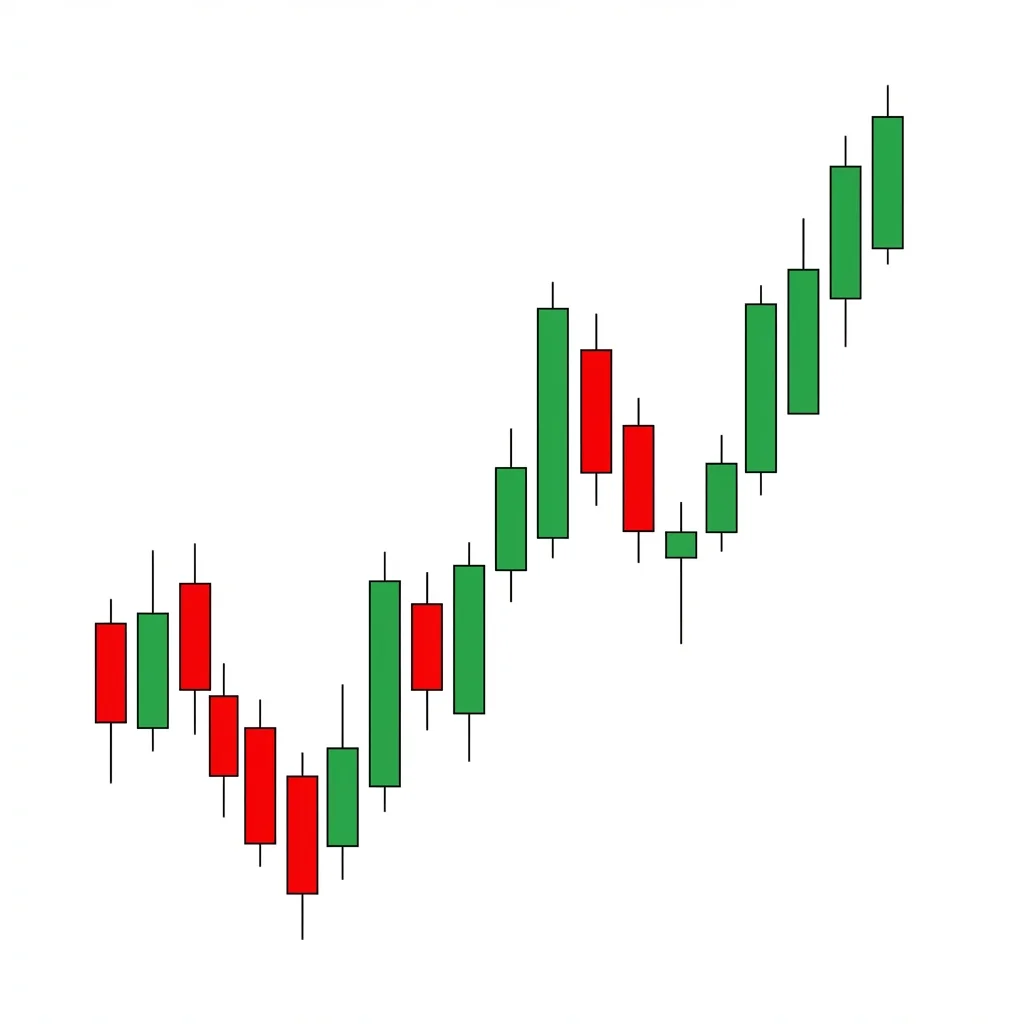
Bullish IHS Neckline Retest
Also known as: Inverse Head and Shoulders Pullback, IHS Throwback, Neckline Retest Entry
The IHS Neckline Retest is a high-probability continuation entry after an inverse head and shoulders breakout. Price pulls back to test the broken neckline as new support, offering a second chance entry with a tighter stop.
After an inverse head and shoulders pattern completes and price breaks above the neckline, many traders miss the initial breakout. The neckline retest provides a second-chance entry. Research shows that approximately 60-70% of inverse H&S breakouts pull back to test the neckline. The retest turns former resistance into support, and if the neckline holds, it provides a high-probability entry with a clearly defined stop loss (below the neckline). This is often considered the conservative, higher-probability way to trade the inverse head and shoulders.
History & Etymology
The neckline retest concept has been documented since the earliest studies of head and shoulders patterns. Edwards and Magee discussed the throwback to the neckline in their seminal 1948 work 'Technical Analysis of Stock Trends.' The concept of resistance becoming support is foundational to technical analysis.
IHS stands for 'Inverse Head and Shoulders.' The 'neckline retest' describes the specific action of price returning to test the neckline (the line connecting the tops of the two shoulders) after breaking above it.
How It Forms
Formation Steps
- 1Complete inverse head and shoulders pattern forms
- 2Price breaks above the neckline with conviction
- 3Price pulls back to retest the neckline as support
- 4Price bounces off the neckline and resumes the advance
Prerequisites
- A fully formed inverse head and shoulders pattern
- A breakout above the neckline has already occurred
- The pullback to the neckline should hold as support
Confirmation Signals
- Bullish candle bouncing off the neckline on the retest
- Volume declining on the pullback and increasing on the bounce
- RSI staying above 40-50 during the retest
Invalidation Signals
- Price closes below the neckline on the retest
- Volume surges on the pullback, indicating distribution
- The right shoulder low is broken
Candle Breakdown
Breakout Candle
The candle that initially breaks above the neckline, completing the inverse H&S
Strong conviction buying drives the breakout. Shorts begin to cover, adding upside fuel.
Retest Candle
Price pulls back to the neckline area. A bullish bounce candle here confirms support.
Profit-taking by early buyers creates the pullback. The neckline holding as support confirms the pattern.
Psychology
The neckline retest represents the market's way of confirming the breakout. Traders who missed the initial move get a second chance, while early buyers watch to see if their breakout level holds.
Buyer Perspective
Buyers who missed the breakout see the retest as an optimal entry point with clearly defined risk. Those who bought the breakout use the retest to add to their positions.
Seller Perspective
Remaining bears attempt one last push lower during the pullback. When the neckline holds, they capitulate, further fueling the advance.
Smart Money Action
Institutions often use the retest as their primary entry point. The initial breakout may be too volatile for large position building, but the orderly retest provides the liquidity they need.
Retail Trader Trap
Retail traders who bought the breakout panic-sell during the pullback, providing liquidity for institutional buyers. Those who short the pullback get trapped when the neckline holds.
Emotional Cycle
Trading Strategy
Aggressive Entry
Enter as soon as price touches the neckline area on the pullback.
Conservative Entry
Wait for a bullish candle (hammer, engulfing, etc.) to close above the neckline after the retest.
The post-breakout high (the high before the pullback).
Measured move: height from head to neckline projected upward from the neckline breakout.
1.5x the measured move target.
Best Conditions
- Timeframe: daily
- Timeframe: 4h
- Timeframe: weekly
- trend reversal
- bottoming market
- sector rotation
- Asset: stocks
- Asset: indices
- Asset: forex
- Asset: crypto
Avoid When
- Timeframe: 1m
- Timeframe: 5m
- strong bear market
- panic selling
- liquidity crisis
Confluence Factors
- Neckline aligns with a major moving average (50 or 200 DMA)
- Volume confirms: low on pullback, high on bounce
- RSI holds above 50 during the retest
- The neckline aligns with a Fibonacci level
- Sector or market support at the same level
Scale In Strategy
Enter 50% on the neckline touch, add 50% on the bullish bounce confirmation.
Scale Out Strategy
Take one-third at the prior breakout high, one-third at the measured move, trail the rest.
Risk Management
Volume Analysis
Volume Confirmation
Volume should decline during the pullback and increase on the bounce from the neckline.
Volume Profile
Low volume pullback to the neckline with a volume surge on the bounce is textbook.
Volume Divergence
Heavy volume on the pullback suggests the breakout may have been false — proceed with caution.
Technical Confluence
Support Resistance
The neckline IS the key level — former resistance becomes support. This polarity principle is the foundation of the trade.
Fibonacci Levels
The pullback often retraces 38.2-61.8% of the initial breakout move, landing near the neckline.
Moving Averages
When the neckline coincides with the 50 or 200-day MA, the confluence is extremely powerful.
Rsi Confirmation
RSI staying above 40-50 during the retest confirms the bullish bias is intact.
Macd Confirmation
MACD remaining positive or showing a bullish crossover at the neckline strengthens the signal.
Bollinger Bands
The neckline retest near the middle Bollinger Band is a common and reliable setup.
Vwap
Neckline near the VWAP level on lower timeframes provides intraday confluence.
Ichimoku Cloud
The neckline coinciding with the top of the Kumo cloud creates a powerful support zone.
Elliott Wave
The IHS neckline retest often occurs as a Wave 2 correction within a new impulse.
Wyckoff Phase
The retest mirrors the backup to the edge of the creek in Wyckoff methodology.
Market Profile
The neckline near a high-volume node provides strong structural support for the retest.
Order Flow
Buy-side absorption visible at the neckline level confirms institutional support.
Open Interest
Rising open interest on the bounce from the neckline confirms new buying interest.
Multi-Timeframe Analysis
Higher Timeframe Alignment
A weekly IHS with a daily neckline retest is one of the most powerful setups in all of technical analysis.
Lower Timeframe Entry
After identifying the daily neckline retest, use the 1H chart for the exact bounce entry.
Timeframe Confluence
The neckline visible on multiple timeframes acts as a stronger support level.
Top-Down Approach
Identify the IHS on the weekly, confirm the breakout on the daily, enter the retest on the 4H.
Statistics
Historical Examples
S&P 500 Post-Bear Market IHS Retest
successThe S&P 500 formed a massive IHS from late 2008 to mid-2009. After breaking the neckline near 950, it retested the level in July 2009 and bounced. The market then rallied 30%+ over the next year.
Lesson: Large-timeframe IHS neckline retests can mark the start of multi-year bull markets.
Bitcoin IHS Neckline Retest
successBitcoin formed an IHS near $3,500-$4,200. After breaking the neckline at $4,200, it retested and bounced, then rallied to $13,000 over the following months.
Lesson: Crypto IHS neckline retests can produce enormous percentage moves.
Variations
Shallow Retest
Price doesn't quite reach the neckline before bouncing — a sign of extreme bullish strength.
Deep Retest (Undercut)
Price briefly dips below the neckline before recovering, shaking out weak hands.
Confusion Matrix
Patterns commonly confused with Bullish IHS Neckline Retest and how to distinguish them.
Bullish Inverse Head Shoulders
9500% similarIf you're looking at the entire formation, it's the IHS. If you're specifically trading the pullback to the neckline after breakout, it's the neckline retest.
Key Differences
- The IHS is the full pattern; the neckline retest is a specific entry strategy after the IHS breakout
- The neckline retest offers a second-chance entry with a tighter stop
The H&S neckline retest occurs when price pulls back to retest the broken neckline from below (throwback), gets rejected, and continues the measured move decline. It provides a second entry opportunity for traders who missed the original breakdown.
The Cup and Handle is one of the most reliable continuation patterns in technical analysis, featuring a rounded U-shaped base (cup) followed by a small pullback (handle) before a powerful breakout to new highs.
The Double Bottom Breakout focuses specifically on the confirmed neckline break of a double bottom pattern, which is the highest-conviction entry point with a clear measured move target and defined risk.
The Bullish Engulfing is one of the most popular and reliable two-candle reversal patterns. A large bullish candle completely engulfs the prior bearish candle body, signaling a decisive shift from selling to buying control.
The Falling Wedge is a bullish pattern with two converging downward-sloping trendlines. The narrowing range compresses energy that is released on an upside breakout, making it both a reversal pattern (after downtrends) and a continuation pattern (during uptrend corrections).
The Inverse Head and Shoulders is one of the most reliable bullish reversal patterns, featuring three troughs with the middle one (head) being the deepest, signaling a major transition from a downtrend to an uptrend.
Pro Tips & Common Mistakes
Pro Tips
- The neckline retest is statistically the best entry for inverse H&S trades — better risk/reward than the breakout entry
- Not all IHS breakouts retest the neckline — be prepared to miss some moves
- The pullback should be on declining volume and the bounce on increasing volume
- Place your stop just below the neckline — if it fails to hold, the trade thesis is invalidated
- Use a limit order at the neckline level to ensure you don't miss the retest
Common Mistakes
- Entering too early during the pullback before a clear bounce from the neckline
- Placing stops too far away (below the head) instead of below the neckline
- Not recognizing when a retest failure is occurring — if price closes below the neckline, exit
- Chasing the bounce too far above the neckline, degrading the risk-reward ratio
- Assuming every IHS will retest — about 30-40% break out and never look back
Advanced Techniques
- Set limit buy orders at the neckline with stops just below for a set-and-forget approach
- Use the lower timeframe (1H) to identify the exact bounce candle for precision entry
- Combine with volume profile to confirm that the neckline coincides with a high-volume node
- Monitor the depth of the pullback — shallow retests (not quite reaching the neckline) indicate extreme strength
Institutional Perspective
The neckline retest is the preferred institutional entry for inverse H&S patterns. The initial breakout often has too much slippage and volatility for large orders. The orderly pullback to the neckline provides the depth of market needed for institutional-sized positions.
Fun Facts
- Edwards and Magee documented the neckline retest phenomenon in 1948, and it remains one of the most reliable setups in technical analysis 75+ years later.
- The neckline retest is one of the few patterns where placing a limit order in advance is a viable strategy, since the exact level is known beforehand.
- Some of the largest bull market rallies in history began with inverse H&S patterns, and many institutional entries occurred on the neckline retest.
Frequently Asked Questions
Approximately 60-70% of IHS breakouts pull back to test the neckline before continuing higher. This makes the neckline retest a common and tradeable event.
For most traders, yes. The retest offers a tighter stop loss (just below the neckline) and clearer risk definition. The breakout entry can be choppy with false starts.
If price closes below the neckline on the retest, the breakout may have been false. Exit immediately and reassess. The right shoulder low becomes the last line of defense for the bullish thesis.