
Overview
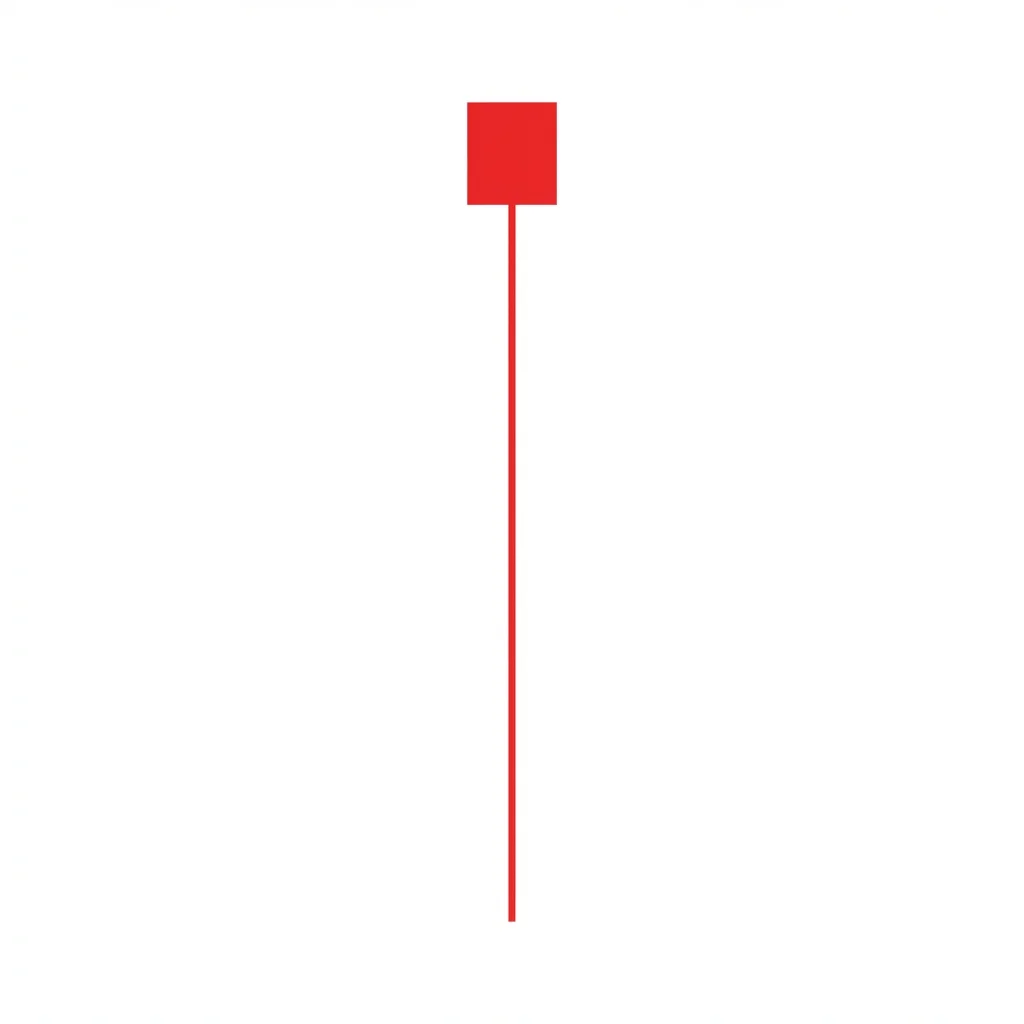
Paper Umbrella
Karakasa (唐傘)
Also known as: Karakasa, Umbrella Line, Hammer/Hanging Man Neutral
The Paper Umbrella is a context-neutral candle with a small body at the top and a long lower shadow. It becomes a Hammer in downtrends (bullish) or a Hanging Man in uptrends (bearish), but without trend context it is a neutral indecision signal.
The Paper Umbrella (Karakasa) is the generic term for any candle with a small real body near the session high and a long lower shadow. Without context, the Paper Umbrella is neither bullish nor bearish — it simply shows that sellers pushed price down during the session but buyers recovered most of the losses. The directional implication depends entirely on where the pattern appears: in a downtrend it functions as a bullish Hammer (rejection of lower prices), and in an uptrend it functions as a bearish Hanging Man (warning of distribution). When appearing in a range or without clear trend context, it remains a neutral signal of indecision.
History & Etymology
The Karakasa (paper umbrella) is one of the oldest candlestick formations identified in Japanese rice trading. The name comes from its resemblance to traditional Japanese oil-paper umbrellas. Steve Nison separated the formation into Hammer and Hanging Man based on trend context, but the original Japanese concept treated it as a single pattern with context-dependent interpretation.
'Karakasa' (唐傘) means 'Chinese umbrella' or 'paper umbrella' in Japanese, referring to the traditional oil-paper parasols. The candle's shape — small top with a long stalk below — resembles an umbrella when held upright.
How It Forms
Formation Steps
- 1Small real body at or near the top of the candle's range
- 2Long lower shadow at least twice the body length
- 3Little to no upper shadow
Prerequisites
- Small real body (can be bullish or bearish)
- Lower shadow should be at least two times the real body length
- Minimal or no upper shadow
- Can appear in uptrends, downtrends, or sideways markets
Confirmation Signals
- Next candle confirms direction (bullish close for hammer context, bearish close for hanging man context)
- Volume increase on the confirmation candle
- Break beyond the paper umbrella's body range
Invalidation Signals
- No follow-through from the next candle
- Price remains within the paper umbrella's range
- Opposing direction close on the following candle
Candle Breakdown
Paper Umbrella
A small-bodied candle positioned at the top of its range with a long lower shadow, resembling an umbrella
During the session, sellers drove price significantly lower. However, buyers mounted a recovery, pushing price back to near the open. The long lower shadow shows rejection of lower prices, but without trend context, the directional meaning is ambiguous.
Psychology
The Paper Umbrella reveals that selling pressure was present during the session but could not be sustained. Buyers stepped in at lower prices and recovered most of the decline. Without knowing the trend context, this could represent either demand emerging (bullish) or distribution occurring (bearish).
Buyer Perspective
Buyers see the recovery from lows as evidence of demand. In a downtrend, this encourages accumulation. In an uptrend, it may just reflect inertia from the prevailing trend.
Seller Perspective
Sellers note their ability to push price sharply lower during the session. In an uptrend, this willingness to sell at current levels is concerning. In a downtrend, the recovery shows their control is weakening.
Smart Money Action
Institutional traders view the Paper Umbrella as a data point requiring context. They use the lower shadow to identify demand zones for future buy orders and the body area as potential distribution levels.
Retail Trader Trap
Retail traders often assign bullish bias to every Paper Umbrella regardless of context, missing the Hanging Man interpretation in uptrends. Others sell the lows during the session and get stopped out during the recovery.
Emotional Cycle
Trading Strategy
Aggressive Entry
Enter in the context-appropriate direction at the Paper Umbrella close (long if at support, short if at resistance).
Conservative Entry
Wait for confirmation from the next candle — bullish close confirms hammer interpretation, bearish close confirms hanging man interpretation.
1:1 risk-reward based on the stop distance.
Next significant support or resistance level.
2:1 risk-reward or the measured move of the prior swing.
Best Conditions
- Timeframe: daily
- Timeframe: 4h
- Timeframe: weekly
- at key support levels (bullish)
- at resistance levels in uptrends (bearish)
- after extended moves
- Asset: stocks
- Asset: forex
- Asset: commodities
- Asset: crypto
Avoid When
- Timeframe: 1m
- Timeframe: 5m
- range-bound markets without clear context
- low liquidity
- mid-range positions
Confluence Factors
- Pattern forms at a key support or resistance level
- RSI confirms the context (oversold for bullish, overbought for bearish)
- Moving average alignment supports the trade direction
- Fibonacci level coincides with the pattern
- Volume confirms the price rejection
Scale In Strategy
Enter half at the Paper Umbrella close, add on confirmation candle.
Scale Out Strategy
Exit one-third at each take profit level.
Risk Management
Volume Analysis
Volume Confirmation
Above-average volume on the Paper Umbrella suggests genuine price rejection. Volume surge on confirmation candle validates the trade.
Volume Profile
Heavy volume at the shadow lows indicates institutional participation at that level.
Volume Divergence
Declining volume during a trend approaching the Paper Umbrella increases the reversal probability.
Technical Confluence
Support Resistance
Paper Umbrella at support favors bullish interpretation (Hammer). At resistance, it favors bearish interpretation (Hanging Man).
Fibonacci Levels
At Fibonacci retracement levels, the pattern gains directional significance based on the retracement context.
Moving Averages
Paper Umbrella at a major moving average — below the MA favors bullish, above the MA in an uptrend favors bearish.
Rsi Confirmation
RSI level disambiguates the signal. Oversold RSI = likely Hammer. Overbought RSI = likely Hanging Man.
Macd Confirmation
MACD direction at the time of the pattern provides the trend context needed for interpretation.
Bollinger Bands
At the lower Bollinger Band = Hammer context. At the upper Bollinger Band = Hanging Man context.
Vwap
Below VWAP with recovery = bullish. Above VWAP with rejection = bearish.
Ichimoku Cloud
Below the cloud = Hammer. Above the cloud in an uptrend = potential Hanging Man.
Elliott Wave
Context within the wave count determines interpretation — end of corrective waves favors reversal.
Wyckoff Phase
In accumulation = Hammer (Spring). In distribution = Hanging Man (Upthrust).
Market Profile
At the Value Area Low = bullish. At the Value Area High in uptrend = bearish.
Order Flow
Buy-side absorption at the shadow lows confirms demand. Sell-side presence at the body confirms supply.
Open Interest
Rising open interest provides no directional bias on the Paper Umbrella alone.
Multi-Timeframe Analysis
Higher Timeframe Alignment
A daily Paper Umbrella at a weekly support/resistance level provides the context needed for directional trading.
Lower Timeframe Entry
After a daily Paper Umbrella, use the 1-hour chart to confirm direction and find precise entry.
Timeframe Confluence
Paper Umbrella on the daily with a confirming lower-timeframe pattern provides the strongest signal.
Top-Down Approach
Weekly trend provides context. Daily Paper Umbrella provides the signal. 4-hour chart provides the entry.
Statistics
Historical Examples
Gold Paper Umbrella at Support
successGold formed a Paper Umbrella at the $1,810 support level during a period without a clear short-term trend. The pattern acted as a Hammer with a $40 bounce.
Lesson: When trend context is ambiguous, support and resistance levels provide the directional clue.
Amazon Paper Umbrella in Range
failureAMZN printed a Paper Umbrella in the middle of its trading range. No clear direction followed as price continued to trade sideways.
Lesson: Paper Umbrella without trend context or key level alignment produces no tradable edge.
EUR/JPY Paper Umbrella as Hanging Man
successEUR/JPY formed a Paper Umbrella after a 200-pip rally. In this uptrend context, it acted as a Hanging Man, preceding a 100-pip decline.
Lesson: Context transforms the neutral Paper Umbrella into a directional signal. Always assess the prior trend.
Variations
Hammer
Paper Umbrella appearing after a downtrend, interpreted as a bullish reversal signal.
Hanging Man
Paper Umbrella appearing after an uptrend, interpreted as a bearish reversal warning.
Confusion Matrix
Patterns commonly confused with Paper Umbrella and how to distinguish them.
Bullish Hammer
9500% similarIf there is a clear prior downtrend, it is a Hammer. If context is absent or ambiguous, classify it as a Paper Umbrella.
Key Differences
- Hammer specifically requires a prior downtrend
- Paper Umbrella is the context-free version of the same formation
Bearish Hanging Man
9500% similarIf there is a clear prior uptrend, it is a Hanging Man. Without clear trend context, it is a Paper Umbrella.
Key Differences
- Hanging Man specifically requires a prior uptrend
- Paper Umbrella is the context-free version of the same formation
The hanging man is a single-candle bearish reversal pattern with a small body at the top and a long lower shadow, appearing at the top of an uptrend. It warns that selling pressure is emerging despite the continued uptrend.
The Doji is the quintessential indecision candle where opening and closing prices are virtually identical, reflecting a perfect tug-of-war between buyers and sellers.
The Hammer Doji (Dragonfly Doji) features a long lower shadow with the open and close at the session high, showing that sellers drove price down sharply but buyers recovered all losses, creating a neutral signal that depends on context.
The Spinning Top is one of the most common candlestick patterns, featuring a small real body with shadows on both sides, indicating mild to moderate indecision where neither buyers nor sellers gained meaningful ground.
The Bearish Belt Hold is a single bearish candle that opens at its high and closes near its low with a long body, indicating that sellers dominated from the opening bell and controlled price action throughout the session.
The Bearish Closing Marubozu is a single bearish candle with no lower shadow — the close is at the exact low of the session. This indicates that sellers controlled the session and maintained pressure through the very last trade, a sign of strong bearish conviction.
Pro Tips & Common Mistakes
Pro Tips
- The Paper Umbrella is the generic form — always identify the trend context to classify it as a Hammer or Hanging Man
- When trend context is unclear, use support/resistance levels and indicators to determine the directional lean
- The length of the lower shadow correlates with the strength of the price rejection signal
- Color of the body provides a minor bias — bullish body is slightly more bullish, bearish body slightly more bearish
- Multiple Paper Umbrellas at the same level, regardless of trend, create a powerful demand zone
Common Mistakes
- Always interpreting the Paper Umbrella as bullish without checking context
- Ignoring the Hanging Man interpretation when the candle appears after an uptrend
- Trading Paper Umbrellas in the middle of ranges where they carry no significance
- Confusing the Paper Umbrella with a Shooting Star (which has the shadow on top)
- Not waiting for confirmation from the next candle before entering
Advanced Techniques
- Use the Paper Umbrella's lower shadow as a demand zone for future limit orders regardless of how the pattern resolves
- Combine with tick volume or order flow data to determine whether the recovery was driven by genuine buying or short covering
- In ambiguous contexts, use the Paper Umbrella as a straddle trigger for options trades
- Track Paper Umbrella formations to build a map of price levels where demand has emerged historically
Institutional Perspective
The Paper Umbrella tells institutions where demand exists (at the shadow lows). Whether acting as Hammer or Hanging Man, institutions note the level where buyers stepped in and use it for future reference in building support/resistance maps.
Fun Facts
- The Karakasa umbrella referenced in the name is a traditional Japanese oil-paper umbrella with a single bamboo shaft, perfectly matching the candle's silhouette.
- Steve Nison split the Paper Umbrella into Hammer and Hanging Man for Western audiences, but Japanese traders traditionally analyzed it as one pattern with contextual interpretation.
- The Paper Umbrella is one of the few candlestick patterns where identical formations can mean completely opposite things.
Frequently Asked Questions
A Paper Umbrella is a candle with a small body at the top and a long lower shadow. It is the neutral, context-free version of the Hammer (bullish) and Hanging Man (bearish).
Check the prior trend. After a downtrend, it is a Hammer (bullish). After an uptrend, it is a Hanging Man (bearish). Without clear context, it remains neutral.
The same candle shape has opposite implications depending on location. In a downtrend, the recovery from lows signals buying. In an uptrend, the same selling pressure signals distribution.