
Overview
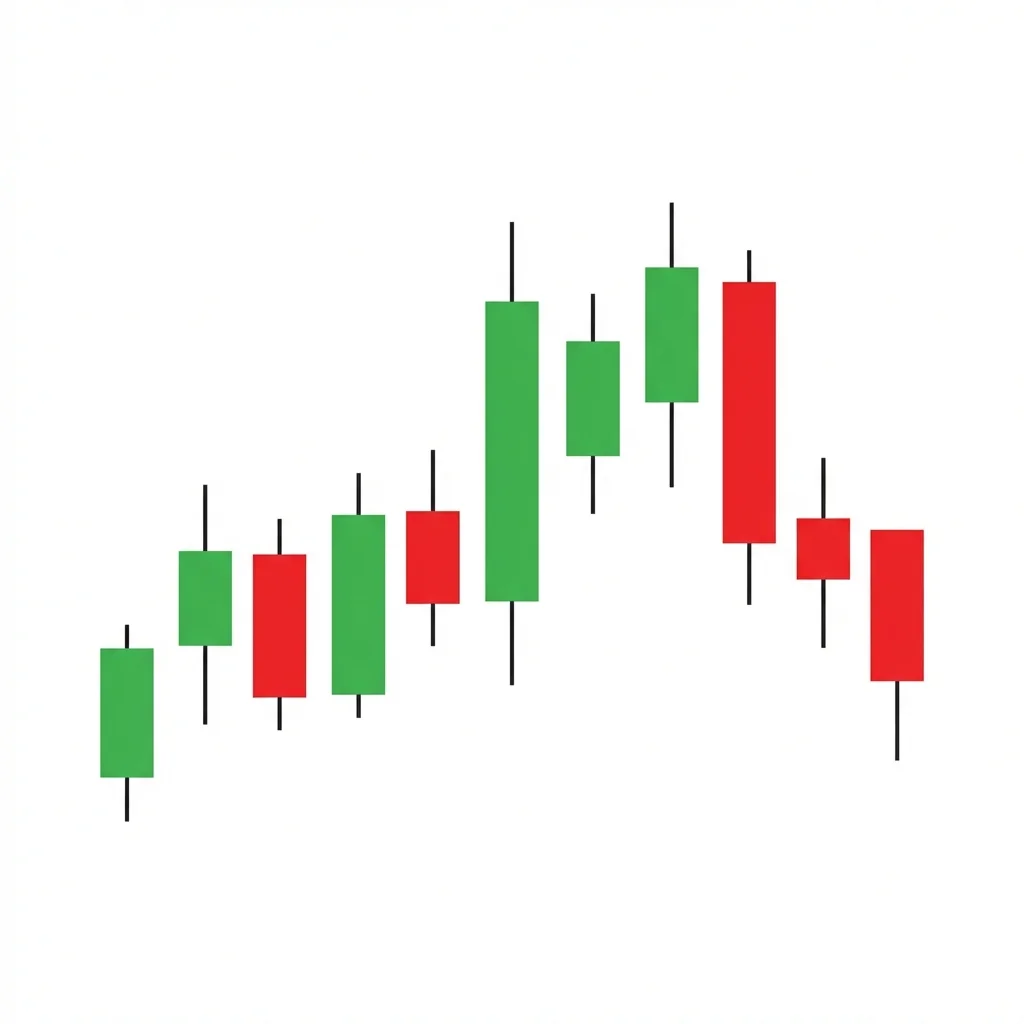
Bearish Hikkake
Hikkake
Also known as: Inside Bar False Breakout, Bearish Trap Pattern, Failed Inside Bar
The bearish hikkake is a trap pattern where an inside bar is followed by a false upside breakout that quickly reverses, trapping buyers and triggering a selloff below the inside bar's low.
The hikkake pattern exploits the predictability of breakout traders. When an inside bar forms, traders set buy orders above the high and sell orders below the low, anticipating a directional breakout. The bearish hikkake occurs when the upside breakout fails — price briefly breaks above the inside bar's high, triggering buy orders, then reverses sharply and closes below the inside bar's low. The trapped buyers are forced to sell, adding fuel to the downside move. The word 'hikkake' means 'trick' or 'trap' in Japanese, perfectly describing the pattern's nature.
History & Etymology
The hikkake pattern was first described by Daniel Chesler in 2003, making it one of the newer formally defined candlestick patterns. Chesler identified the pattern by studying inside bar failures and recognized that the false breakout created a reliable, tradeable setup.
Hikkake (引っ掛け) is Japanese for 'trick,' 'trap,' or 'snag.' The name reflects the pattern's deceptive nature — it tricks breakout traders into the wrong direction before reversing.
How It Forms
Formation Steps
- 1An inside bar forms (second candle's range is within the first candle's range)
- 2The next candle breaks above the inside bar's high (false breakout to the upside)
- 3Price reverses and closes below the inside bar's low within 2-3 candles
- 4The false breakout traps buyers and fuels the downside reversal
Prerequisites
- An inside bar must first form
- A false breakout above the inside bar's high
Confirmation Signals
- Price closes below the inside bar's low
- Volume increases on the downside reversal
- Follow-through selling continues after the trigger
Invalidation Signals
- Price continues higher after the upside breakout without reversing
- No close below the inside bar's low within 3 candles of the breakout
- Strong volume supports the upside breakout
Candle Breakdown
Mother Bar
The larger candle that defines the range for the inside bar.
Establishes the range that the market is consolidating within.
Inside Bar
A candle whose entire range (high and low) is within the mother bar's range.
Compression and indecision. Breakout traders set orders above and below this range.
False Breakout Candle
A candle that breaks above the inside bar's high, triggering buy orders, but fails to sustain the breakout.
Buyers are lured in by the breakout. Their orders provide liquidity for smart money selling.
Trigger Candle
A bearish candle that closes below the inside bar's low, confirming the trap and triggering the bearish move.
Trapped buyers panic sell. Sellers press aggressively. The false breakout's energy reverses completely.
Psychology
The hikkake pattern exploits the predictable behavior of breakout traders. The inside bar attracts attention, the false breakout triggers their entries, and the reversal traps them — their forced exits become fuel for the real move.
Buyer Perspective
Buyers see the inside bar breakout and enter long. When price reverses through the inside bar's low, they face losses and must exit, compounding the selling pressure.
Seller Perspective
Smart sellers recognize the false breakout as a liquidity grab. They enter short after the false breakout fails, using the trapped buyers' stops as fuel for their trade.
Smart Money Action
Smart money often engineers the false breakout to generate liquidity. They sell into the breakout buying, then press short when the reversal triggers stop-losses above the inside bar.
Retail Trader Trap
Retail breakout traders are the primary victims. They buy the upside breakout with stops below the inside bar, and the reversal takes out every one of those stops.
Emotional Cycle
Trading Strategy
Aggressive Entry
Enter short as soon as price reverses back inside the inside bar's range after the false upside breakout.
Conservative Entry
Wait for a close below the inside bar's low (trigger confirmation), then enter short.
Mother bar's range projected downward from the inside bar's low.
Next significant support level.
2x the mother bar's range.
Best Conditions
- Timeframe: daily
- Timeframe: 4h
- Timeframe: 1h
- range-bound
- choppy
- at resistance
- Asset: stocks
- Asset: forex
- Asset: indices
Avoid When
- Timeframe: 1m
- Timeframe: 5m
- strong trend
- breakout mode
Confluence Factors
- False breakout occurs at a known resistance level
- RSI divergence present
- Declining momentum on the breakout attempt
- Smart money concept levels align (order blocks)
- Volume is low on the false breakout
Scale In Strategy
Enter 50% on the reversal back inside the range, add 50% on the close below the inside bar's low.
Scale Out Strategy
Take 50% at TP1, trail remainder.
Risk Management
Volume Analysis
Volume Confirmation
Volume should be low on the false breakout and high on the reversal. This confirms the breakout lacked conviction and the reversal is genuine.
Volume Profile
The inside bar area should be a low-volume node. The false breakout into a high-volume area above often causes the failure.
Volume Divergence
If volume is very high on the upside breakout, it may be a genuine breakout rather than a hikkake — avoid the trade.
Technical Confluence
Support Resistance
Hikkake at established resistance is significantly more reliable. The false breakout above resistance that fails is a classic bull trap.
Fibonacci Levels
Inside bar at a Fibonacci level with a false breakout beyond it creates a high-probability hikkake setup.
Moving Averages
False breakout above a moving average (50 or 200 SMA) that fails and reverses is a powerful hikkake variant.
Rsi Confirmation
RSI failing to make a new high on the false breakout (divergence) confirms the trap.
Macd Confirmation
MACD declining during the false breakout attempt shows weakening momentum behind the breakout.
Bollinger Bands
False breakout beyond the upper Bollinger Band that snaps back inside is a classic hikkake setup.
Vwap
On intraday charts, a false breakout above VWAP that reverses below creates an intraday hikkake.
Ichimoku Cloud
False breakout above the Kumo cloud that reverses back below is a powerful bearish hikkake on higher timeframes.
Elliott Wave
Hikkake patterns often form at the end of corrective waves where the market tricks traders into expecting new impulsive moves.
Wyckoff Phase
The hikkake is closely related to the upthrust after distribution (UTAD) concept in Wyckoff methodology.
Market Profile
The false breakout extends into a low-volume area above the value area, then reverses back into value — classic excess.
Order Flow
The false breakout shows aggressive buying absorbed by passive selling. When buying exhausts, the reversal begins.
Open Interest
Rapid increase then decrease in open interest during the breakout-reversal sequence confirms the trap.
Multi-Timeframe Analysis
Higher Timeframe Alignment
A hikkake on the daily chart at a weekly resistance level is the ideal setup.
Lower Timeframe Entry
Use the 1H chart to time the entry within the false breakout reversal for better risk-reward.
Timeframe Confluence
Inside bar visible on both the daily and 4H charts at resistance increases the pattern's reliability.
Top-Down Approach
Weekly resistance → Daily inside bar → 4H false breakout → 1H reversal entry.
Statistics
Historical Examples
Amazon Hikkake at All-Time High
successAmazon formed an inside bar near its all-time high, broke above briefly, then reversed sharply. The hikkake trapped breakout buyers and led to a 15% decline over the following weeks.
Lesson: Hikkake patterns at all-time highs or major resistance are among the most reliable trap setups.
GBP/USD Hikkake at 1.4000
successGBP/USD formed an inside bar at the psychological 1.4000 level, broke above briefly, then reversed 200 pips. The round number attracted breakout traders who were subsequently trapped.
Lesson: Psychological round numbers are prime locations for hikkake patterns as they attract concentrated breakout orders.
Variations
Modified Hikkake
Uses a narrower definition where the trigger must occur within 3 candles of the inside bar.
Hikkake at Support/Resistance
Hikkake forming at a major support or resistance level.
Confusion Matrix
Patterns commonly confused with Bearish Hikkake and how to distinguish them.
Bearish Bull Trap
80% similarIf there is a clear inside bar preceding the false breakout, it is a hikkake. If the false breakout occurs without an inside bar setup, it is a general bull trap.
Key Differences
- Hikkake specifically requires an inside bar as the setup
- Bull trap can occur at any resistance without an inside bar
- Hikkake has a more formal definition with specific rules
Bearish Upthrust
60% similarUpthrust is about distribution with high volume followed by a close near the low. Hikkake is about the inside bar false breakout structure regardless of the broader phase.
Key Differences
- Upthrust is a Wyckoff concept at the end of distribution
- Hikkake requires the inside bar structure
- Upthrust focuses on volume characteristics; hikkake on price structure
A Bull Trap is a false breakout above resistance that lures buyers in before immediately reversing, trapping them at elevated prices and triggering a sharp sell-off as trapped longs are forced to exit.
The shooting star is a single-candle bearish reversal pattern with a small body near the low and a long upper shadow. It shows that buyers pushed price significantly higher during the session but sellers drove it back down, signaling a potential top.
The bearish upthrust is a Wyckoff concept where price briefly breaks above a trading range's resistance before reversing sharply back inside. This false breakout traps breakout buyers and signals that institutional sellers are using the higher prices to distribute, leading to a subsequent decline.
The Bullish Hikkake is a deceptive pattern that traps sellers with a false downside breakout of an inside bar, then reverses sharply higher as trapped shorts are forced to cover.
The Dead Cat Bounce is a brief, unsustainable rally in the midst of a larger decline. Named for the morbid Wall Street adage that 'even a dead cat will bounce if dropped from a great height,' the pattern traps buyers who mistake the bounce for a bottom.
A Bear Trap occurs when price breaks below a key support level, luring bears into short positions, only to reverse sharply higher. The trapped shorts are forced to cover, adding fuel to the bullish reversal.
Pro Tips & Common Mistakes
Pro Tips
- The best hikkake setups occur at significant levels where many breakout orders are clustered (resistance, round numbers, previous highs).
- Low volume on the false breakout and high volume on the reversal is the ideal volume signature.
- The hikkake works better in ranging markets where false breakouts are more common than in strongly trending markets.
- Combine with smart money concepts — the false breakout is essentially a liquidity grab above the inside bar.
Common Mistakes
- Entering before the trigger (close below the inside bar's low) — the false breakout may not reverse.
- Trading hikkake in strongly trending markets where breakouts tend to be genuine.
- Ignoring the volume profile — high-volume breakouts that reverse are different from low-volume false breakouts.
- Setting stops too tight — the false breakout high plus a buffer is the correct stop level.
Advanced Techniques
- Use order flow analysis to see the breakout stop-hunt in real-time — passive selling absorbing aggressive buying at the false breakout level.
- Combine with smart money concepts: the false breakout is a 'liquidity sweep' that provides the setup for institutional entries.
- Use the inside bar's body (not range) for more precise hikkake identification on higher timeframes.
- Monitor the speed of the reversal: fast reversals after the false breakout are more powerful than slow drifts.
Institutional Perspective
The hikkake pattern is a favorite among institutional traders because it provides clear entry points and defined risk. The false breakout creates the liquidity needed for institutional entries — trapped retail stops fund their positions.
Fun Facts
- The hikkake was formally described by Daniel Chesler in 2003, making it one of the youngest named candlestick patterns.
- The name 'hikkake' literally means 'trick' in Japanese — one of the few pattern names that explicitly acknowledges its deceptive nature.
- Algorithmic traders specifically hunt for hikkake setups because the defined risk and clear trigger make them ideal for systematic strategies.
Frequently Asked Questions
A hikkake is a trap pattern based on a failed inside bar breakout. The bearish version occurs when price breaks above an inside bar (triggering buy orders) then reverses and closes below the inside bar's low, trapping the buyers.
The hikkake has a win rate of approximately 63%, making it one of the more reliable trap patterns. It works best in ranging markets and at significant resistance levels.
A hikkake specifically requires an inside bar setup before the false breakout. A bull trap is a broader term for any false upside breakout. All bearish hikkakes are bull traps, but not all bull traps are hikkakes.