
Overview
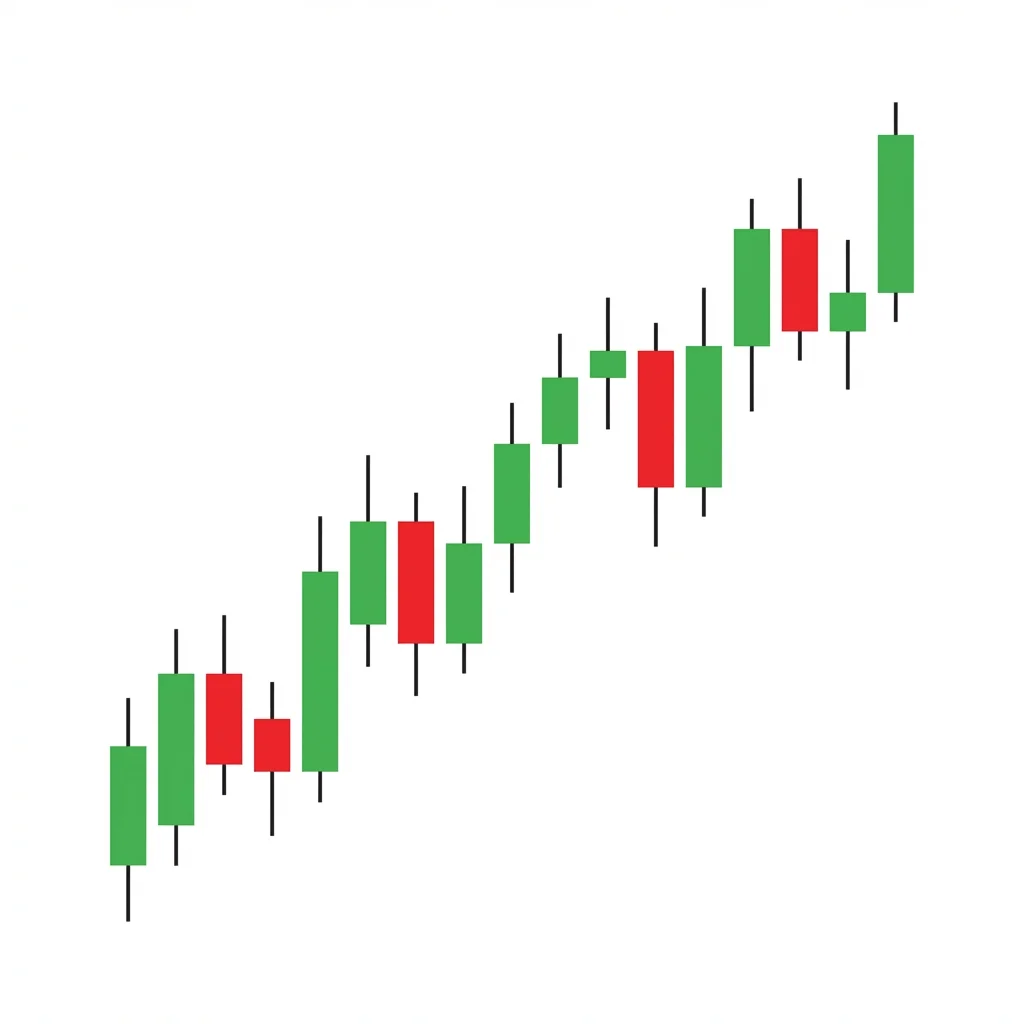
Bullish Higher Lows
Also known as: Ascending Lows, Staircase Bottom, Rising Support
The Higher Lows pattern is the most fundamental bullish structure, showing that buyers are willing to step in at progressively higher prices, indicating strengthening demand and a healthy uptrend.
Higher Lows is the backbone of any uptrend. When the market consistently makes higher lows, it means buyers are becoming more aggressive, willing to buy at higher prices with each pullback. This creates an ascending support structure that reflects increasing demand and decreasing supply at lower levels. The pattern is both a continuation signal within uptrends and a reversal signal when forming after a downtrend. It is one of the most fundamental concepts in technical analysis and the basis for drawing ascending trendlines.
History & Etymology
The concept of higher lows has been fundamental to technical analysis since Charles Dow first articulated Dow Theory in the late 1800s. Dow described uptrends as a series of higher highs and higher lows, making this one of the oldest and most well-established patterns in market analysis.
The name is purely descriptive — each successive low point in price is higher than the one before it. It is sometimes called 'staircase' because the lows ascend like steps.
How It Forms
Formation Steps
- 1At least two consecutive swing lows where each low is higher than the previous
- 2Pullbacks become shallower or maintain consistent depth
- 3An ascending trendline can be drawn connecting the swing lows
Prerequisites
- Market transitioning from downtrend to uptrend or in an established uptrend
- At least two identifiable swing lows
- Each subsequent low must be higher than the previous
Confirmation Signals
- Price bounces off the ascending trendline connecting the lows
- Higher highs accompany the higher lows
- Volume increases on the bounces from each higher low
Invalidation Signals
- A swing low breaks below the previous swing low
- The ascending trendline is broken with conviction
- Lower highs begin forming alongside the higher lows (converging into a triangle)
Candle Breakdown
First Swing Low
The initial low point from which the pattern begins. This sets the baseline.
Strong buying interest appears at this level, establishing a support floor.
Second Swing Low (Higher)
A pullback that finds support above the first swing low, confirming the pattern.
Buyers are willing to step in at a higher price, showing increased demand and confidence.
Psychology
Higher lows represent the market's voting mechanism at work — buyers are consistently willing to pay more with each pullback, reflecting growing confidence and demand accumulation.
Buyer Perspective
Buyers see each higher low as confirmation that the trend is healthy. They use pullbacks to the ascending trendline as buying opportunities, knowing demand is strong.
Seller Perspective
Sellers find it increasingly difficult to push price back to prior lows. Each attempt to sell is met with stronger buying, causing bears to gradually capitulate.
Smart Money Action
Institutions accumulate during pullbacks to the ascending trendline. The higher lows structure is their preferred environment for building large positions gradually.
Retail Trader Trap
Retail traders often wait for 'cheaper' prices that never come. They keep waiting for a deeper pullback while the market steadily grinds higher.
Emotional Cycle
Trading Strategy
Aggressive Entry
Buy when price touches the ascending trendline connecting the higher lows.
Conservative Entry
Wait for a bounce off the trendline plus a bullish candle confirmation before entering.
Previous swing high.
Measured move: distance from last low to last high projected from the new low.
Trendline extension or channel resistance if identifiable.
Best Conditions
- Timeframe: daily
- Timeframe: 4h
- Timeframe: weekly
- Timeframe: 1h
- trending market
- bull market
- sector rotation into the asset
- Asset: stocks
- Asset: ETFs
- Asset: indices
- Asset: crypto
Avoid When
- Timeframe: 1m
- choppy sideways market
- bear market rallies
- low volume drift
Confluence Factors
- Higher highs accompany the higher lows
- Rising moving averages beneath price
- Increasing relative strength vs. benchmark
- Sector or market uptrend alignment
- Volume confirms the trend
Scale In Strategy
Add to the position at each subsequent higher low, building a pyramiding position.
Scale Out Strategy
Take partial profits at each new swing high, letting the core position ride the trend.
Risk Management
Volume Analysis
Volume Confirmation
Volume should increase on rallies and decrease on pullbacks to higher lows.
Volume Profile
Healthy higher lows show rising volume on advances and declining volume on pullbacks.
Volume Divergence
If volume increases on pullbacks while decreasing on rallies, the pattern may be weakening.
Technical Confluence
Support Resistance
The ascending trendline connecting higher lows IS dynamic support. Prior swing lows act as horizontal support.
Fibonacci Levels
Pullbacks to the 38.2% or 50% retracement of the prior swing often create the next higher low.
Moving Averages
Higher lows typically ride above the 20 or 50-period moving average. The MA acts as dynamic support.
Rsi Confirmation
RSI staying above 40-50 on pullbacks confirms the bullish higher-low structure.
Macd Confirmation
MACD histogram making higher lows alongside price confirms trend strength.
Bollinger Bands
Higher lows bouncing off the middle or lower Bollinger Band indicate healthy mean-reversion within the trend.
Vwap
Pullbacks to VWAP that hold and bounce confirm institutional buying interest.
Ichimoku Cloud
Price staying above the Kumo cloud while making higher lows is a strong trend confirmation.
Elliott Wave
Higher lows typically form during Waves 1, 3, and 5 of an impulse wave sequence.
Wyckoff Phase
Higher lows are characteristic of the markup phase following Wyckoff accumulation.
Market Profile
Higher lows often form at the lower edge of developing value areas.
Order Flow
Aggressive buying at each pullback low, visible as buy imbalances, confirms the pattern.
Open Interest
Rising open interest alongside higher lows confirms new money is entering the trend.
Multi-Timeframe Analysis
Higher Timeframe Alignment
Weekly higher lows provide the best context for daily trend-following entries.
Lower Timeframe Entry
When the daily chart shows a higher low forming, use the 1H chart to time the exact bounce entry.
Timeframe Confluence
Higher lows across weekly, daily, and 4H timeframes simultaneously represent the strongest trend structure.
Top-Down Approach
Confirm weekly trend is making higher lows, then buy daily pullbacks to the ascending trendline.
Statistics
Historical Examples
S&P 500 Post-COVID Recovery
successThe S&P 500 formed a textbook series of higher lows from March 2020 through November 2020, rallying from 2,200 to 3,600 with each pullback finding support at progressively higher levels.
Lesson: The higher lows pattern is the backbone of recovery rallies. Buying the higher lows consistently outperformed trying to time tops.
NVIDIA Uptrend Structure
successNVIDIA established a powerful series of higher lows through 2023 as AI hype accelerated. Each dip was bought aggressively, creating a staircase advance from $150 to $500+.
Lesson: In momentum-driven moves, higher lows can persist far longer than expected. Trend-following with this pattern captures outsized moves.
Variations
Accelerating Higher Lows
Each higher low is progressively closer to the previous low in time, showing increasing buyer urgency.
Higher Lows with Equal Highs
Higher lows forming against a flat resistance level, creating an ascending triangle.
Confusion Matrix
Patterns commonly confused with Bullish Higher Lows and how to distinguish them.
Bullish Ascending Triangle
7000% similarIf there's a flat resistance ceiling, it's an ascending triangle. If both highs and lows are rising, it's a higher-lows uptrend.
Key Differences
- Ascending triangle has a flat resistance top; higher lows can have rising highs too
- Ascending triangle is a consolidation pattern; higher lows describe trend structure
Bearish lower highs is a fundamental trend structure pattern where each successive swing high forms at a lower level, confirming bearish momentum and a downtrend. It is the most basic and important bearish market structure signal.
The Bullish Ascending Channel is a continuation pattern where price trends upward within two parallel trendlines, providing clear buy zones at the lower boundary and profit targets at the upper boundary.
The Bullish Ascending Triangle is a continuation pattern featuring flat resistance and rising support. Buyers are consistently willing to pay higher prices, compressing the range until a breakout above resistance triggers the next leg up.
The Bullish Flag is the quintessential continuation pattern: a sharp rally (pole) followed by a brief, tight consolidation (flag) before the next leg up. It represents a healthy pause in a strong uptrend.
The Bullish Staircase Up is a trend continuation formation consisting of alternating impulse moves and consolidation periods, creating a step-like progression of higher highs and higher lows that confirms a healthy, sustainable uptrend.
The Broadening Top (Megaphone) is a chart formation characterized by expanding price swings that create higher highs and lower lows, reflecting increasing volatility and instability at market tops before a bearish breakdown.
Pro Tips & Common Mistakes
Pro Tips
- Draw a trendline connecting at least two higher lows — this becomes your key support for future entries
- The pattern is most reliable when accompanied by higher highs, forming a healthy uptrend
- Volume should decline on pullbacks and expand on advances for the healthiest trend
- Use the 20-EMA as a proxy for the higher-low support in fast-moving trends
- The first higher low after a downtrend is the most profitable entry but carries the most risk
Common Mistakes
- Buying too far above the trendline instead of waiting for the pullback to the higher low
- Ignoring a trendline break — when the pattern fails, it fails fast
- Not recognizing that shallower pullbacks can signal exhaustion rather than strength
- Forcing the pattern in ranging markets where highs and lows have no clear direction
- Using too-tight stops that get hit during normal pullback volatility
Advanced Techniques
- Use the angle of the ascending trendline to gauge trend strength — steeper is stronger but less sustainable
- Monitor the depth of each pullback — if pullbacks are getting shallower, the trend is accelerating
- Apply Fibonacci extension from the higher lows to project potential price targets
- Combine with relative strength analysis to identify the strongest assets making higher lows
Institutional Perspective
Higher lows are the primary structure institutions look for when building trend-following positions. They allocate capital systematically on pullbacks to the ascending trendline, with each higher low confirming their thesis. The structure allows them to add size gradually without chasing price.
Fun Facts
- Charles Dow's original definition of an uptrend was simply 'a series of higher highs and higher lows' — this pattern IS the uptrend.
- Studies show that buying the third higher low in a sequence has the best risk-reward profile statistically.
- The higher-lows concept is fractal — it appears identically on every timeframe from tick charts to monthly charts.
Frequently Asked Questions
Higher lows indicate that buyers are willing to step in at progressively higher prices, showing increasing demand and bullish sentiment. It is the defining characteristic of an uptrend.
At least two higher lows are needed to draw an ascending trendline. Three or more higher lows provide much stronger confirmation of the trend.
The pattern fails when price makes a lower low — breaking below the most recent swing low. This signals a potential trend reversal or transition to a ranging market.