Loading patterns...

 Sponsored
Chart Pattern Cheat Sheet
All 186patterns at a glance — print this page for a quick desk reference.
Single Candle(29)
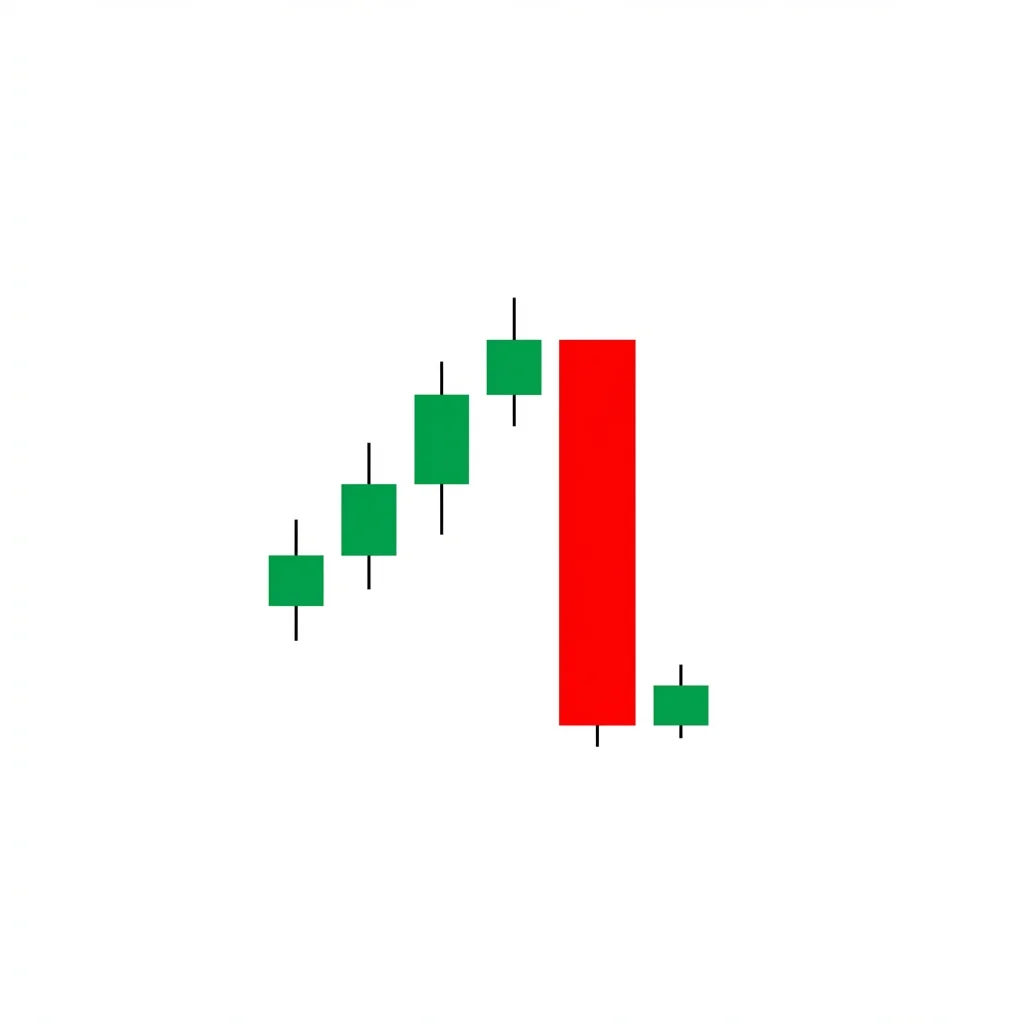
Bearish Belt Hold
bearishReversalLow
The Bearish Belt Hold is a single bearish candle that opens at its high and closes near its low with a long body, indicating that sellers dominated from the opening bell and controlled price action throughout the session.

Bearish Closing Marubozu
bearishBothLow
The Bearish Closing Marubozu is a single bearish candle with no lower shadow — the close is at the exact low of the session. This indicates that sellers controlled the session and maintained pressure through the very last trade, a sign of strong bearish conviction.
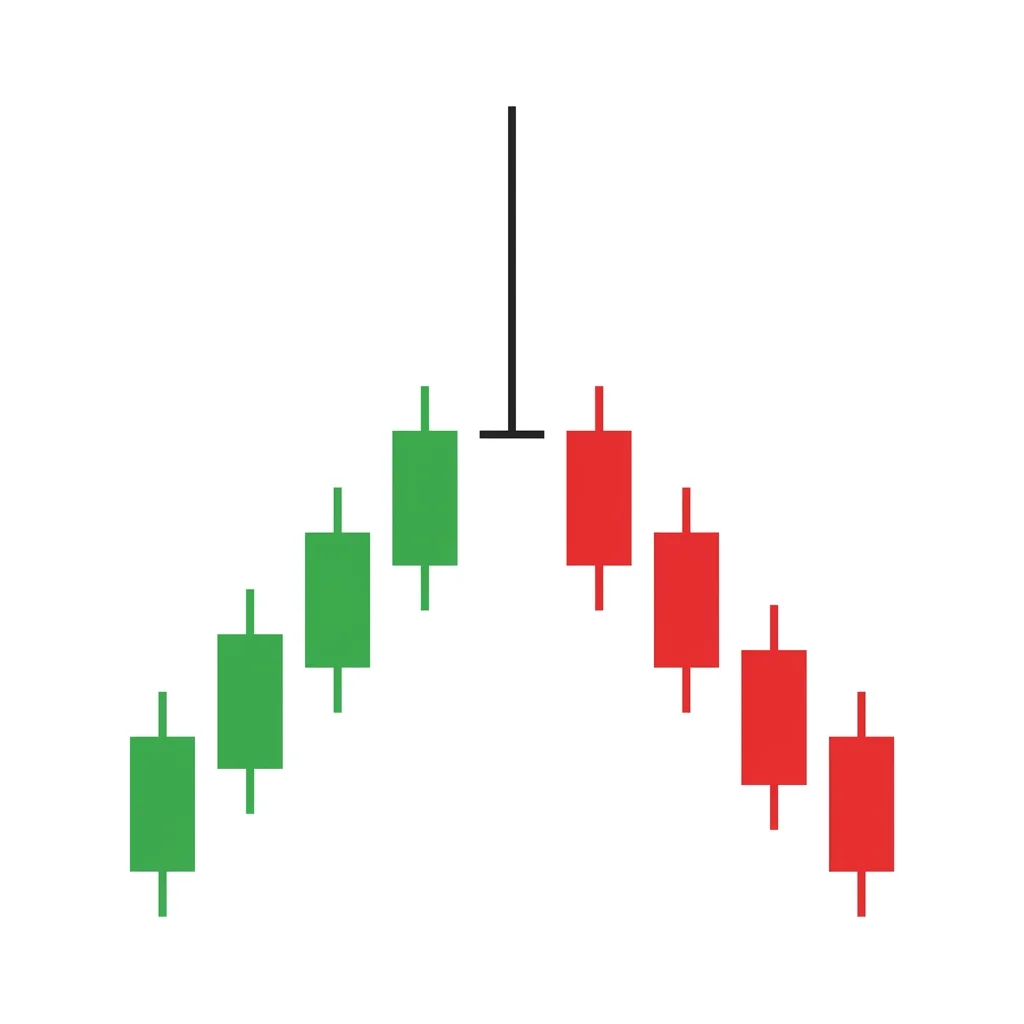
Bearish Gravestone Doji
bearishReversalModerate
The gravestone doji is a single-candle reversal pattern with the open, close, and low at the same level and a long upper shadow, resembling a gravestone. It signals that buyers pushed price higher but sellers reclaimed all gains by the close.

Bearish Hanging Man
bearishReversalModerate
The hanging man is a single-candle bearish reversal pattern with a small body at the top and a long lower shadow, appearing at the top of an uptrend. It warns that selling pressure is emerging despite the continued uptrend.

Bearish Key Reversal
bearishReversalHigh
The bearish key reversal is a powerful single-bar reversal pattern where price makes a new high then reverses to close below the prior bar's low on high volume, signaling a decisive shift from buying to selling control.
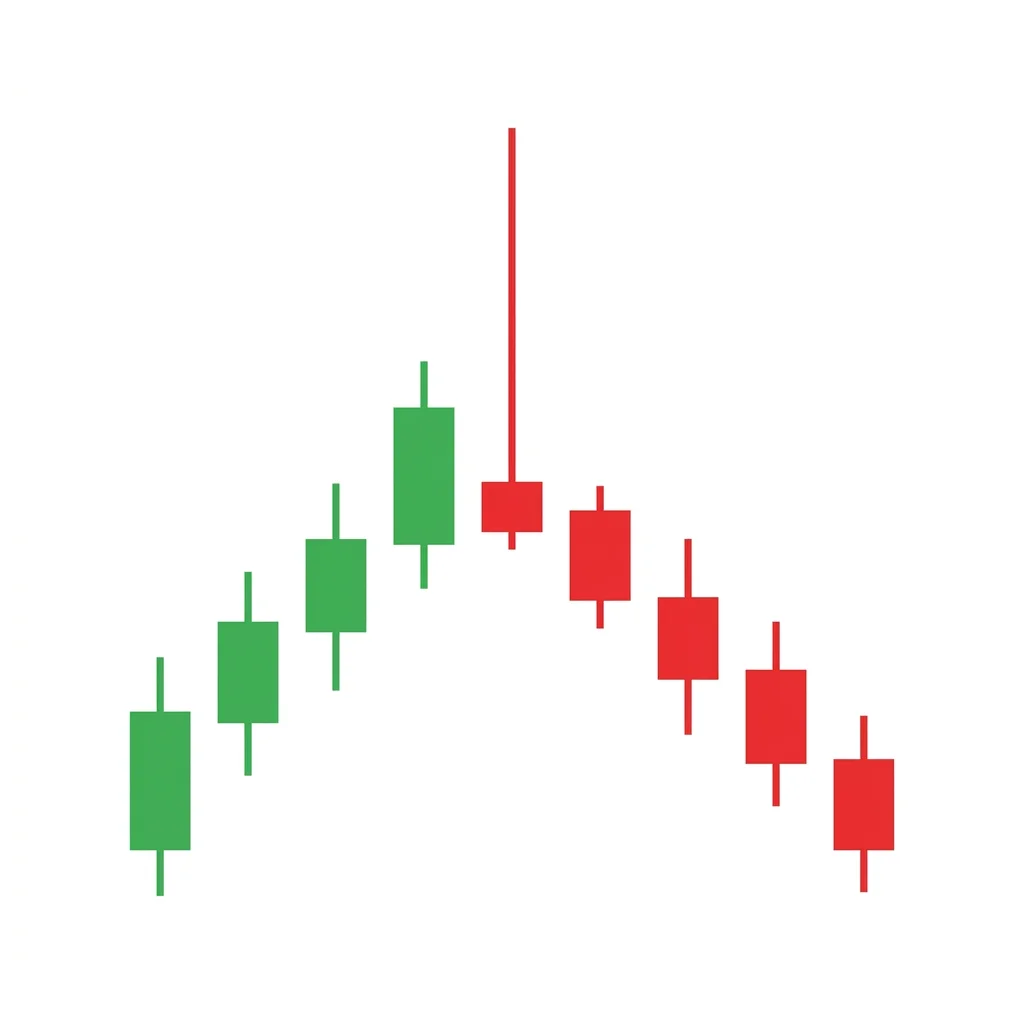
Bearish Long Upper Shadow
bearishReversalModerate
A candle with a long upper shadow (at least 2-3x the body) indicates that price rallied significantly during the session but was rejected, closing near the low. It signals selling pressure and potential reversal at the top of rallies.
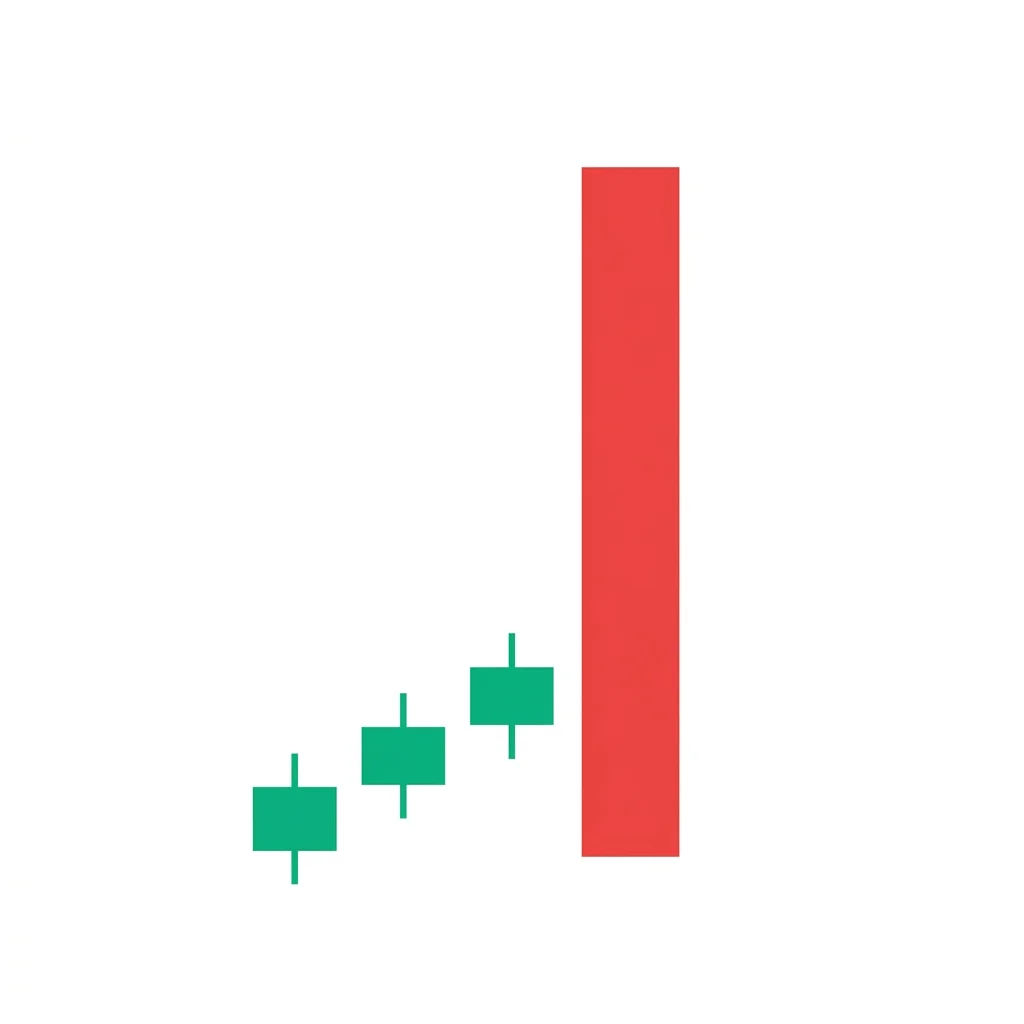
Bearish Marubozu
bearishContinuationHigh
The bearish marubozu is a single candle with no shadows — price opened at the high and closed at the low, showing complete seller domination throughout the entire session with no buying resistance.
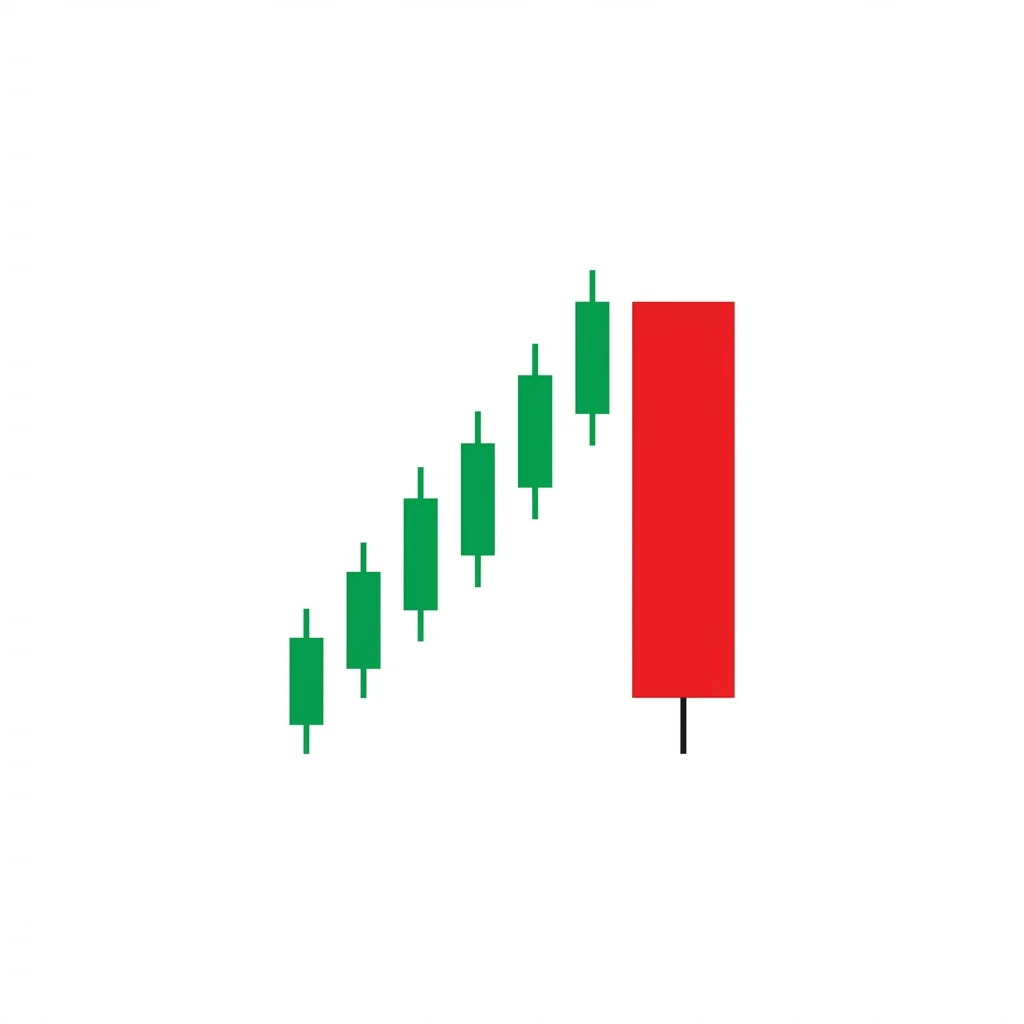
Bearish Opening Marubozu
bearishContinuationModerate
The bearish opening marubozu is a single candle where the open equals the high (no upper shadow), showing that sellers took immediate control at the open and maintained pressure throughout the session. A small lower shadow may be present.
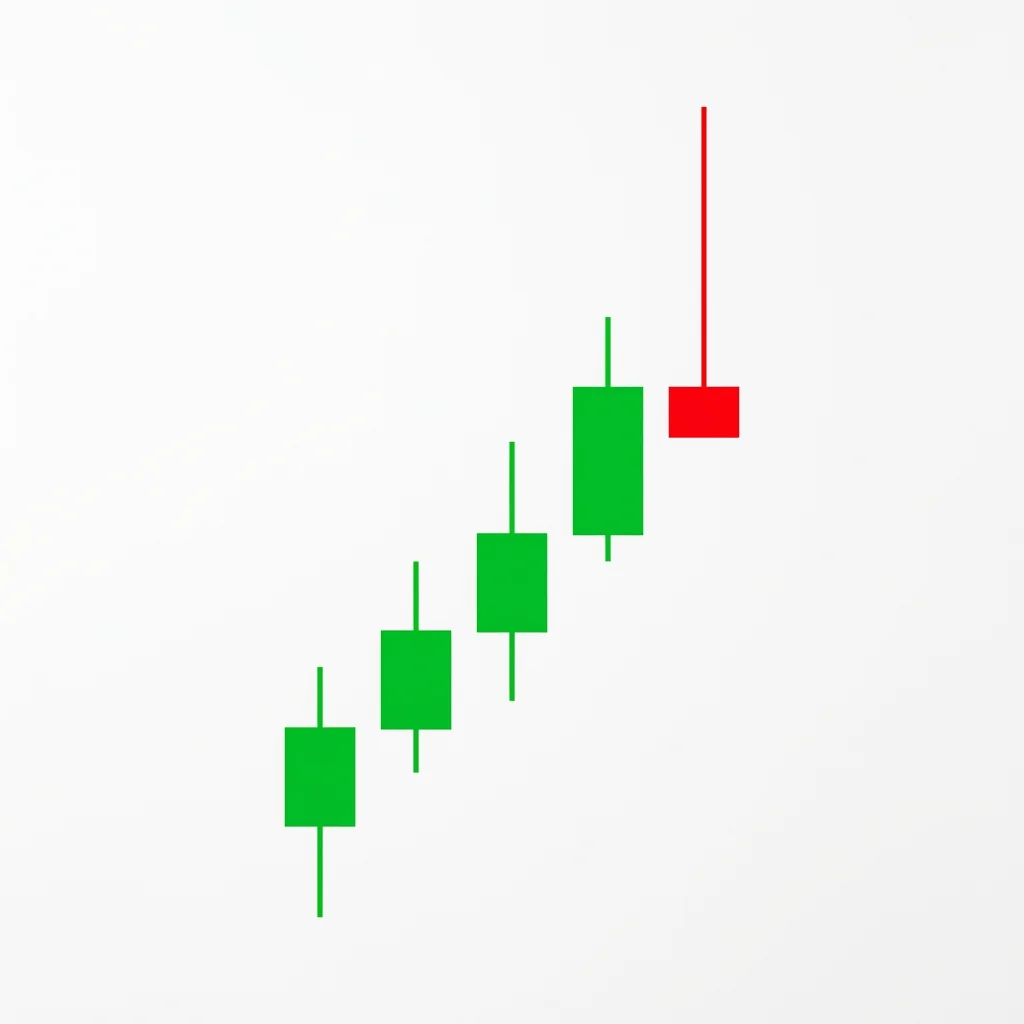
Bearish Shooting Star
bearishReversalModerate
The shooting star is a single-candle bearish reversal pattern with a small body near the low and a long upper shadow. It shows that buyers pushed price significantly higher during the session but sellers drove it back down, signaling a potential top.
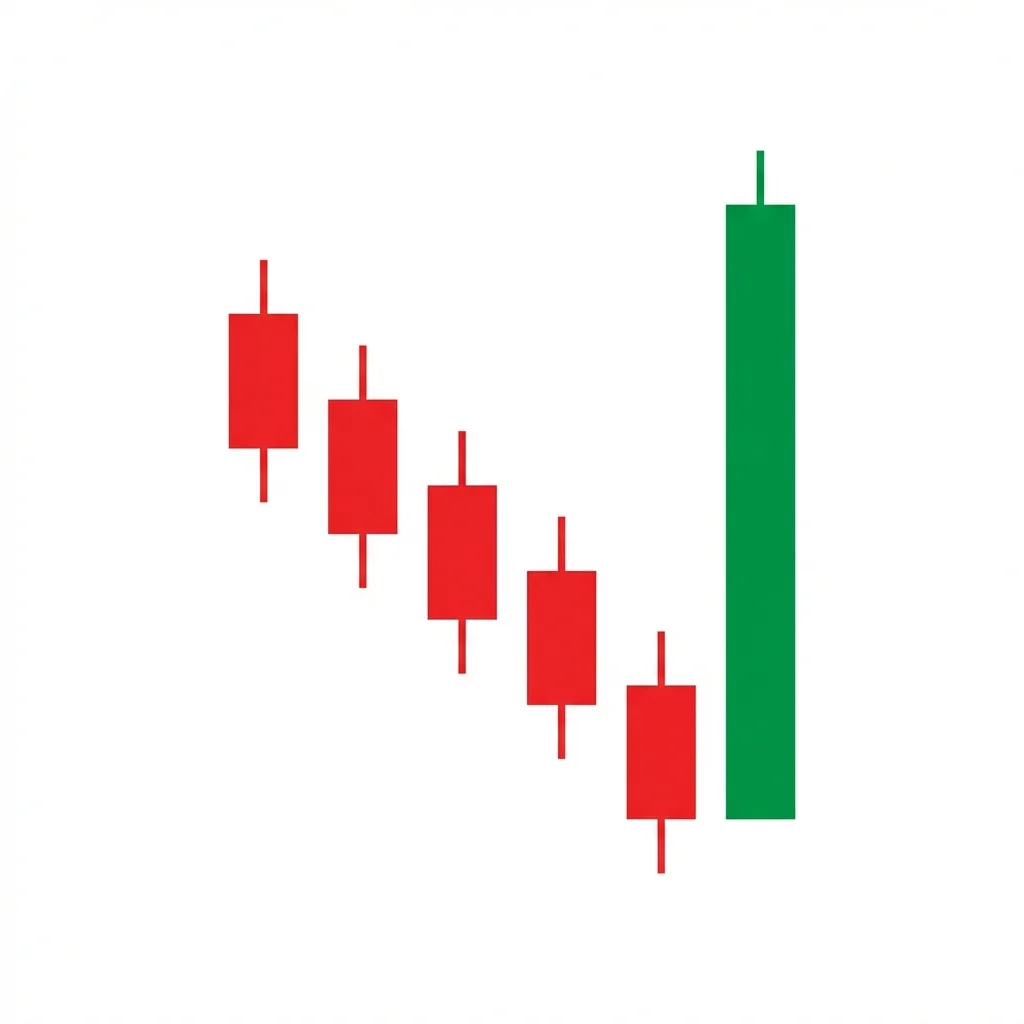
Bullish Belt Hold
bullishReversalLow
The Bullish Belt Hold is a single-candle reversal pattern that opens at the low of the session and rallies strongly to close near the high, signaling a potential shift from bearish to bullish control.

Bullish Closing Marubozu
bullishContinuationModerate
The Bullish Closing Marubozu is a single-candle pattern where the close equals the session high (no upper shadow), signaling that buyers maintained control through the closing bell with zero pullback.
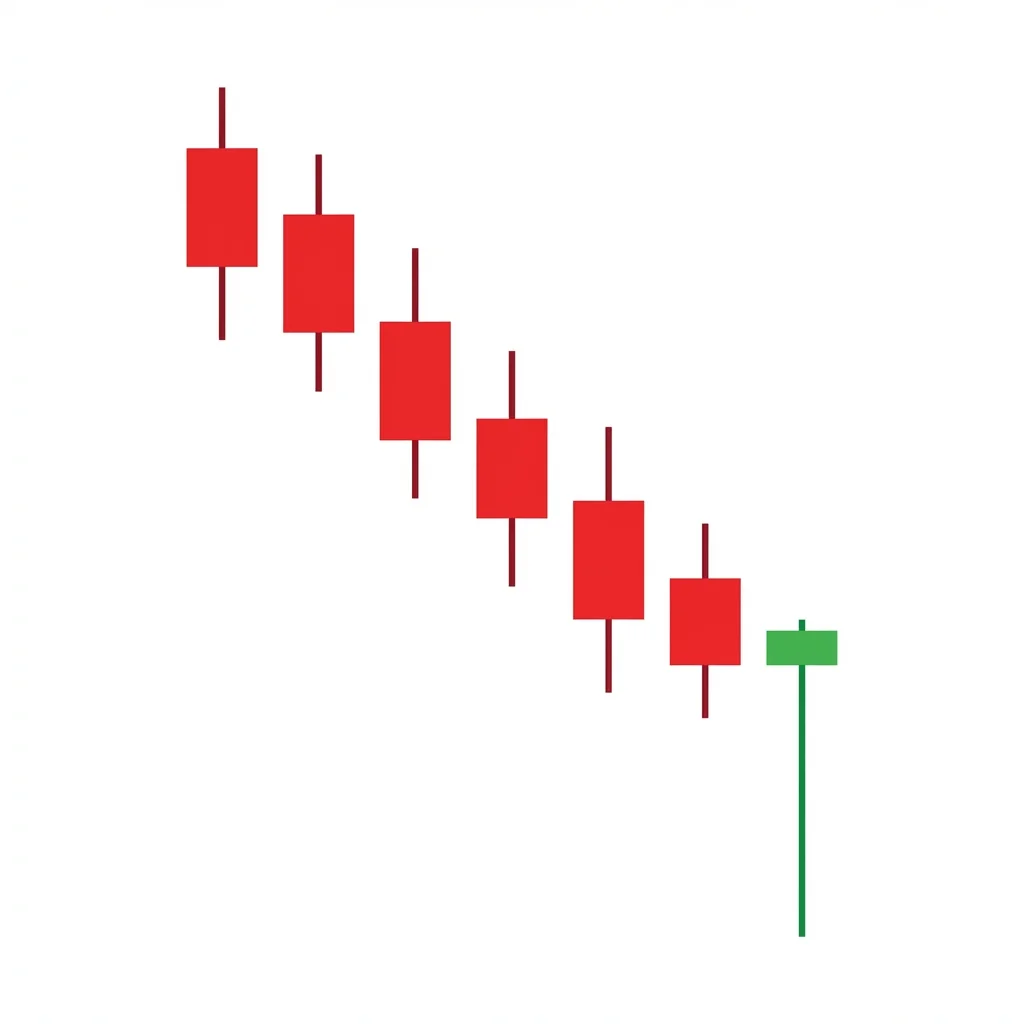
Bullish Dragonfly Doji
bullishReversalModerate
The Dragonfly Doji is a powerful single-candle reversal signal where sellers push price significantly lower during the session, but buyers fight back to close at the opening level, creating a T-shaped candle that signals complete rejection of lower prices.
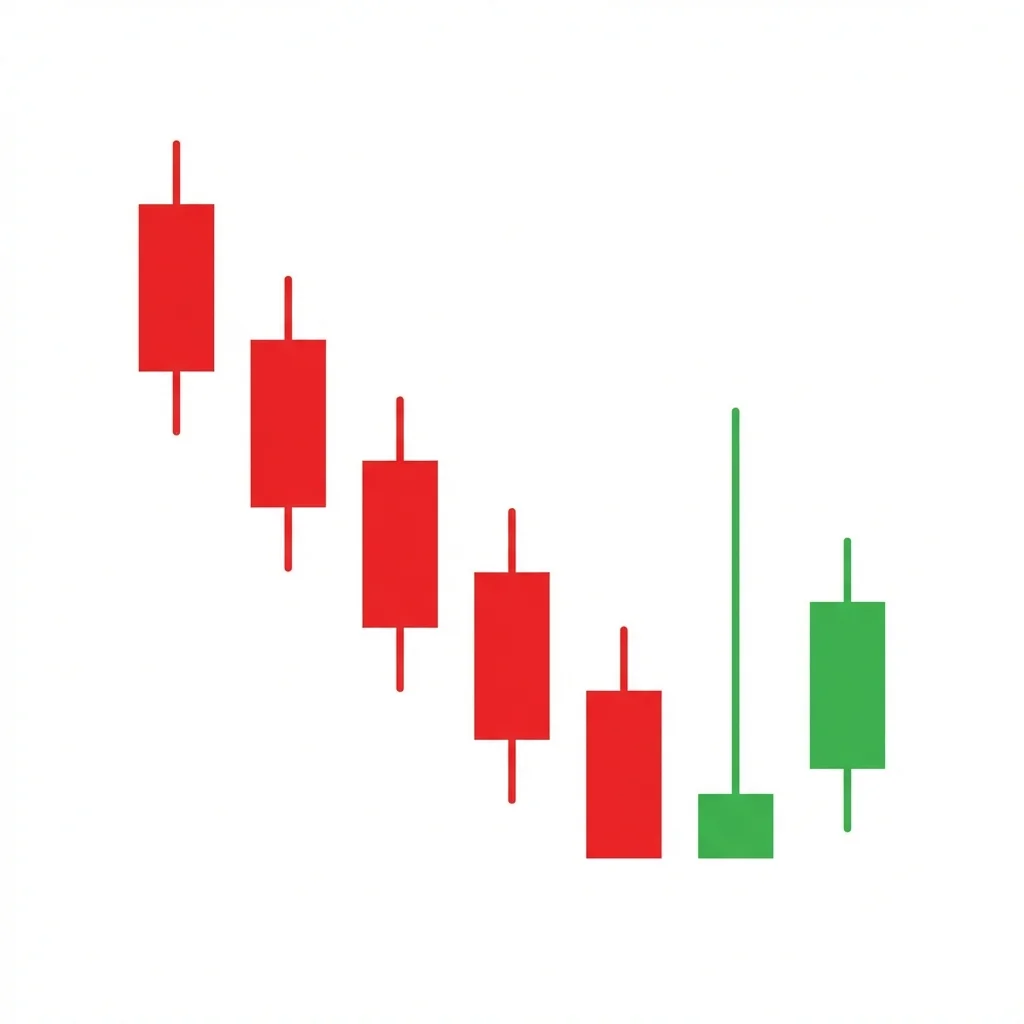
Bullish Inverted Hammer
bullishReversalModerate
The Inverted Hammer is a single-candle bullish reversal pattern appearing at the bottom of downtrends. Its long upper shadow shows buyers attempted to push price higher, hinting that the selling pressure may be ending.
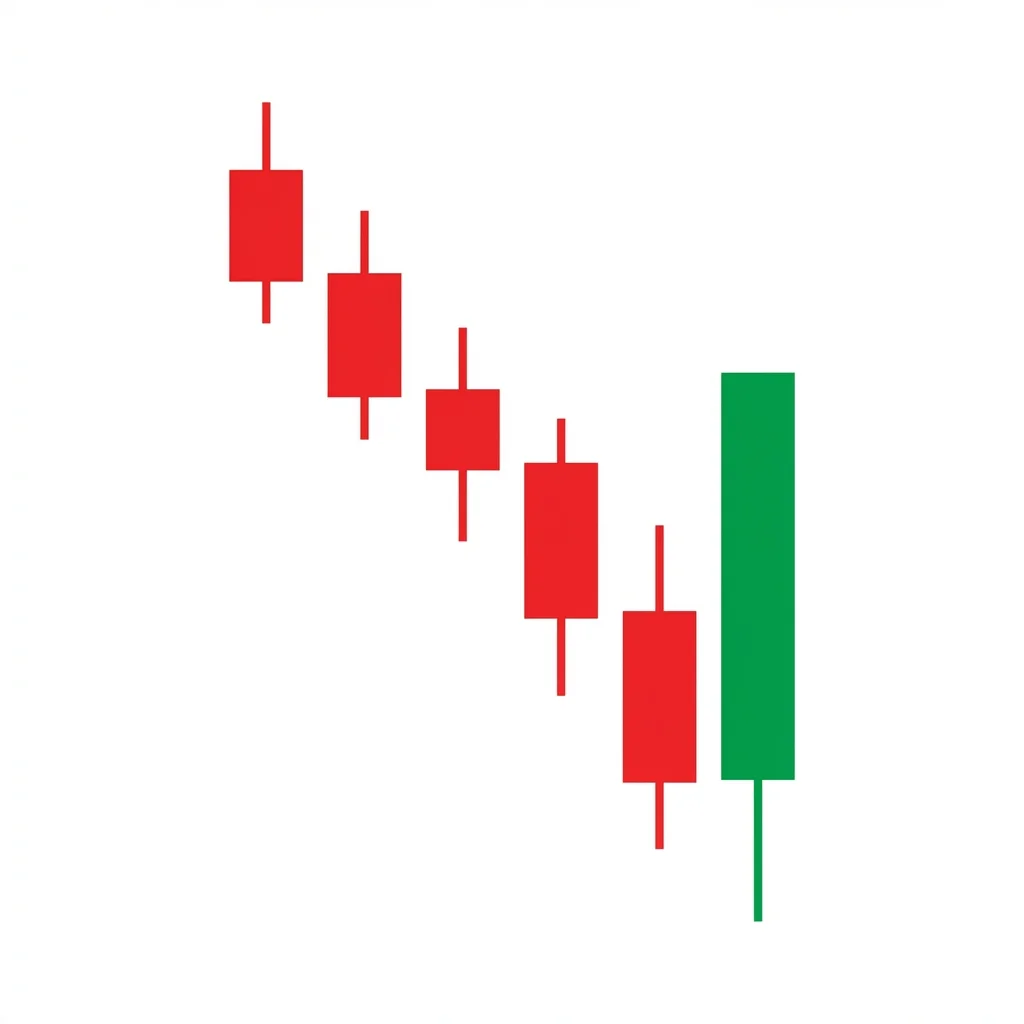
Bullish Key Reversal
bullishReversalHigh
A Bullish Key Reversal occurs when price makes a new low during a downtrend but reverses to close above the prior bar's high on heavy volume, signaling a dramatic single-day shift in control from sellers to buyers.
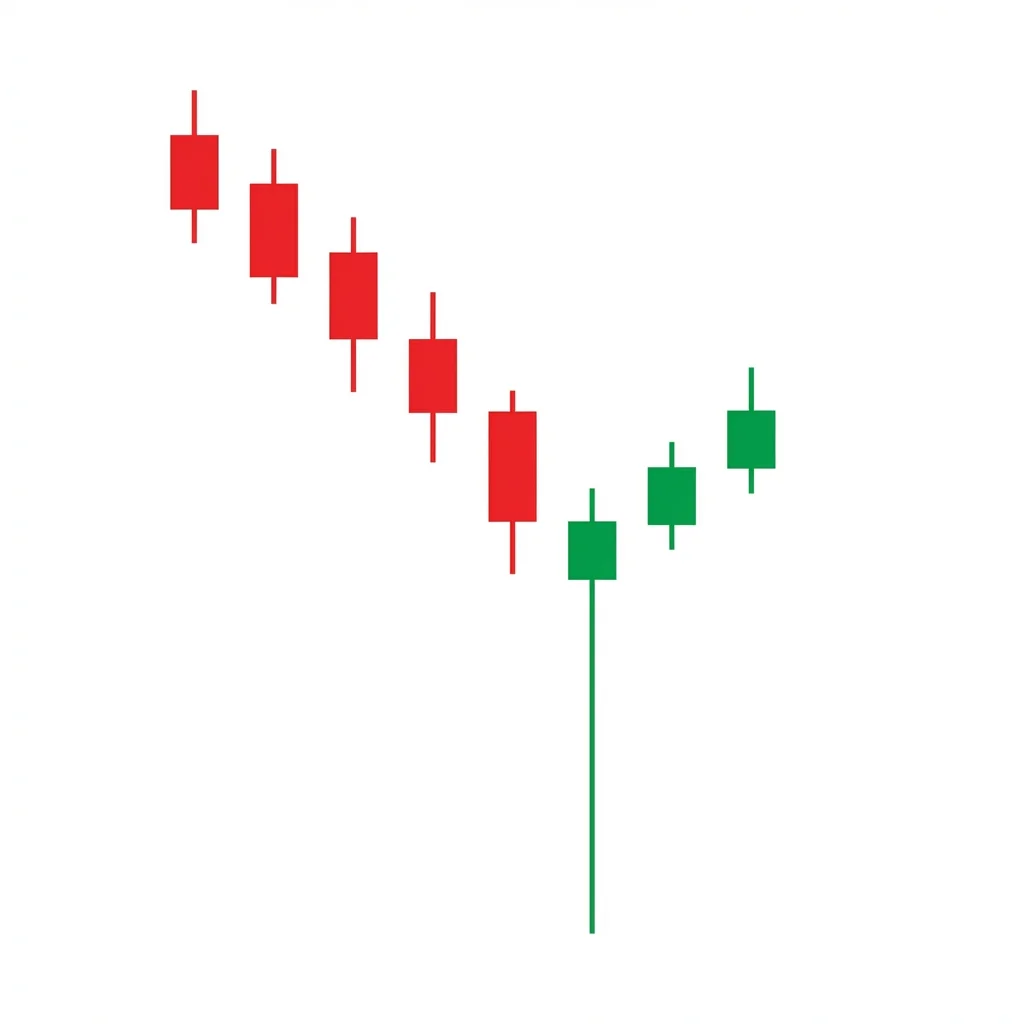
Bullish Long Lower Shadow
bullishReversalModerate
A candle with a long lower shadow signals that buyers aggressively rejected lower prices during the session, pushing price back up from the lows. This buying pressure suggests a potential bottom or support level.
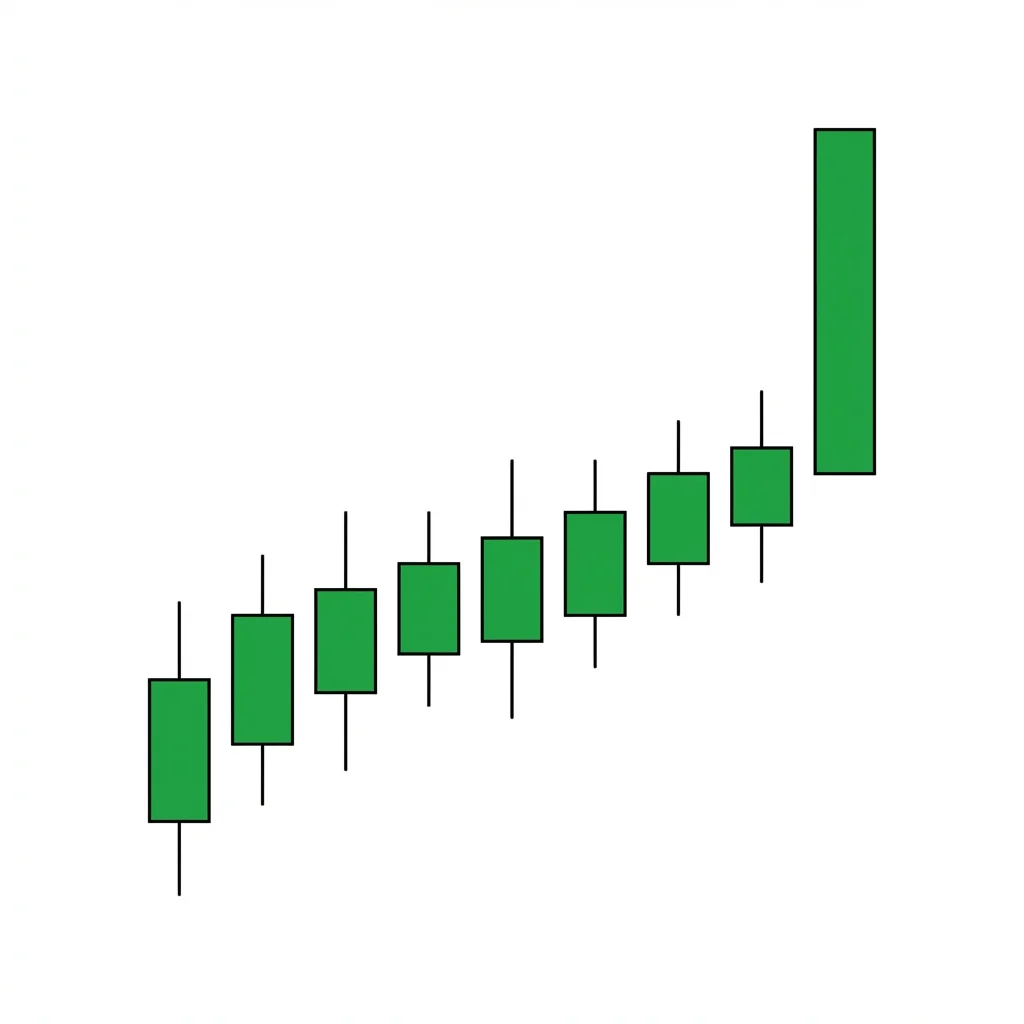
Bullish Marubozu
bullishContinuationHigh
The Bullish Marubozu is a single candle with no shadows — it opens at the low and closes at the high, representing complete buyer dominance throughout the entire session with no seller resistance.

Bullish Opening Marubozu
bullishContinuationModerate
The Opening Marubozu is a bullish candle with no lower shadow — the open IS the low — showing that from the moment the session opened, buyers were in control and never let price trade below the open.
Bullish Takuri
bullishReversalHigh
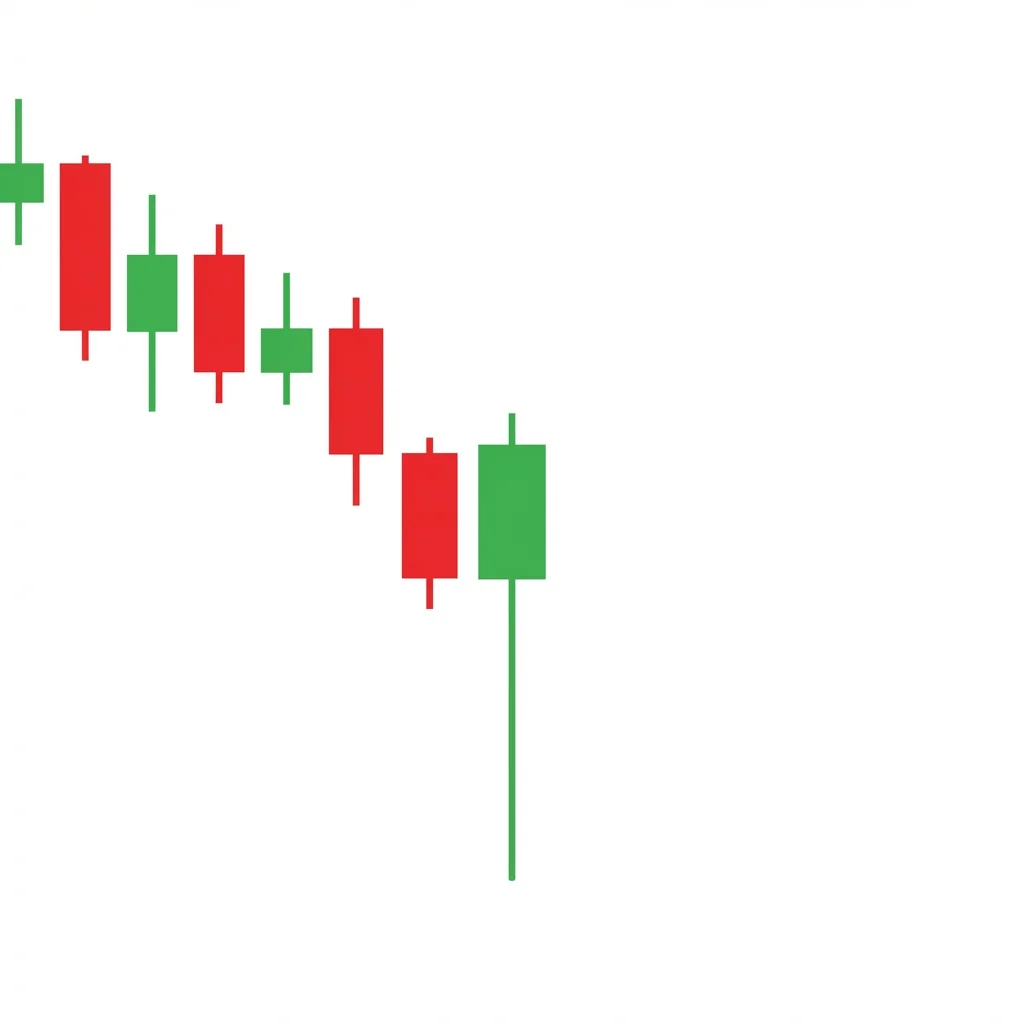
The Bullish Takuri is a single-candle reversal pattern characterized by an extremely long lower shadow and a tiny body near the candle's high. It is a stronger version of the hammer, indicating aggressive rejection of lower prices and a high probability of trend reversal.
Doji
neutralIndecisionLow
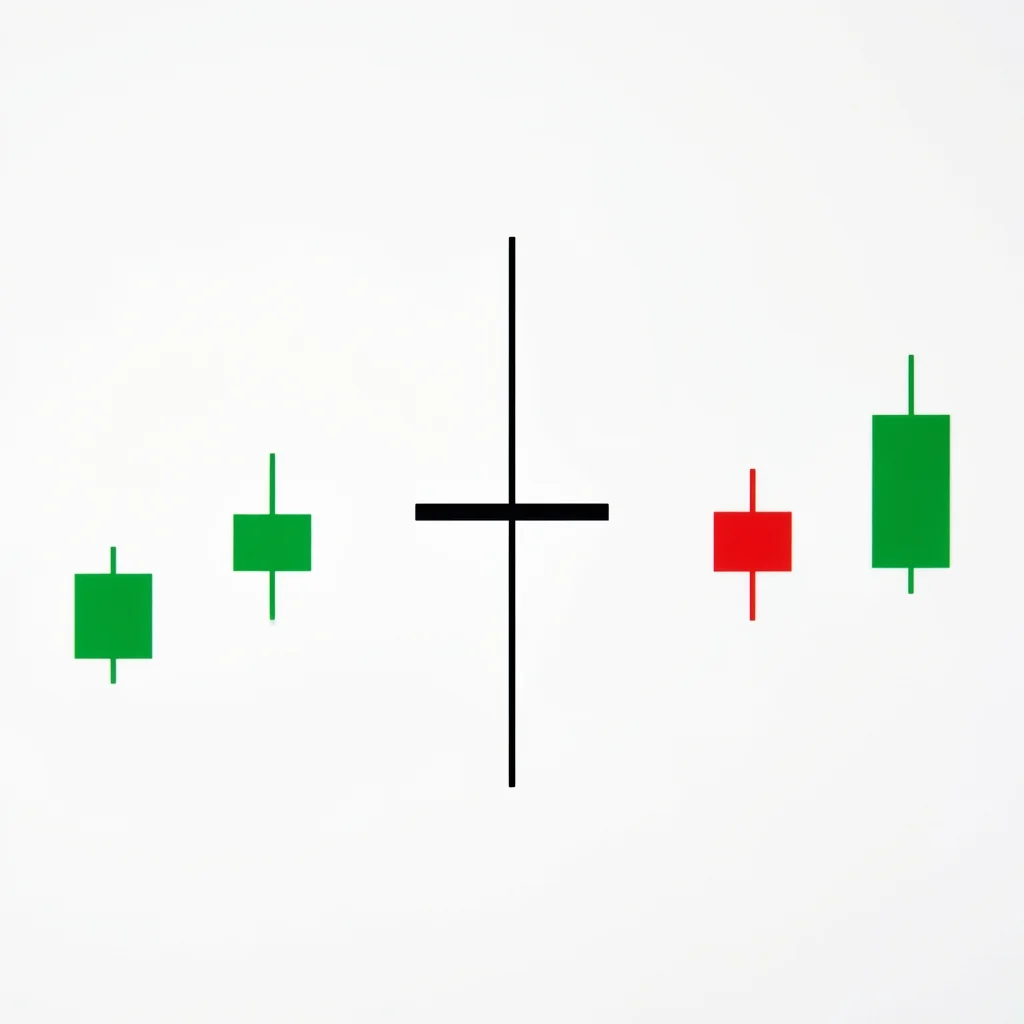
The Doji is the quintessential indecision candle where opening and closing prices are virtually identical, reflecting a perfect tug-of-war between buyers and sellers.

Four-Price Doji
neutralIndecisionVery Low
The Four-Price Doji is the rarest doji variant where all four price points (open, high, low, close) are identical, appearing as a horizontal line and signaling complete market inactivity or perfect equilibrium.
Hammer Doji
neutralIndecisionModerate
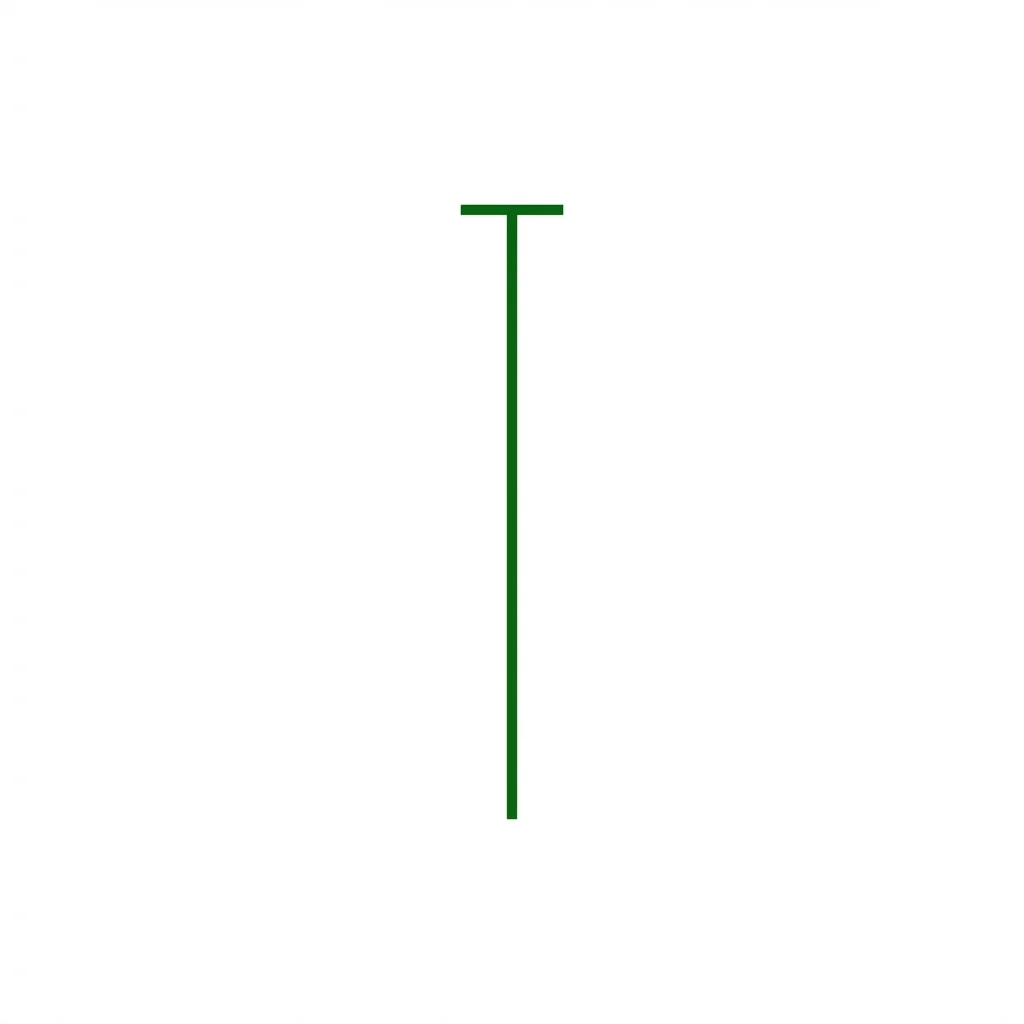
The Hammer Doji (Dragonfly Doji) features a long lower shadow with the open and close at the session high, showing that sellers drove price down sharply but buyers recovered all losses, creating a neutral signal that depends on context.
High Wave
neutralIndecisionModerate
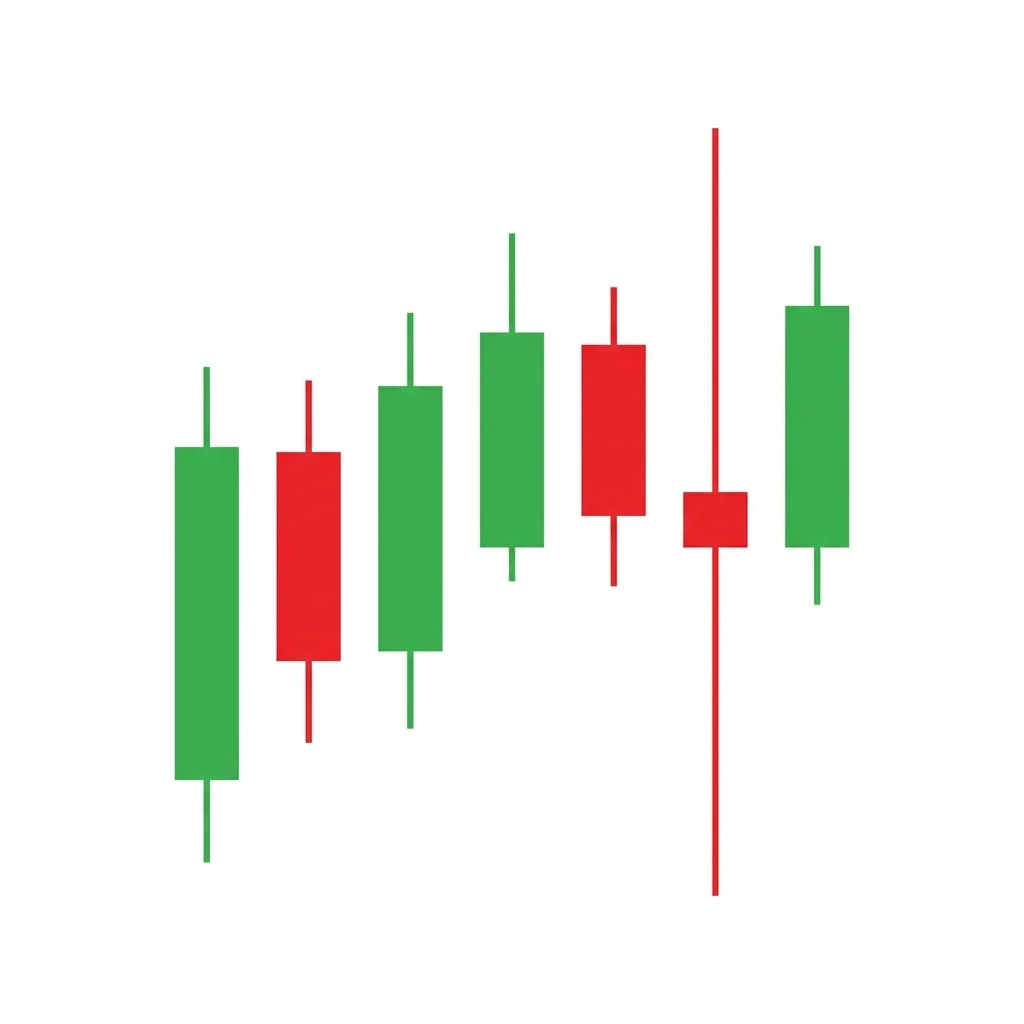
The High Wave candle features a small body with extremely long upper and lower shadows, signaling intense intraday volatility and extreme indecision that often precedes a significant directional move.
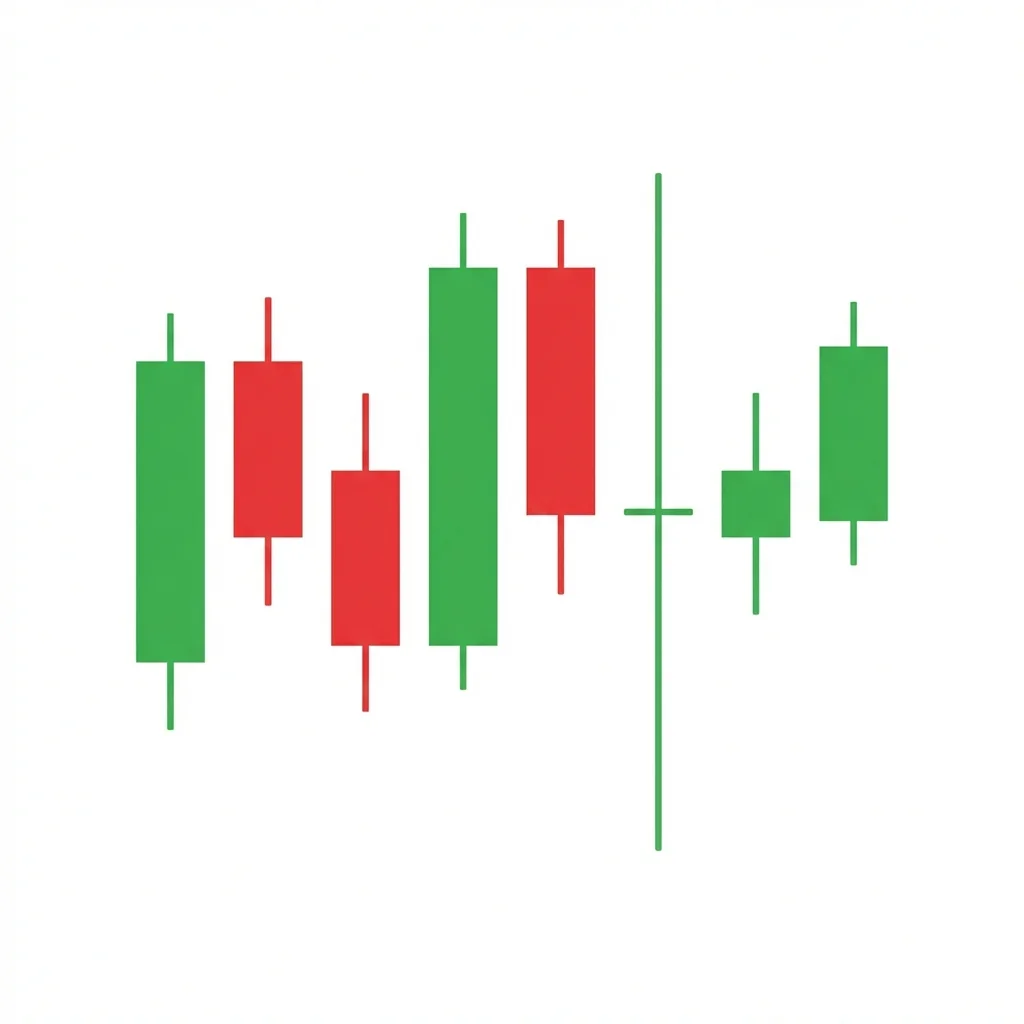
Long-Legged Doji
neutralIndecisionModerate
The Long-Legged Doji features extremely long shadows in both directions with the open and close near the center, representing the most extreme form of single-candle indecision and a potent warning of momentum exhaustion.
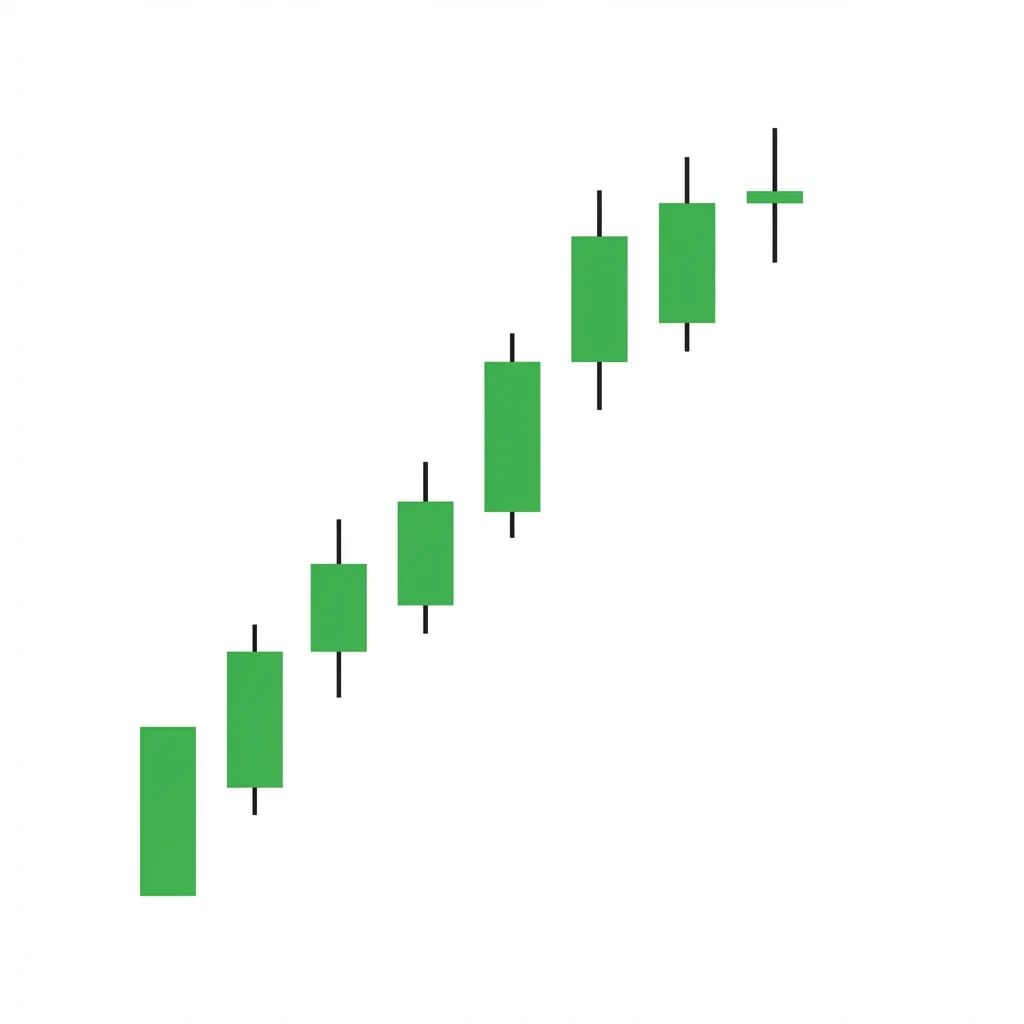
Northern Doji
neutralIndecisionModerate
The Northern Doji appears after an uptrend and signals that buying momentum may be exhausting. While it warns of potential reversal, it can also be a pause before continuation, making it a neutral alert rather than a directional signal.
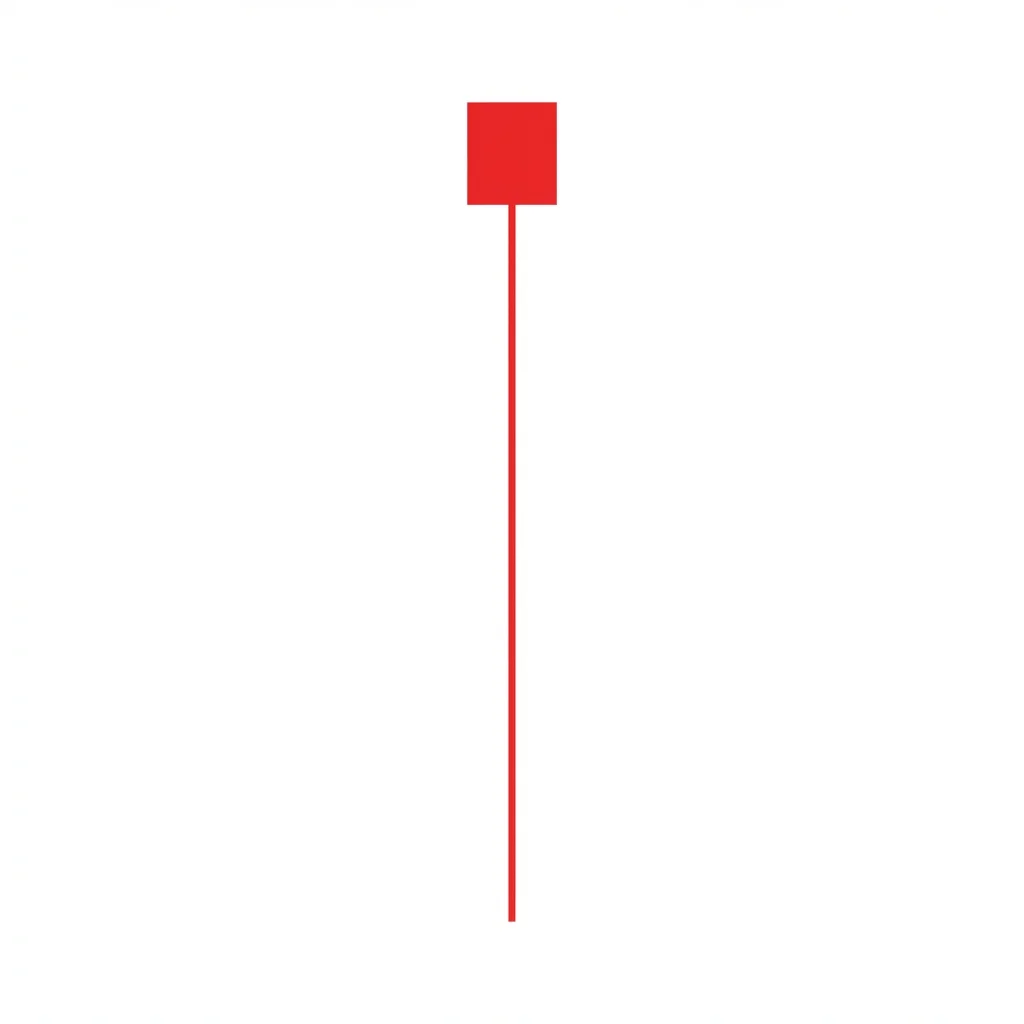
Paper Umbrella
neutralIndecisionModerate
The Paper Umbrella is a context-neutral candle with a small body at the top and a long lower shadow. It becomes a Hammer in downtrends (bullish) or a Hanging Man in uptrends (bearish), but without trend context it is a neutral indecision signal.
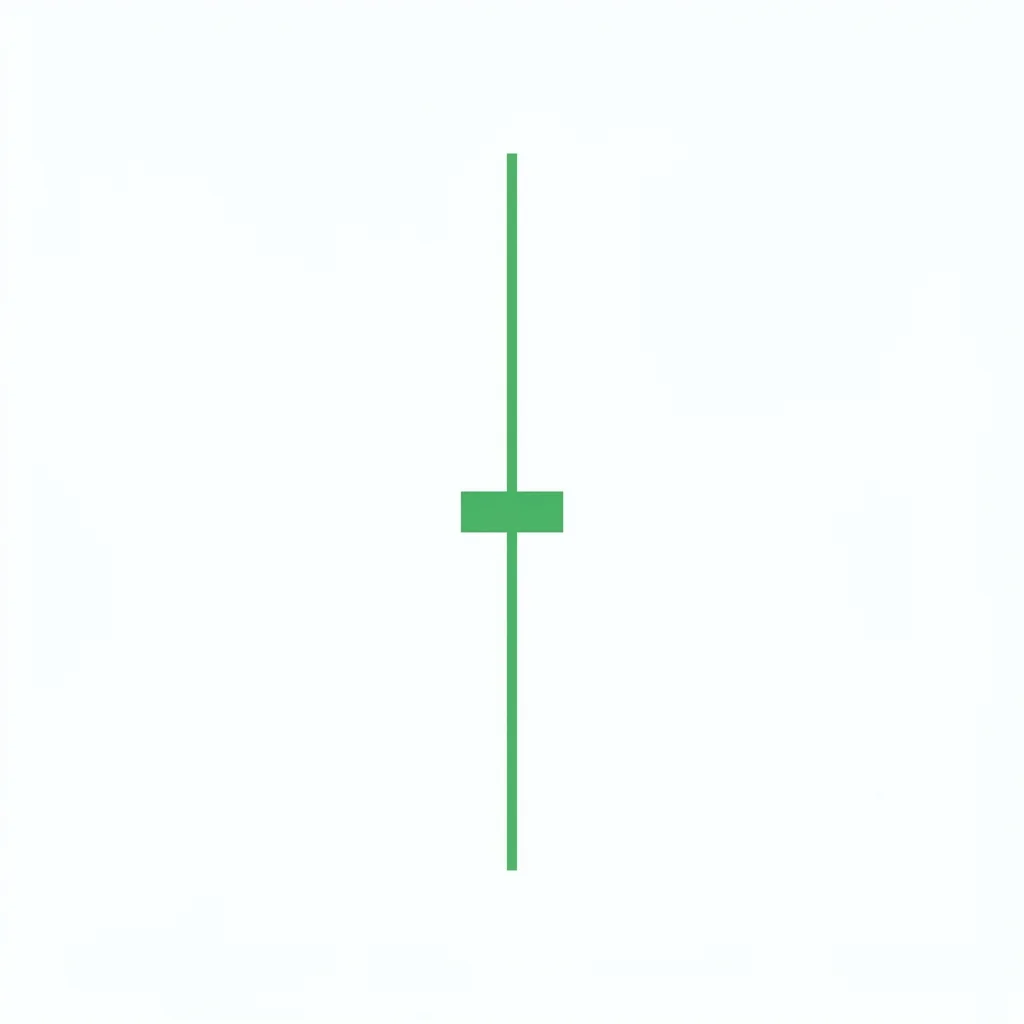
Rickshaw Man
neutralIndecisionModerate
The Rickshaw Man is a specialized long-legged doji where the open and close are positioned exactly at the midpoint of the candle's range, representing the purest expression of market indecision with perfectly balanced shadows.
Shooting Star Doji
neutralIndecisionModerate
The Shooting Star Doji (Gravestone Doji) features a long upper shadow with the open and close at the session low, showing buyers drove prices up but sellers reversed all gains, creating a context-dependent signal that leans bearish in uptrends.
Southern Doji
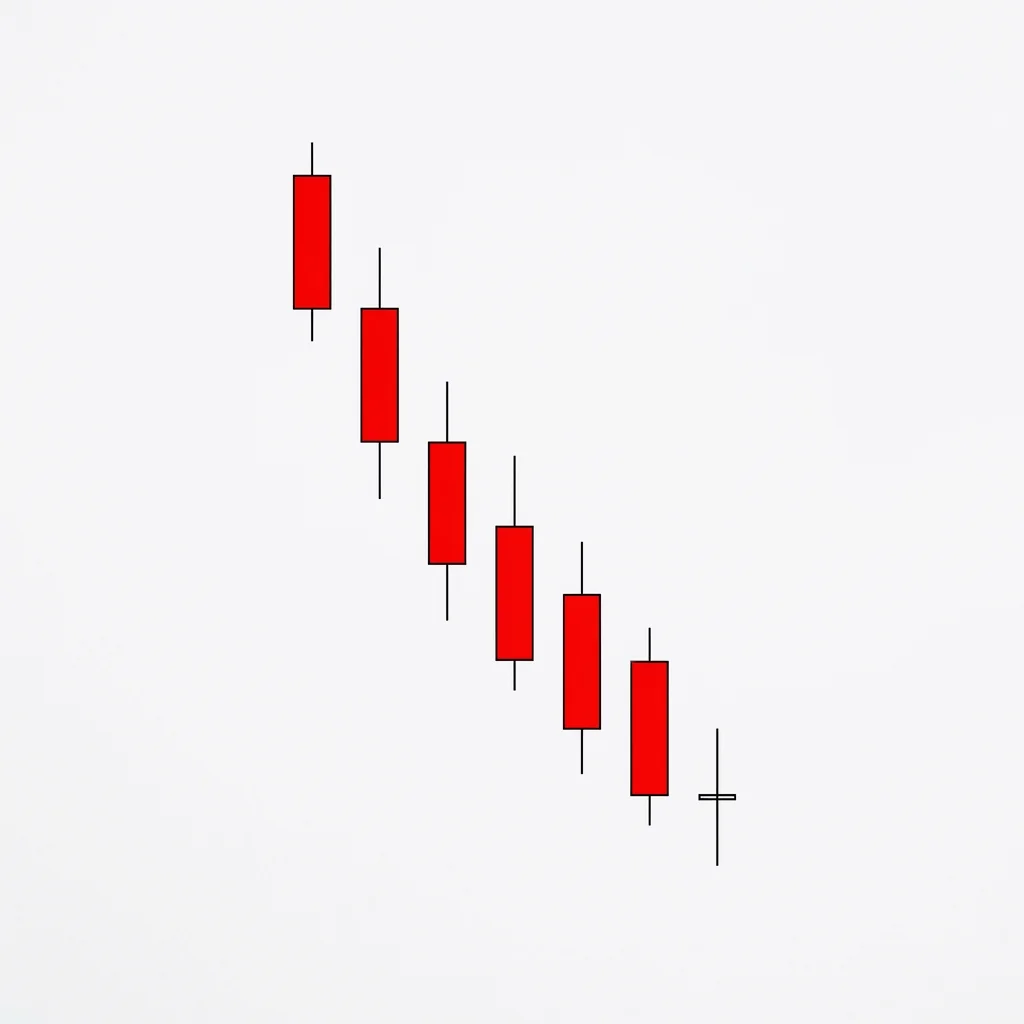
neutralIndecisionModerate
The Southern Doji appears after a downtrend and signals that selling momentum may be exhausting. While it warns of potential reversal, it can also be a pause before continuation lower, making it a neutral alert requiring confirmation.
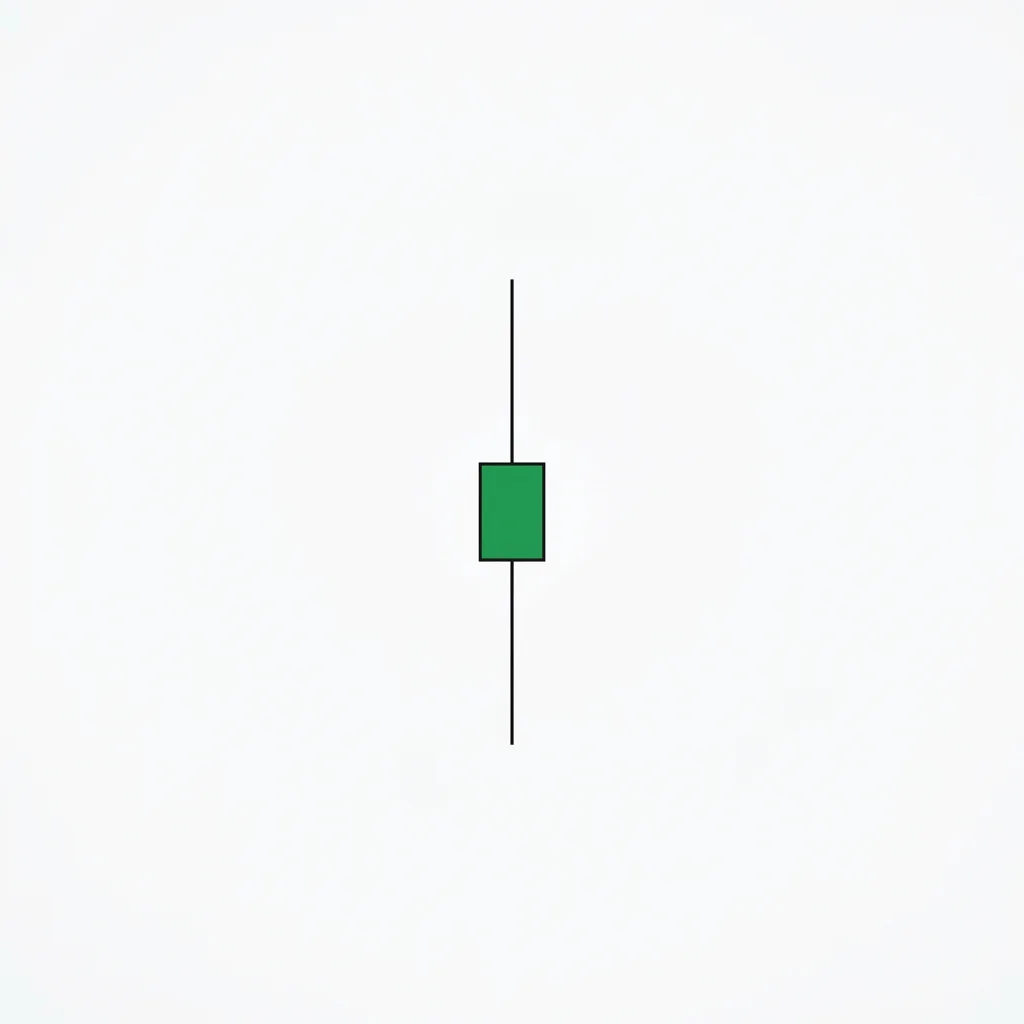
Spinning Top
neutralIndecisionLow
The Spinning Top is one of the most common candlestick patterns, featuring a small real body with shadows on both sides, indicating mild to moderate indecision where neither buyers nor sellers gained meaningful ground.
Double Candle(31)
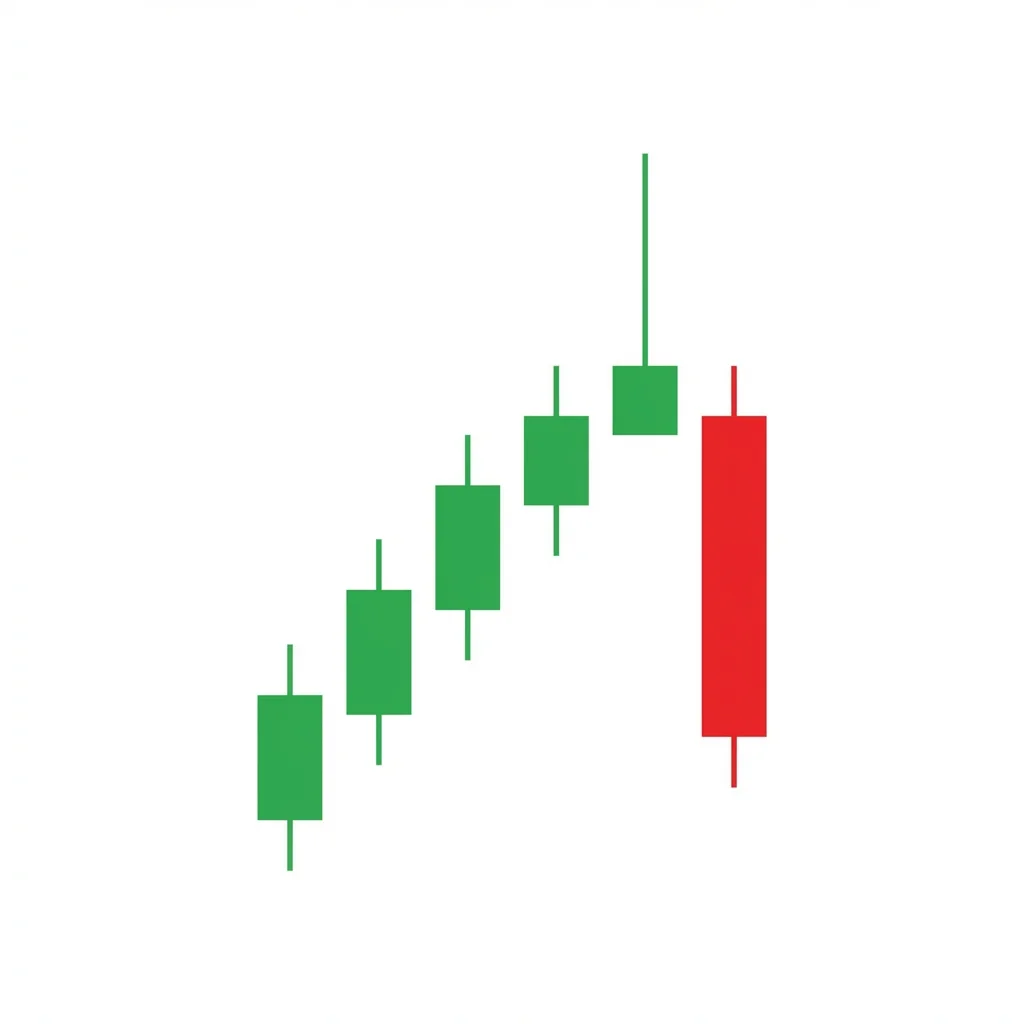
Bearish Confirmed Shooting Star
bearishReversalHigh
The Confirmed Shooting Star adds a bearish confirmation candle to the classic shooting star, eliminating the ambiguity of the standalone pattern and creating a higher-probability reversal signal at the top of uptrends.
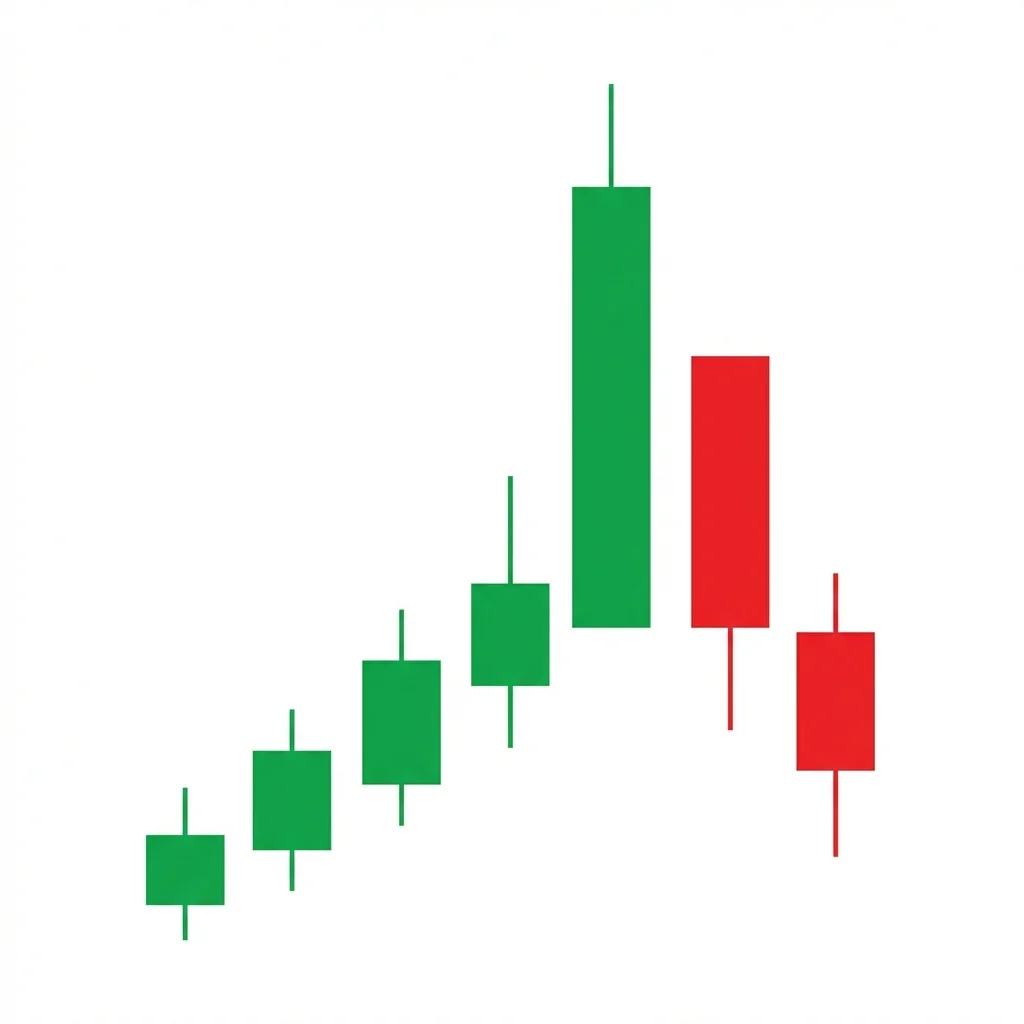
Bearish Counterattack Line
bearishReversalModerate
The Bearish Counterattack Line features a bullish candle followed by a bearish candle that gaps up at the open but closes back to the same level as the first candle's close, signaling that sellers 'counterattacked' the bullish advance.

Bearish Dark Cloud Cover
bearishReversalHigh
The Dark Cloud Cover is a two-candle bearish reversal pattern where a bearish candle opens above the prior bullish candle's high and closes below its midpoint, signaling that the bullish 'sky' is being covered by a bearish 'dark cloud.'

Bearish Doji Star
bearishReversalModerate
The Bearish Doji Star is a two-candle reversal pattern featuring a strong bullish candle followed by a doji that gaps above it, signaling that buying momentum has stalled and indecision has replaced conviction at the top of an uptrend.
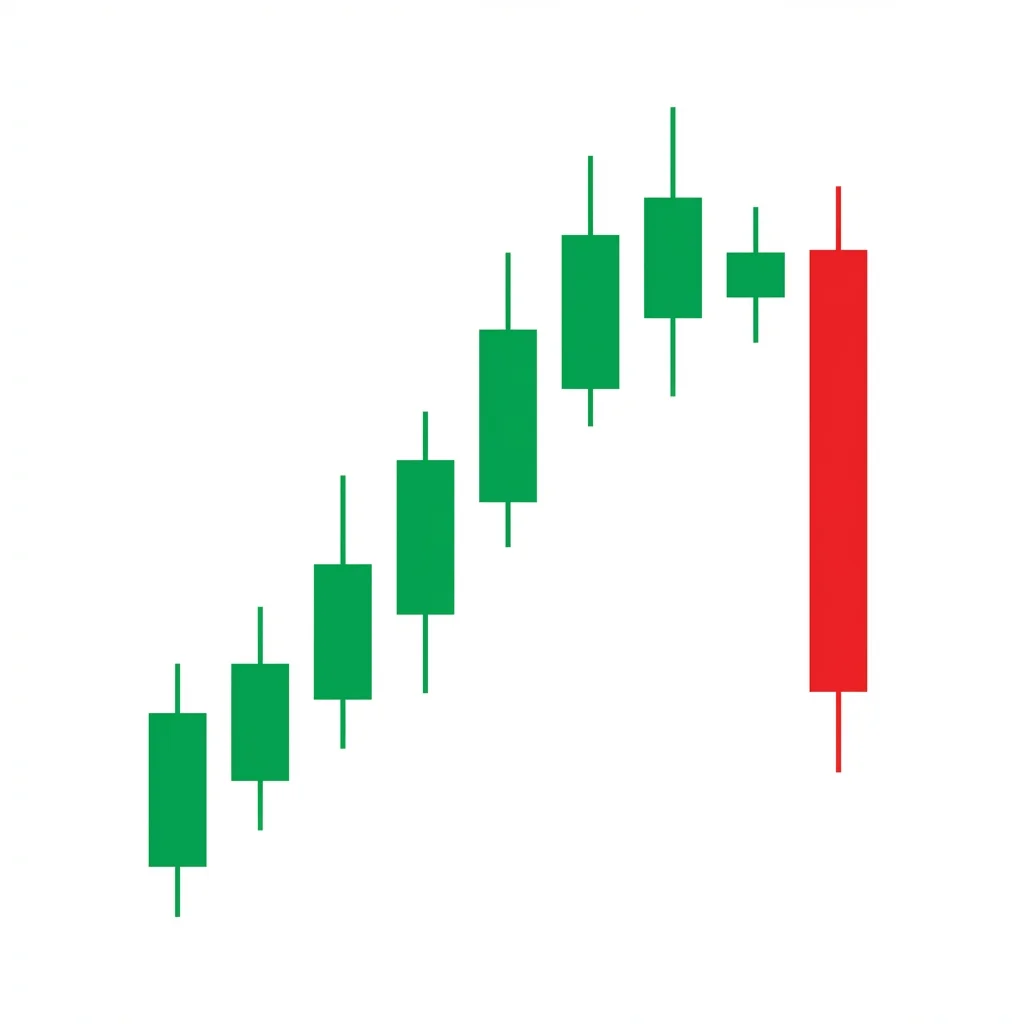
Bearish Engulfing
bearishReversalHigh
The Bearish Engulfing is one of the most powerful and commonly traded two-candle reversal patterns. A large bearish candle completely engulfs the prior bullish candle, demonstrating a decisive shift from buying to selling dominance.
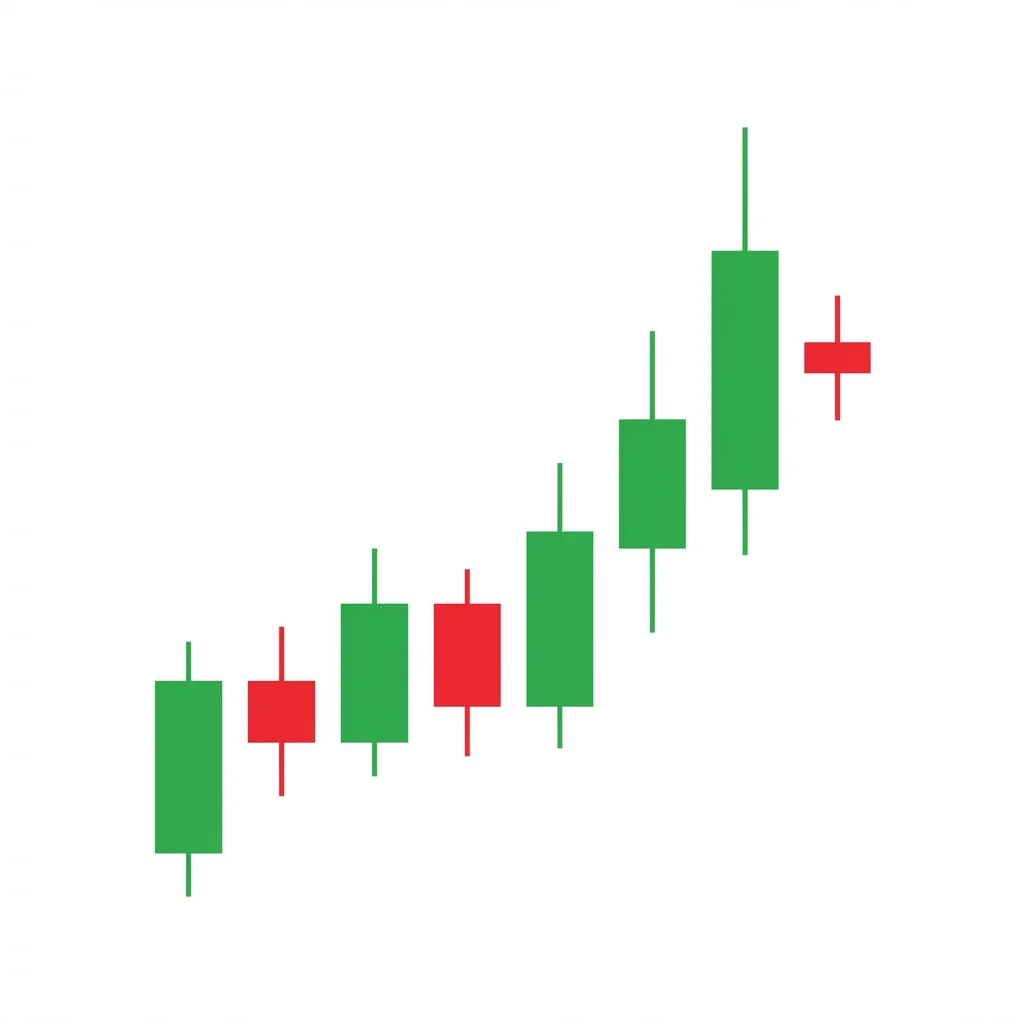
Bearish Harami Cross
bearishReversalModerate
The bearish harami cross is a two-candle reversal pattern where a large bullish candle is followed by a doji contained within the first candle's body. The doji represents complete indecision, making this a slightly stronger reversal signal than the standard harami.
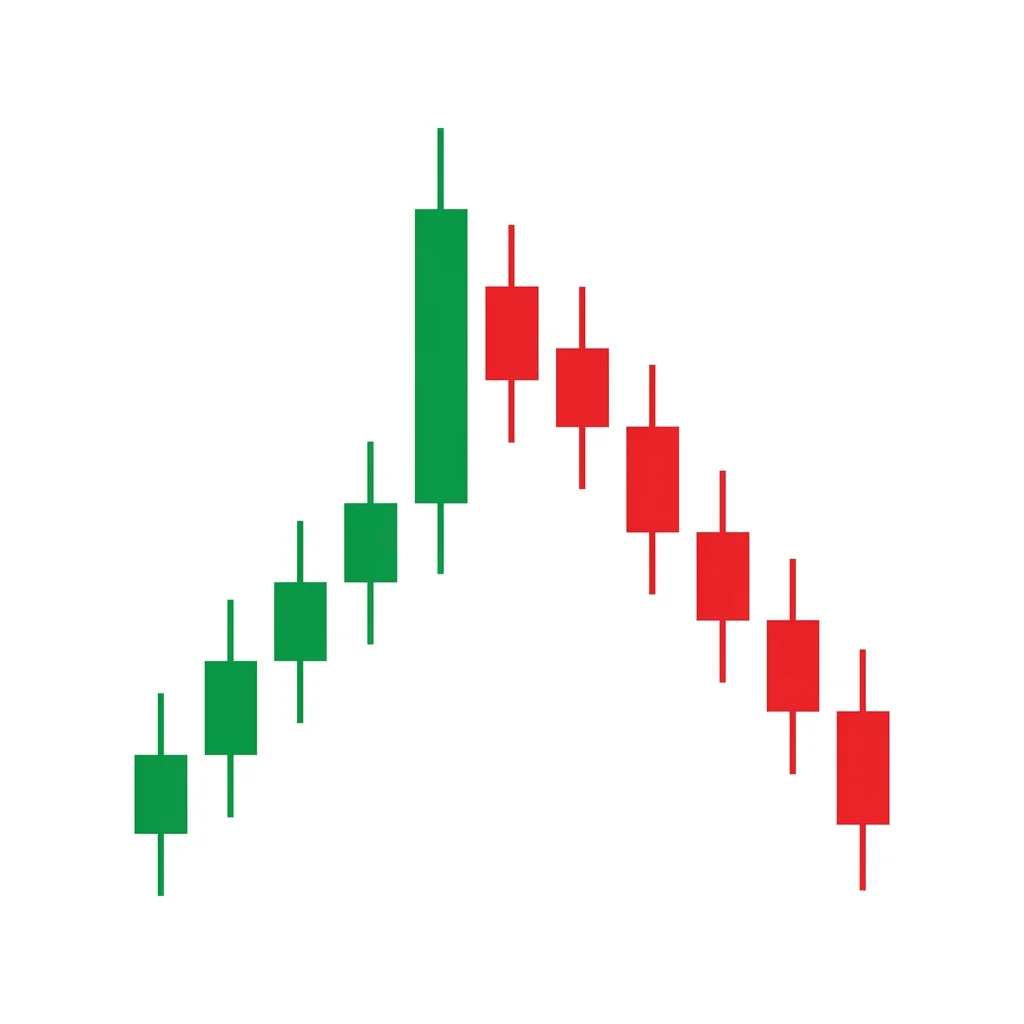
Bearish Harami
bearishReversalModerate
The bearish harami is a two-candle reversal pattern where a large bullish candle is followed by a small bearish candle entirely contained within the first candle's body. It signals waning buying momentum and potential trend reversal.
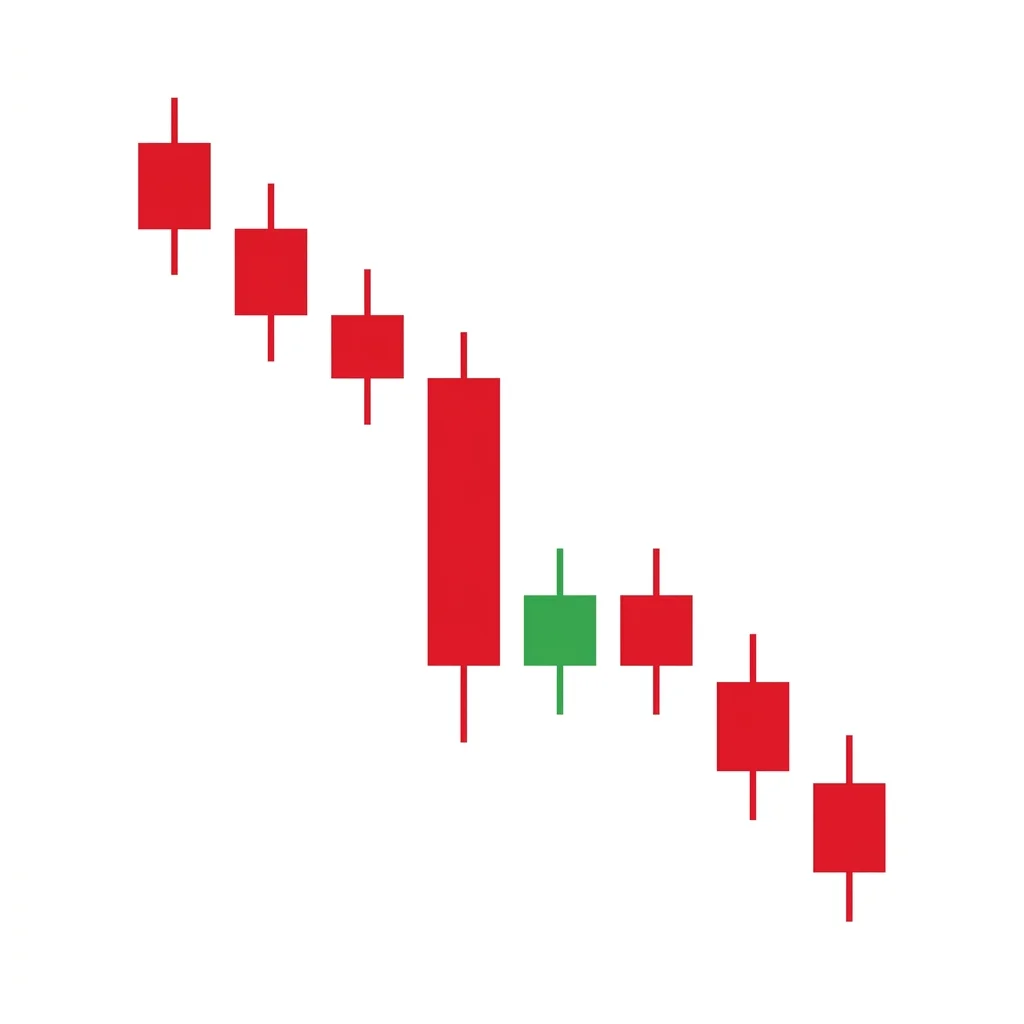
Bearish In Neck
bearishContinuationModerate
The bearish in neck pattern is a two-candle continuation pattern where a bullish second candle closes at or barely above the first bearish candle's close, showing insufficient buying power to reverse the downtrend.
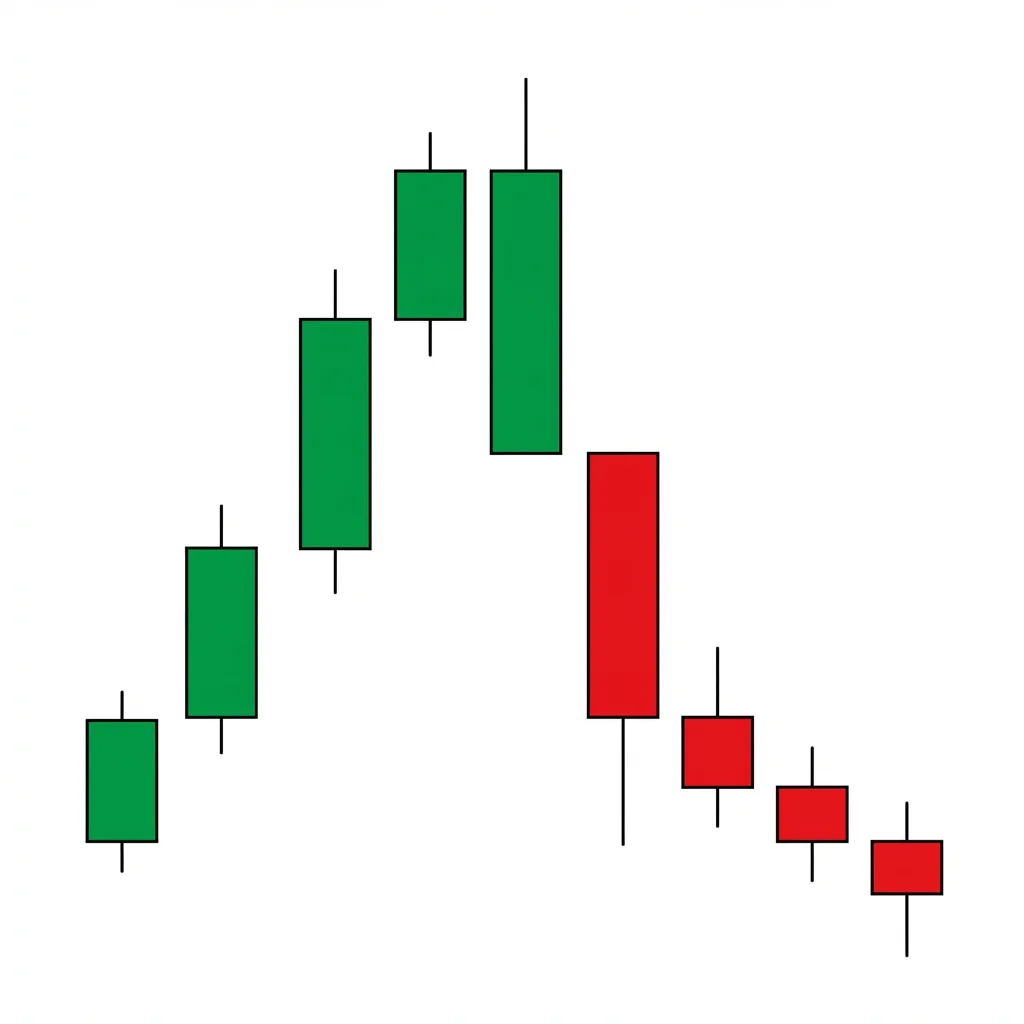
Bearish Kicker
bearishReversalVery High
The bearish kicker is one of the most powerful two-candle reversal patterns. A bullish candle is followed by a bearish candle that gaps down to open at or below the first candle's open, signaling an immediate and complete sentiment reversal.
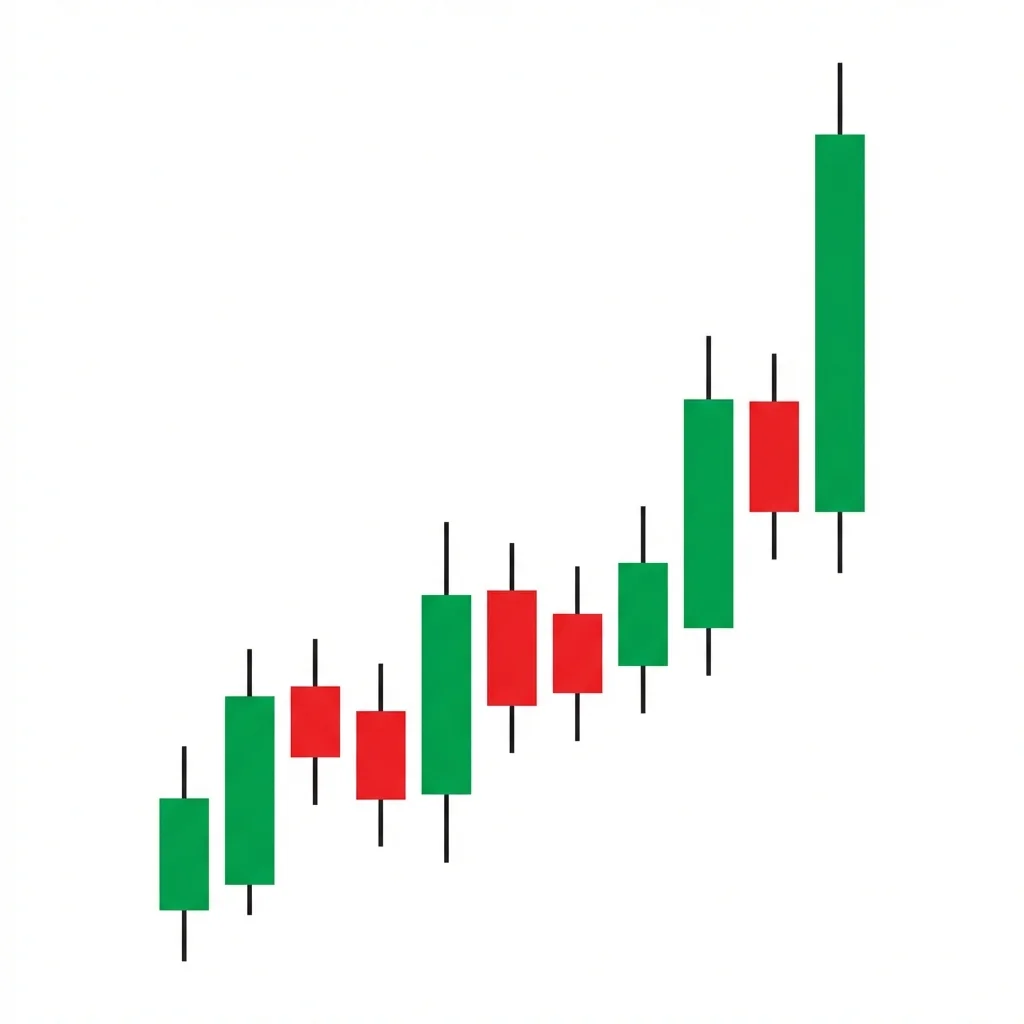
Bearish Last Engulfing Top
bearishReversalModerate
The last engulfing top is a deceptive pattern where a bullish engulfing appears at the top of an uptrend, but rather than signaling continuation, it represents the last gasp of buying before a reversal.
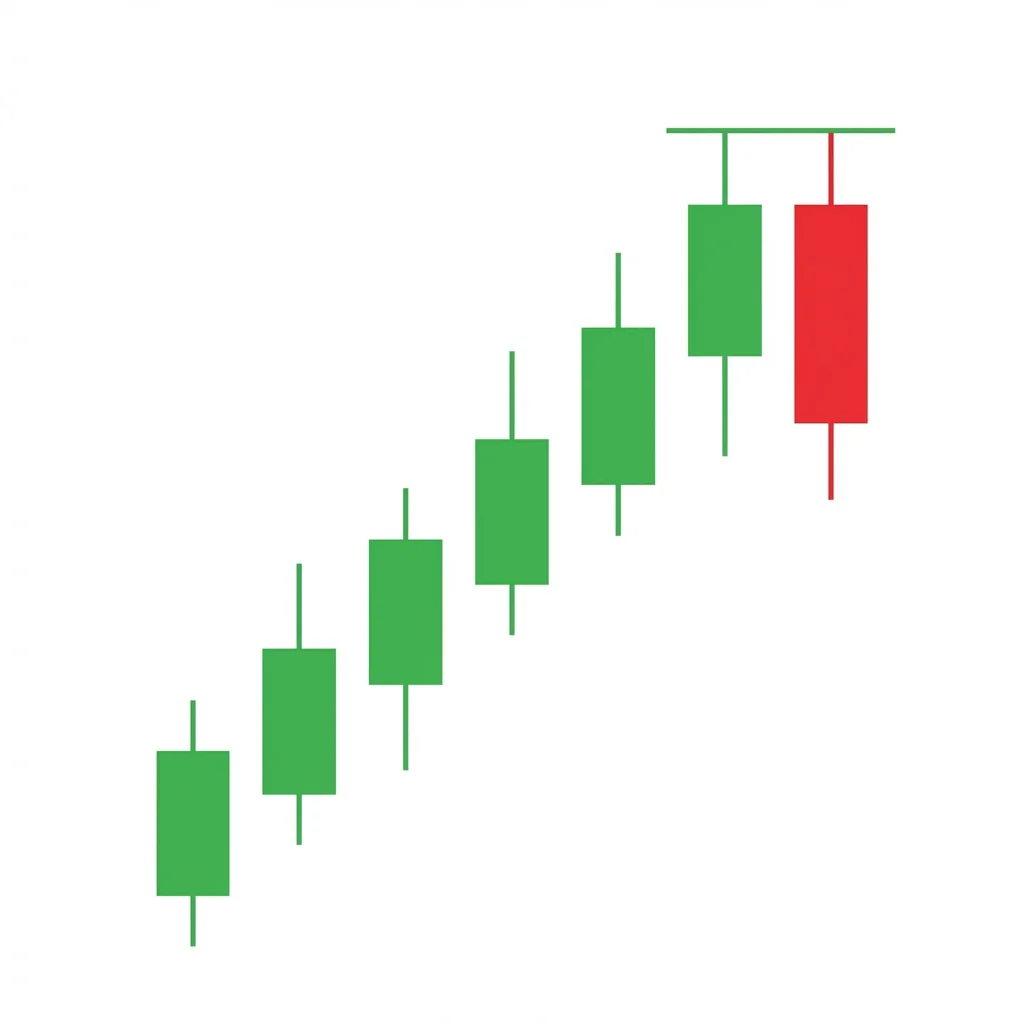
Bearish Matching High
bearishReversalModerate
The bearish matching high is a two-candle reversal pattern where two consecutive candles close at the same or very near the same price, creating a resistance level that signals the uptrend may be stalling.
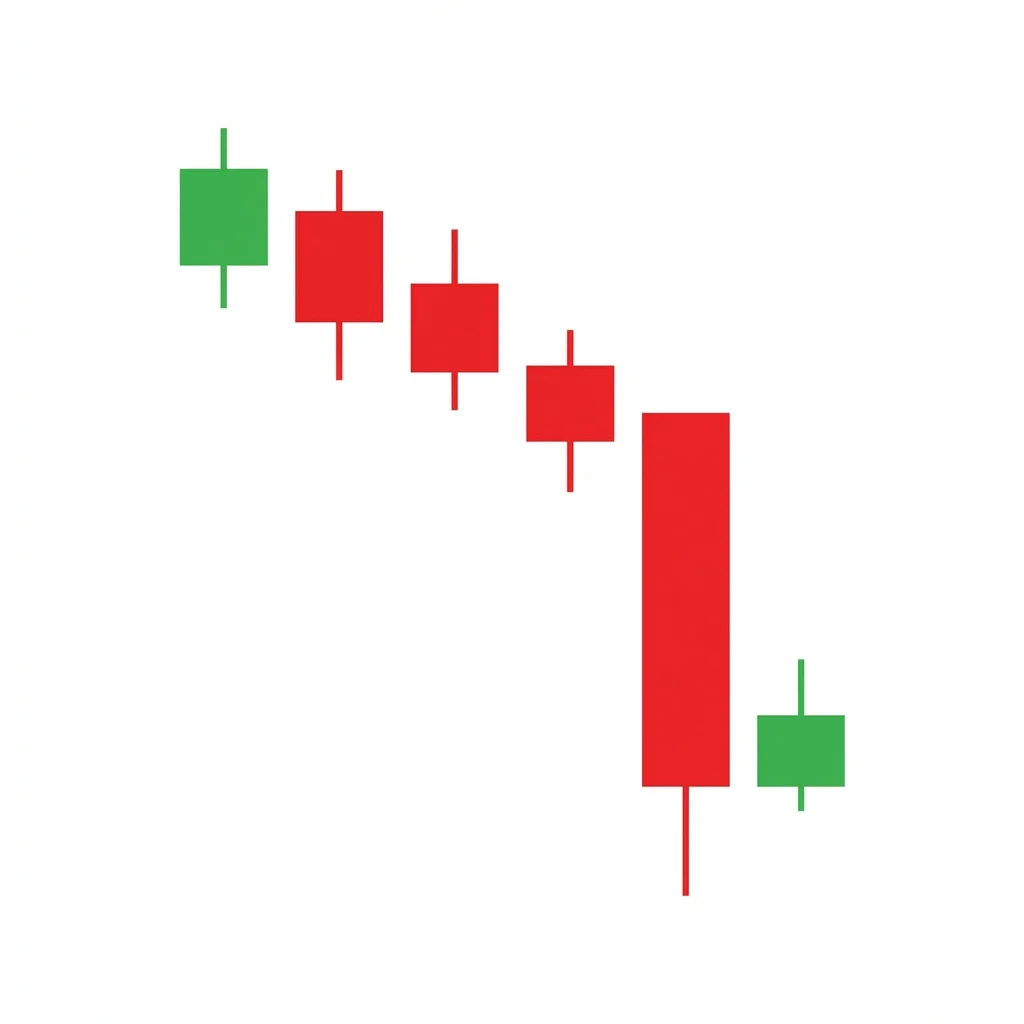
Bearish On Neck
bearishContinuationModerate
The bearish on neck is a two-candle continuation pattern where a bullish second candle closes at the first bearish candle's low, showing that buyers could only push price to the weakest resistance level — the prior candle's low.
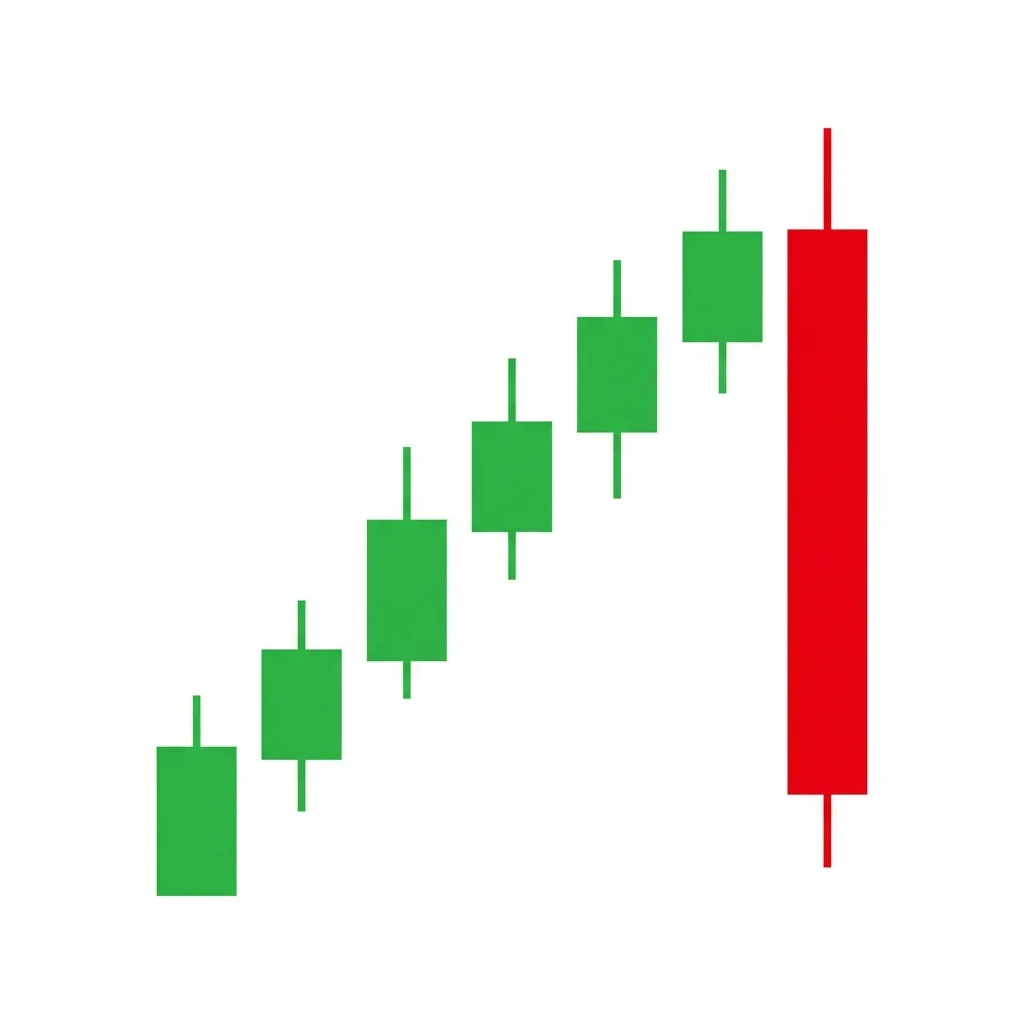
Bearish Outside Reversal
bearishReversalHigh
A bearish outside reversal occurs when a candle's range completely engulfs the prior candle's entire range (highs and lows), closing near its low. It signals that sellers have overwhelmed buyers and a reversal is likely.
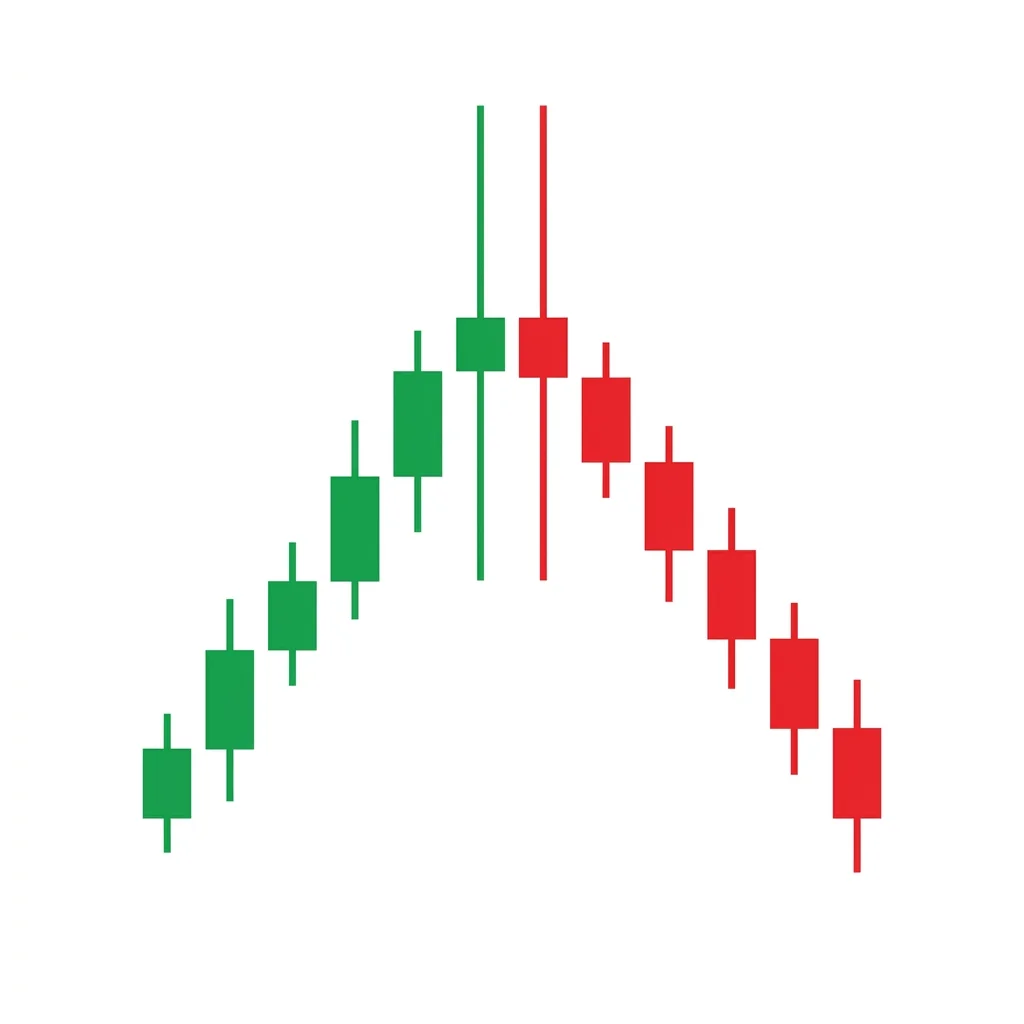
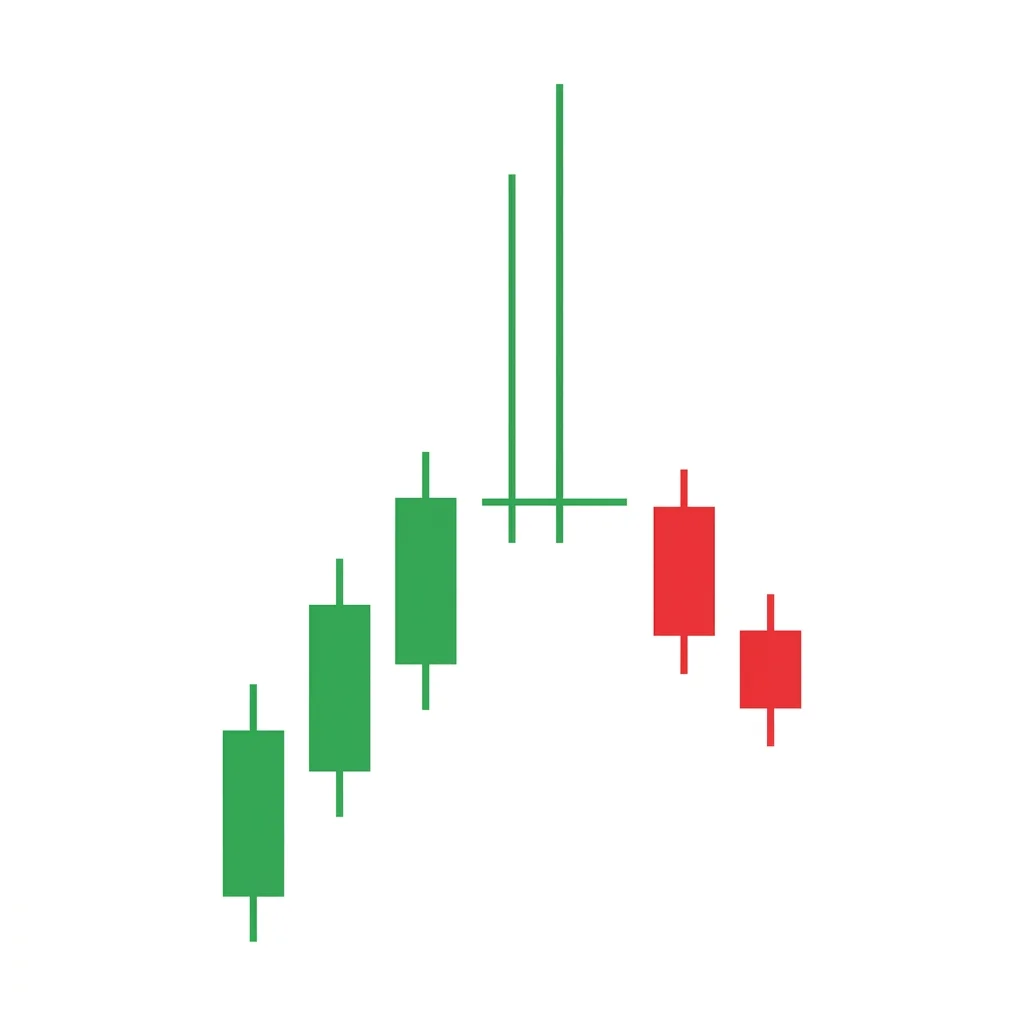
Bearish Pipe Top
bearishReversalModerate
The bearish pipe top consists of two adjacent candles with long upper shadows reaching similar highs, showing that sellers twice defended a price level. This double rejection signals strong overhead resistance and an impending reversal.

Bearish Separating Lines
bearishContinuationModerate
Bearish separating lines consist of a bullish candle followed by a bearish candle that opens at the same price as the first candle's open. The matching opens 'separate' or 'divide' the two candles, and the bearish second candle confirms the downtrend will continue.

Bearish Thrusting
bearishContinuationModerate
The bearish thrusting pattern is a two-candle continuation signal in a downtrend. A long bearish candle is followed by a bullish candle that opens below the first candle's low but closes below its midpoint, showing insufficient buying strength to reverse the trend.
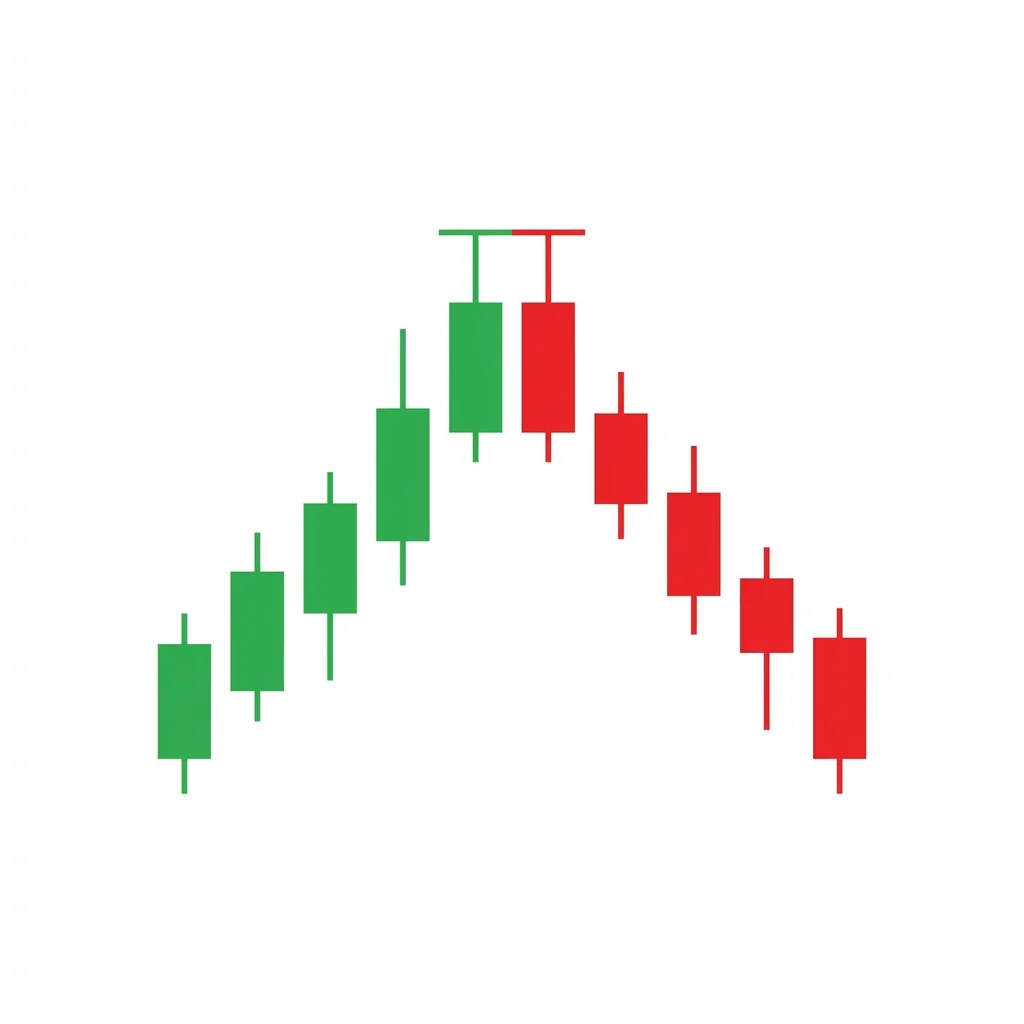
Bearish Tweezer Top
bearishReversalModerate
The tweezer top is a two-candle bearish reversal pattern where two consecutive candles reach the same high price and are rejected. The matching highs demonstrate a precise resistance level where sellers consistently overwhelm buyers.
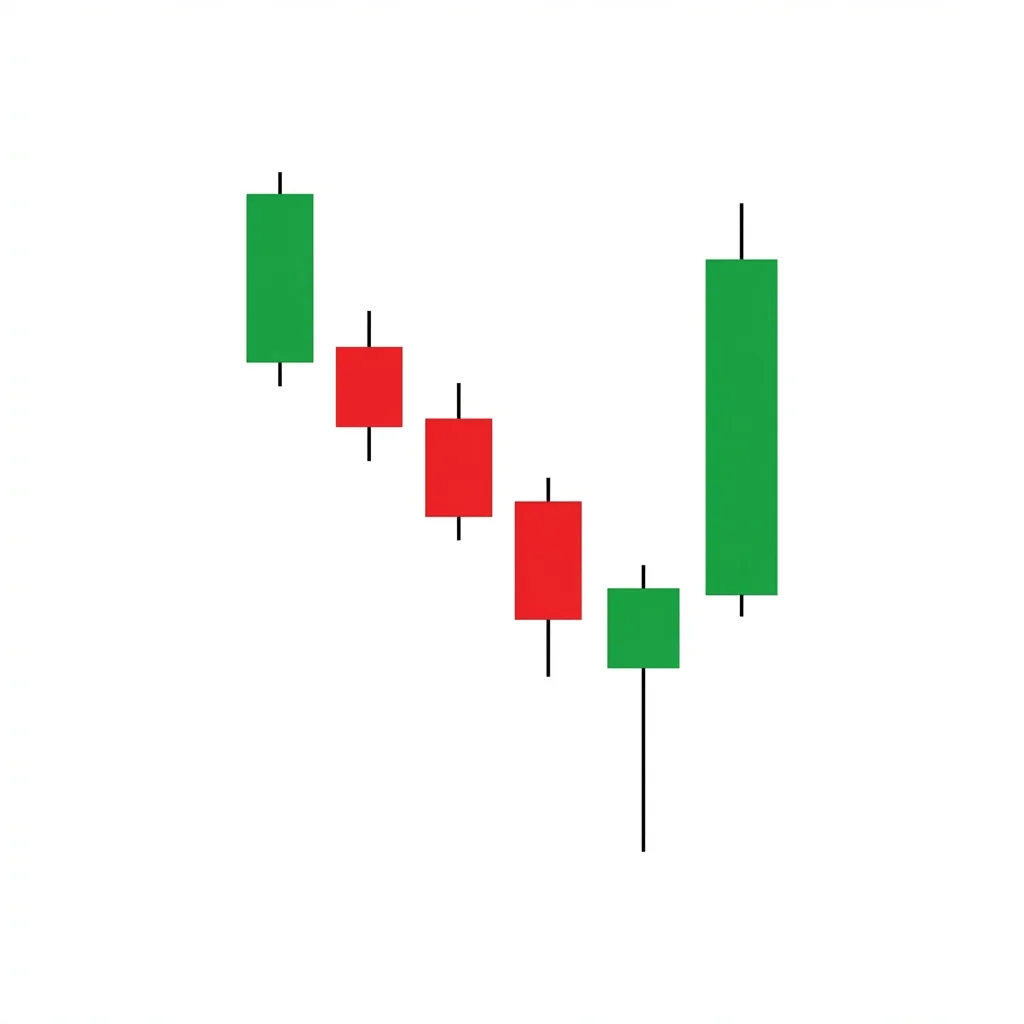
Bullish Confirmed Hammer
bullishReversalHigh
The Bullish Confirmed Hammer adds a confirmation candle to the classic hammer pattern, significantly improving reliability by proving that buyers who defended the lows maintained control into the next session.
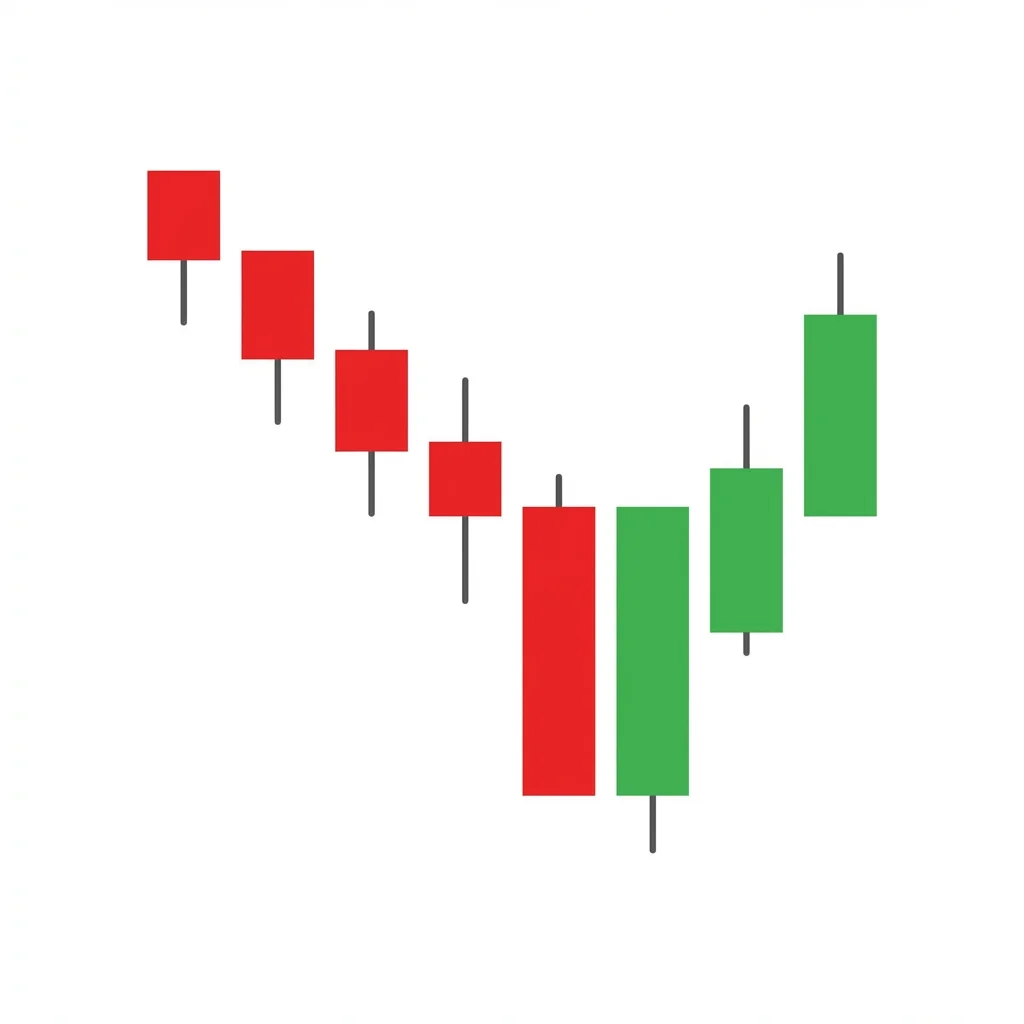
Bullish Counterattack Line
bullishReversalModerate
The Bullish Counterattack Line is a two-candle reversal where a gap-down bullish candle rallies to close at exactly the same level as the previous bearish candle close, showing that buyers have matched sellers point for point.
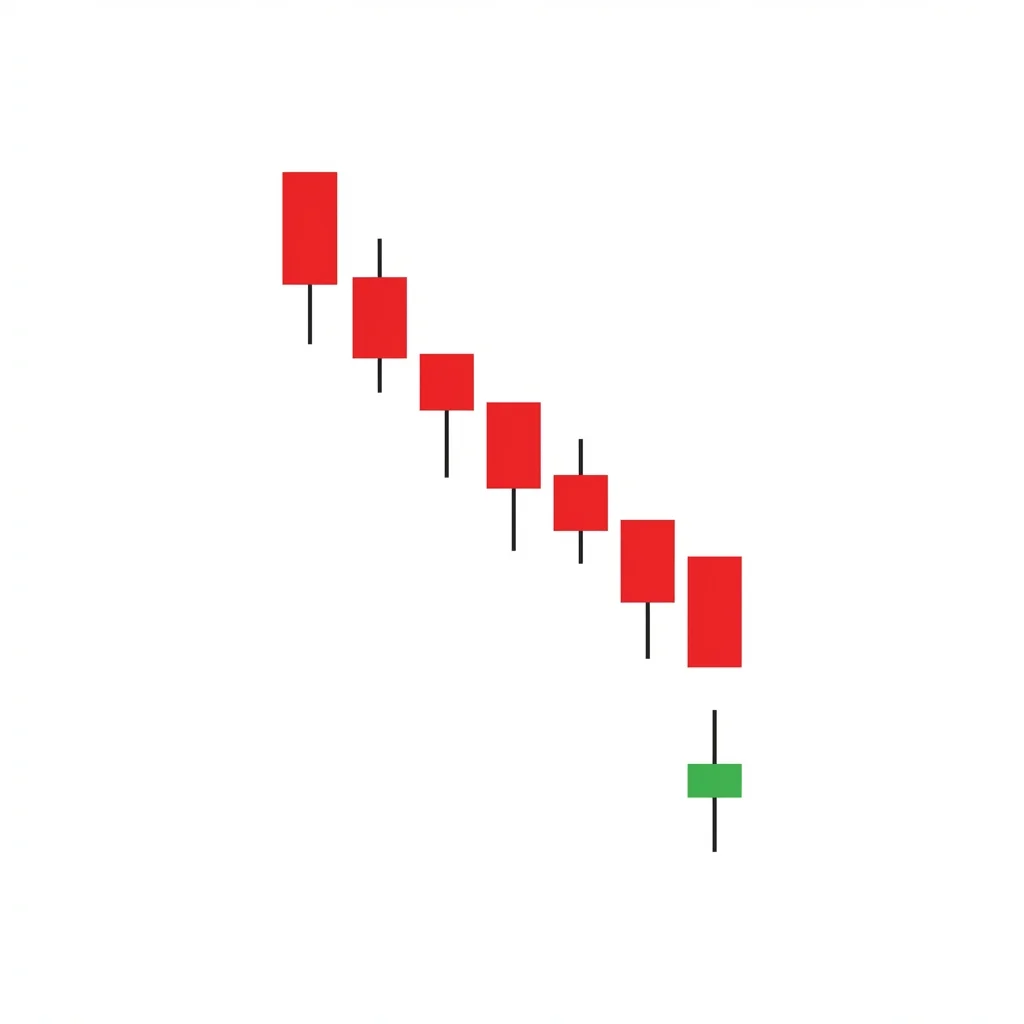
Bullish Doji Star
bullishReversalModerate
The Bullish Doji Star is a two-candle pattern where a doji gaps below a bearish candle, signaling that selling momentum has stalled and a potential reversal is forming.
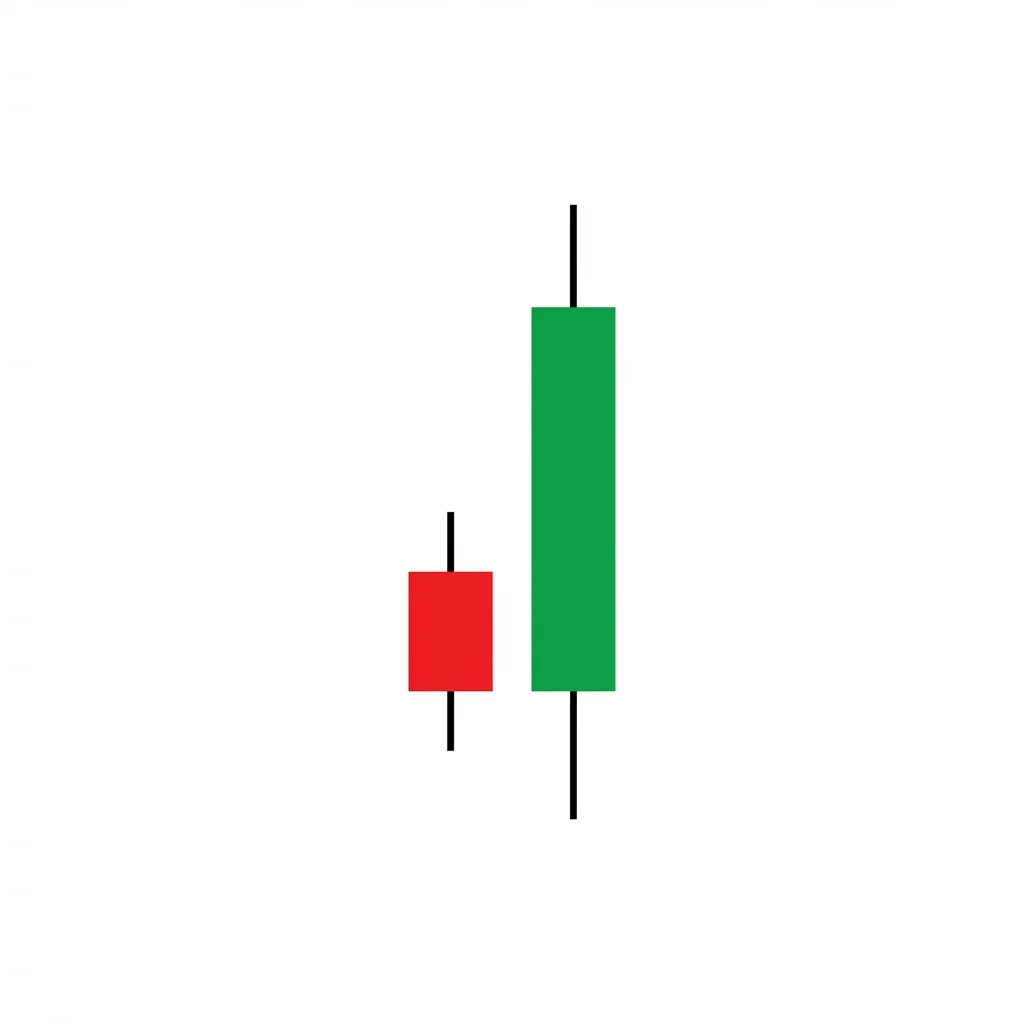
Bullish Engulfing
bullishReversalHigh
The Bullish Engulfing is one of the most popular and reliable two-candle reversal patterns. A large bullish candle completely engulfs the prior bearish candle body, signaling a decisive shift from selling to buying control.

Bullish Harami Cross
bullishReversalModerate
The Bullish Harami Cross is a two-candle reversal pattern where a doji forms within the body of a preceding large bearish candle, indicating strong indecision and a potential bottom.

Bullish Harami
bullishReversalModerate
The Bullish Harami is a two-candle reversal pattern where a small bullish candle is entirely contained within the body of the preceding large bearish candle, signaling a potential end to a downtrend.
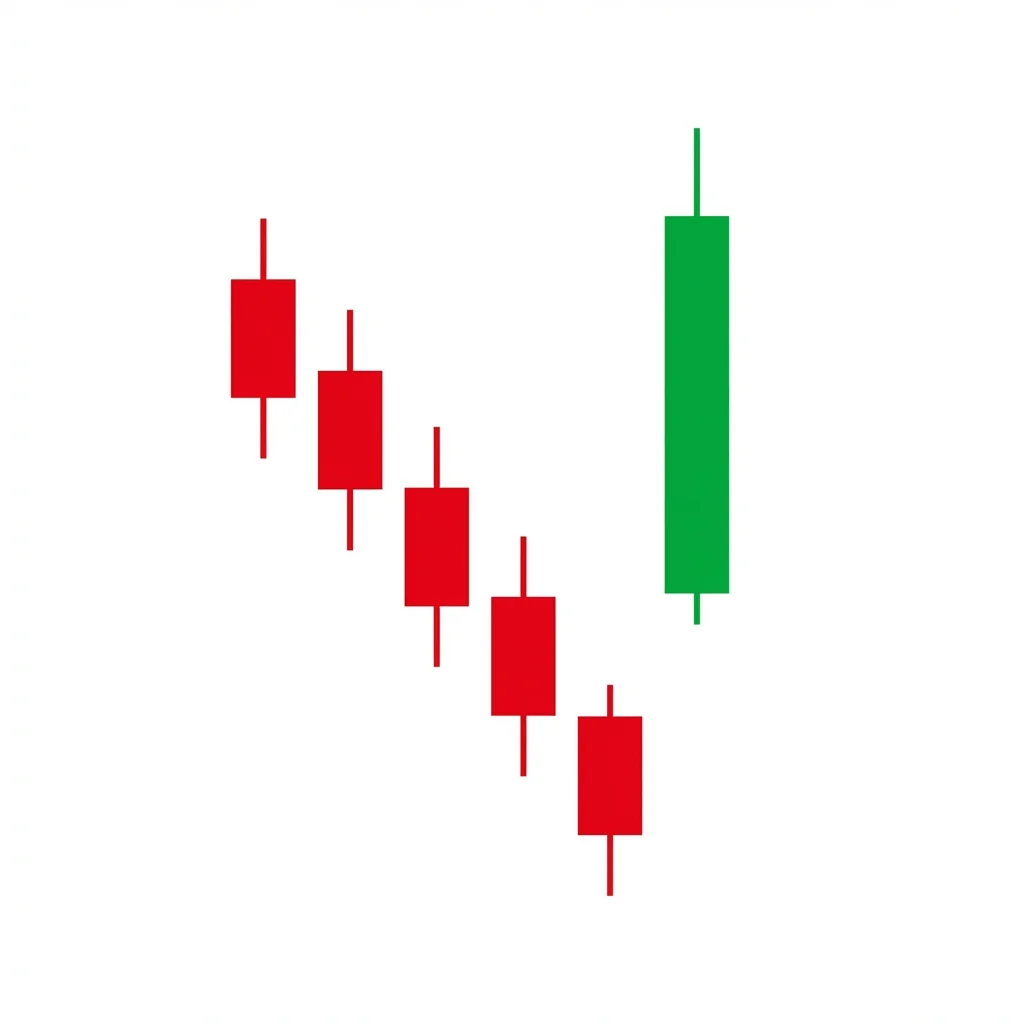
Bullish Kicker
bullishReversalVery High
The Bullish Kicker is one of the strongest two-candle reversal patterns. A bearish candle is followed by a bullish candle that gaps up to open at or above the prior candle's open, signaling an immediate and powerful shift in sentiment.

Bullish Last Engulfing Bottom
bullishReversalModerate
The Last Engulfing Bottom is a contrarian pattern where a bearish engulfing candle at the bottom of a downtrend turns out to be the final bearish push before a reversal — the bears' 'last gasp.'
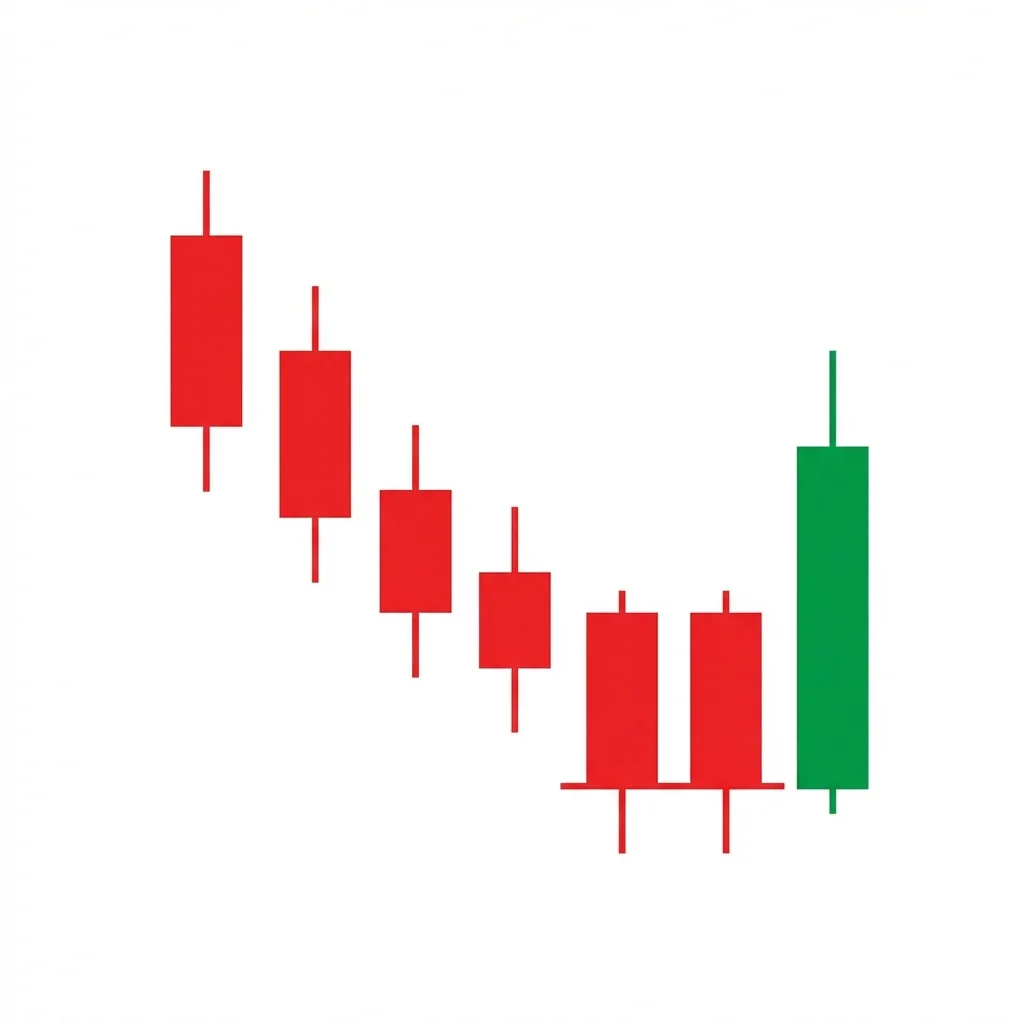
Bullish Matching Low
bullishReversalModerate
The Matching Low is a two-candle bullish reversal pattern where two consecutive bearish candles close at the same price, indicating a support level that sellers cannot breach.
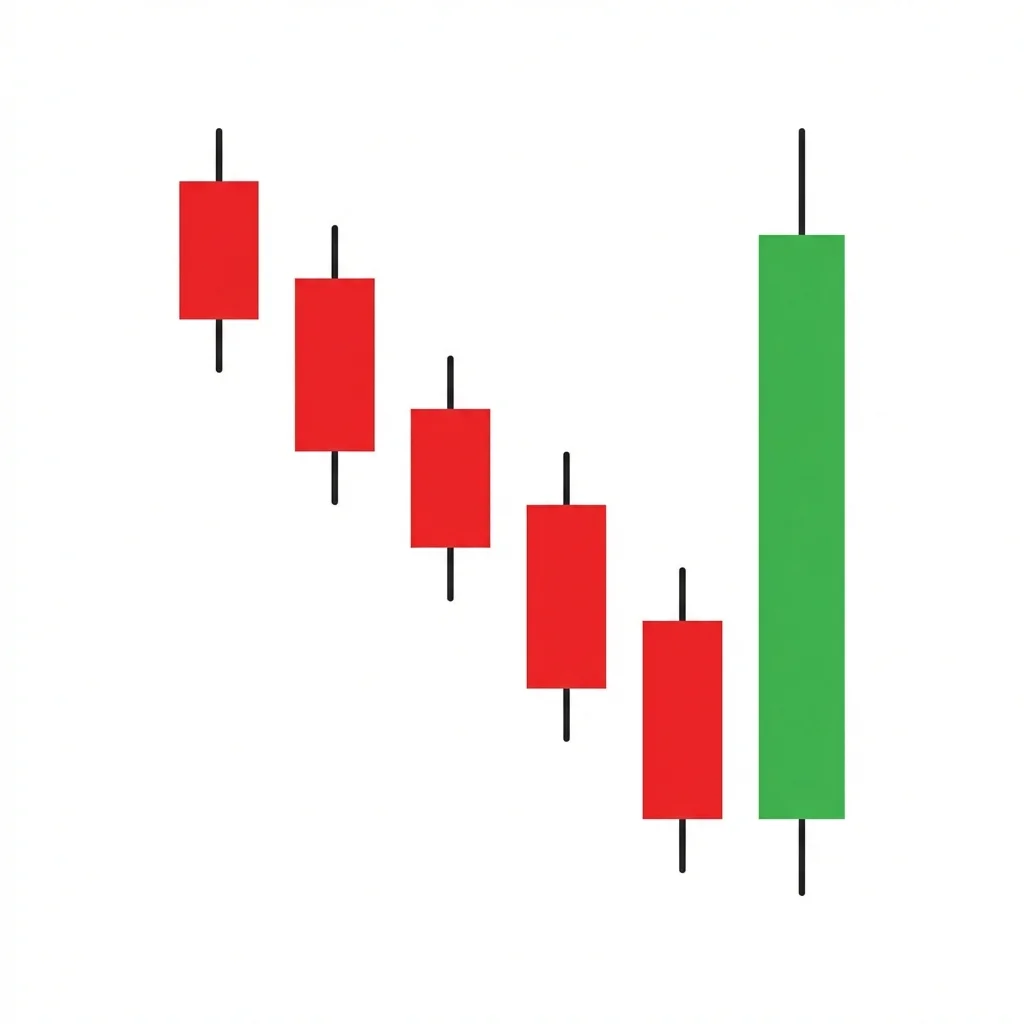
Bullish Outside Reversal
bullishReversalHigh
The Bullish Outside Reversal is a two-bar pattern where the second bar has a wider range than the first, trading both below its low and above its high before closing bullish. This dramatic range expansion signals a powerful shift from bearish to bullish control.
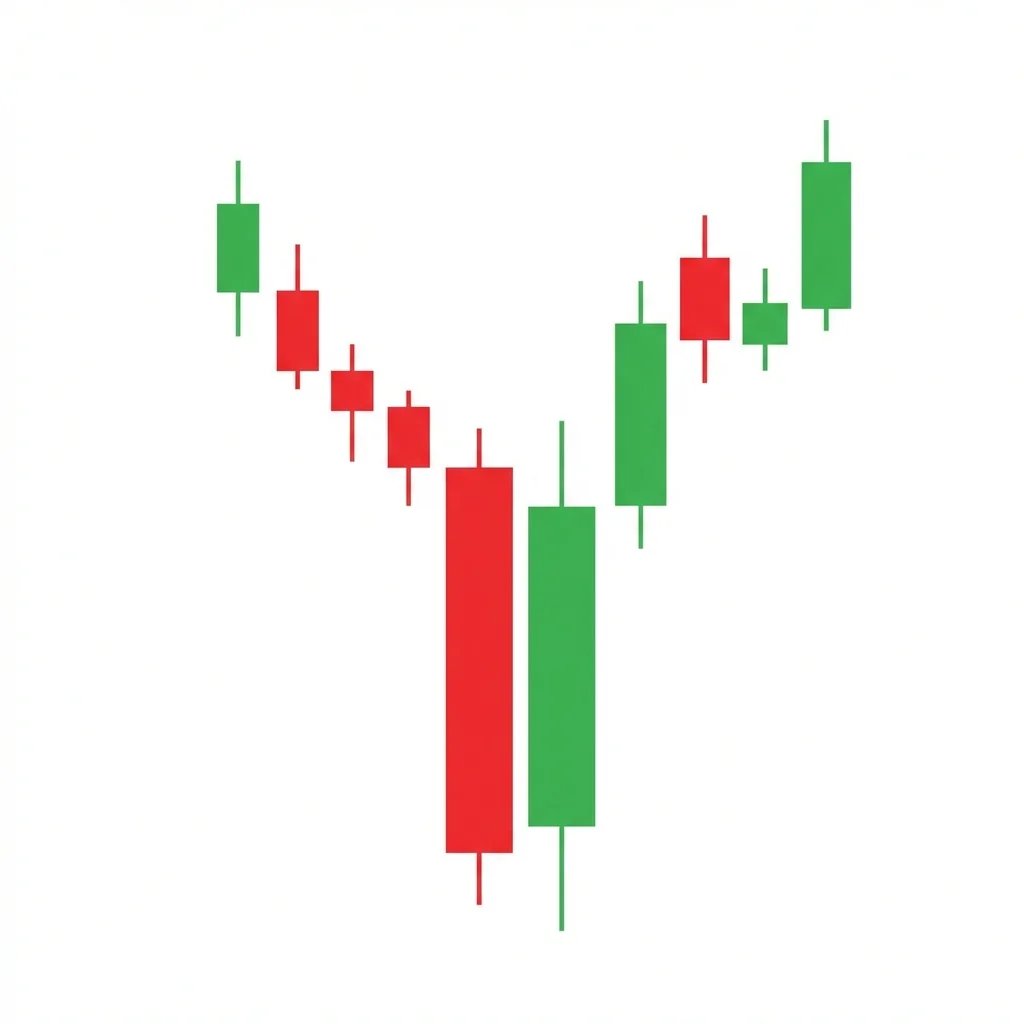
Bullish Piercing Line
bullishReversalModerate
The Piercing Line is a two-candle bullish reversal pattern where a bearish candle is followed by a bullish candle that opens below the low and 'pierces' above the midpoint of the first candle's body, showing strong buying recovery.
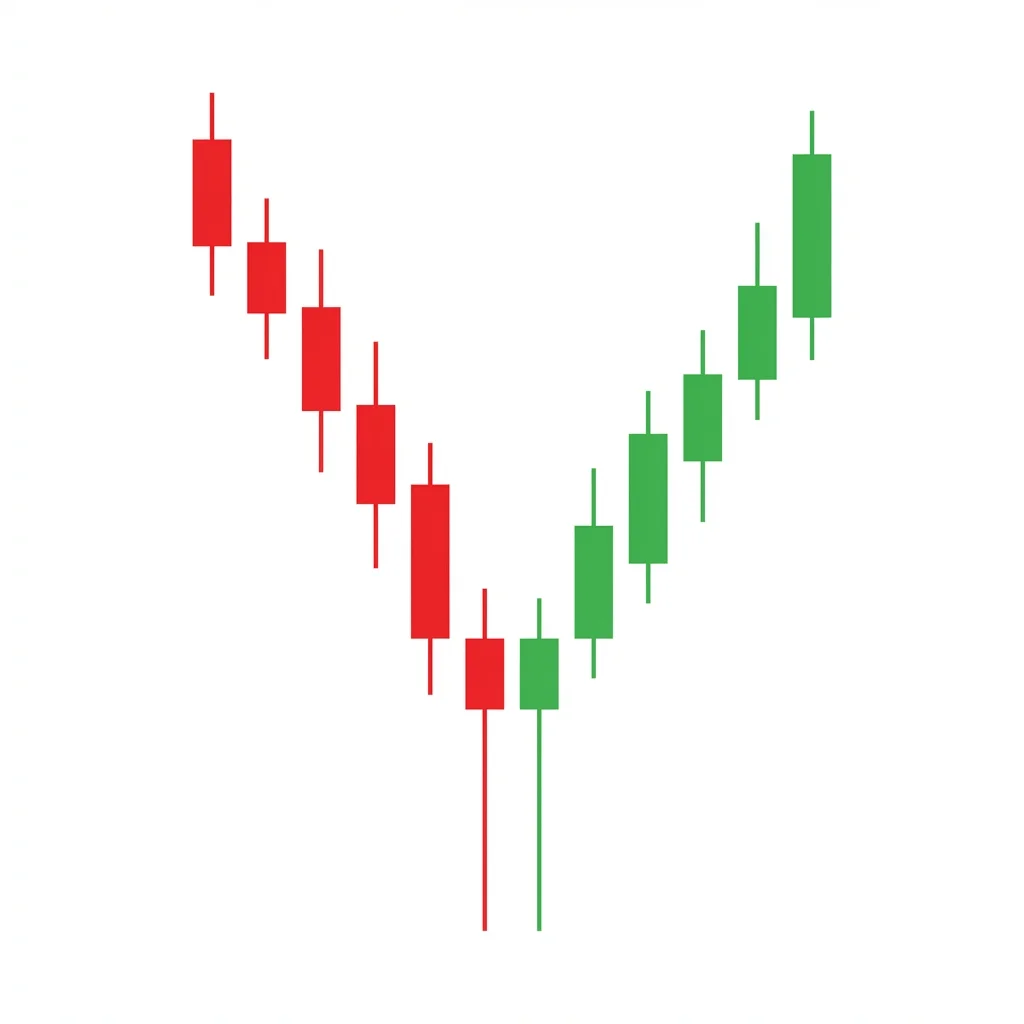
Bullish Pipe Bottom
bullishReversalHigh
The Pipe Bottom is a two-candle bullish reversal pattern featuring two adjacent candles with long lower shadows at similar levels, resembling parallel pipes. The double rejection of lower prices creates a powerful support floor signaling a potential bottom.

Bullish Separating Lines
bullishContinuationModerate
The Bullish Separating Lines is a two-candle continuation pattern where a bearish pullback candle is followed by a bullish candle opening at the same level, signaling that the uptrend will resume.
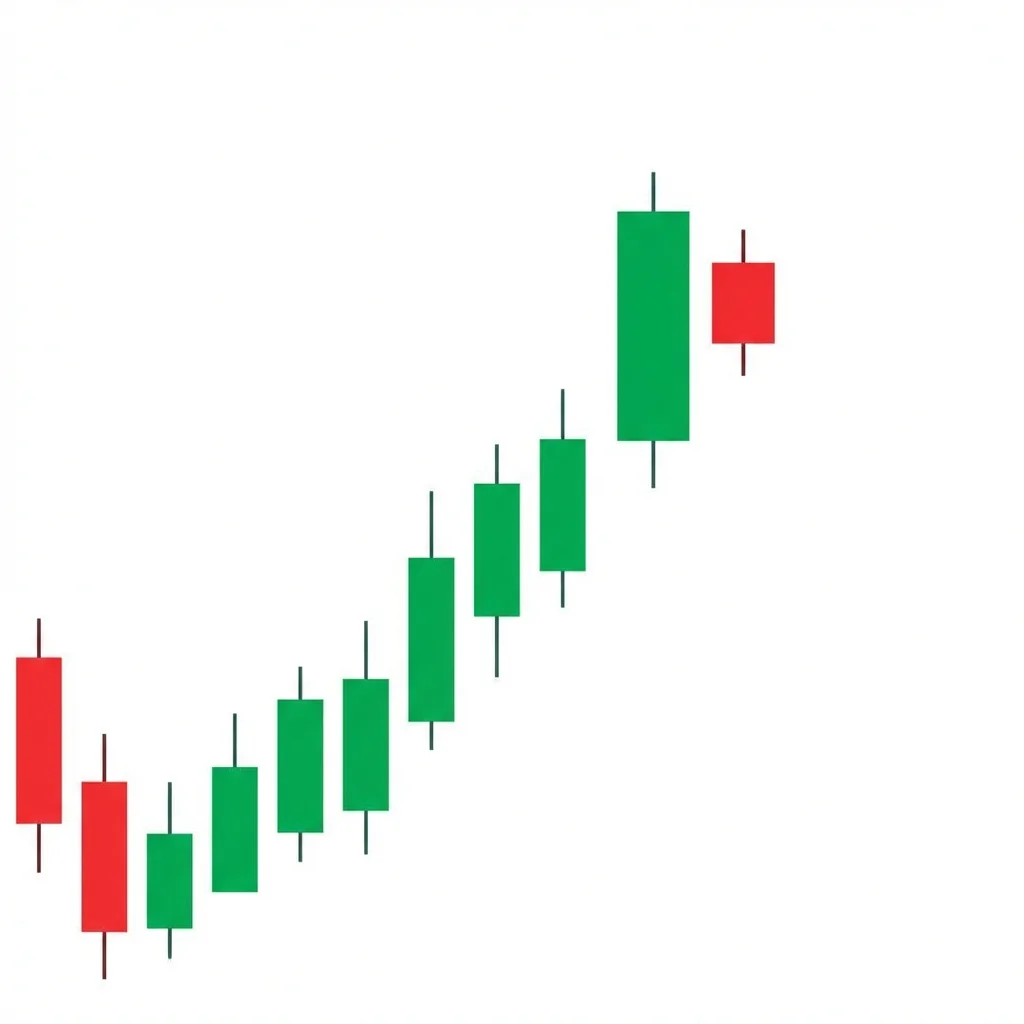
Inside Bar
neutralIndecisionModerate
The Inside Bar is a two-candle pattern where the second candle's entire range is contained within the first candle, signaling a contraction in volatility and a pending breakout in either direction.
Triple Candle(28)
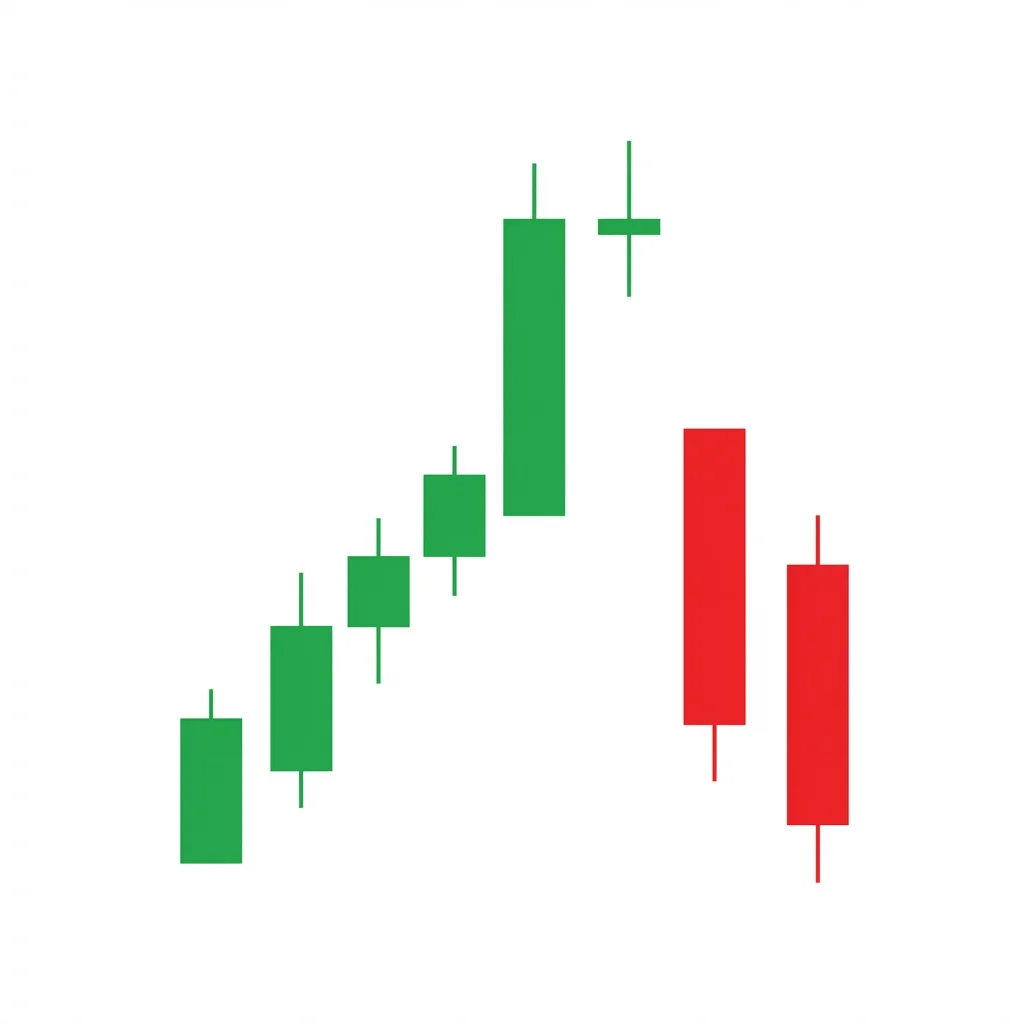
Bearish Abandoned Baby
bearishReversalVery High
The Bearish Abandoned Baby is one of the rarest and most reliable top reversal patterns in candlestick analysis. It features a doji that is completely isolated by gaps on both sides, signaling an abrupt and dramatic shift from buying to selling pressure.
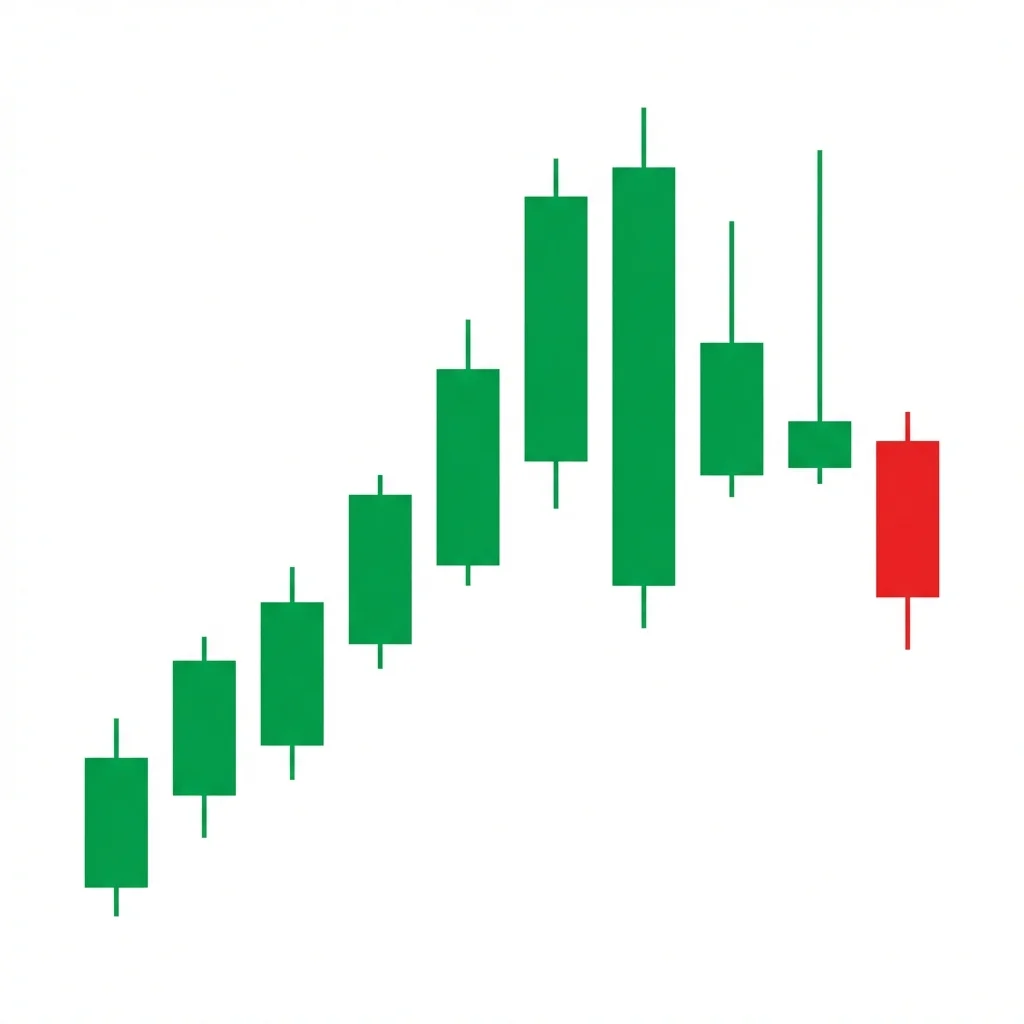
Bearish Advance Block
bearishReversalModerate
The Bearish Advance Block shows three consecutive bullish candles with progressively smaller bodies and longer upper shadows, signaling that buying momentum is weakening and a reversal or consolidation is likely.

Bearish Deliberation
bearishReversalModerate
The Deliberation pattern shows two strong bullish candles followed by a small-bodied third candle, indicating that the uptrend is 'deliberating' — the bulls have stalled and are uncertain about pushing higher.
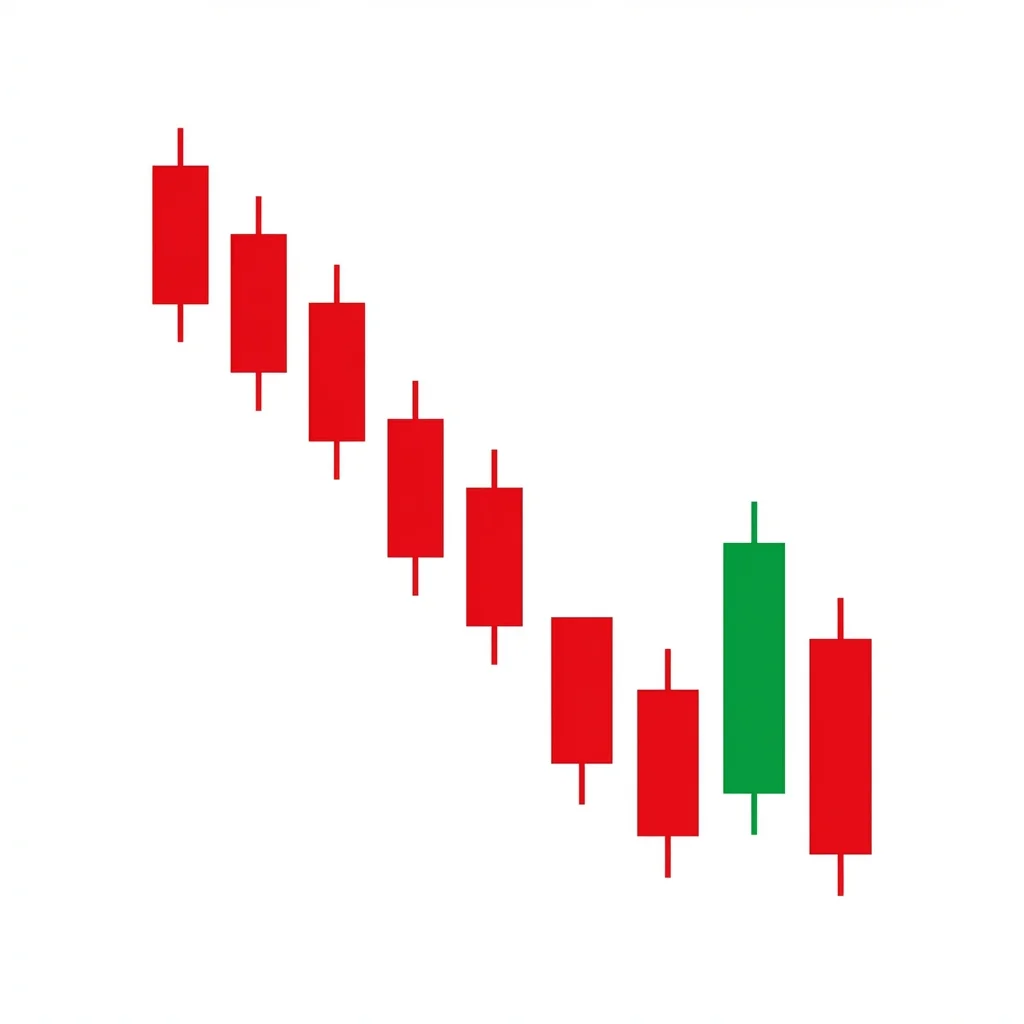
Bearish Downside Tasuki Gap
bearishContinuationModerate
The Downside Tasuki Gap is a bearish continuation pattern in a downtrend where a gap-down is partially but not completely filled by a bullish candle, suggesting that the downtrend will continue as the gap acts as resistance.
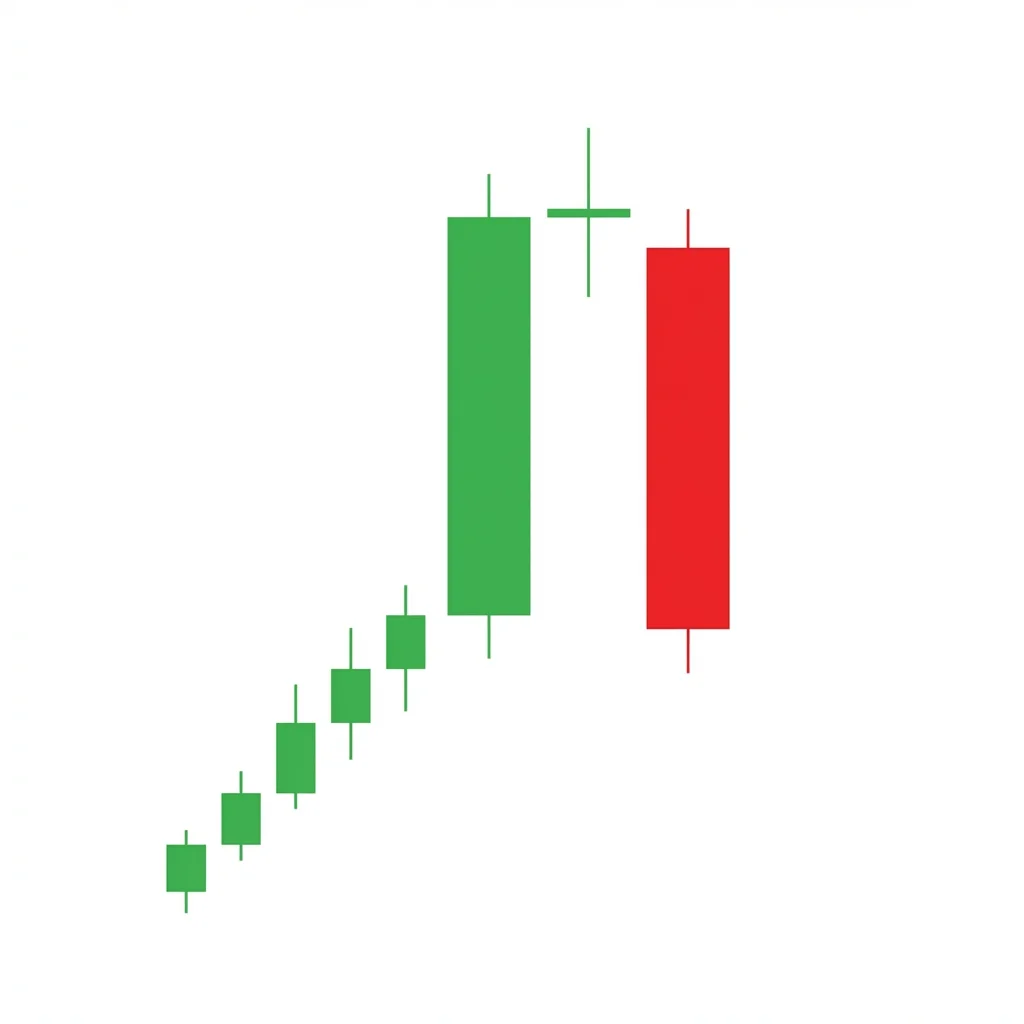
Bearish Evening Doji Star
bearishReversalVery High
The Evening Doji Star is a top-tier three-candle bearish reversal pattern. The doji in the star position represents the pivot point between bullish confidence (first candle) and bearish dominance (third candle), making it one of the most reliable reversal signals in candlestick analysis.

Bearish Identical Three Crows
bearishContinuationHigh
The identical three crows pattern consists of three bearish candles where each opens at or near the previous candle's close, creating a staircase-like decline. It is a stronger variant of the three black crows with more specific opening criteria.
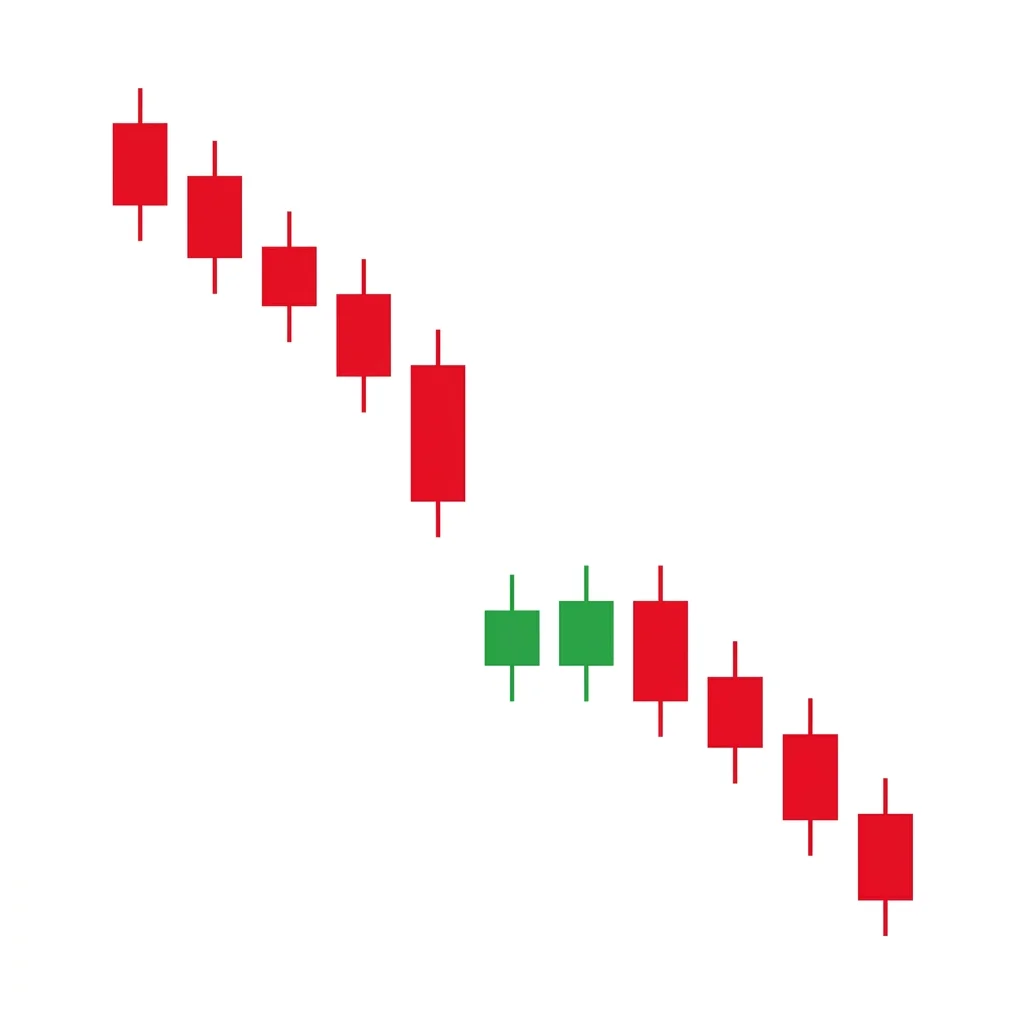
Bearish Side-by-Side White Lines
bearishContinuationModerate
Bearish side-by-side white lines is a rare three-candle continuation pattern in a downtrend. A bearish candle is followed by two similar-sized bullish candles that gap down. Despite the bullish candles, the gap is not filled, signaling that sellers maintain control.
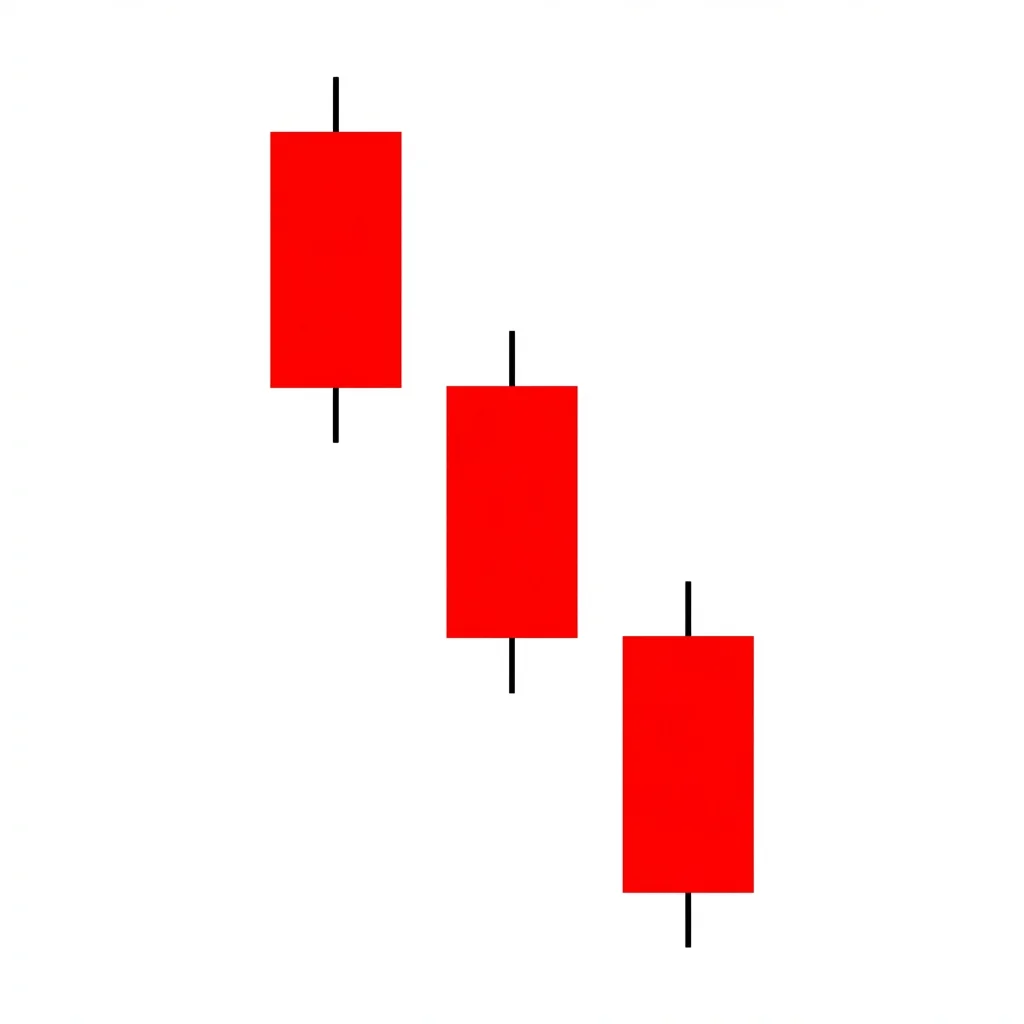
Bearish Three Black Crows
bearishReversalVery High
Three black crows is a powerful bearish reversal pattern consisting of three consecutive long bearish candles, each opening within the prior candle's body and closing near its low. It signals strong, persistent selling pressure and a likely trend reversal.
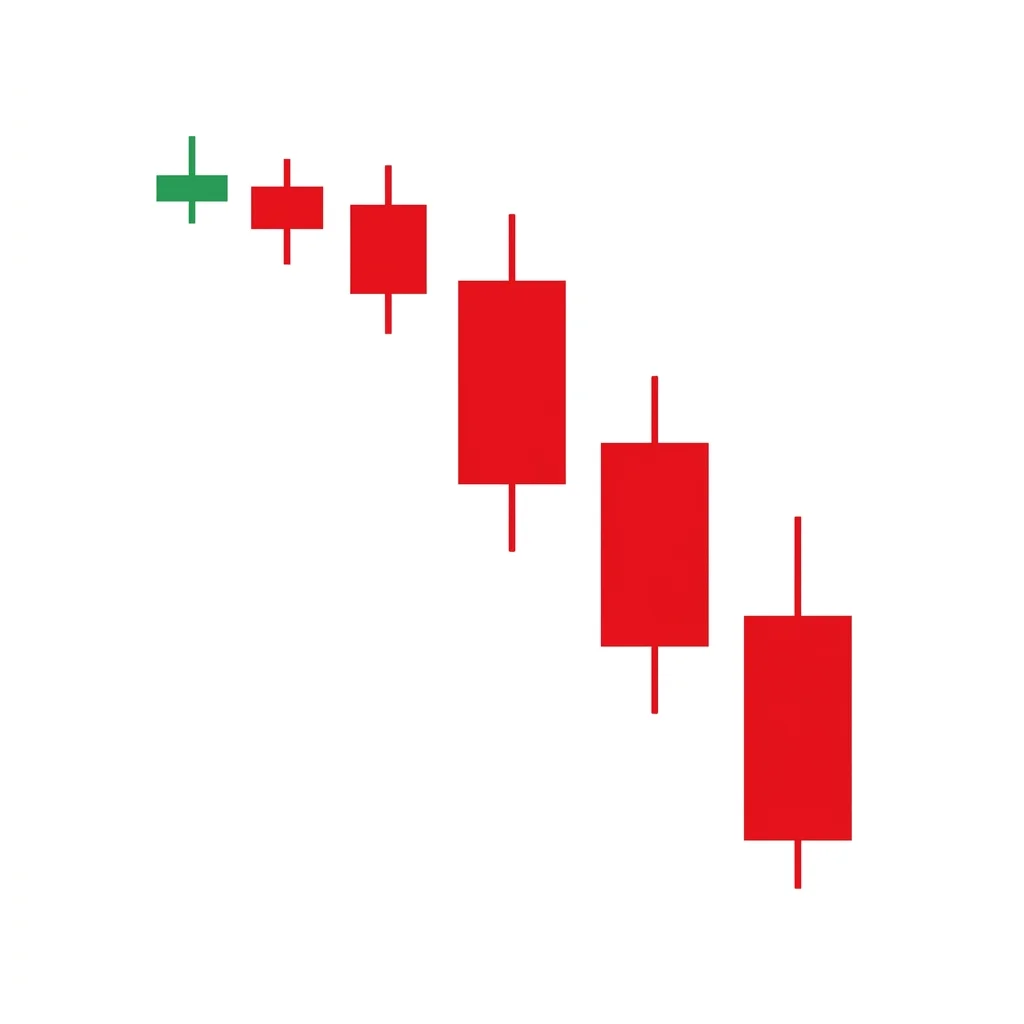
Bearish Three Declining Soldiers
bearishReversalModerate
Three declining soldiers feature three consecutive bearish candles with progressively smaller bodies, indicating that while selling continues, its momentum is weakening. The pattern signals a reversal but with less conviction than three black crows.

Bearish Three Inside Down
bearishReversalHigh
The three inside down is a confirmed bearish harami pattern. A long bullish candle is followed by a smaller bearish candle inside its body, then a third bearish candle closes below the first candle's low, providing definitive reversal confirmation.

Bearish Three Outside Down
bearishReversalHigh
The three outside down is a confirmed bearish engulfing pattern. A small bullish candle is engulfed by a larger bearish candle, then a third bearish candle closes below the second candle's low, providing definitive confirmation of the reversal.
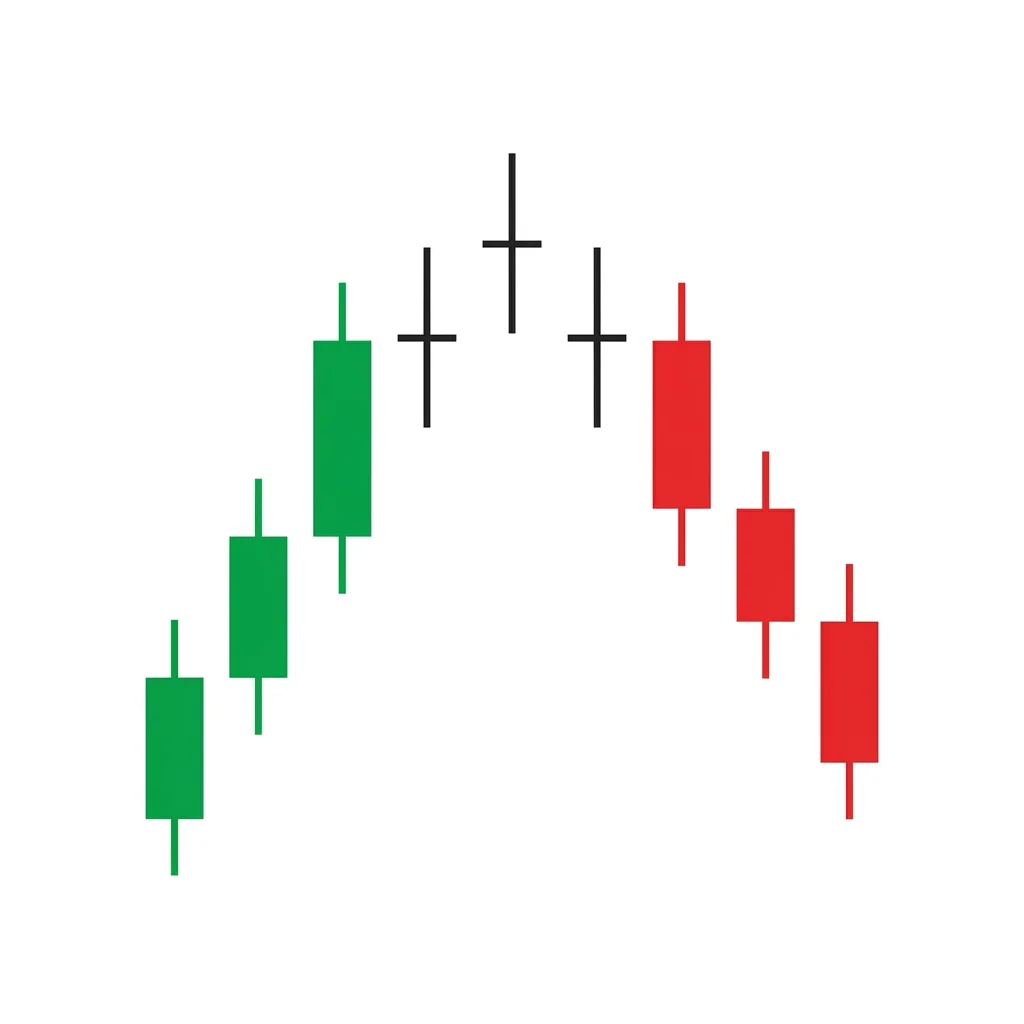
Bearish Tri-Star
bearishReversalHigh
The bearish tri-star is an extremely rare and powerful reversal pattern consisting of three consecutive doji candles, with the middle doji gapping higher. Three sessions of complete indecision at the top of an uptrend signal that buying momentum has evaporated.

Bearish Two Crows
bearishReversalModerate
The two crows pattern features a long bullish candle followed by two bearish candles that gap above it. The second crow engulfs the first and closes into or below the bullish candle's body, signaling that the uptrend is failing despite the initial gaps higher.

Bearish Upside Gap Two Crows
bearishReversalHigh
The upside gap two crows features a long bullish candle followed by two bearish candles that gap above it. Crucially, the gap between the first candle and the crows remains unfilled, creating an 'island' of bearish candles. The third candle engulfs the second, confirming the reversal.

Bullish Abandoned Baby
bullishReversalVery High
The Bullish Abandoned Baby is one of the rarest and most reliable reversal patterns in candlestick analysis. It features a doji completely isolated by gaps on both sides, signaling an abrupt shift from bearish to bullish sentiment.

Bullish Identical Three Whites
bullishContinuationModerate
Identical Three Whites is a variation of Three White Soldiers where the three bullish candles are of similar size, each opening at the prior close, indicating steady and controlled buying pressure.
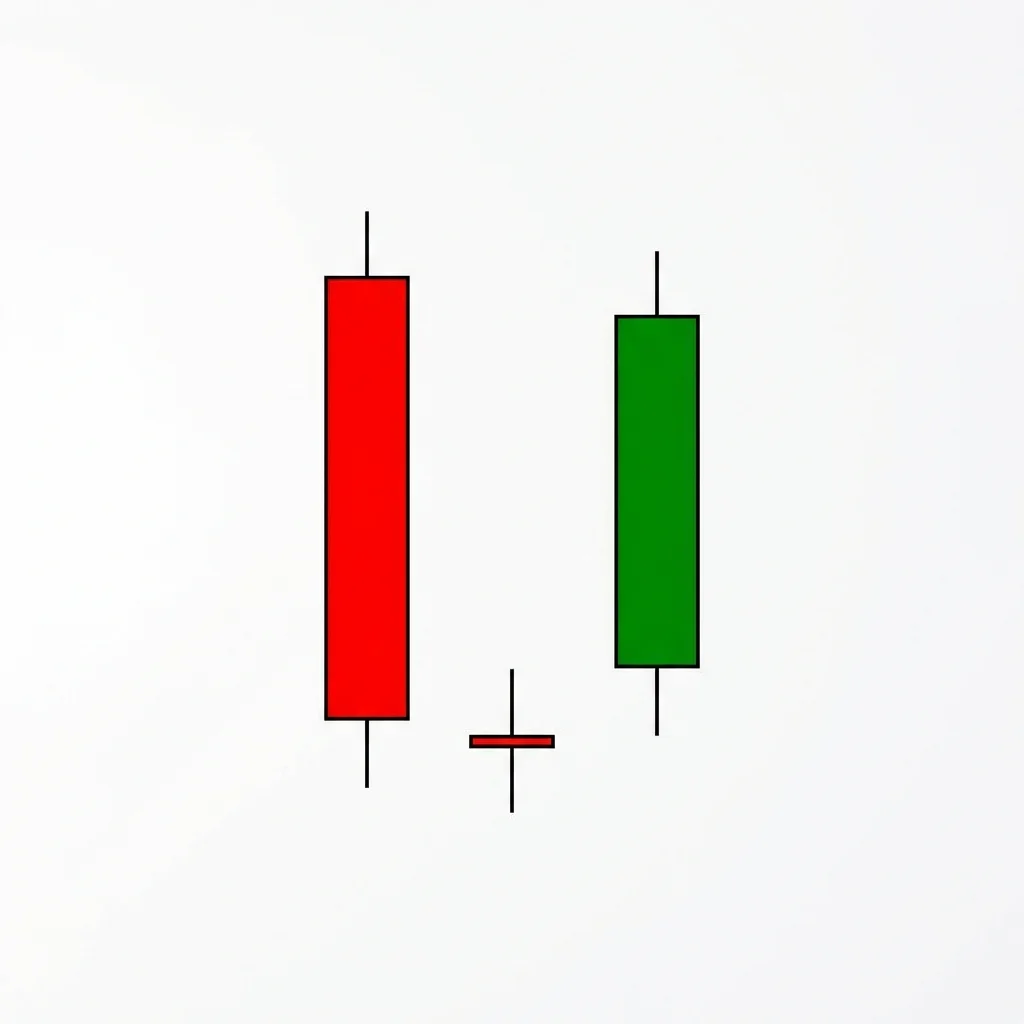
Bullish Morning Doji Star
bullishReversalHigh
The Morning Doji Star is a three-candle bullish reversal pattern where a bearish candle, a gapped-down doji, and a strong bullish candle combine to signal a decisive bottom — more powerful than the standard Morning Star due to the doji's complete indecision signal.
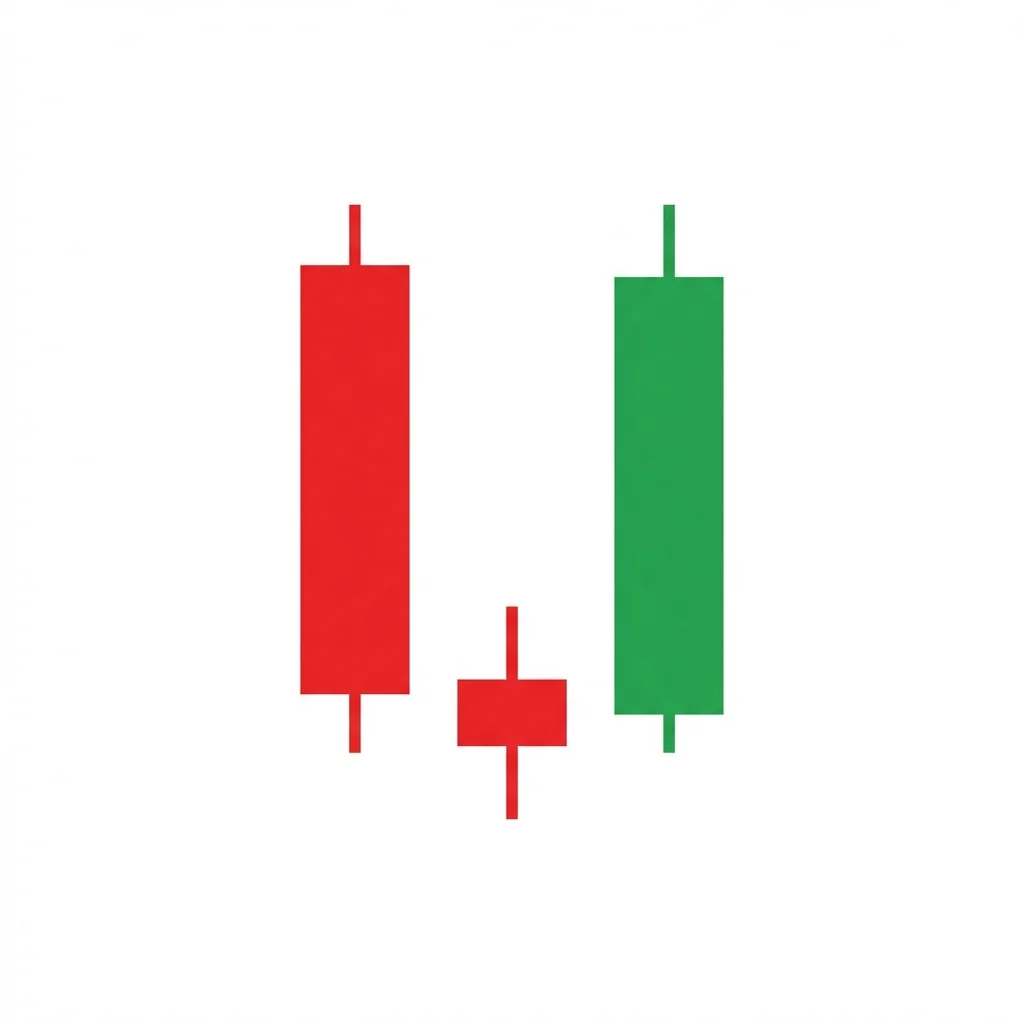
Bullish Morning Star
bullishReversalHigh
The Morning Star is a three-candle bullish reversal pattern consisting of a large bearish candle, a small star candle showing indecision, and a large bullish candle confirming the reversal. It is one of the most widely recognized and reliable bottom reversal signals.

Bullish Side-by-Side White Lines
bullishContinuationModerate
Bullish Side-by-Side White Lines is a three-candle continuation pattern where a bullish candle gaps up and is followed by two similar-sized bullish candles at the same level, confirming the uptrend's strength.
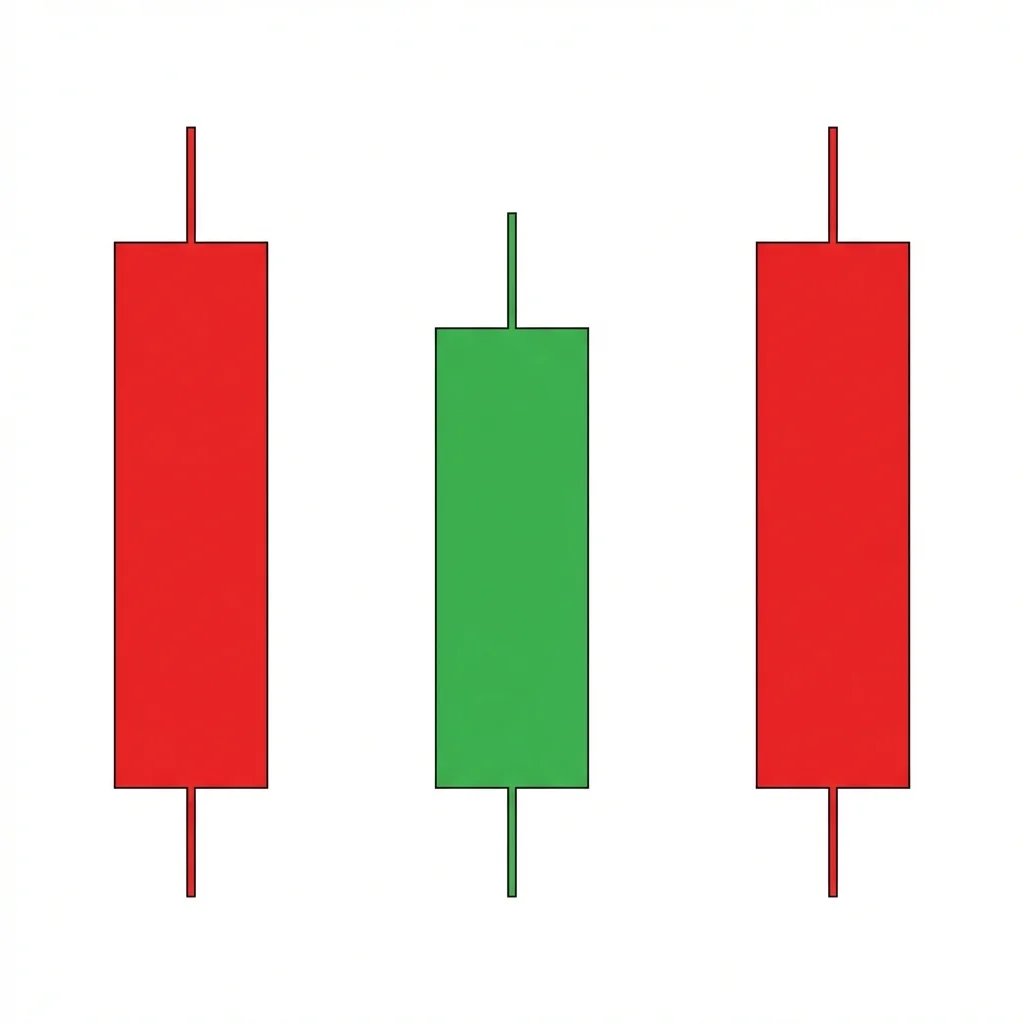
Bullish Stick Sandwich
bullishReversalModerate
The Bullish Stick Sandwich is a three-candle reversal pattern where two bearish candles with matching closes 'sandwich' a bullish candle, creating a support level at the shared close price that suggests a potential bottom.
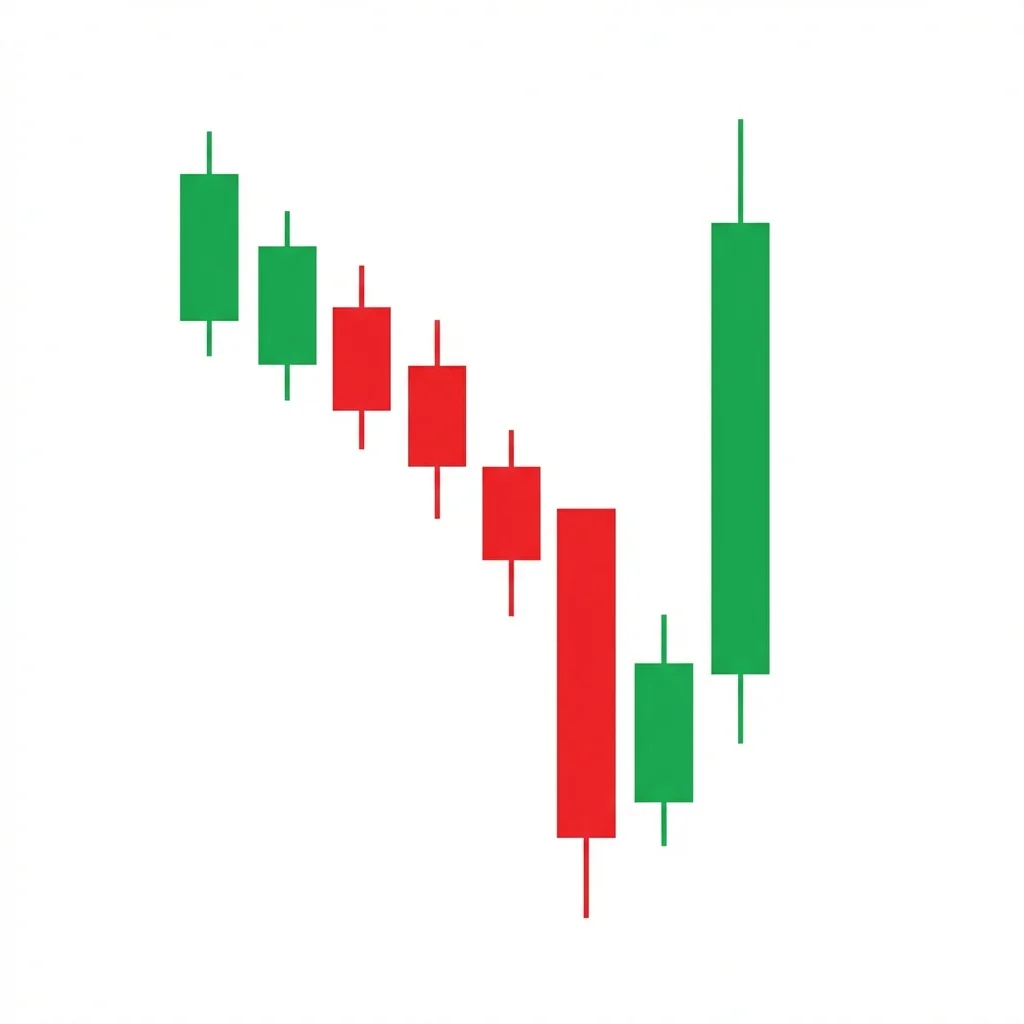
Bullish Three Inside Up
bullishReversalHigh
The Bullish Three Inside Up is a three-candle reversal pattern that combines a bullish harami with a confirming third candle that closes above the first candle's open, providing a more reliable reversal signal than the harami alone.
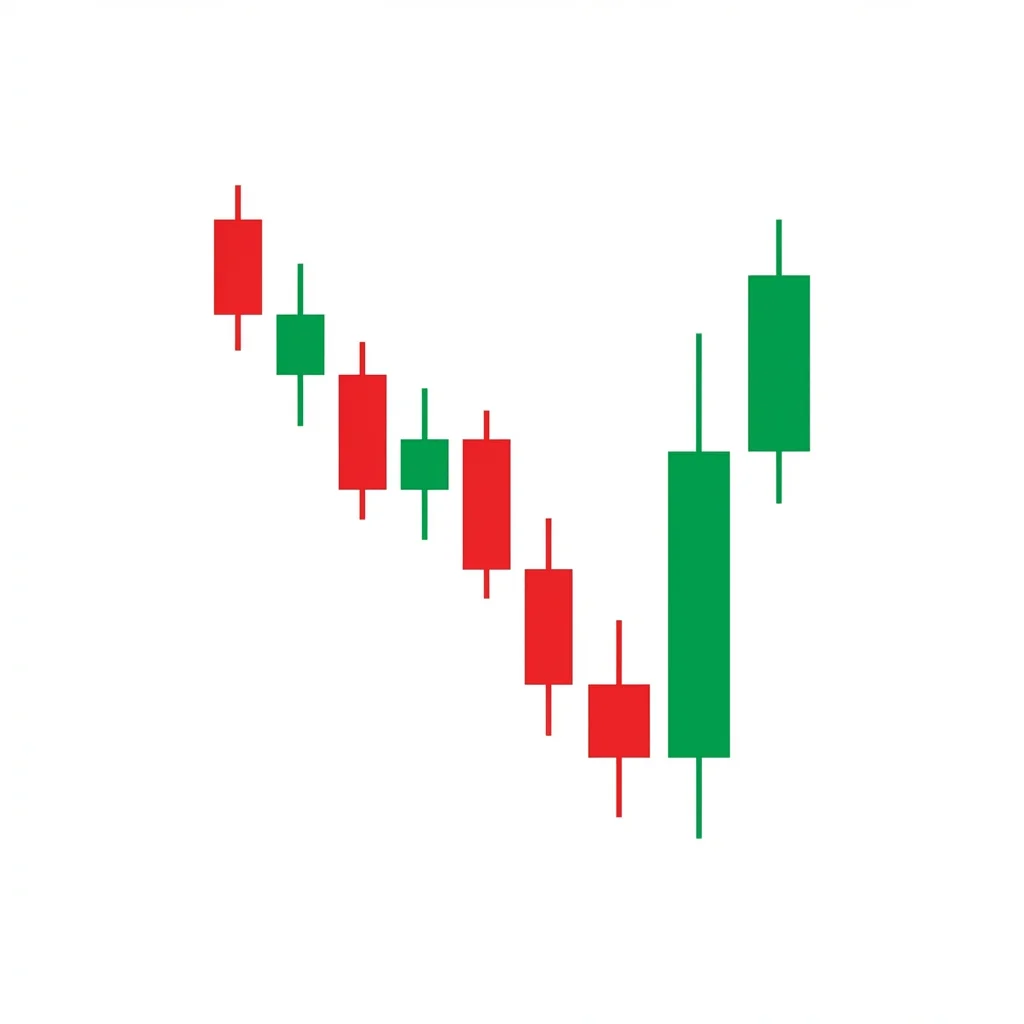
Bullish Three Outside Up
bullishReversalHigh
The Bullish Three Outside Up is a three-candle reversal pattern combining a bullish engulfing with a confirming third candle that closes higher, providing one of the strongest reversal signals in candlestick analysis.
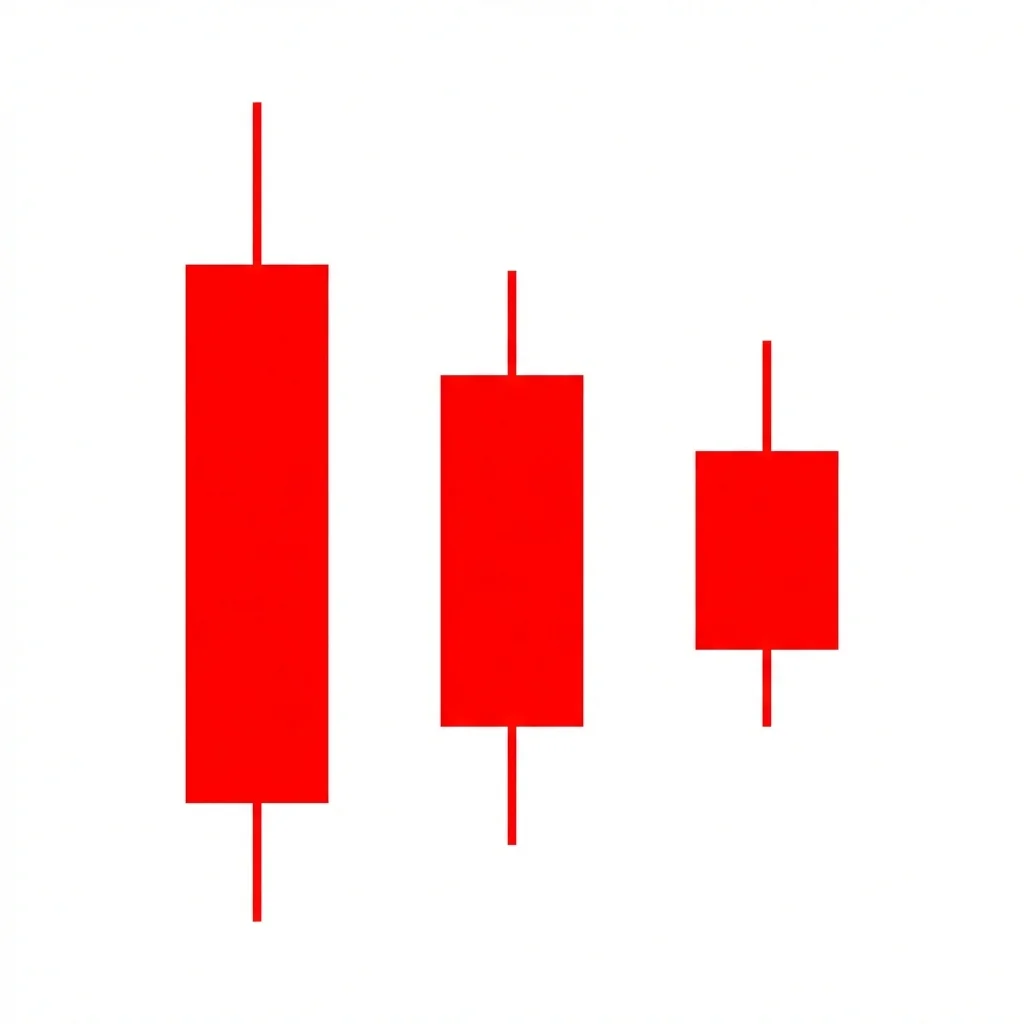
Bullish Three Recovering Crows
bullishReversalModerate
The Bullish Three Recovering Crows features three bearish candles where each opens within the prior candle's body and the bodies get progressively smaller, signaling that selling pressure is exhausting itself and a reversal may be imminent.
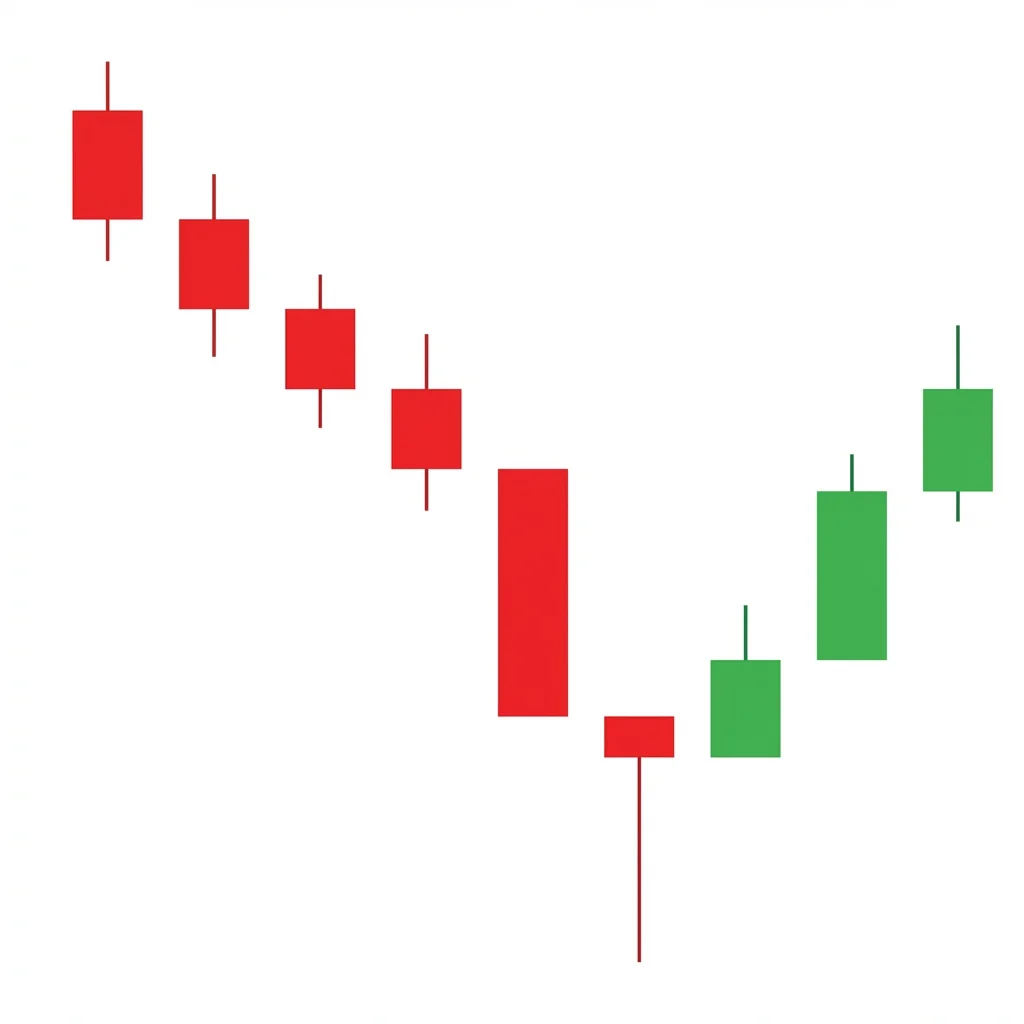
Bullish Three River Bottom
bullishReversalModerate
The Bullish Three River Bottom is a rare three-candle reversal pattern where a long bearish candle is followed by a harami-like candle with a long lower shadow that probes new lows, and a small bullish candle that signals the selling has exhausted itself.
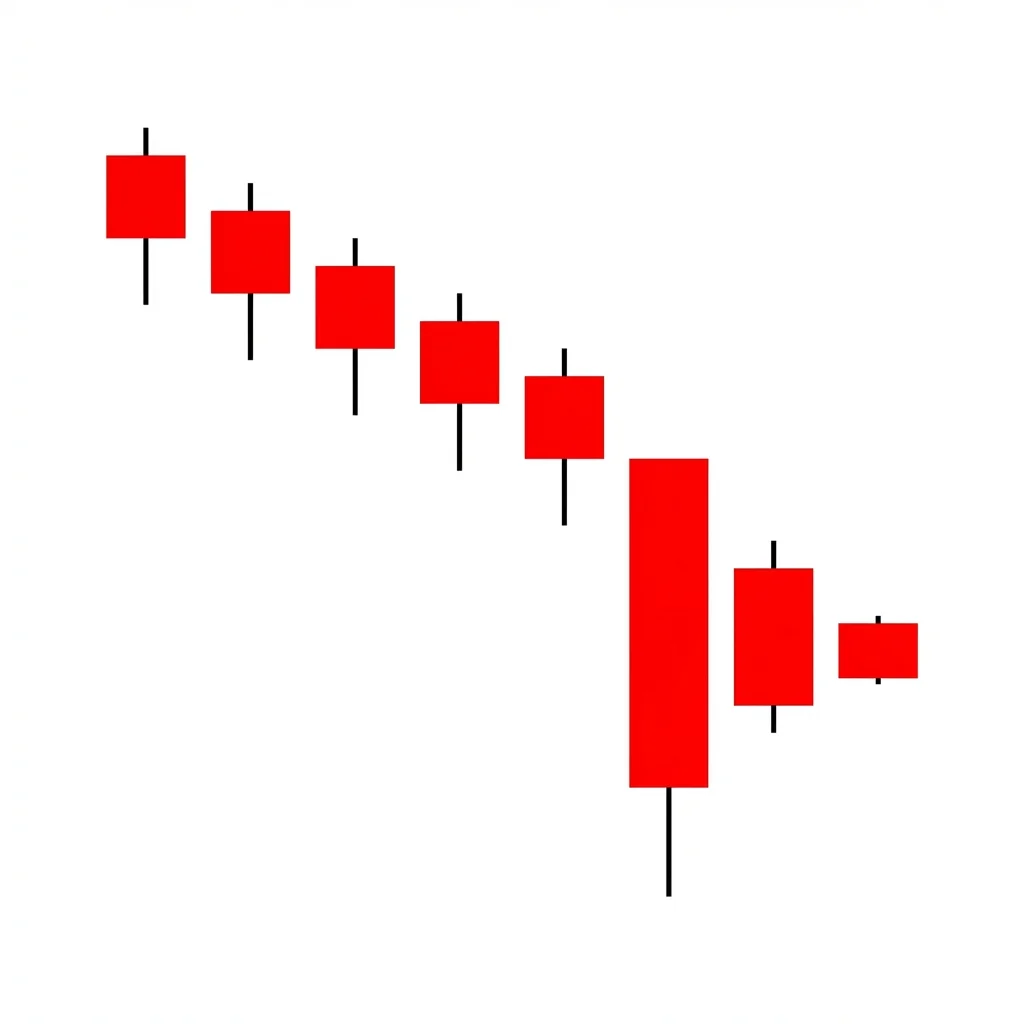
Bullish Three Stars in the South
bullishReversalModerate
Three Stars in the South is a rare bullish reversal pattern of three progressively smaller bearish candles, each with shorter lower shadows and higher lows, signaling that selling pressure is systematically diminishing.

Bullish Three White Soldiers
bullishReversalHigh
Three White Soldiers is one of the strongest bullish reversal patterns: three consecutive long bullish candles with progressively higher closes, each opening within the prior candle's body, signaling a powerful shift from bearish to bullish sentiment.
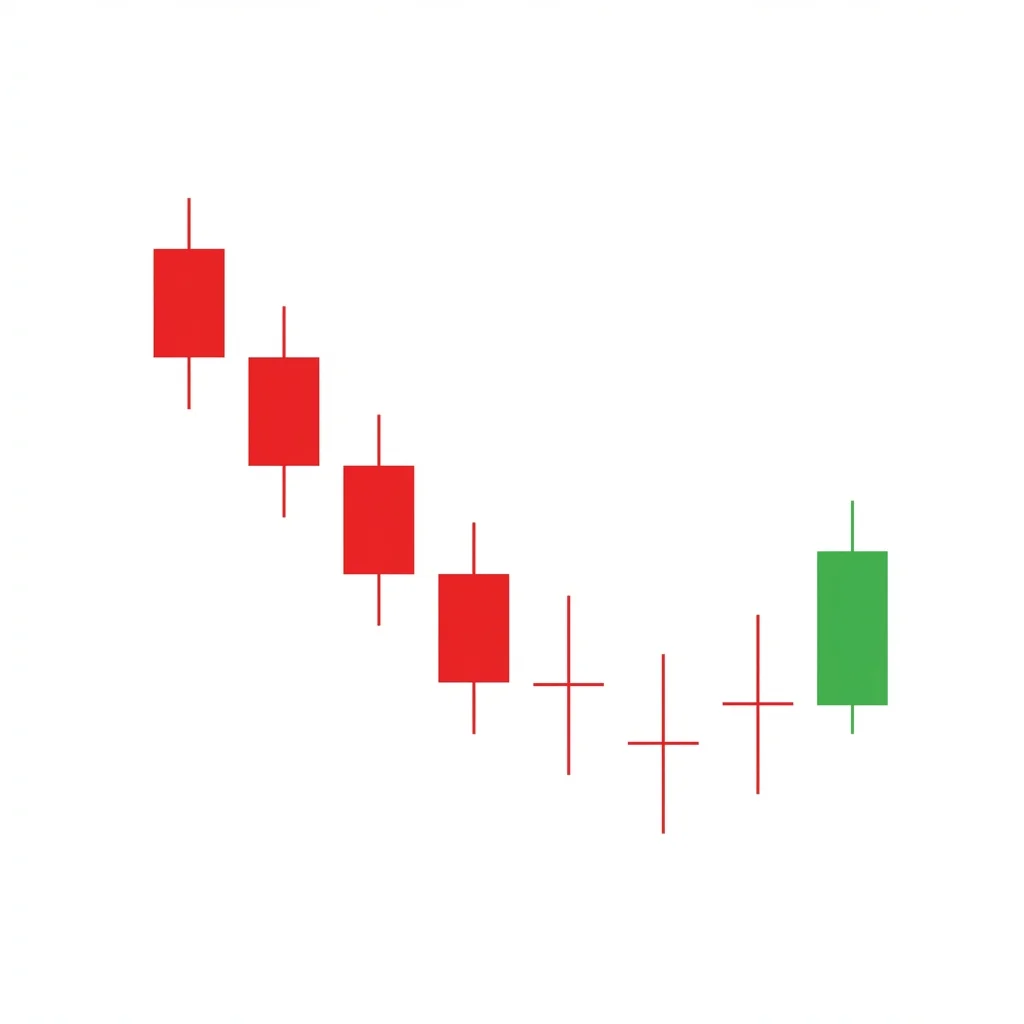
Bullish Tri-Star
bullishReversalHigh
The Bullish Tri-Star is an extremely rare reversal pattern consisting of three consecutive doji candles with the middle one gapping below the others. It signals maximum indecision and a potential major trend reversal.

Inside-Outside-Inside
neutralIndecisionHigh
The Inside-Outside-Inside (IOI) is a three-candle pattern where an inside bar is followed by an outside bar and then another inside bar, creating a compression-expansion-compression sequence that often precedes a significant breakout.
Multi-Candle(13)
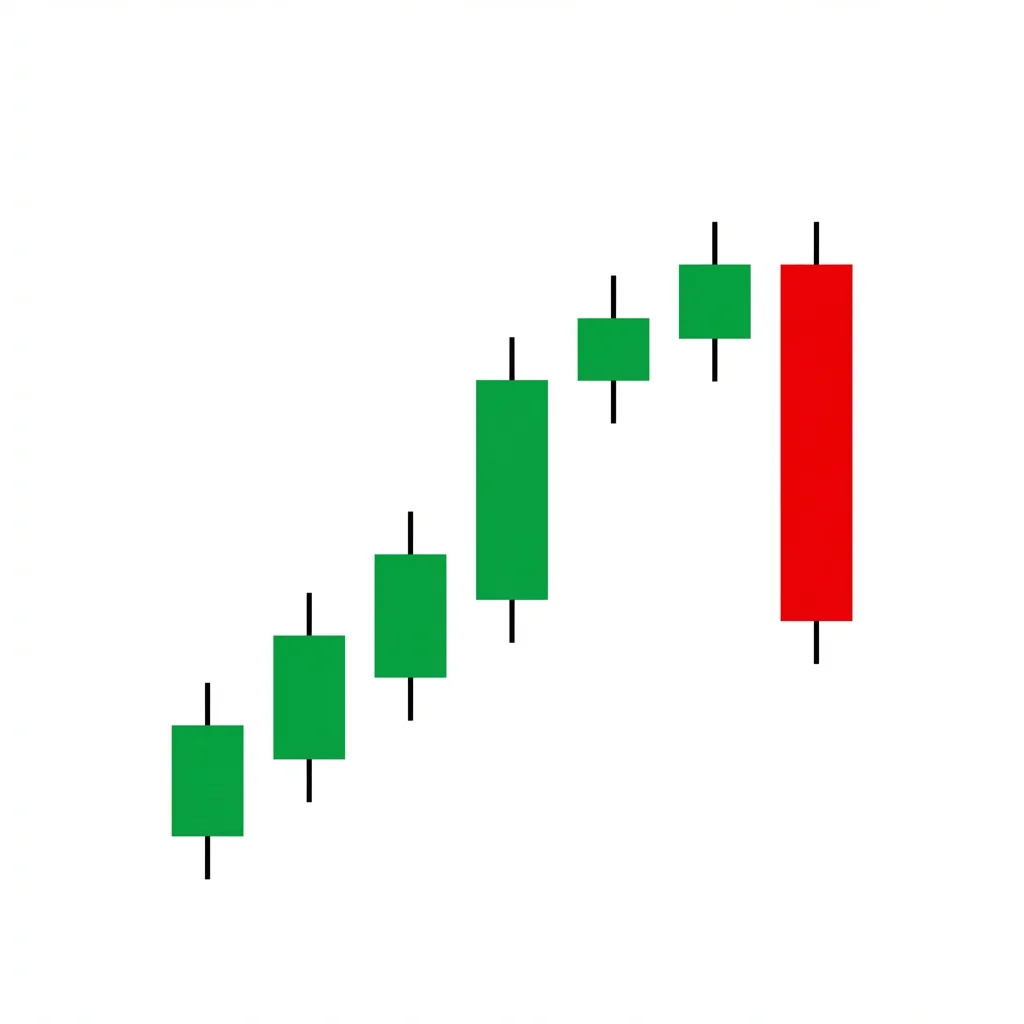
Bearish Breakaway
bearishReversalModerate
The Bearish Breakaway is a five-candle reversal pattern where a gap-up rally stalls over three sessions before a powerful bearish candle breaks back down into the gap, signaling the uptrend is exhausted.
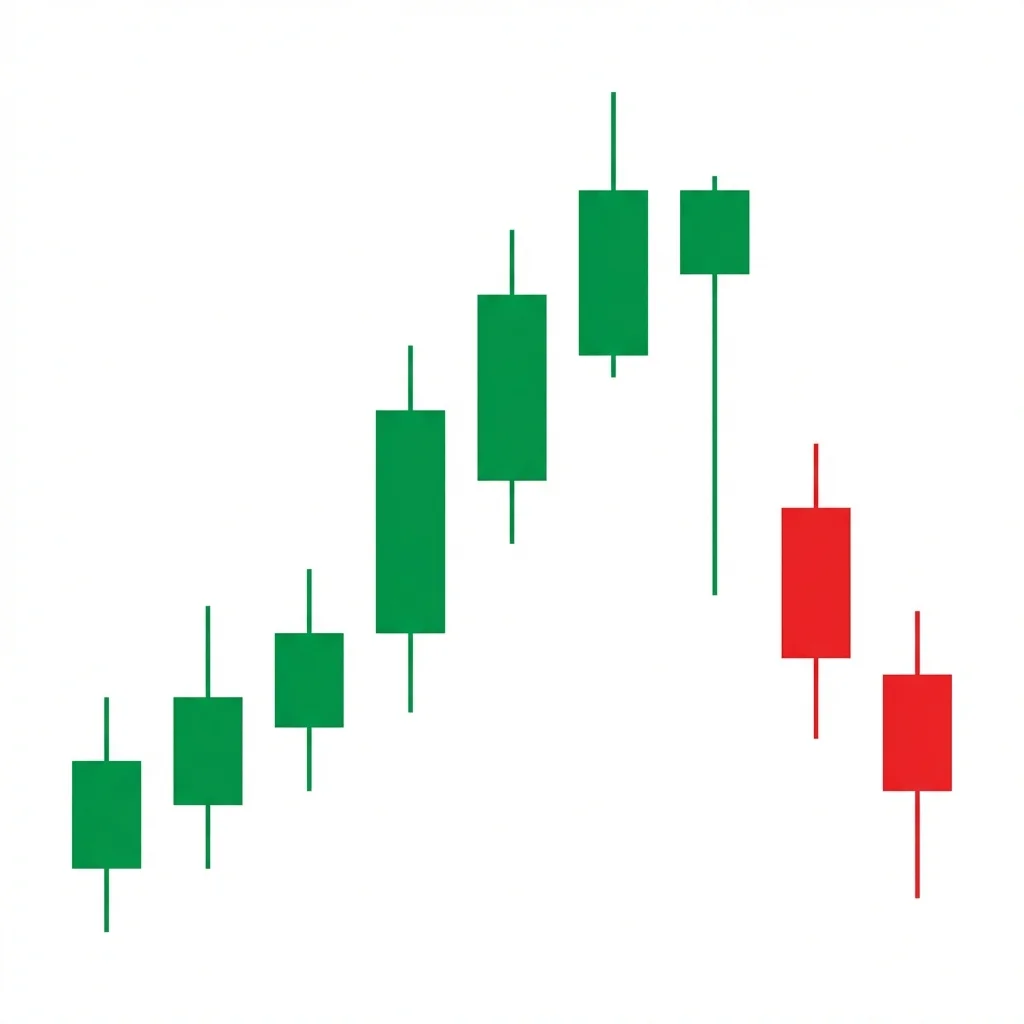
Bearish Ladder Top
bearishReversalModerate
The ladder top is a five-candle bearish reversal pattern where three bullish candles climb like a ladder, a fourth candle shows hesitation, and a fifth bearish candle confirms the reversal by closing below the third candle's close.
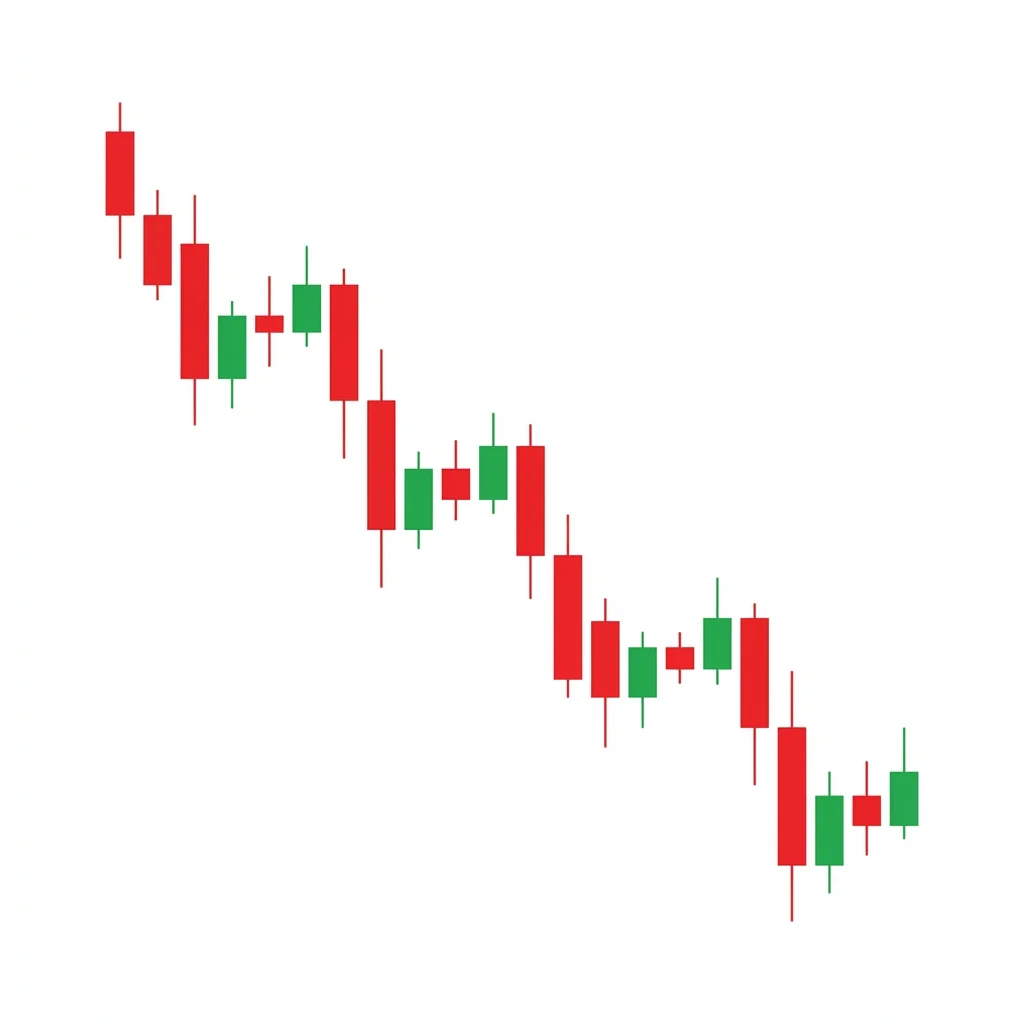
Bearish Staircase Down
bearishContinuationHigh
The bearish staircase down is a trend continuation pattern characterized by a rhythmic series of lower highs and lower lows, creating a step-like descending structure. Each step represents a decline followed by a partial recovery that fails to reclaim the prior high.
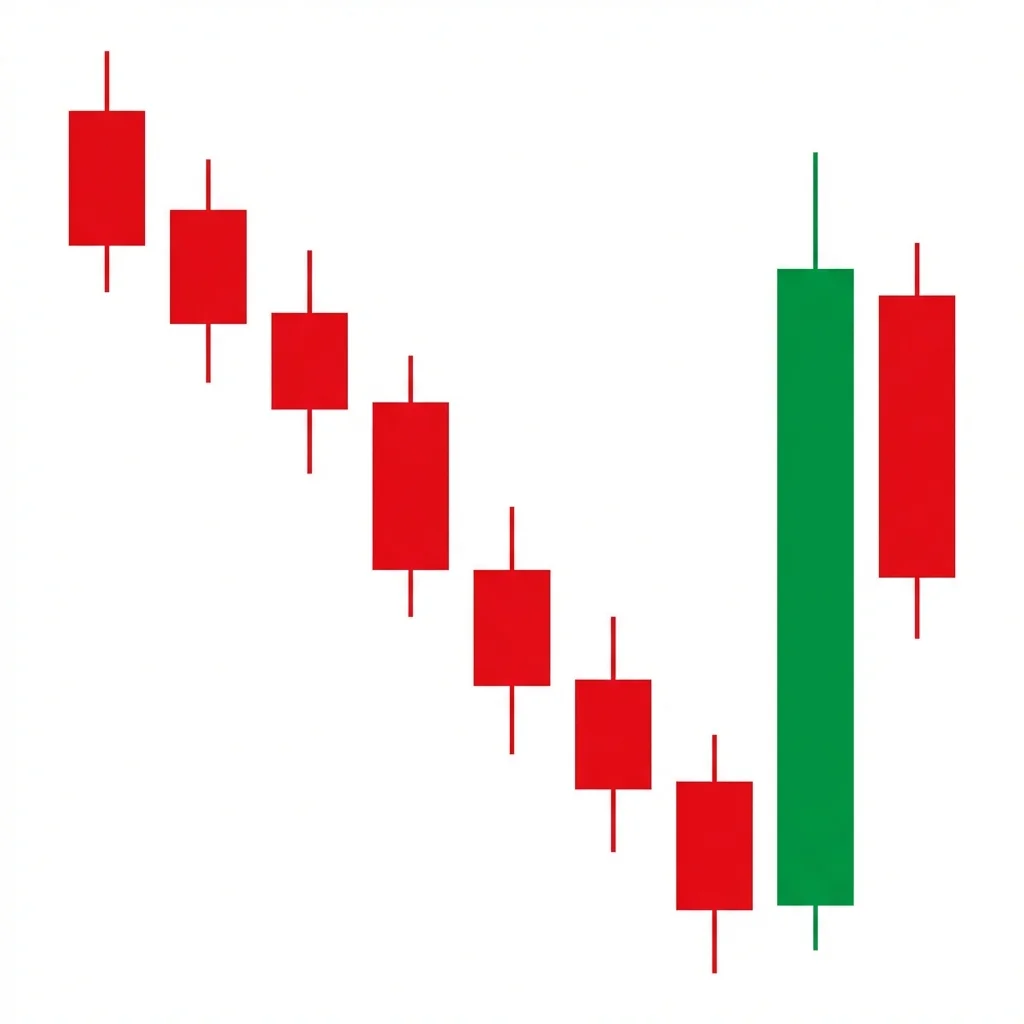
Bearish Three Line Strike
bearishContinuationHigh
The bearish three line strike features three bearish candles followed by a large bullish candle that engulfs all three. Despite the dramatic bullish fourth candle, the pattern paradoxically signals bearish continuation—the bullish candle is a temporary short squeeze before the downtrend resumes.
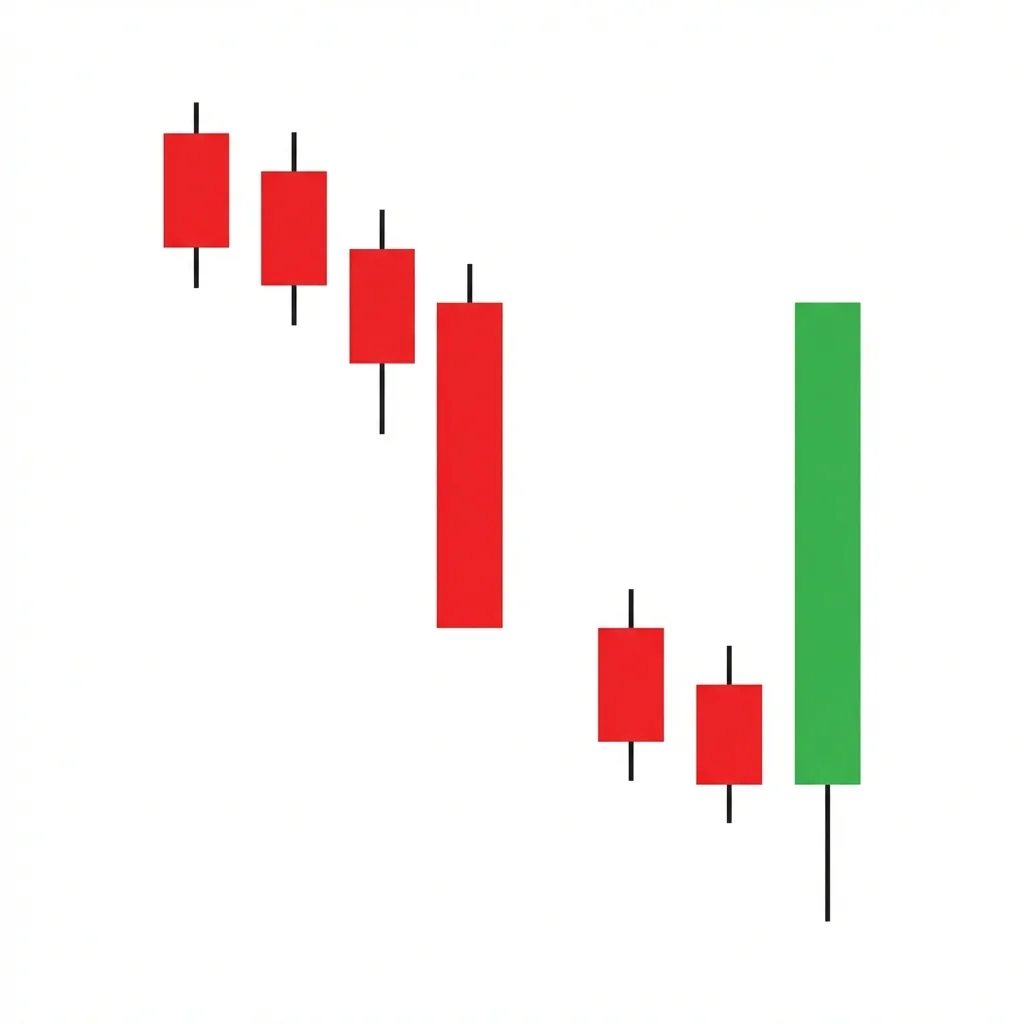
Bullish Breakaway
bullishReversalModerate
The Bullish Breakaway is a five-candle reversal pattern where a gap-down continuation is followed by progressively smaller candles and a strong bullish candle that reclaims the gap, signaling exhaustion of selling pressure.

Bullish Concealing Baby Swallow
bullishReversalHigh
The Bullish Concealing Baby Swallow is an extremely rare four-candle reversal pattern consisting of bearish marubozus where the third candle's upper shadow (the baby) is concealed by the fourth candle, signaling exhaustion of the downtrend.

Bullish Hikkake
bullishReversalHigh
The Bullish Hikkake is a deceptive pattern that traps sellers with a false downside breakout of an inside bar, then reverses sharply higher as trapped shorts are forced to cover.
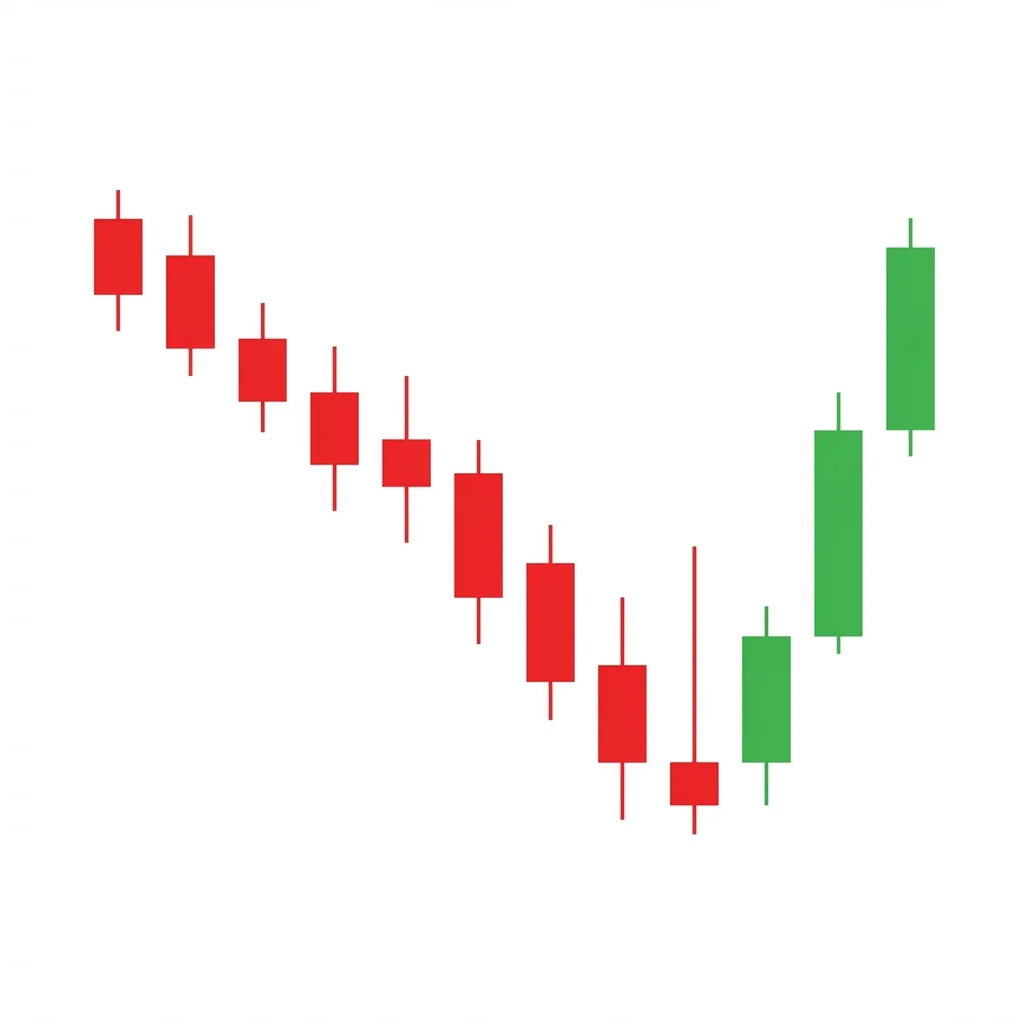
Bullish Ladder Bottom
bullishReversalModerate
The Ladder Bottom is a five-candle bullish reversal pattern where three descending bearish candles are followed by an exhaustion signal and a confirming bullish candle, resembling climbing down and then back up a ladder.
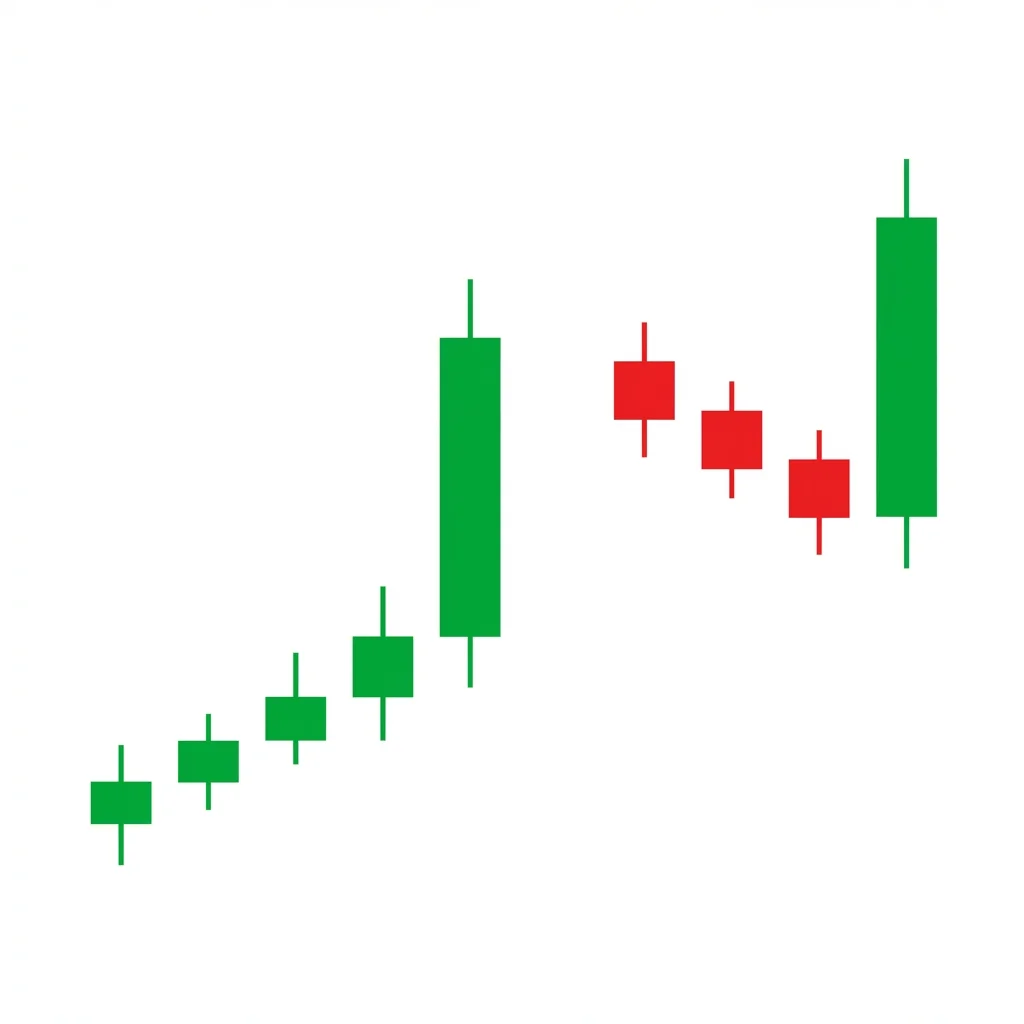
Bullish Mat Hold
bullishContinuationHigh
The Mat Hold is a five-candle bullish continuation pattern where a strong bullish candle is followed by a brief, shallow pullback of small bearish candles, then a final bullish candle resumes the advance — indicating the trend remains intact.

Bullish Rising Three Methods
bullishContinuationHigh
The Rising Three Methods is a five-candle bullish continuation pattern where a long bullish candle is followed by three small bearish candles within its range, then a final bullish candle closes above the first, confirming the uptrend will continue.

Bullish Three Line Strike
bullishContinuationHigh
The Bullish Three Line Strike is a four-candle continuation pattern where three bullish candles are followed by a large bearish candle that engulfs all three. Despite the dramatic sell-off, the pattern is a continuation signal — the fourth candle is a shakeout that traps sellers before the uptrend resumes.
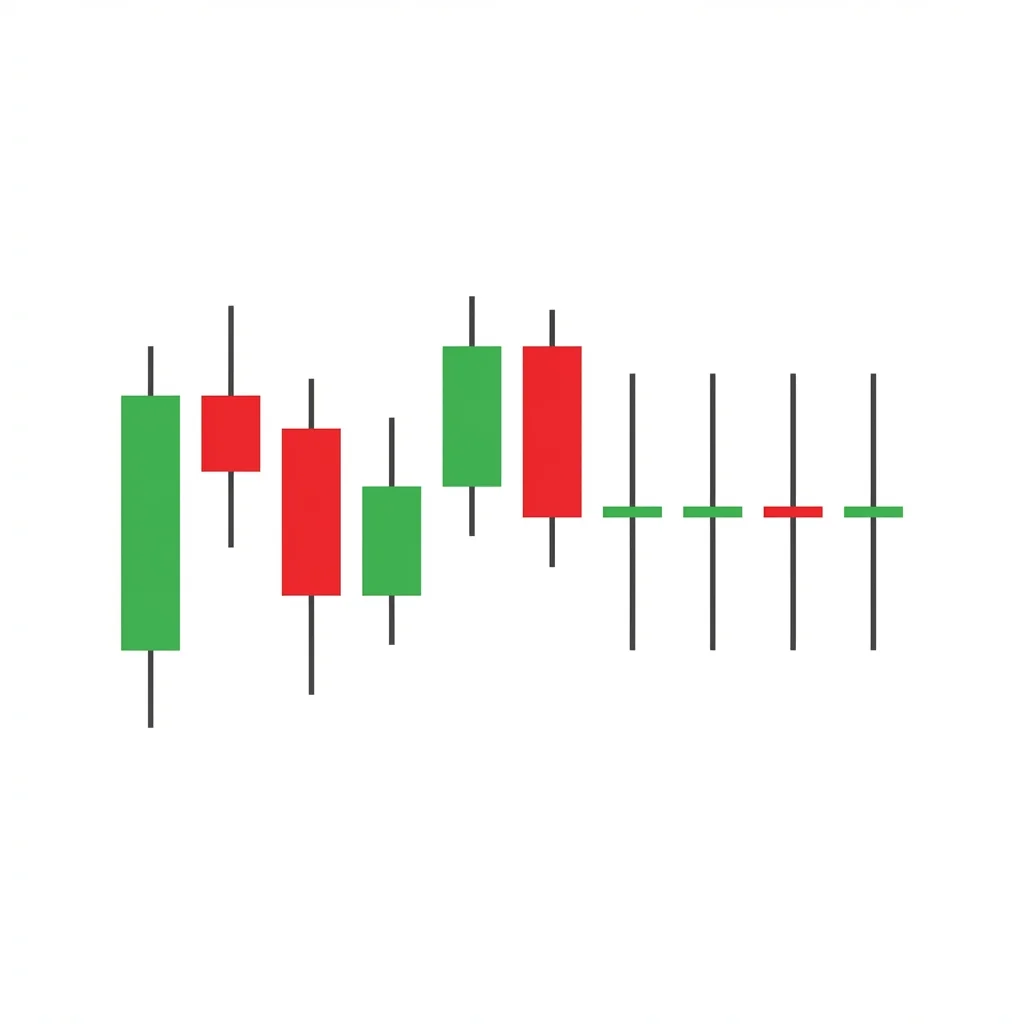
Doji Cluster
neutralIndecisionModerate
A Doji Cluster consists of two or more consecutive doji candles, indicating prolonged indecision and compressed volatility that typically precedes a significant breakout move.

Tight Coil
neutralIndecisionHigh
The Tight Coil is a multi-candle pattern where each successive candle has a smaller range than the last, creating a coiled-spring effect that typically precedes an explosive directional breakout.
Chart Formations(51)
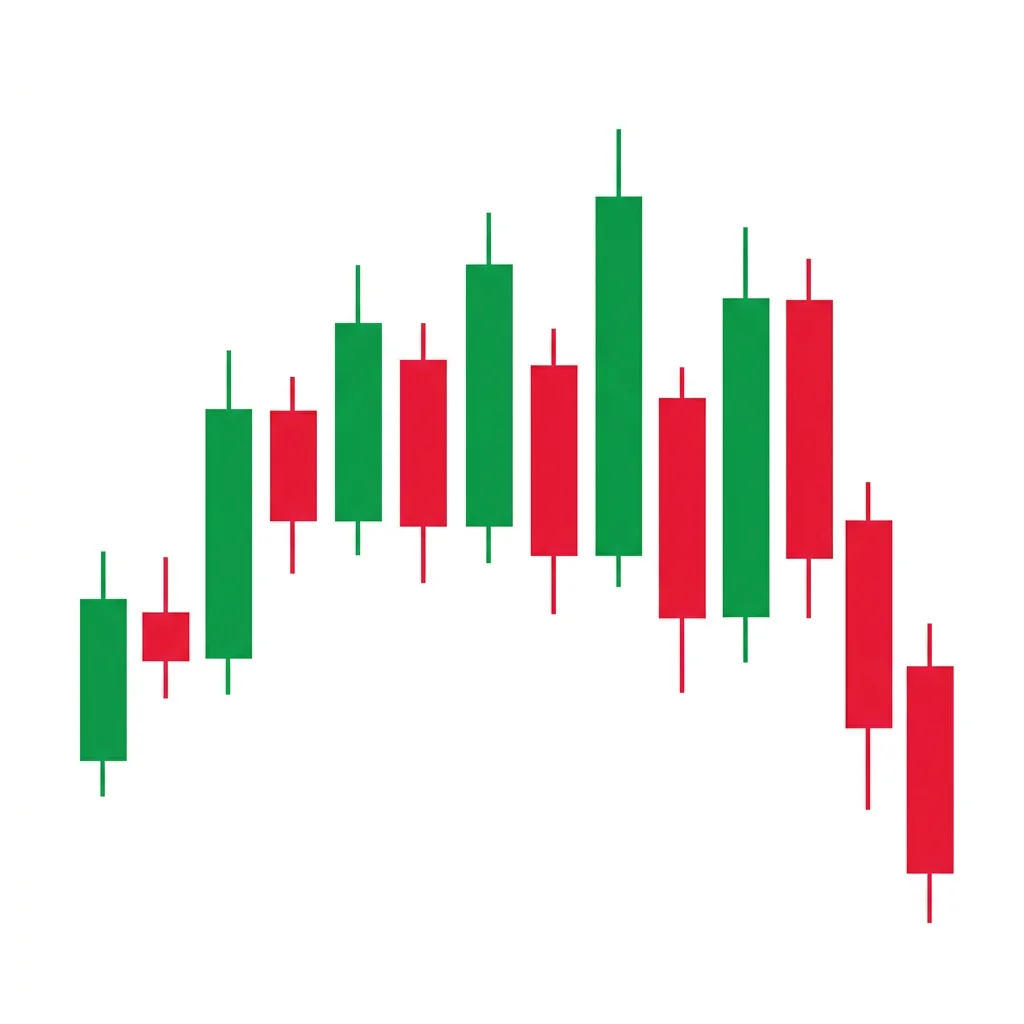
Bearish Broadening Top
bearishReversalModerate
The Broadening Top (Megaphone) is a chart formation characterized by expanding price swings that create higher highs and lower lows, reflecting increasing volatility and instability at market tops before a bearish breakdown.
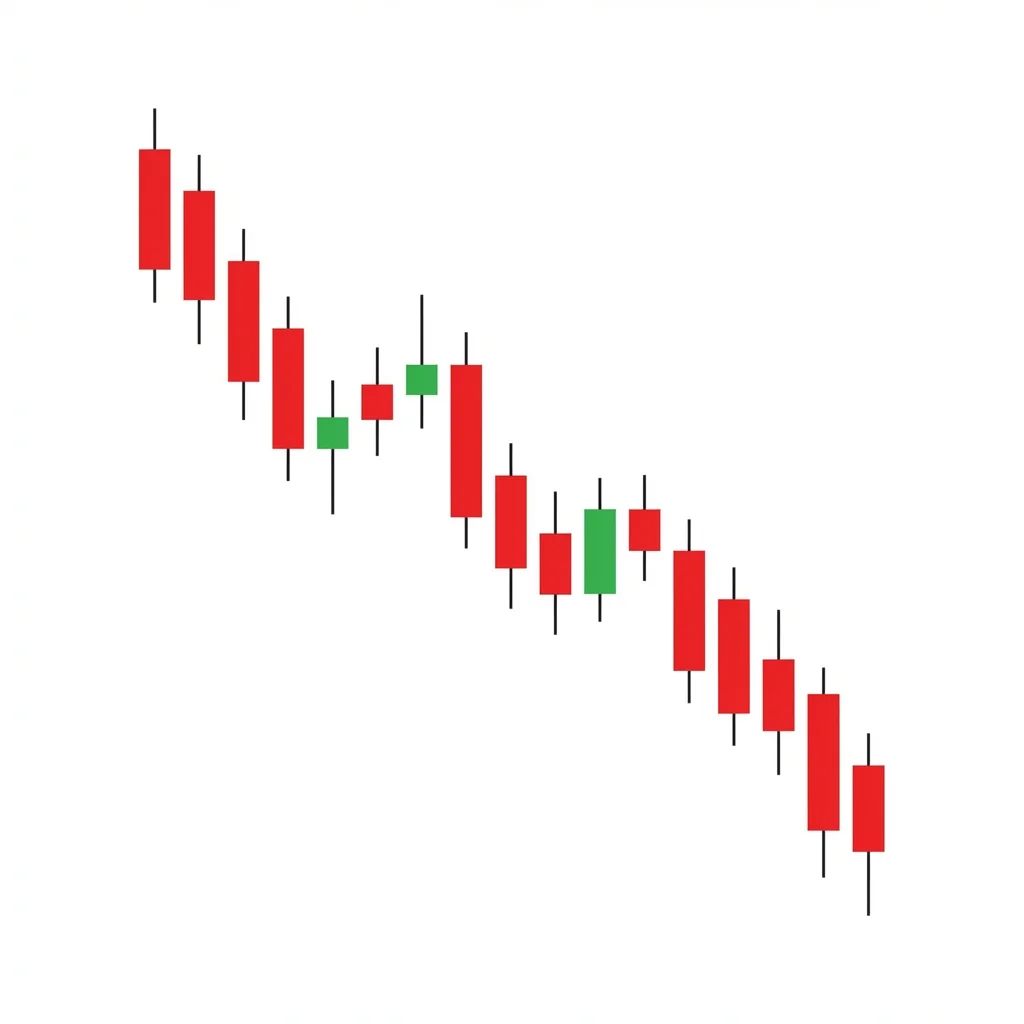
Bearish Descending Channel
bearishContinuationHigh
The Descending Channel is a chart formation where price trends lower within two parallel downward-sloping trendlines, making consistent lower highs and lower lows in an orderly bearish progression.
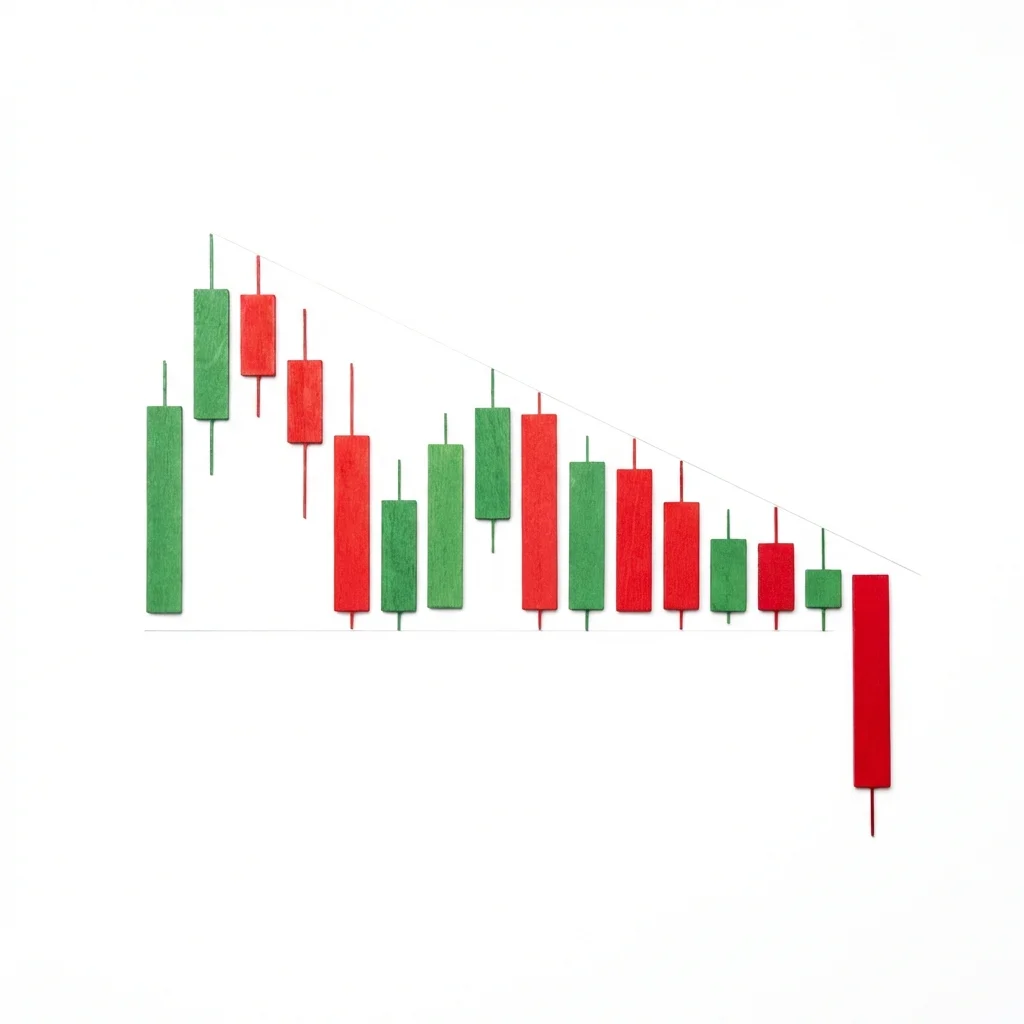
Bearish Descending Triangle
bearishContinuationHigh
The Descending Triangle is a bearish continuation pattern featuring a flat support level with lower highs converging into an apex, typically resolving with a breakdown below the horizontal support as sellers gradually overwhelm buyers.
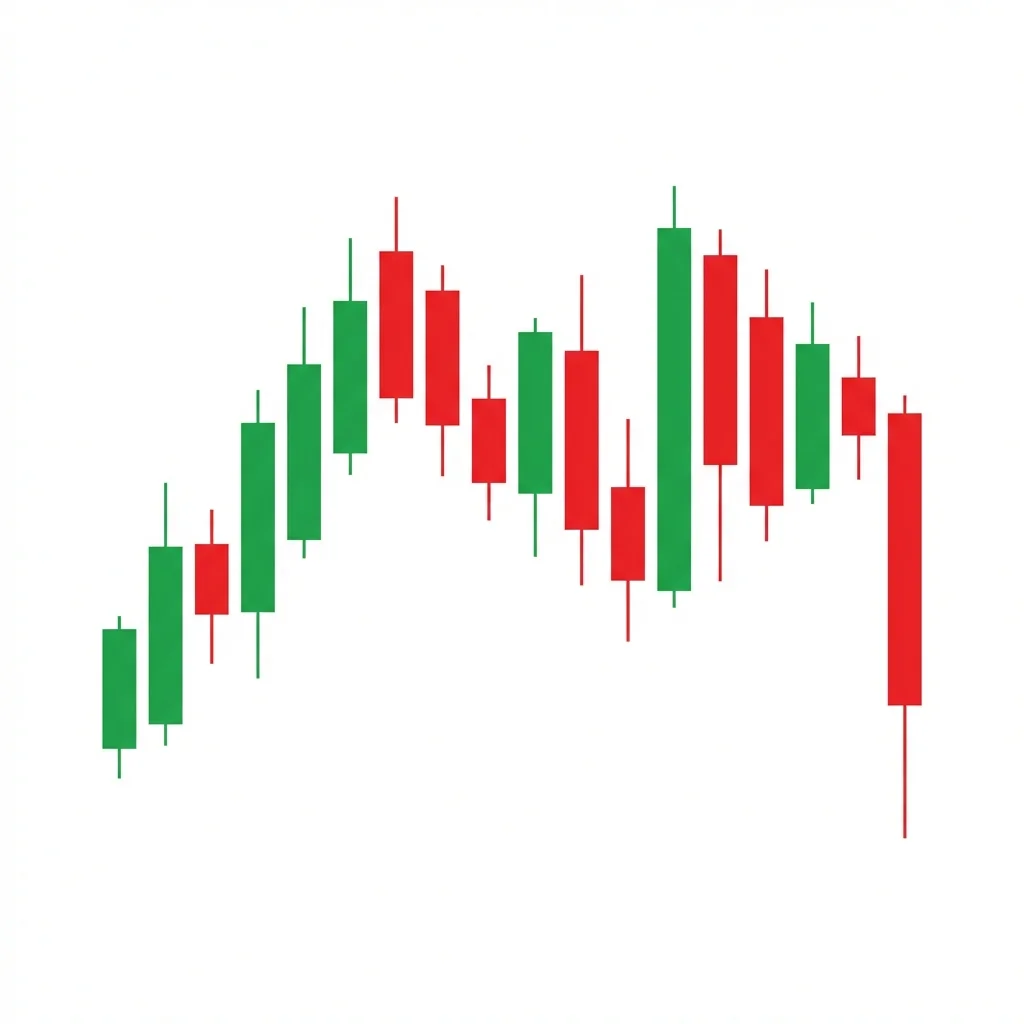
Bearish Diamond Top
bearishReversalHigh
The Diamond Top is a rare reversal pattern that forms at market peaks, consisting of a broadening formation followed by a contracting formation, creating a diamond shape that signals a shift from expansion to contraction and ultimately a bearish breakdown.
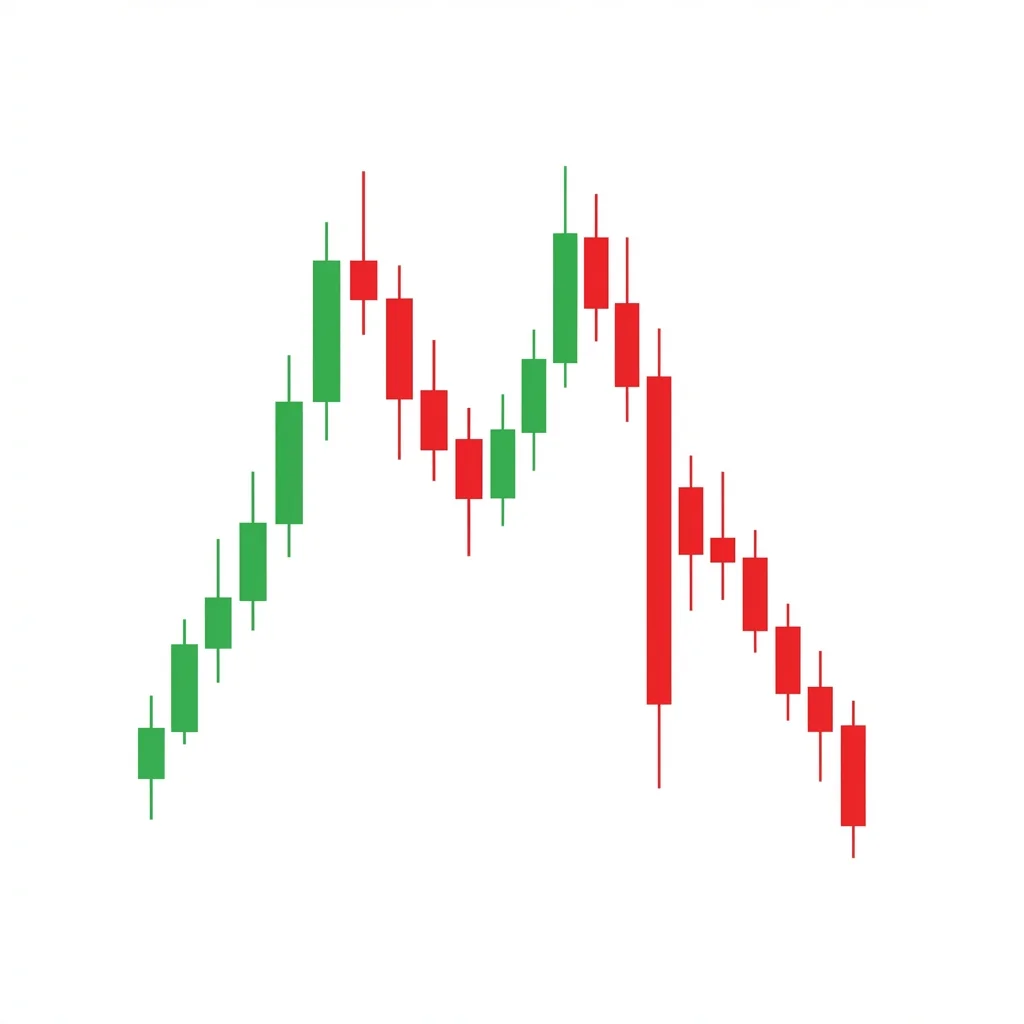
Bearish Double Top Breakdown
bearishReversalVery High
The Double Top Breakdown is the confirmed version of the Double Top — the precise moment when price breaks below the neckline, triggering the measured move decline. This is the actionable event that converts the pattern from potential to confirmed.
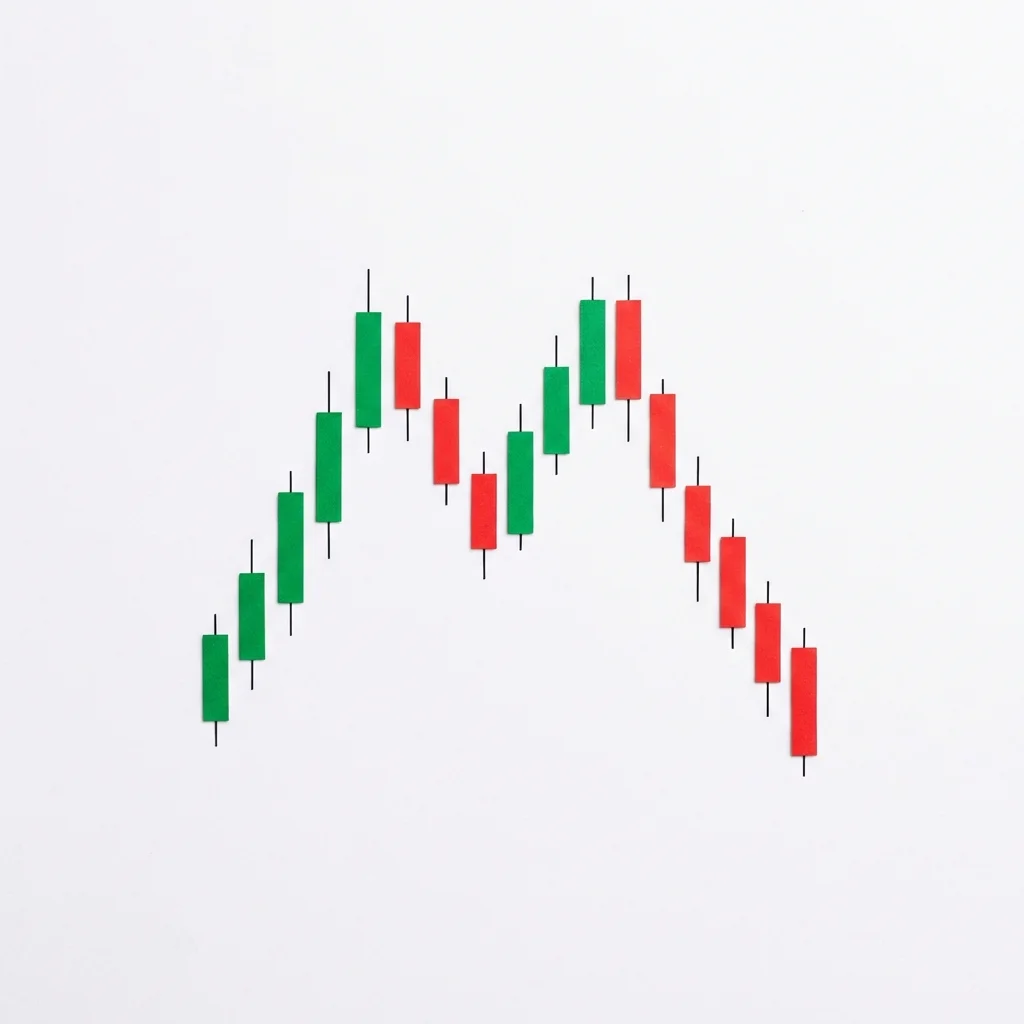
Bearish Double Top
bearishReversalHigh
The Double Top is an M-shaped reversal pattern where price tests a resistance level twice and fails, creating two peaks at similar levels. The breakdown below the neckline (trough between peaks) confirms the reversal with a measured move target equal to the pattern height.

Bearish Downtrend
bearishContinuationVery High
The Downtrend is the most fundamental bearish pattern — a persistent series of lower highs and lower lows demonstrating that sellers consistently overwhelm buyers at progressively lower price levels.
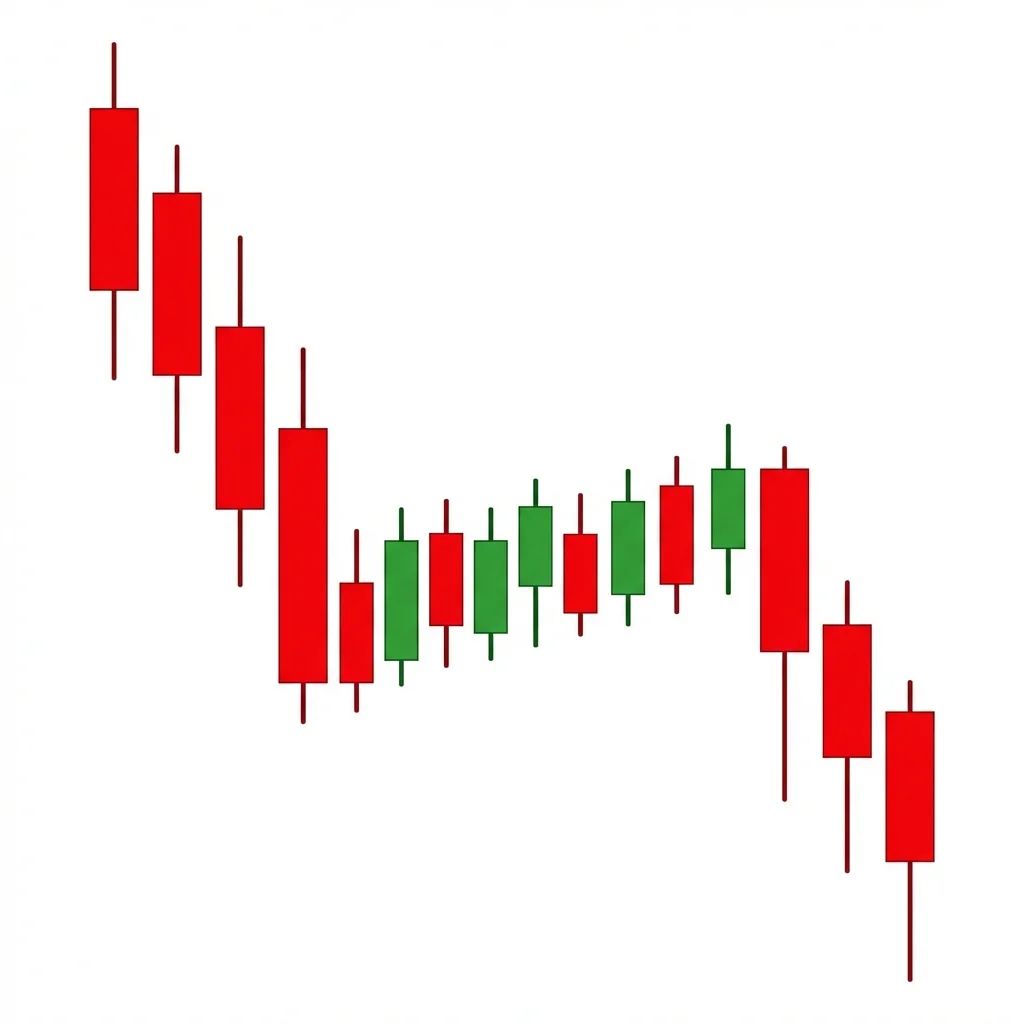
Bearish Flag
bearishContinuationHigh
The bearish flag is a continuation pattern consisting of a sharp decline (flagpole) followed by a gentle upward-sloping consolidation (flag) before price breaks down to continue the trend.
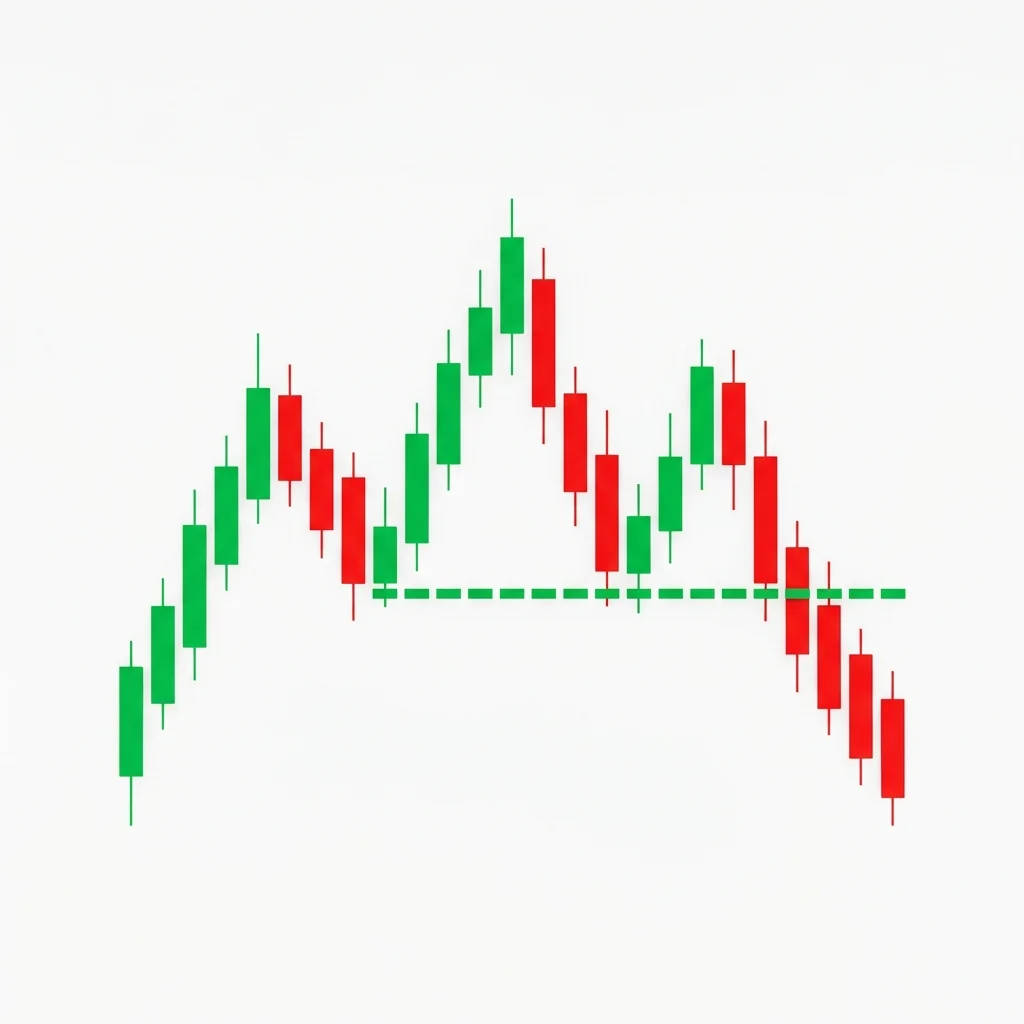
Bearish Head and Shoulders
bearishReversalVery High
The head and shoulders is the most well-known reversal pattern in technical analysis. It consists of three peaks — a higher middle peak (head) flanked by two lower peaks (shoulders) — and signals a major bearish reversal when the neckline breaks.
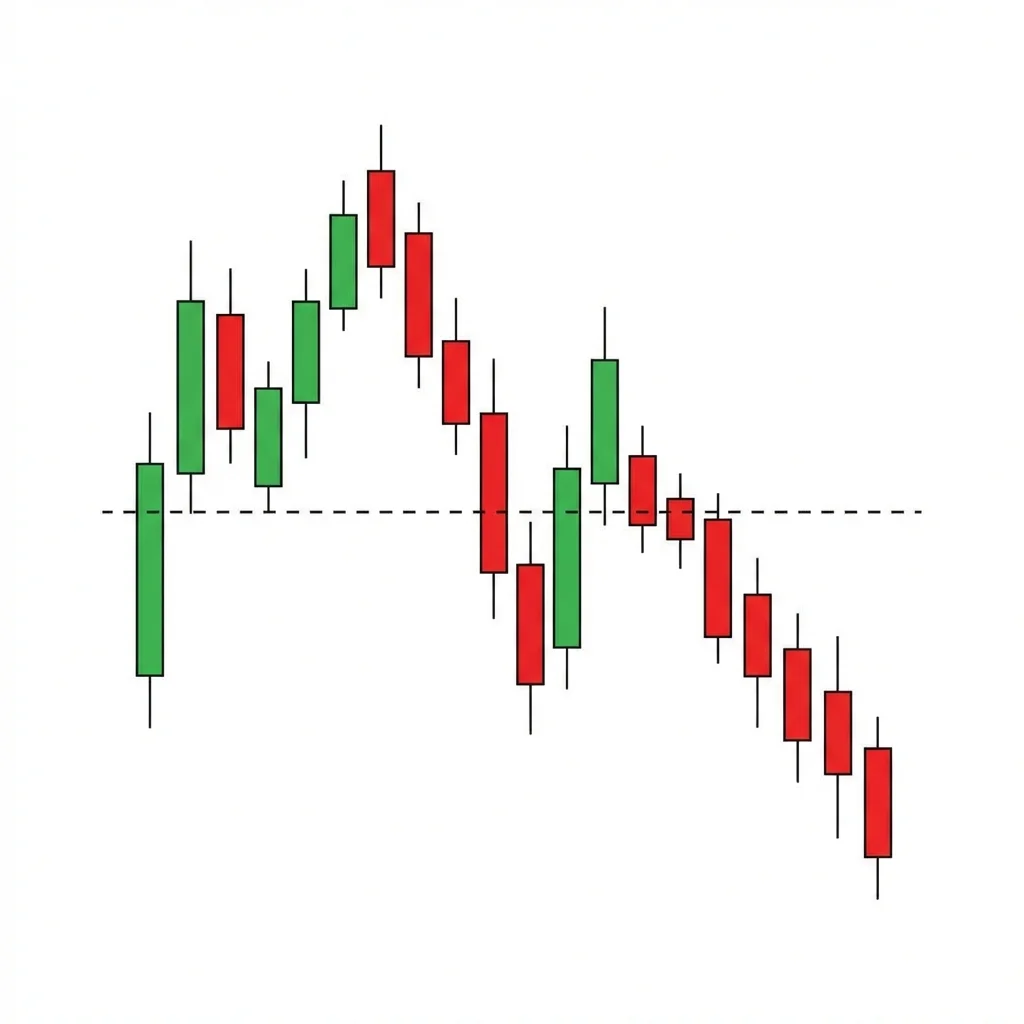
Bearish H&S Neckline Retest
bearishContinuationHigh
The H&S neckline retest occurs when price pulls back to retest the broken neckline from below (throwback), gets rejected, and continues the measured move decline. It provides a second entry opportunity for traders who missed the original breakdown.
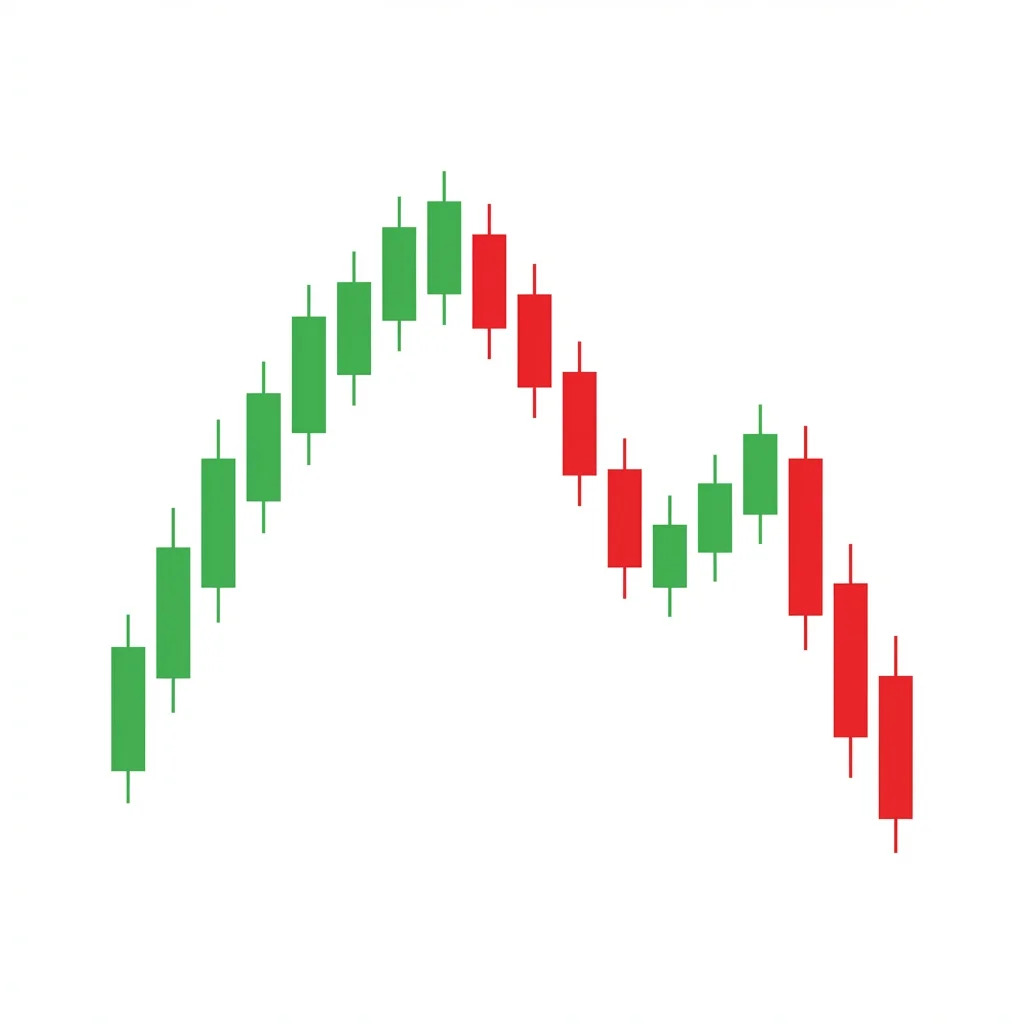
Bearish Inverted Cup and Handle
bearishReversalHigh
The inverted cup and handle is a bearish reversal pattern featuring a rounded top (inverted cup) followed by a brief upward consolidation (handle) before a breakdown, mirroring the bullish cup and handle pattern in reverse.
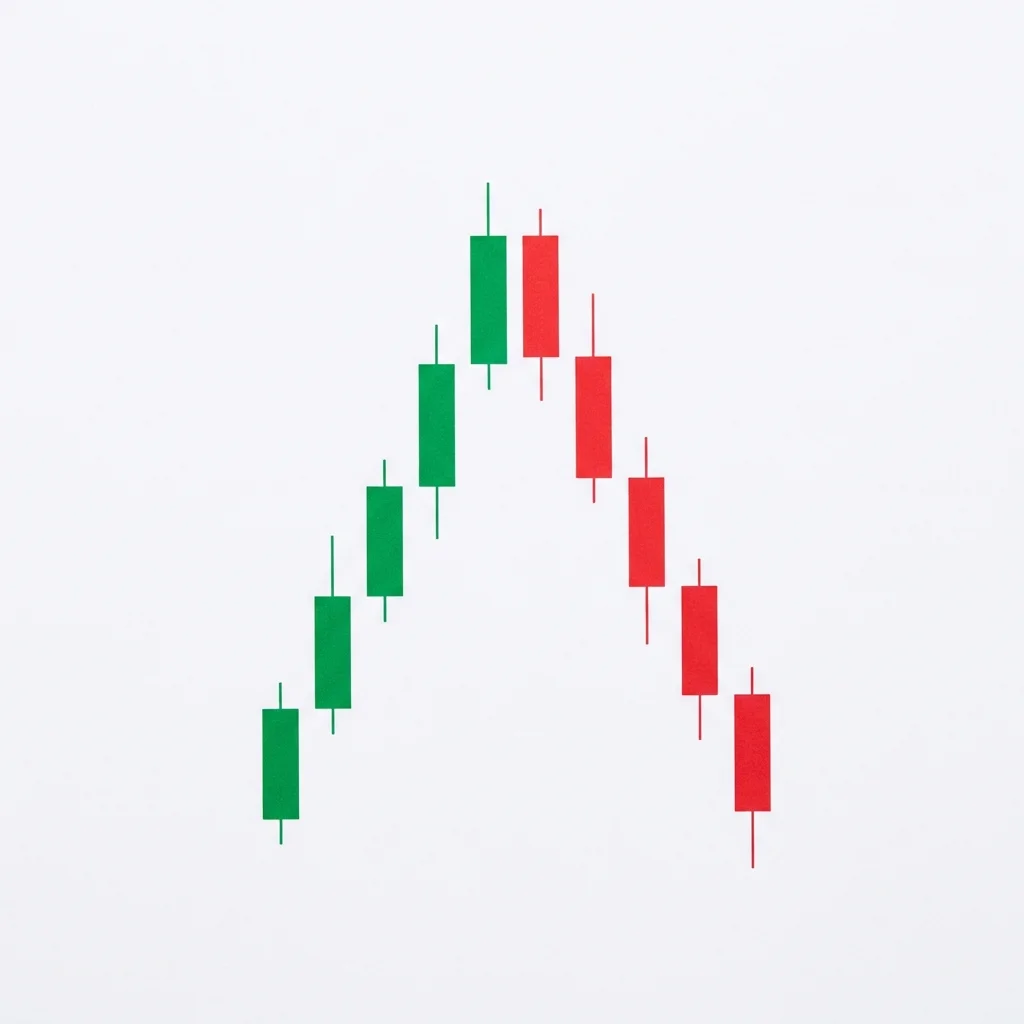
Bearish Inverted V
bearishReversalModerate
The inverted V (V-top) is a sharp reversal pattern where a steep rally is immediately followed by an equally sharp decline, creating an inverted V shape on the chart with virtually no consolidation at the top.
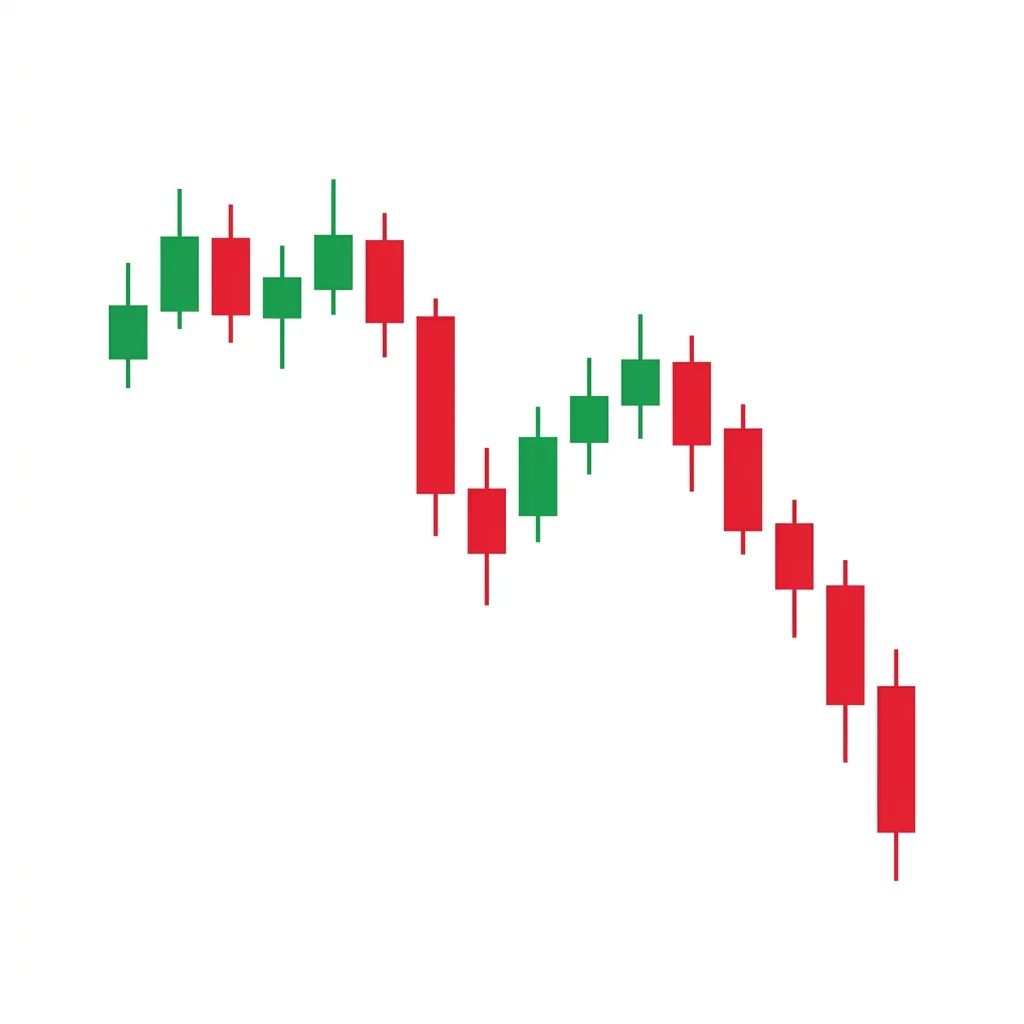
Bearish Last Kiss
bearishContinuationHigh
The last kiss occurs when price breaks below support, rallies back to 'kiss' the broken level from below, and is rejected. The old support now acts as resistance, confirming the breakdown and offering an optimal short entry.
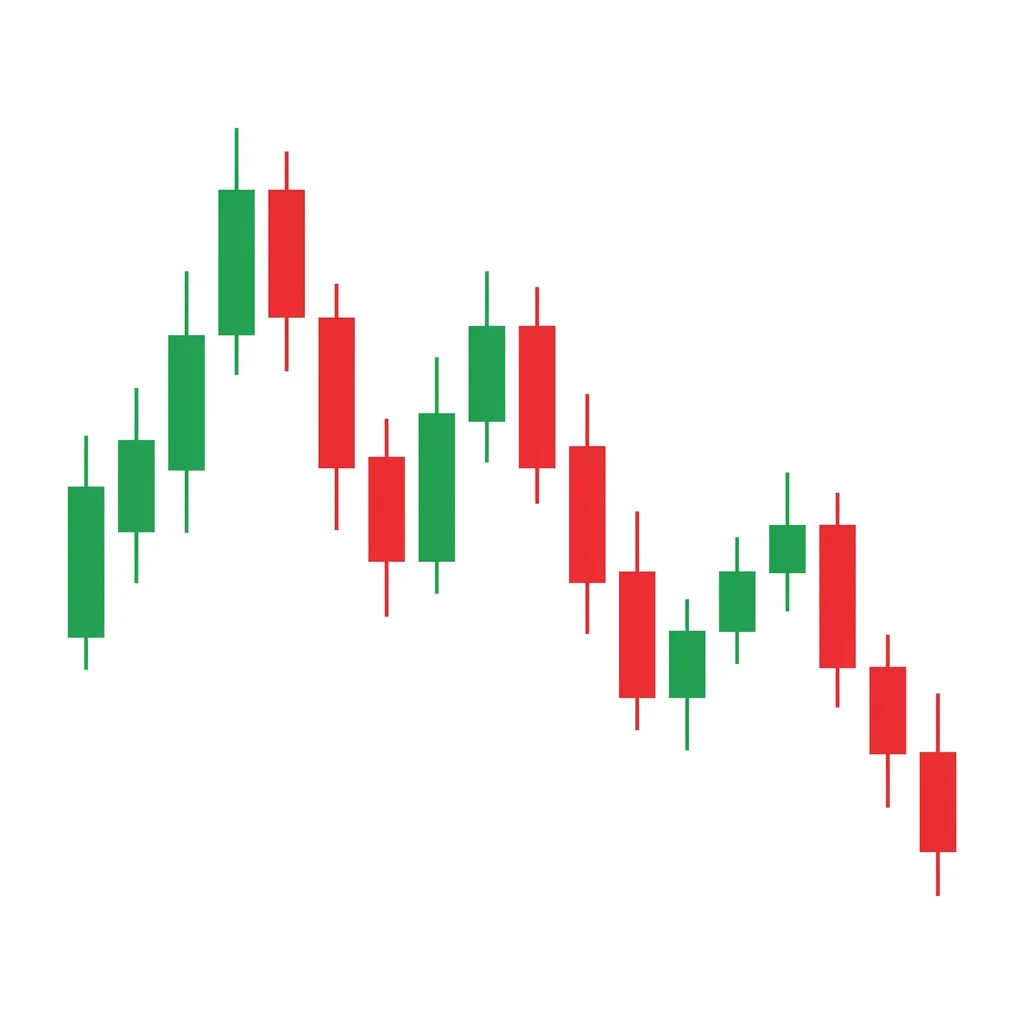
Bearish Lower Highs
bearishContinuationHigh
Bearish lower highs is a fundamental trend structure pattern where each successive swing high forms at a lower level, confirming bearish momentum and a downtrend. It is the most basic and important bearish market structure signal.
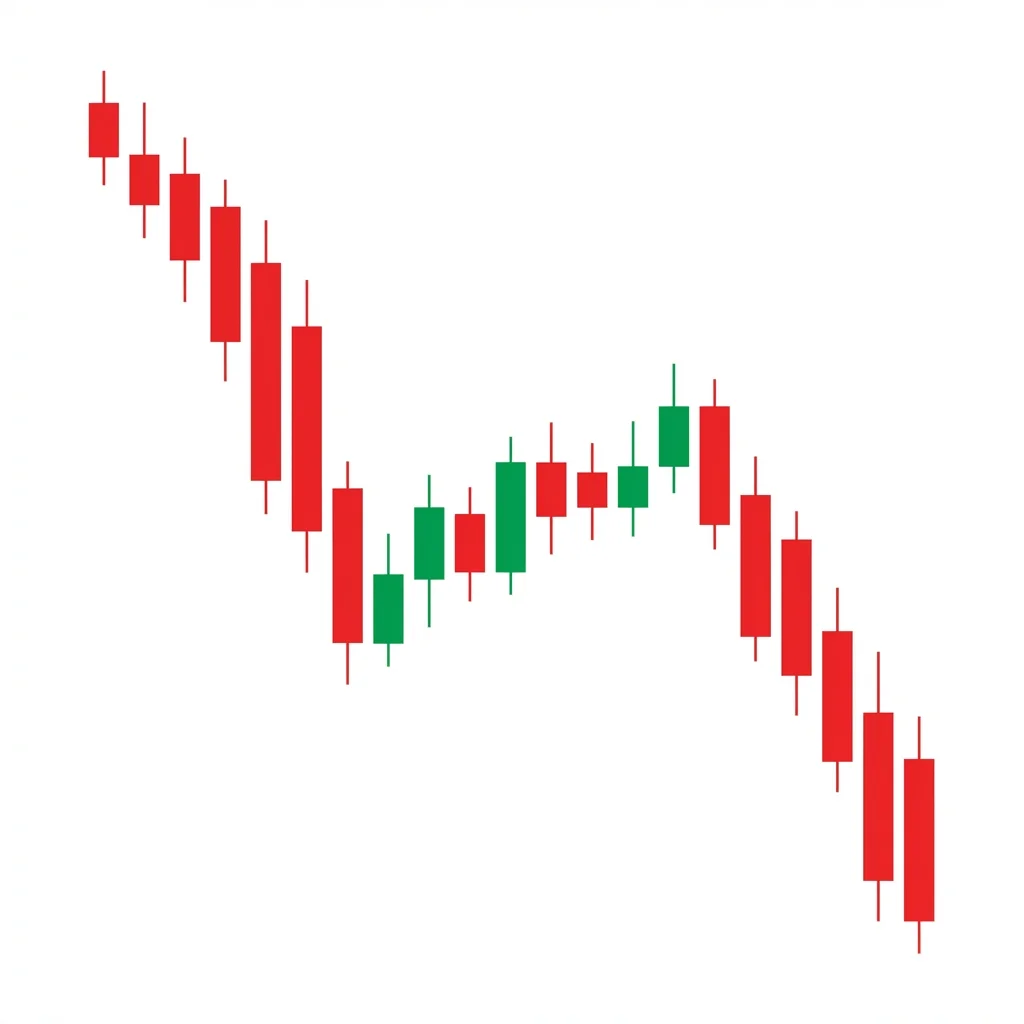
Bearish Measured Move Down
bearishContinuationHigh
The measured move down is a two-leg decline pattern where the second leg is approximately equal in distance to the first, separated by a corrective phase. It provides a clear price target for the decline based on symmetry.
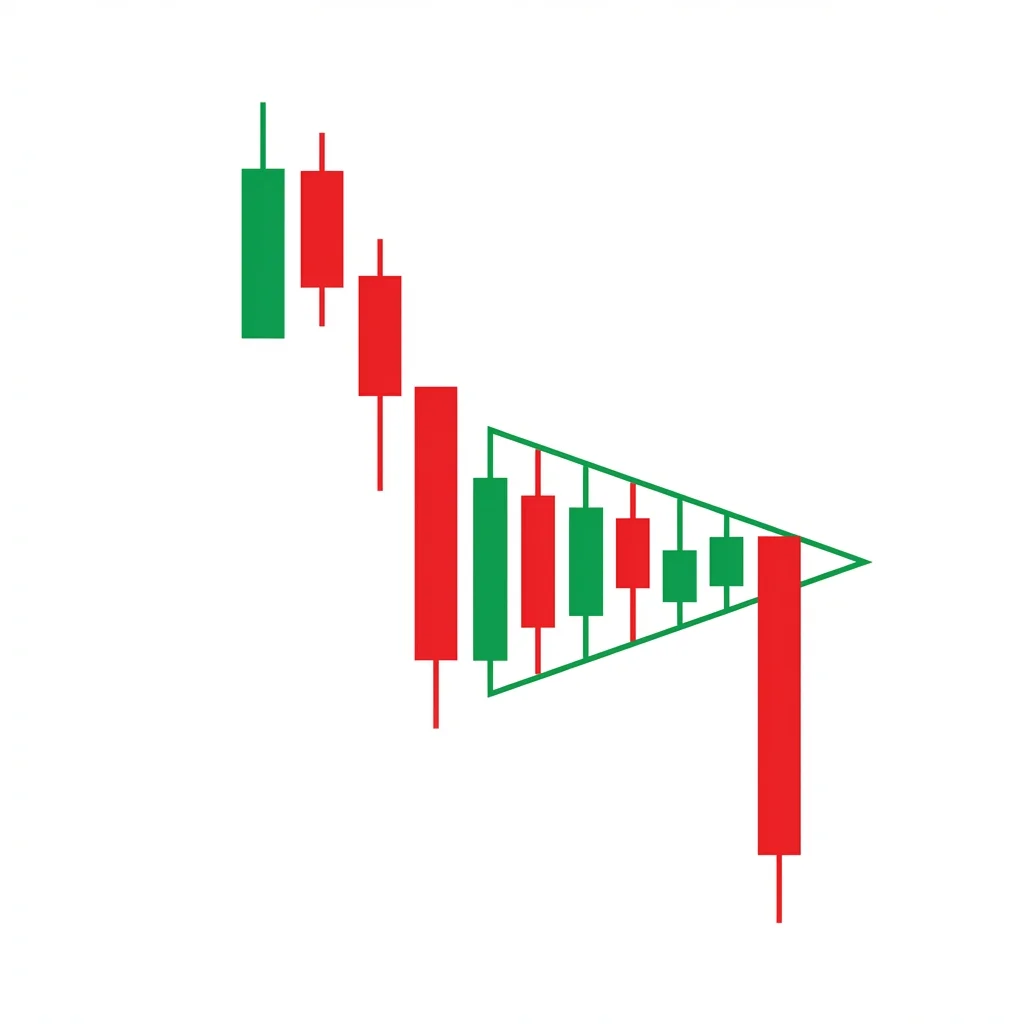
Bearish Pennant
bearishContinuationHigh
A bearish pennant is a continuation pattern that forms after a sharp decline, creating a small symmetrical triangle as the market consolidates before resuming its downward move. The measured target equals the flagpole's length projected from the breakout point.
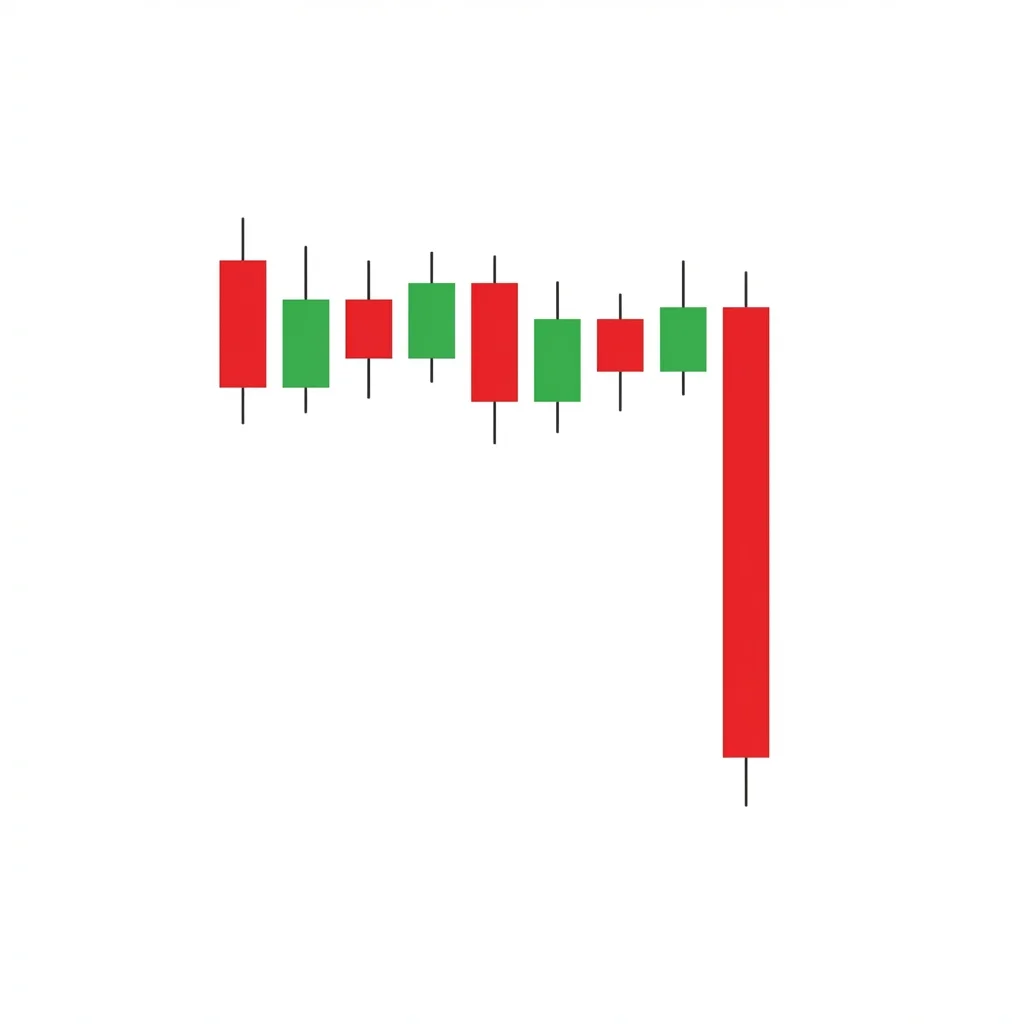
Bearish Rectangle Breakdown
bearishContinuationHigh
A bearish rectangle breakdown occurs when price trades in a horizontal range between parallel support and resistance before breaking below support. The measured move target equals the height of the rectangle projected downward from the breakdown point.
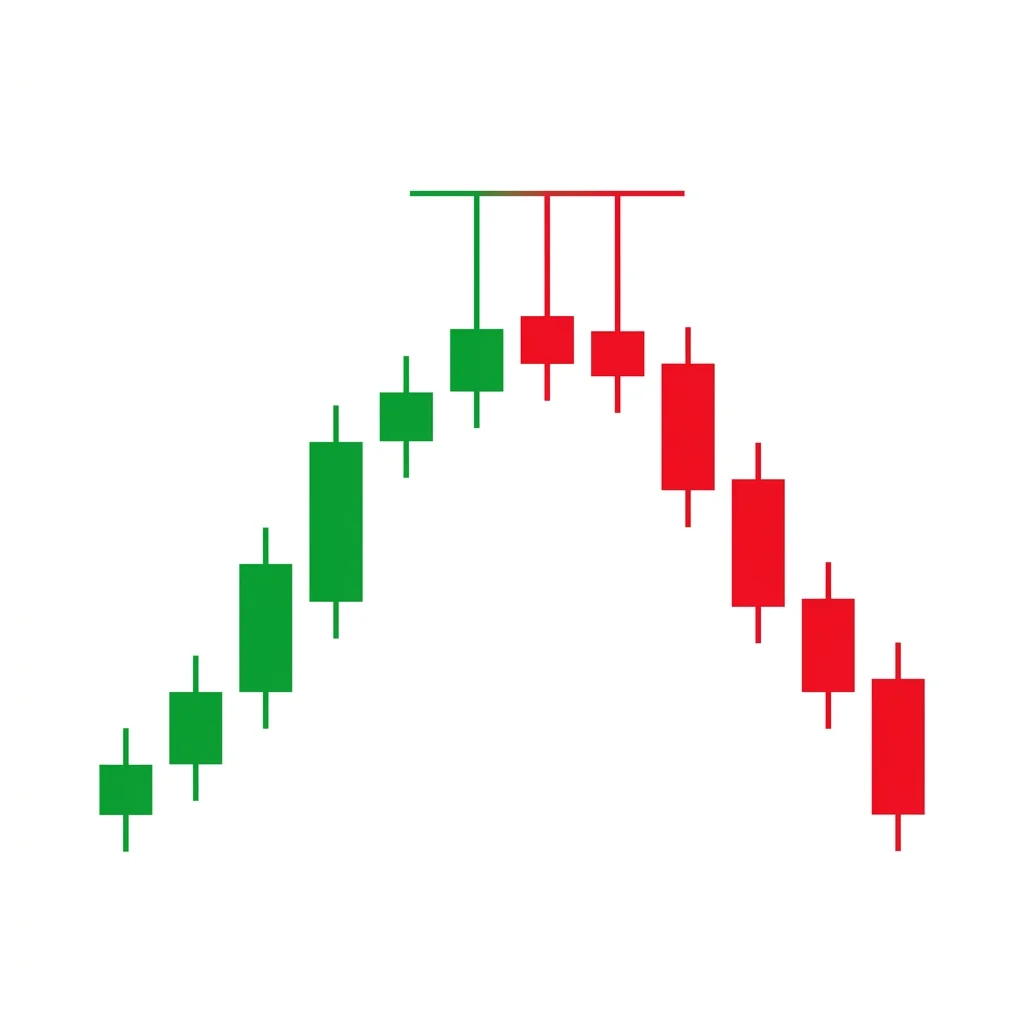
Bearish Resistance Rejection
bearishReversalHigh
A bearish resistance rejection occurs when price rallies into a well-established resistance level and is met with selling pressure, producing bearish candles with long upper wicks. The repeated failure to break through resistance signals a reversal.
Bearish Reversal
bearishReversalHigh
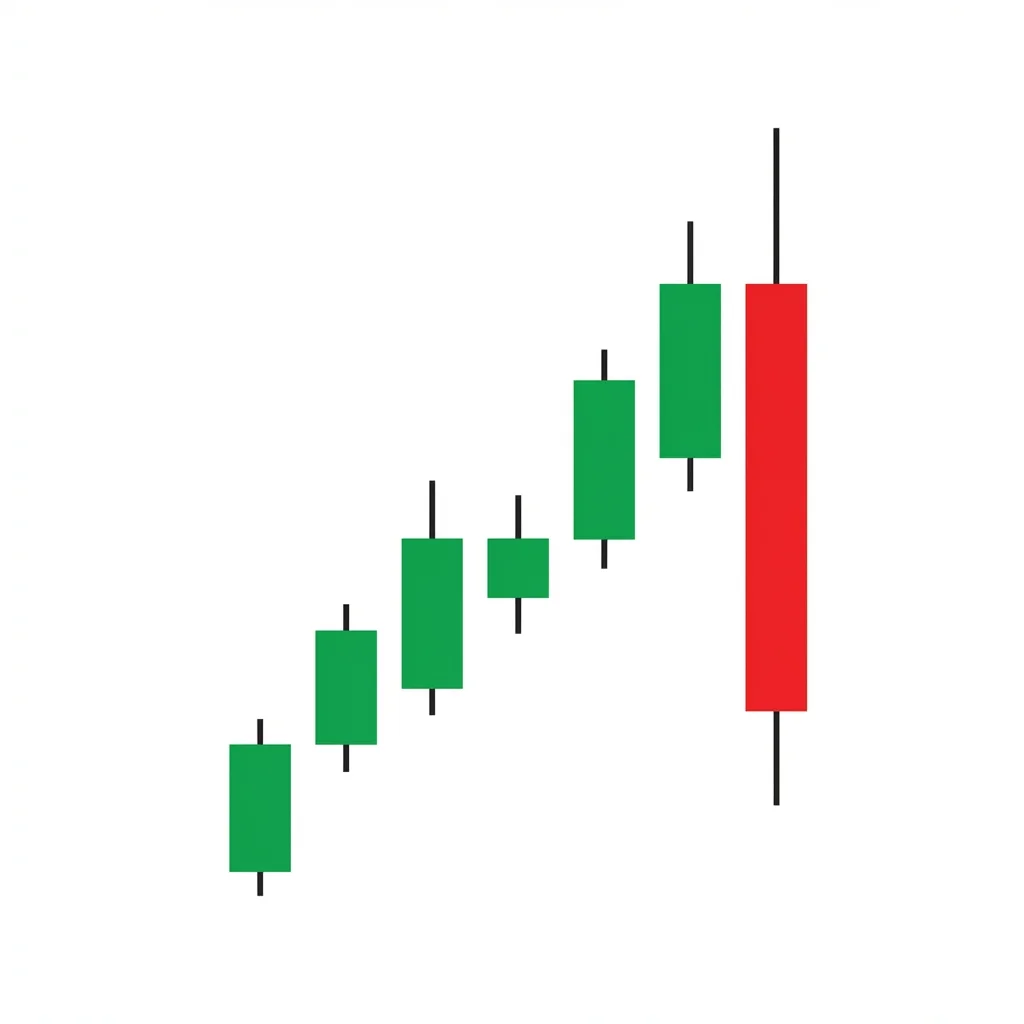
A bearish reversal is the comprehensive transition from an uptrend to a downtrend, marked by a failure to make a new higher high, the formation of a lower high, and a break below the last higher low. It represents a fundamental shift in market sentiment from bullish to bearish.
Bearish Rising Channel Break
bearishReversalHigh
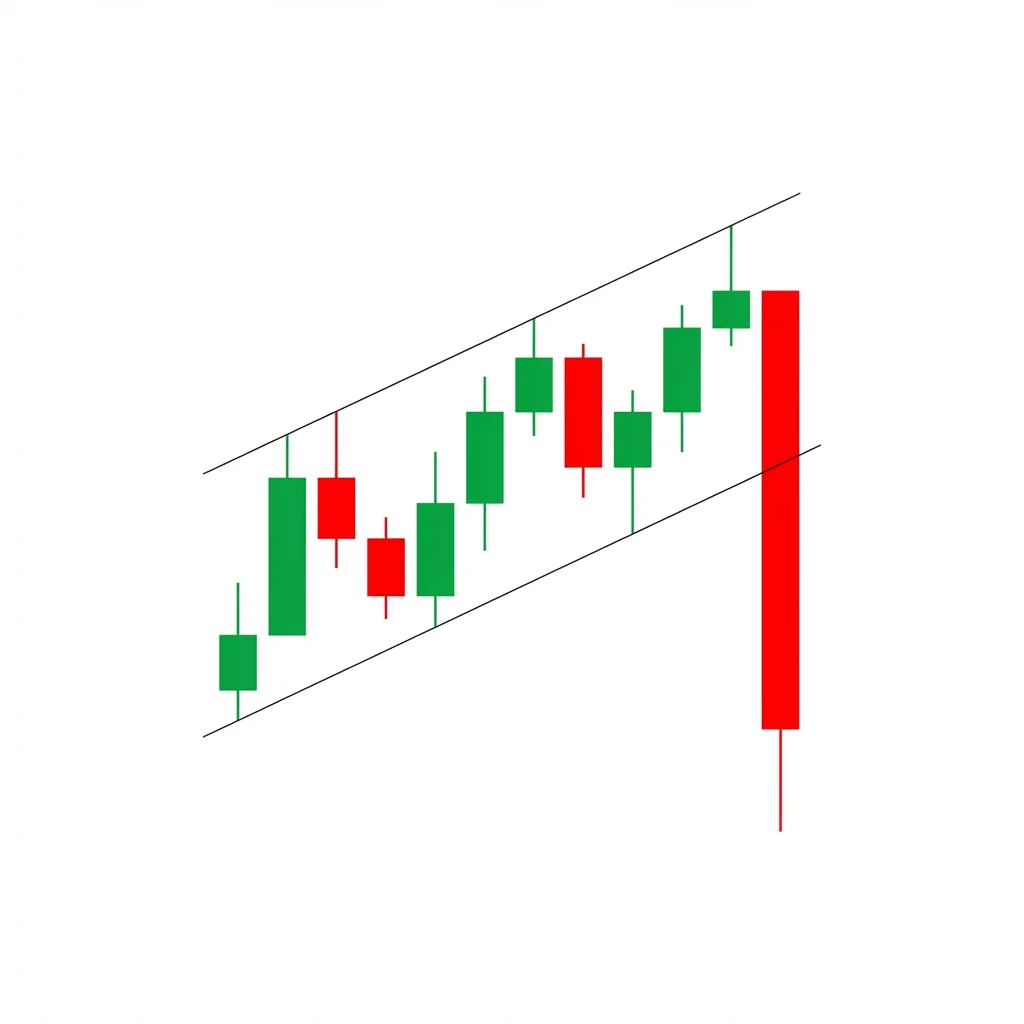
A bearish rising channel break occurs when price has been trading within an ascending channel and breaks below the lower trendline, signaling the end of the uptrend. The measured target equals the channel's width projected downward from the breakout point.
Bearish Rising Wedge
bearishReversalHigh
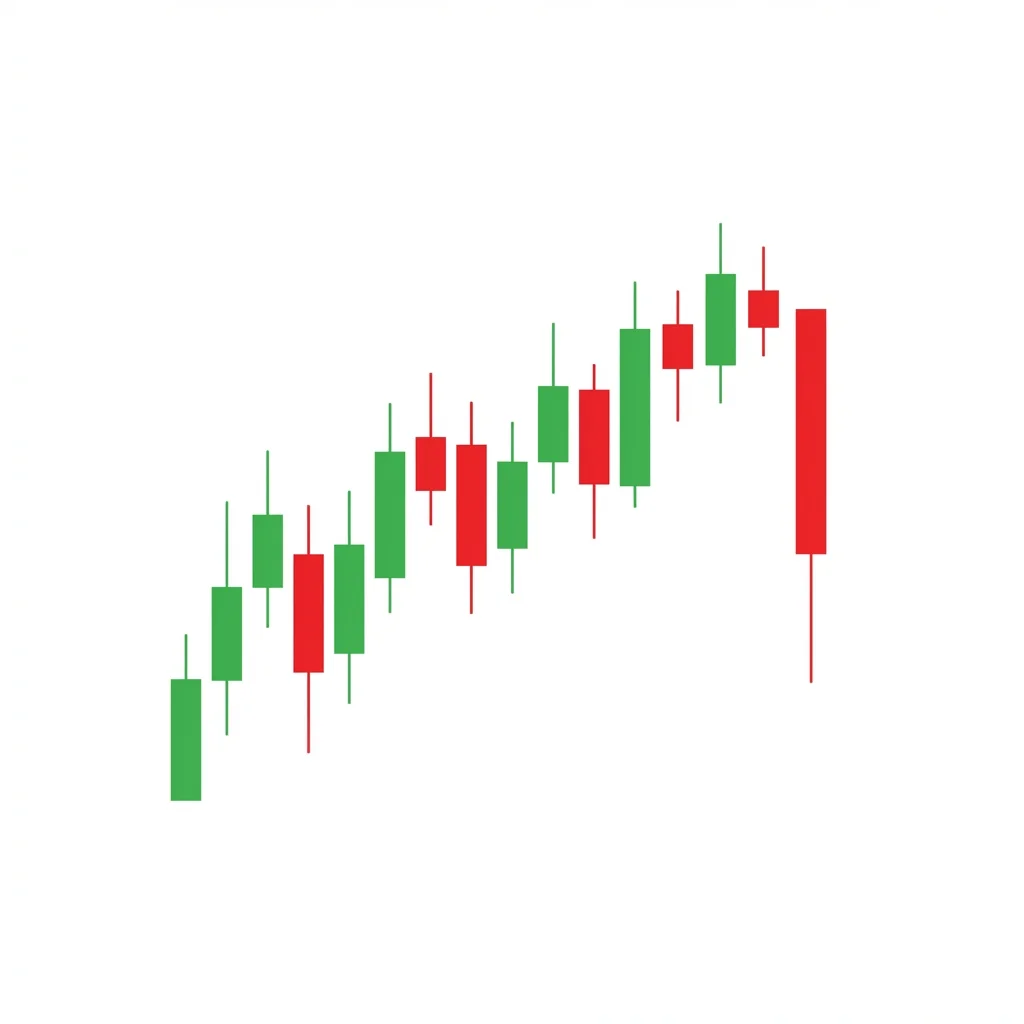
A rising wedge is a bearish pattern formed by two converging upward-sloping trendlines. As price makes higher highs and higher lows within the narrowing range, momentum diminishes. The breakdown below the lower trendline typically leads to a sharp decline targeting the base of the wedge.
Bearish Rounding Top
bearishReversalHigh
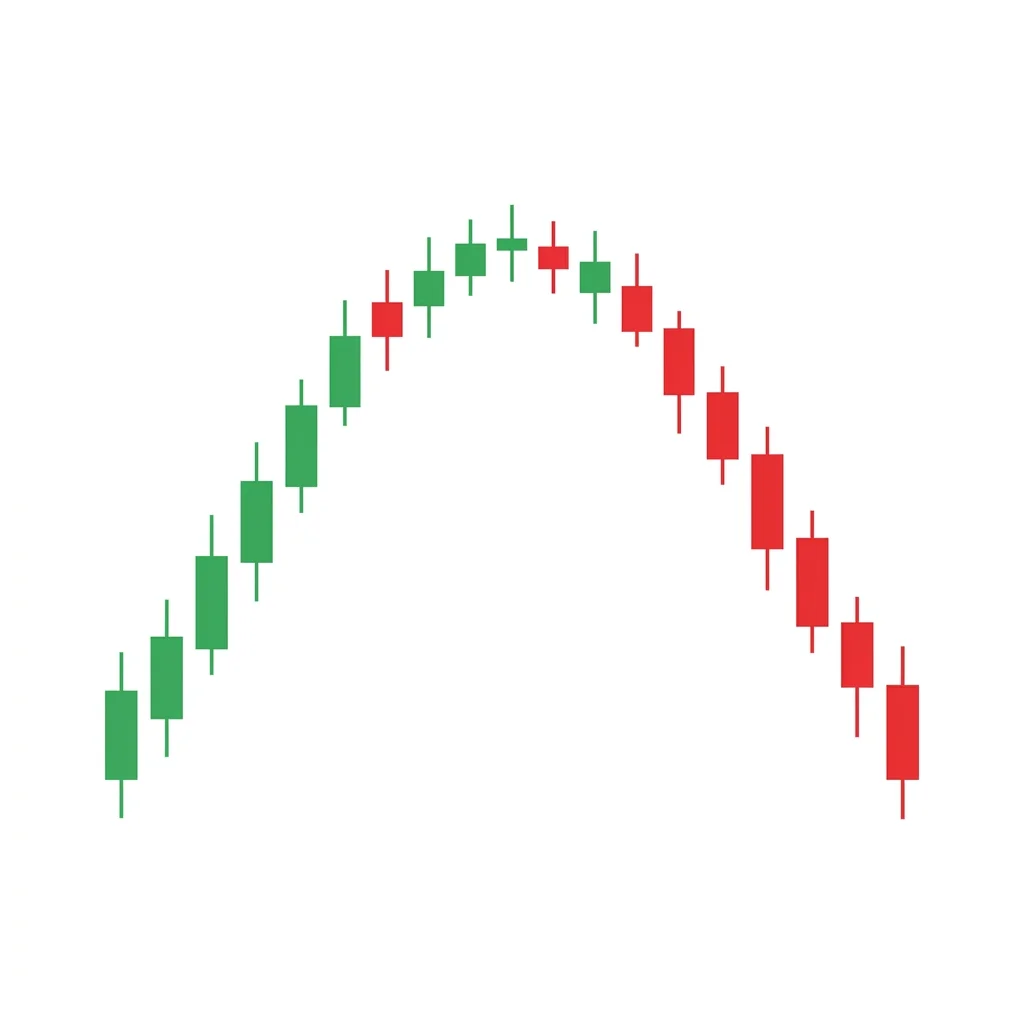
The rounding top is a gradual reversal pattern shaped like an inverted saucer. Price slowly transitions from an uptrend to a downtrend in a smooth arc, with volume declining at the peak and expanding on the neckline breakdown.
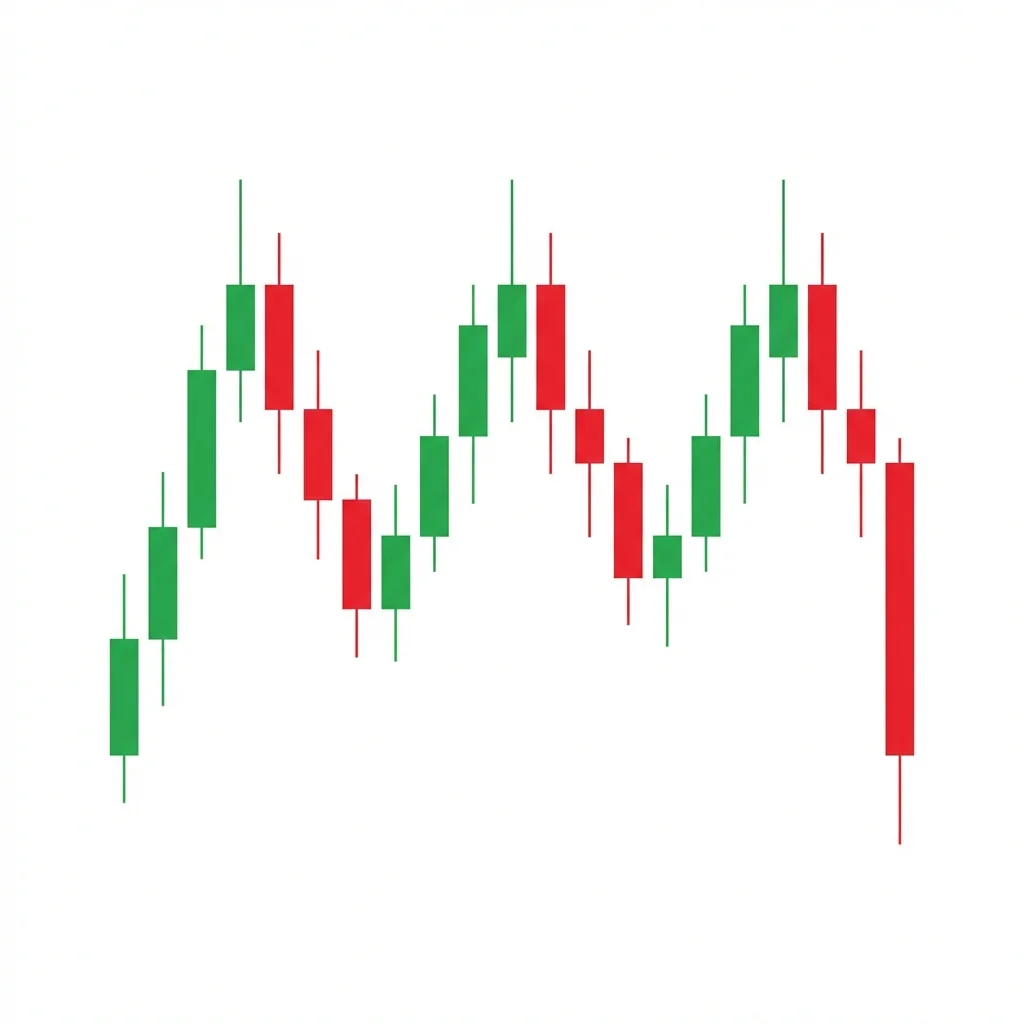
Bearish Triple Top
bearishReversalVery High
The triple top is a powerful bearish reversal pattern formed by three peaks at approximately the same price level, separated by two pullbacks. The pattern confirms when price breaks below the neckline, with a measured target equal to the pattern's height projected downward.
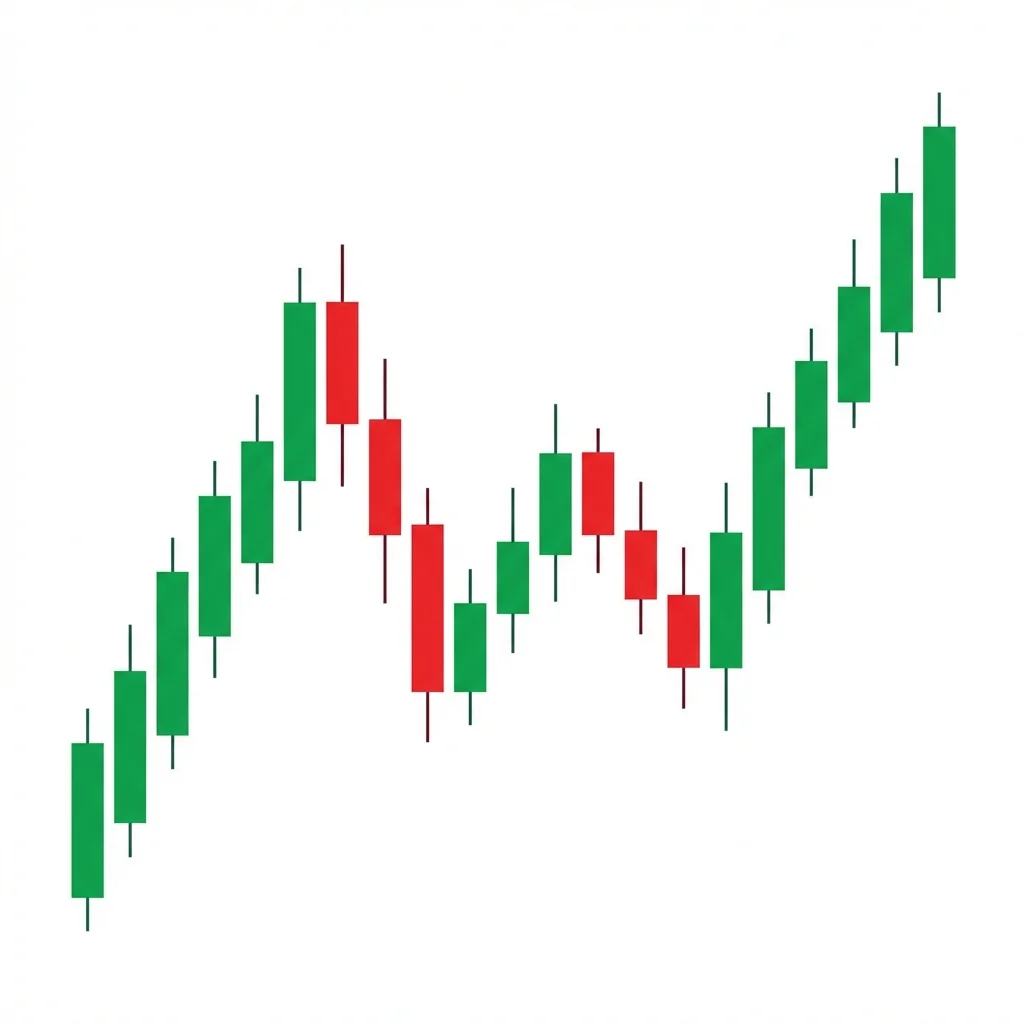
Bullish ABC Bounce
bullishContinuationHigh
The Bullish ABC Bounce is a simple but powerful continuation pattern where price makes a three-wave corrective pullback within an uptrend before resuming higher. It is one of the most fundamental and frequently occurring patterns in all of technical analysis.
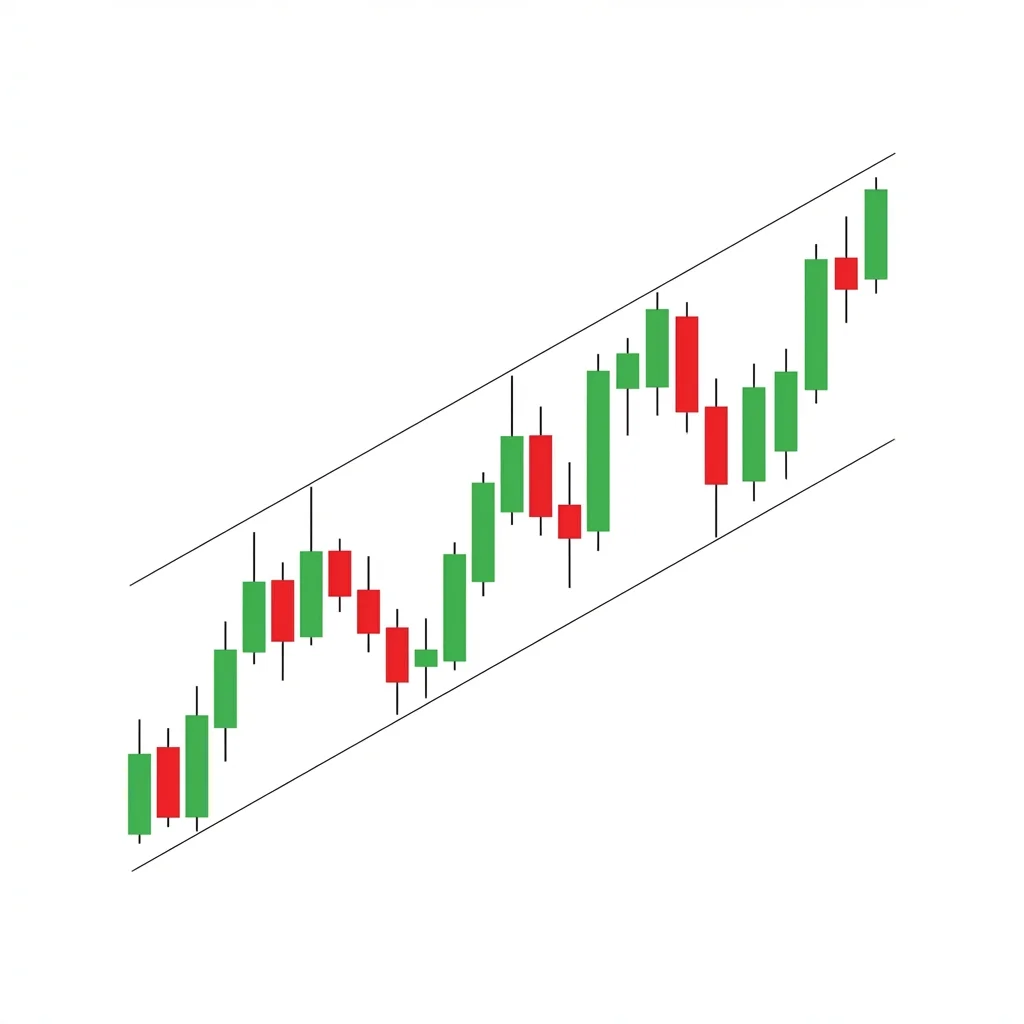
Bullish Ascending Channel
bullishContinuationHigh
The Bullish Ascending Channel is a continuation pattern where price trends upward within two parallel trendlines, providing clear buy zones at the lower boundary and profit targets at the upper boundary.
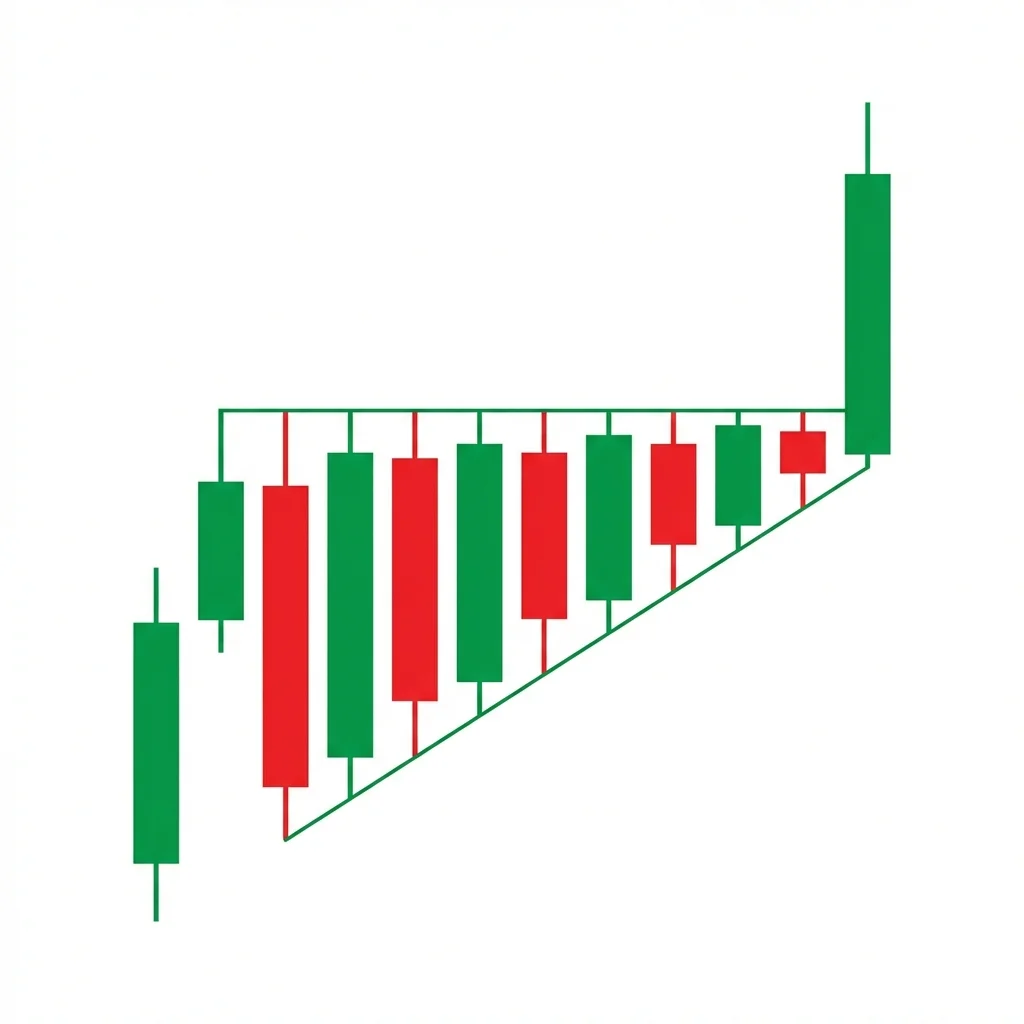
Bullish Ascending Triangle
bullishContinuationHigh
The Bullish Ascending Triangle is a continuation pattern featuring flat resistance and rising support. Buyers are consistently willing to pay higher prices, compressing the range until a breakout above resistance triggers the next leg up.
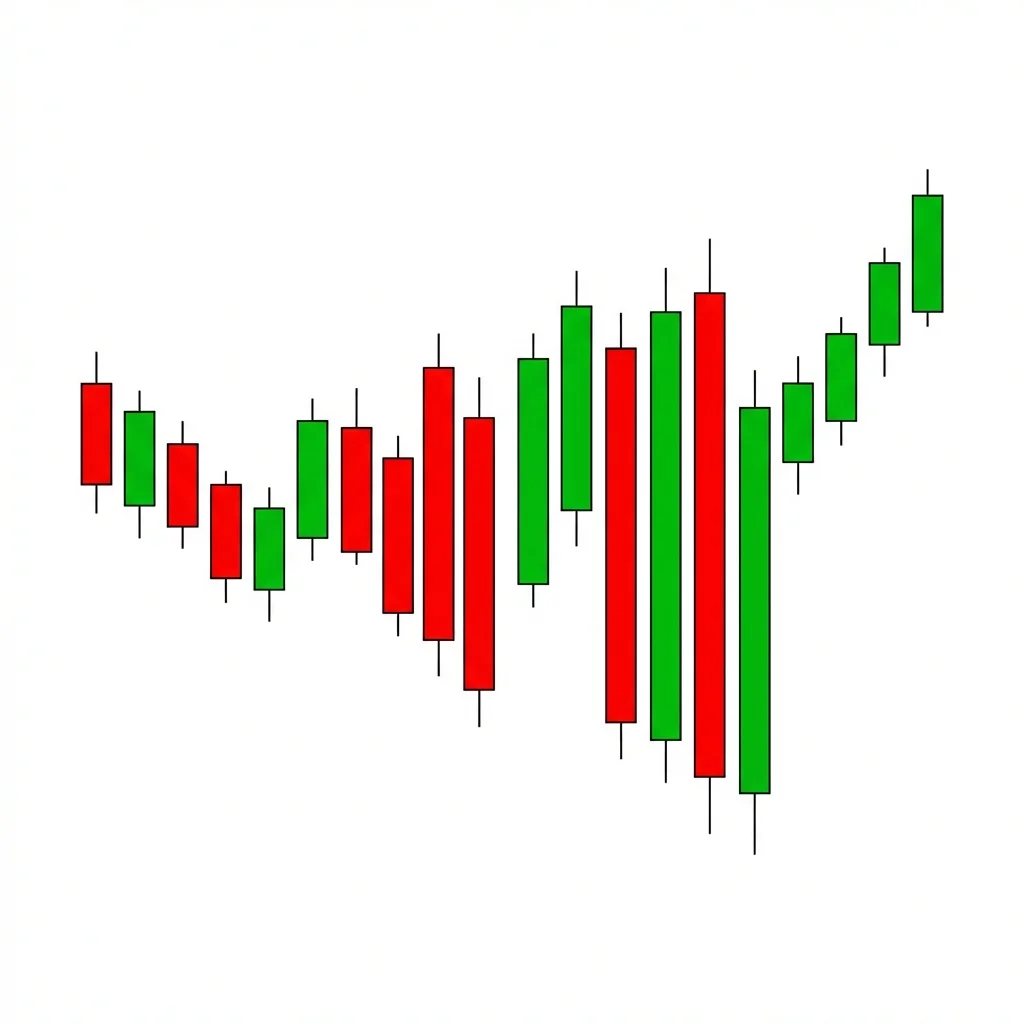
Bullish Broadening Bottom
bullishReversalModerate
The Bullish Broadening Bottom is an expanding volatility pattern where price makes successively wider swings. When it resolves with an upside breakout above the upper trendline, it signals a powerful reversal higher.
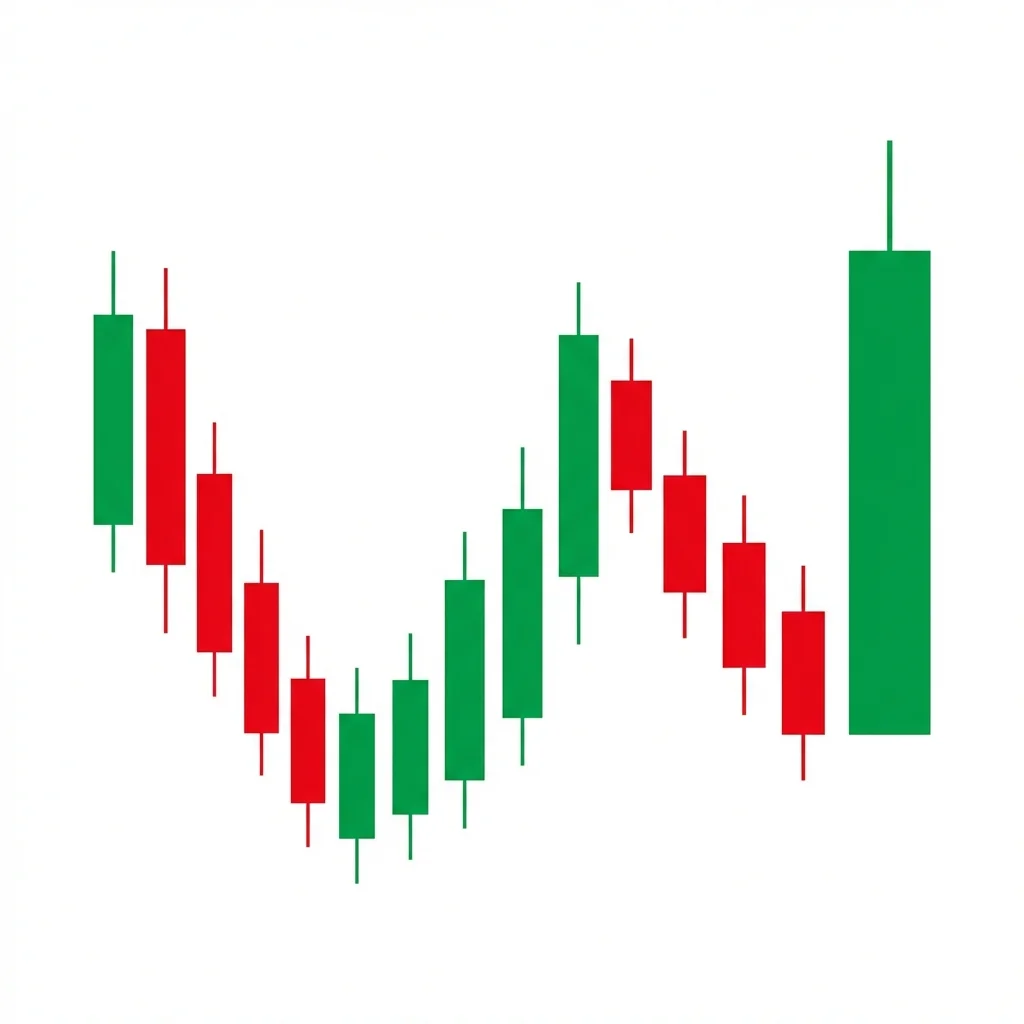
Bullish Cup and Handle
bullishContinuationVery High
The Cup and Handle is one of the most reliable continuation patterns in technical analysis, featuring a rounded U-shaped base (cup) followed by a small pullback (handle) before a powerful breakout to new highs.
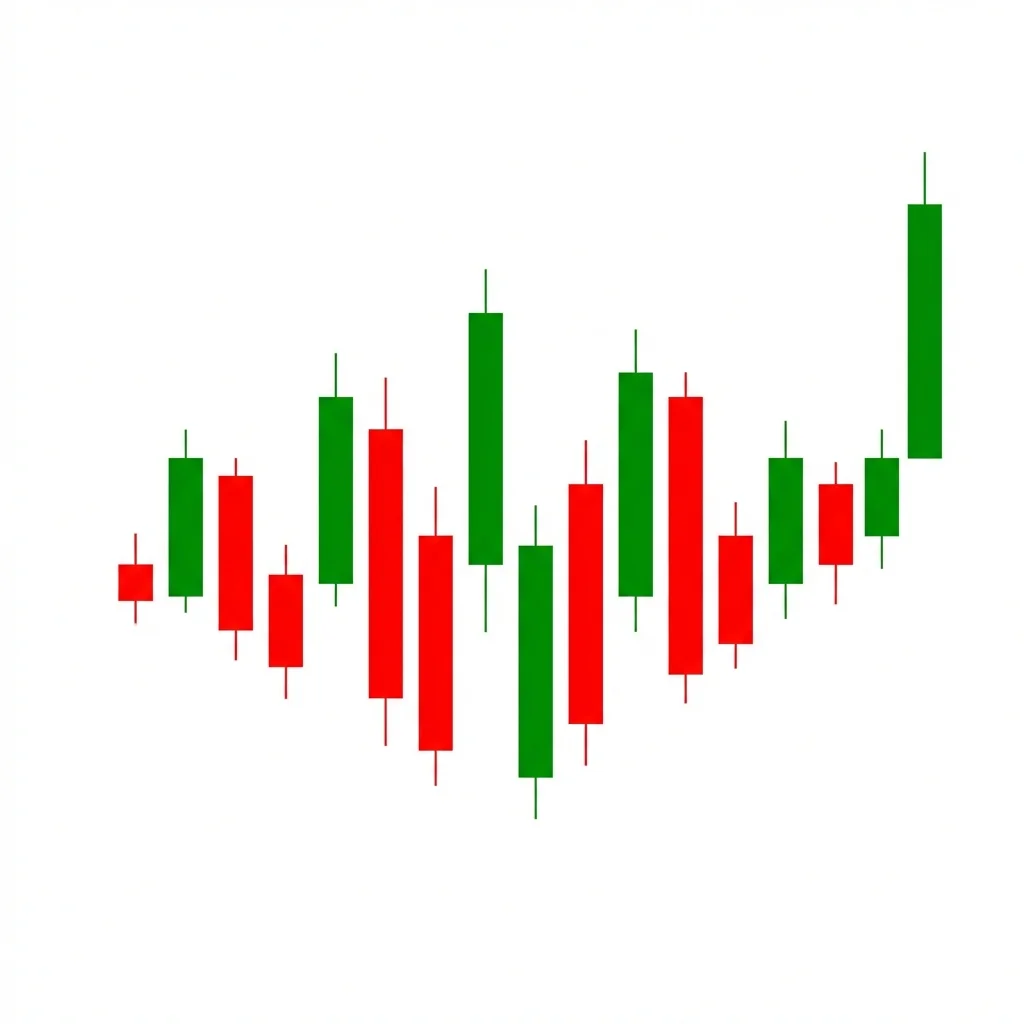
Bullish Diamond Bottom
bullishReversalModerate
The Bullish Diamond Bottom is a complex reversal formation that transitions from expanding volatility to contracting volatility in a diamond shape, resolving with a bullish breakout as uncertainty transforms into directional conviction.
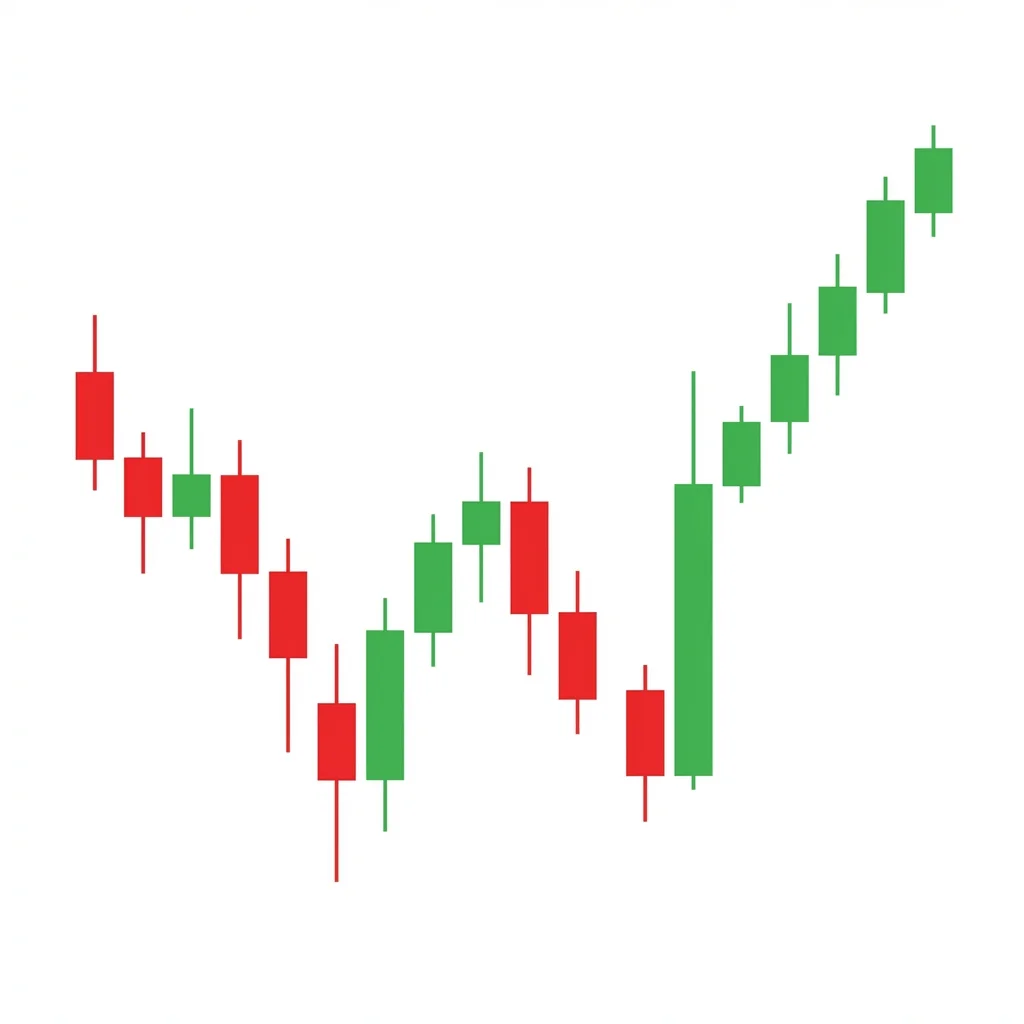
Bullish Double Bottom Breakout
bullishReversalVery High
The Double Bottom Breakout focuses specifically on the confirmed neckline break of a double bottom pattern, which is the highest-conviction entry point with a clear measured move target and defined risk.
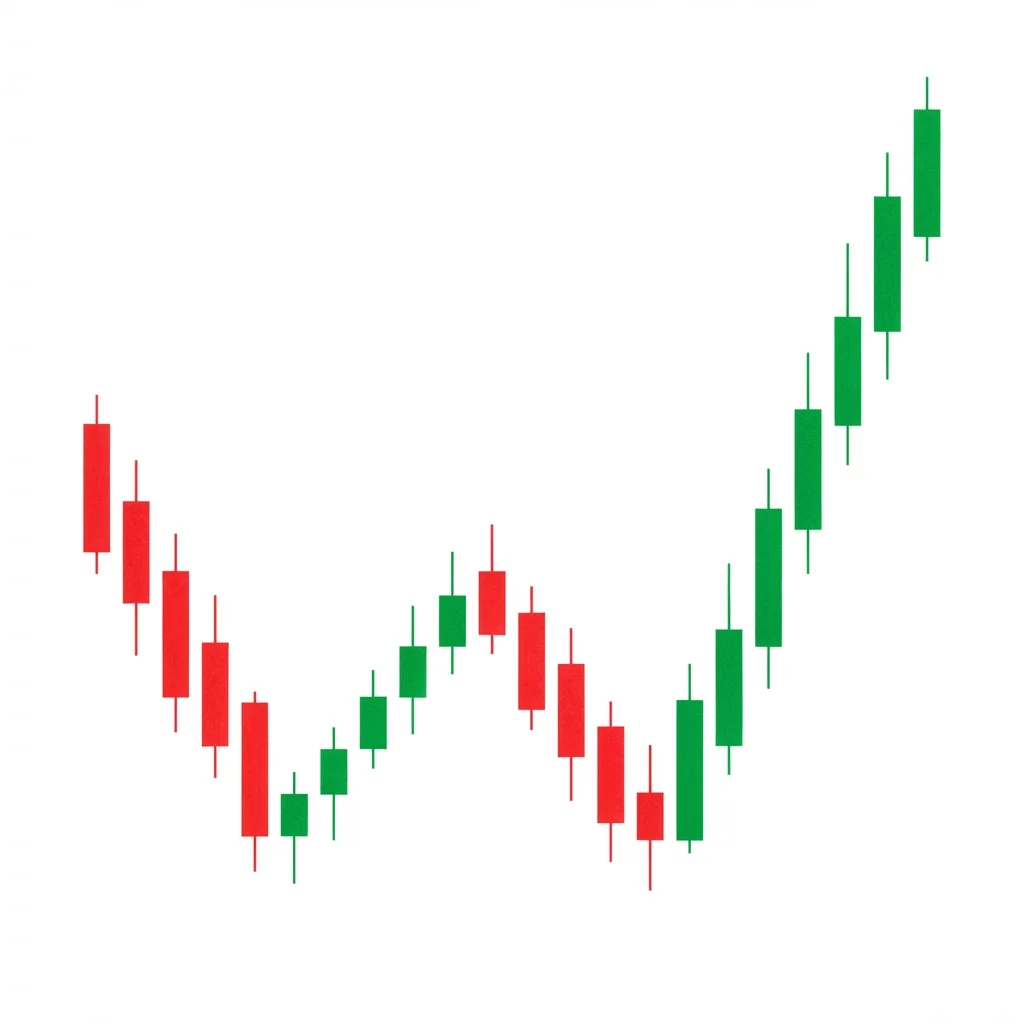
Bullish Double Bottom
bullishReversalHigh
The Double Bottom is one of the most recognized reversal patterns, forming a W-shape where price tests a support level twice and bounces, signaling that sellers cannot push through and buyers are gaining control.
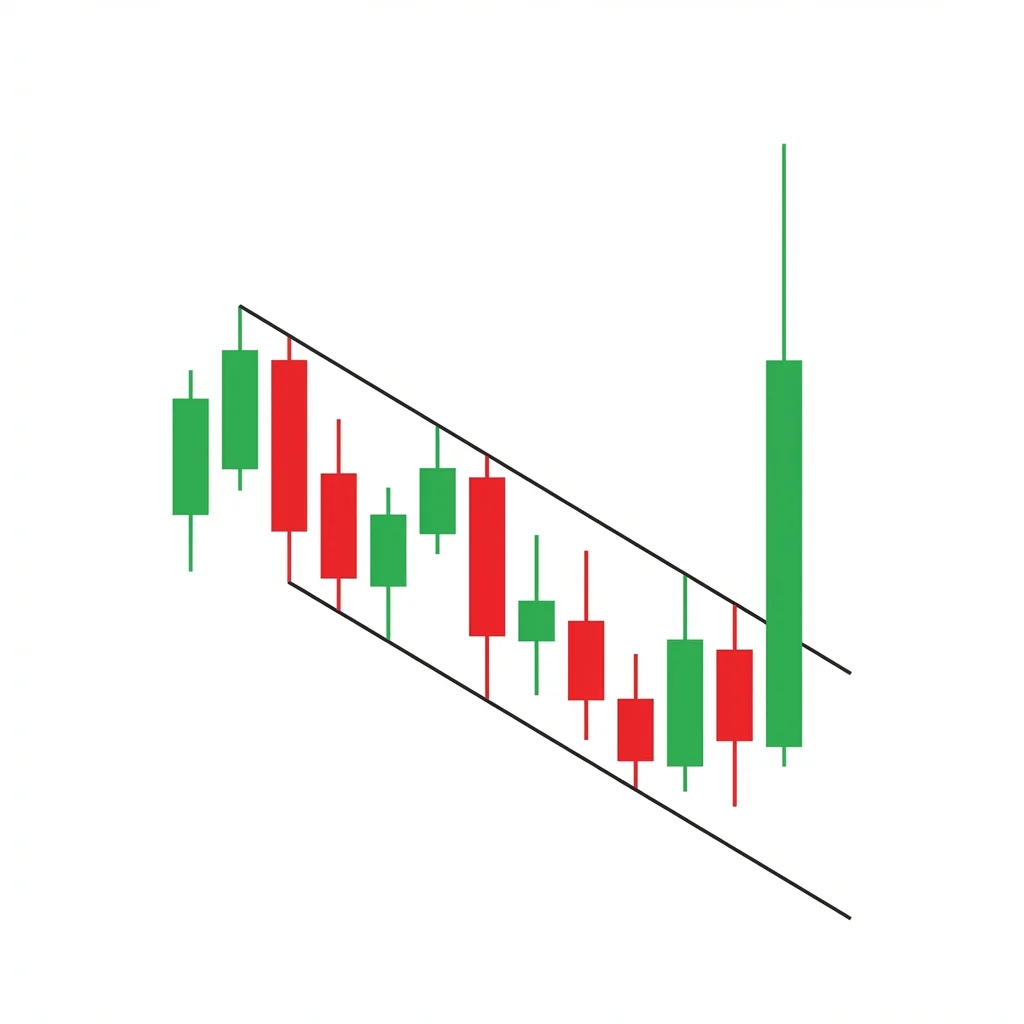
Bullish Falling Channel Break
bullishReversalHigh
The Falling Channel Break occurs when price breaks above the upper boundary of a descending parallel channel, signaling the end of the downtrend and the beginning of a new bullish phase.
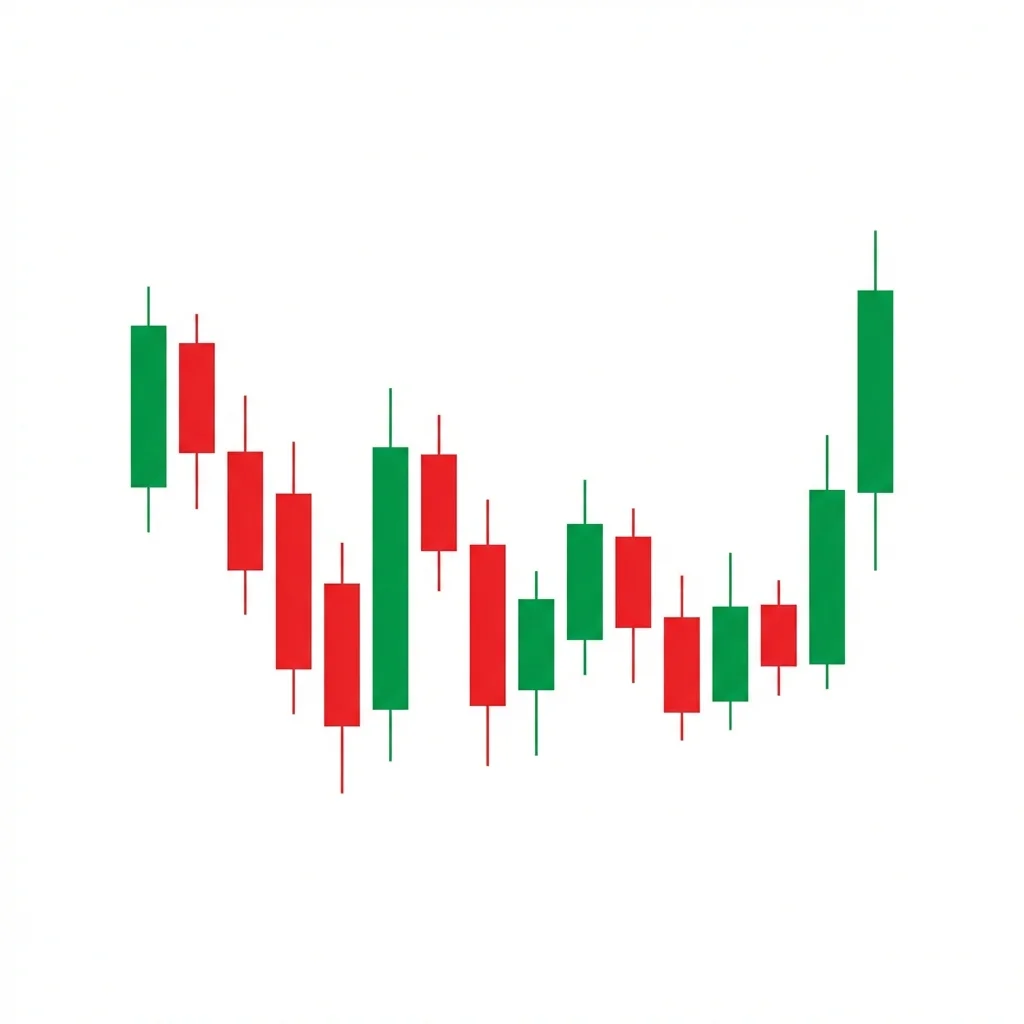
Bullish Falling Wedge
bullishBothHigh
The Falling Wedge is a bullish pattern with two converging downward-sloping trendlines. The narrowing range compresses energy that is released on an upside breakout, making it both a reversal pattern (after downtrends) and a continuation pattern (during uptrend corrections).
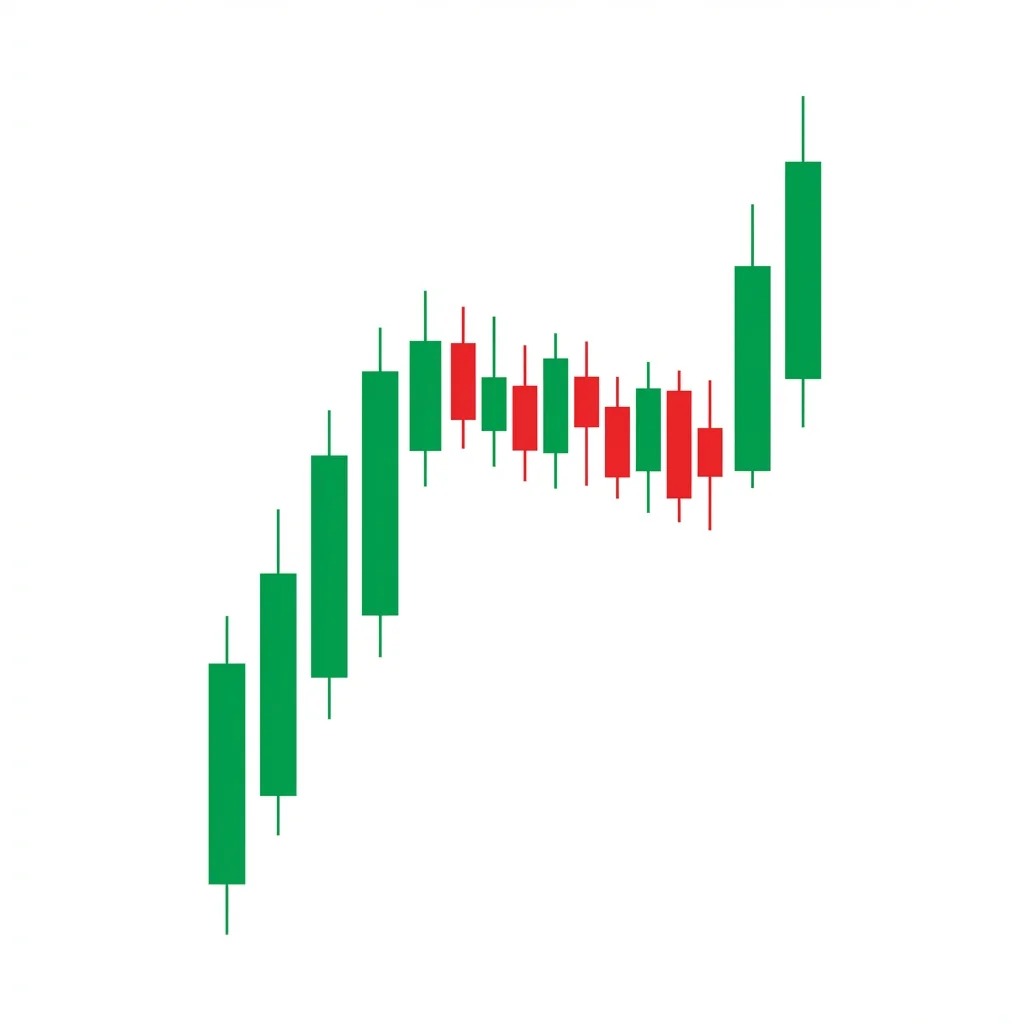
Bullish Flag
bullishContinuationHigh
The Bullish Flag is the quintessential continuation pattern: a sharp rally (pole) followed by a brief, tight consolidation (flag) before the next leg up. It represents a healthy pause in a strong uptrend.
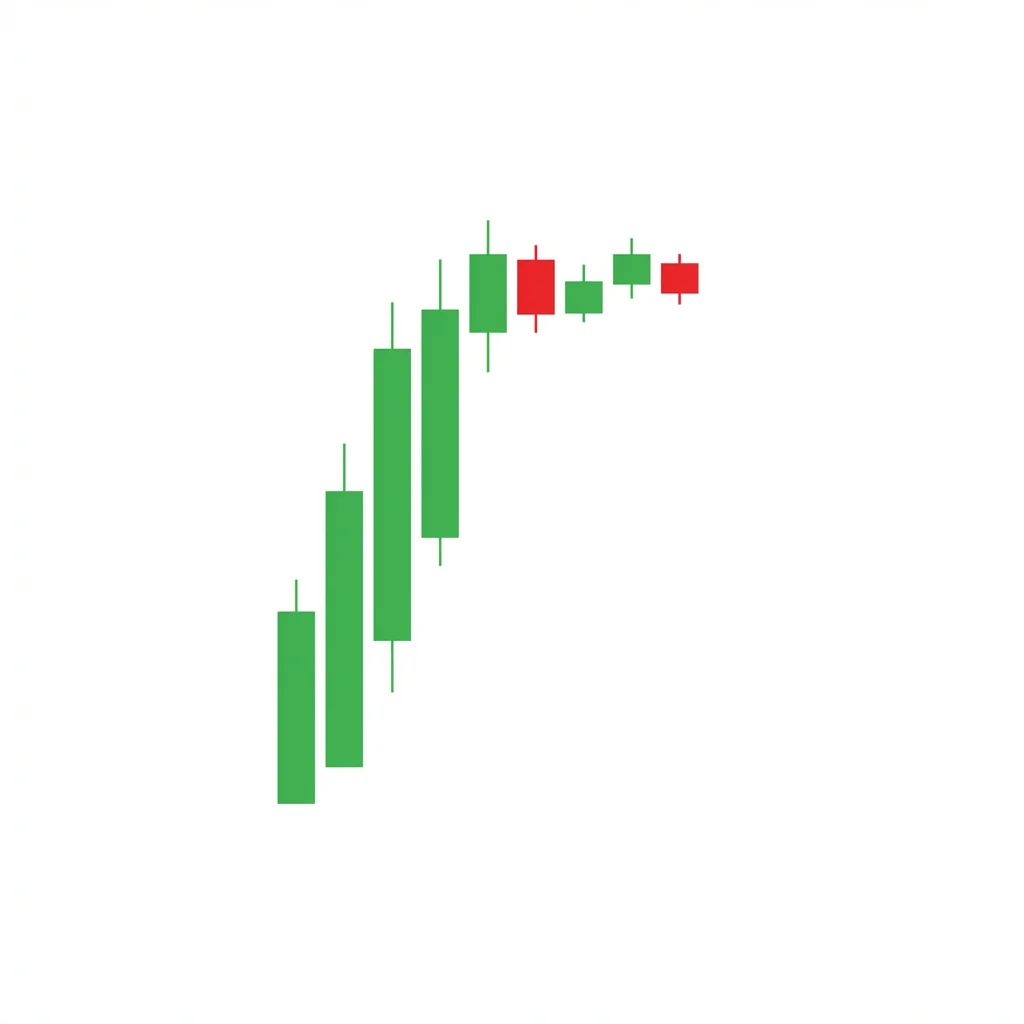
Bullish High Tight Flag
bullishContinuationVery High
The High Tight Flag is one of the rarest and most powerful bullish continuation patterns. It features a stock that doubles in price quickly, then consolidates in a very tight range before breaking out to potentially double again.
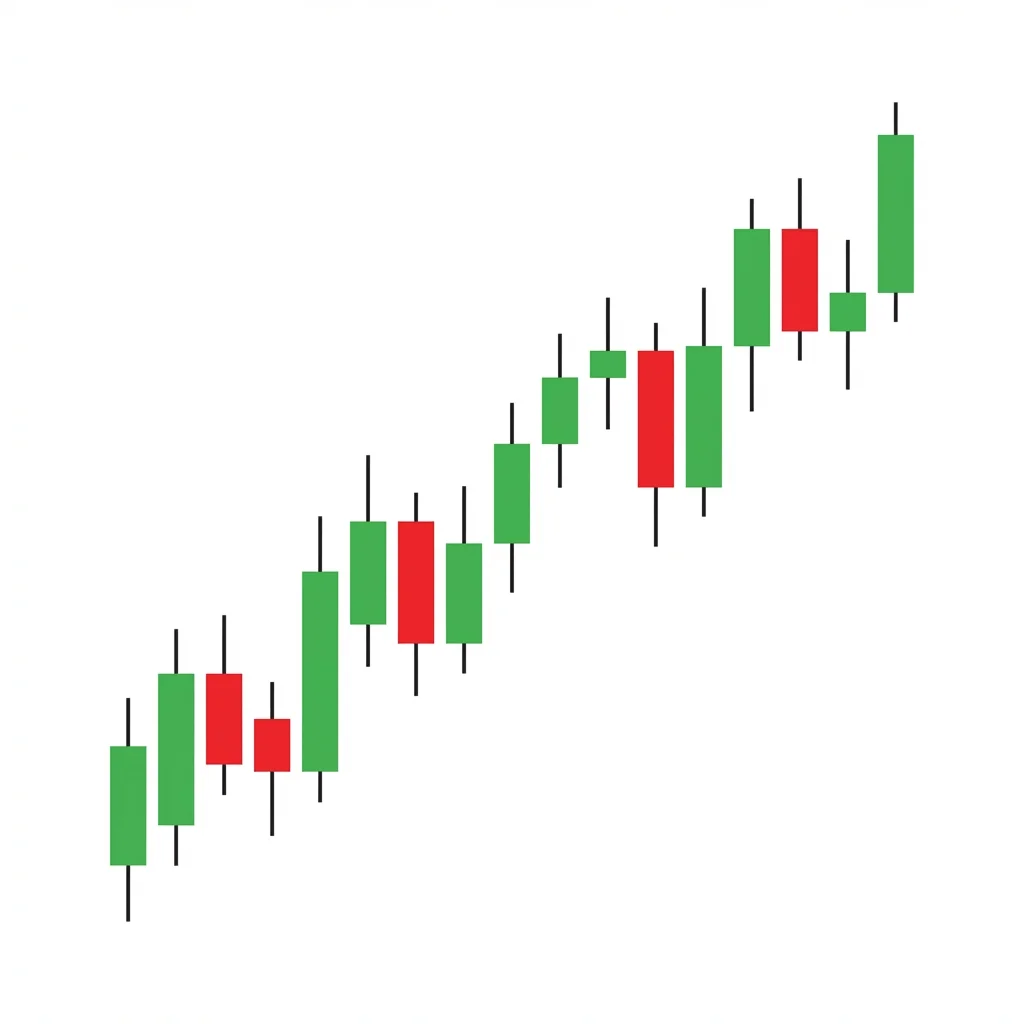
Bullish Higher Lows
bullishContinuationHigh
The Higher Lows pattern is the most fundamental bullish structure, showing that buyers are willing to step in at progressively higher prices, indicating strengthening demand and a healthy uptrend.
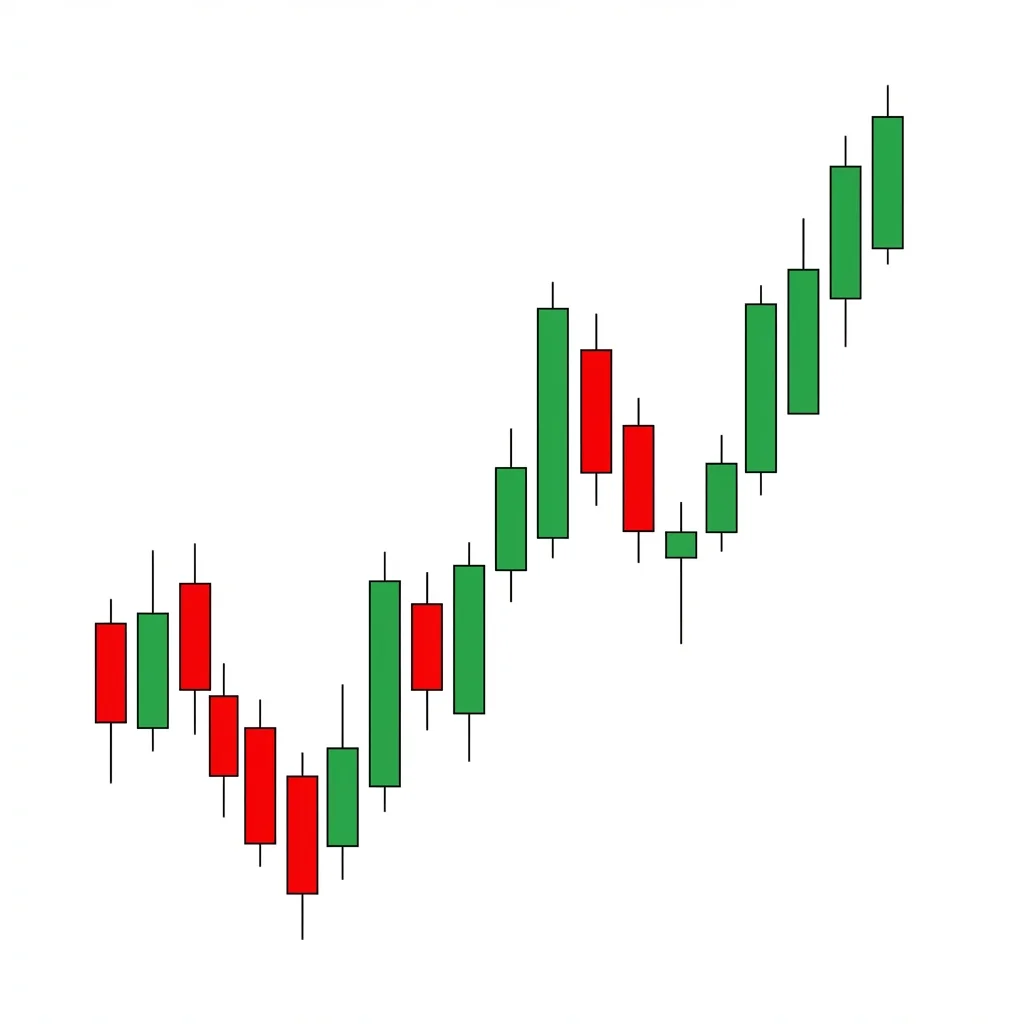
Bullish IHS Neckline Retest
bullishContinuationHigh
The IHS Neckline Retest is a high-probability continuation entry after an inverse head and shoulders breakout. Price pulls back to test the broken neckline as new support, offering a second chance entry with a tighter stop.
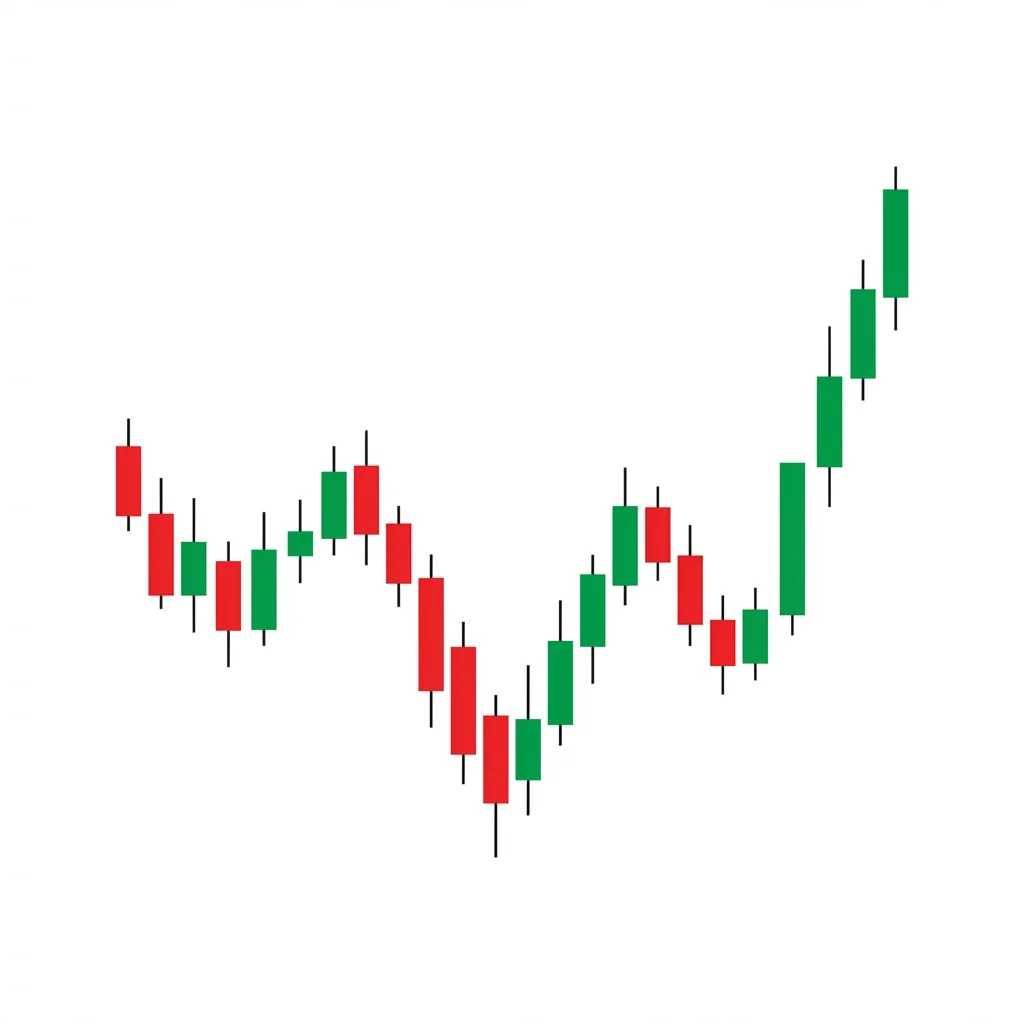
Bullish Inverse Head and Shoulders
bullishReversalVery High
The Inverse Head and Shoulders is one of the most reliable bullish reversal patterns, featuring three troughs with the middle one (head) being the deepest, signaling a major transition from a downtrend to an uptrend.
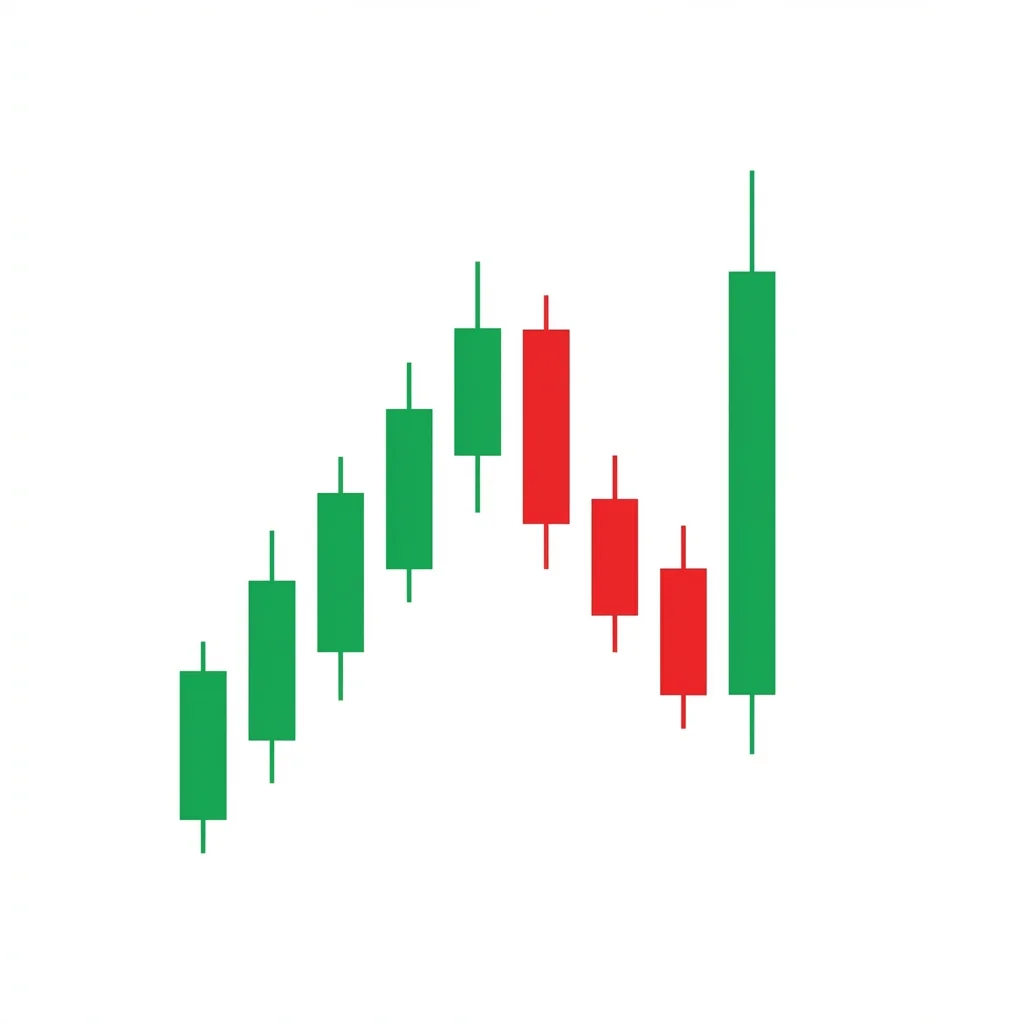
Bullish Last Kiss
bullishContinuationHigh
The Last Kiss is a breakout pullback pattern where price returns to test a broken resistance level as new support one final time before continuing the advance — the 'last kiss goodbye' before leaving the old range behind.
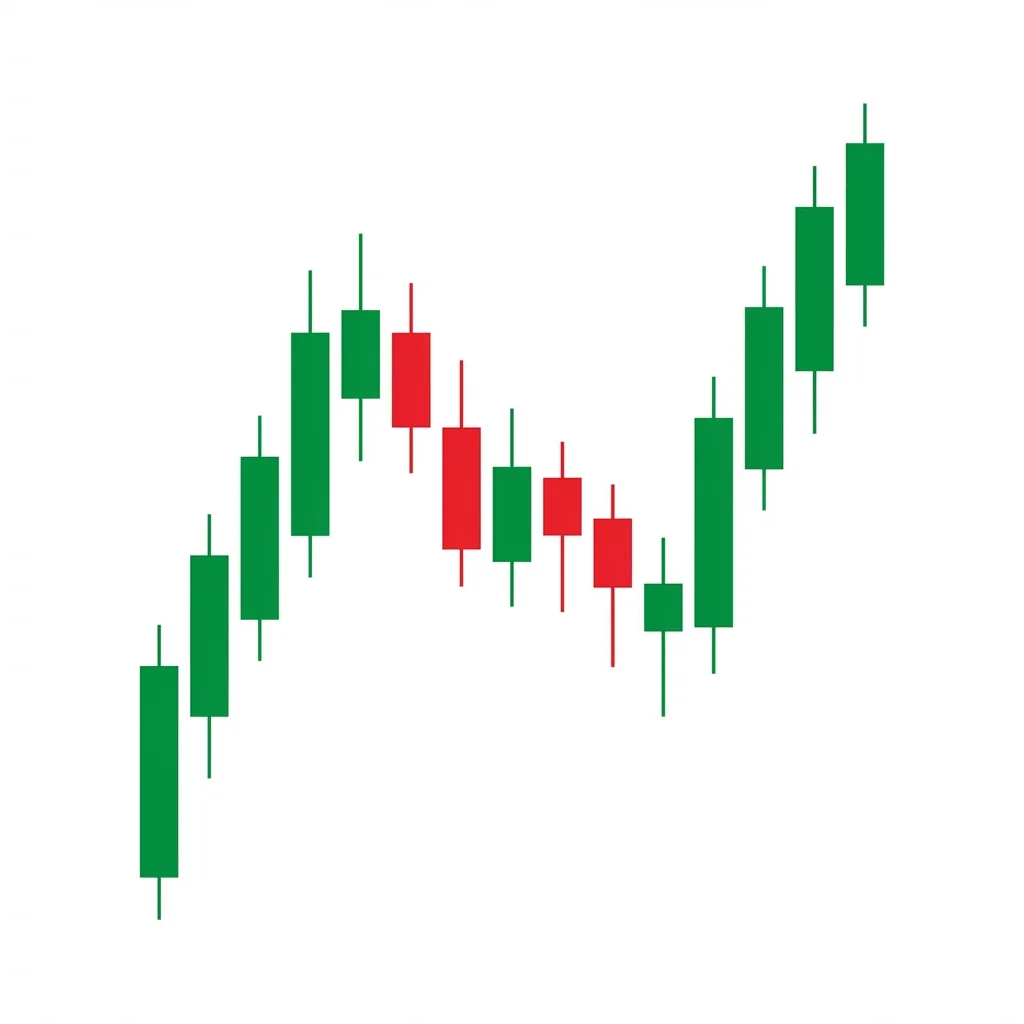
Bullish Measured Move Up
bullishContinuationHigh
The Measured Move Up is a bullish pattern where two rally legs of approximately equal length are separated by a correction, allowing traders to project the second leg's target by measuring the first leg's distance.
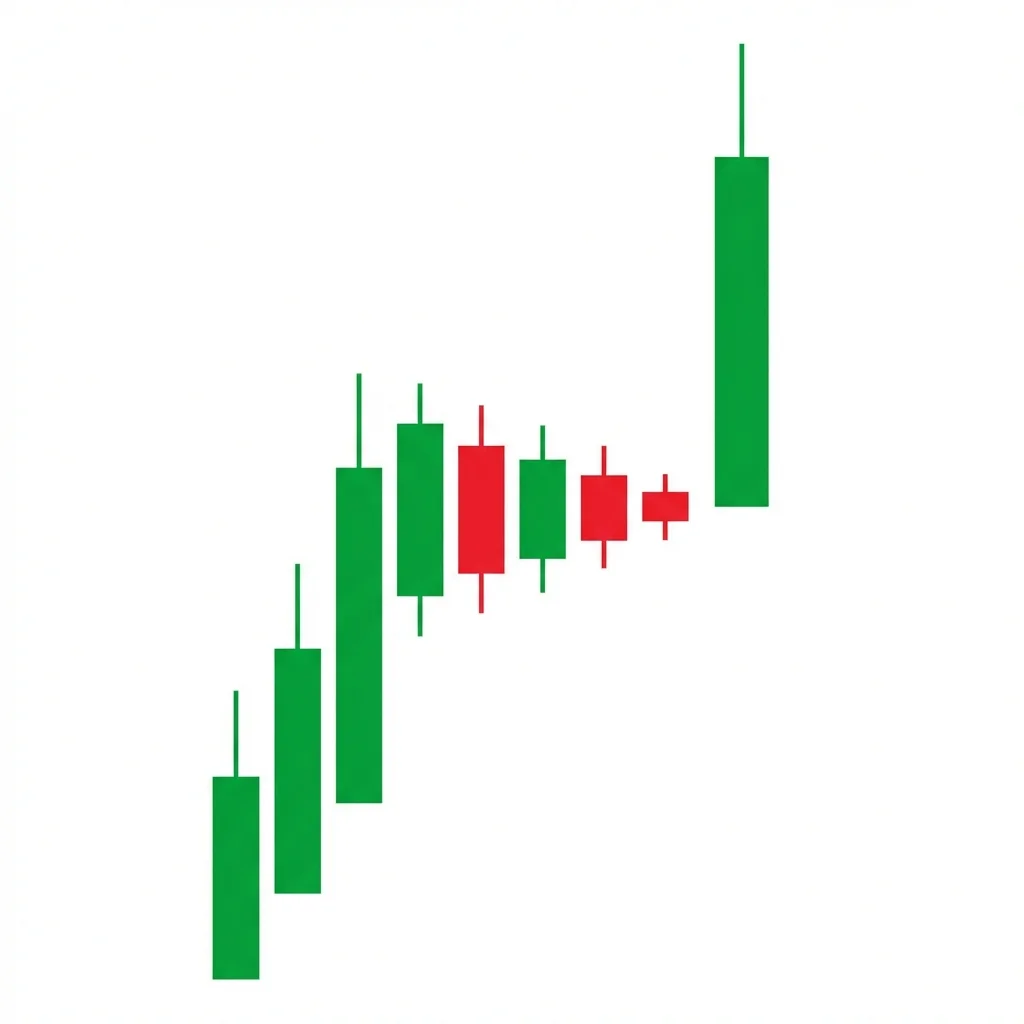
Bullish Pennant
bullishContinuationHigh
The Bullish Pennant is a continuation pattern featuring a sharp advance (flagpole) followed by a brief triangular consolidation (pennant), before price breaks out and continues higher with a measured move equal to the flagpole.
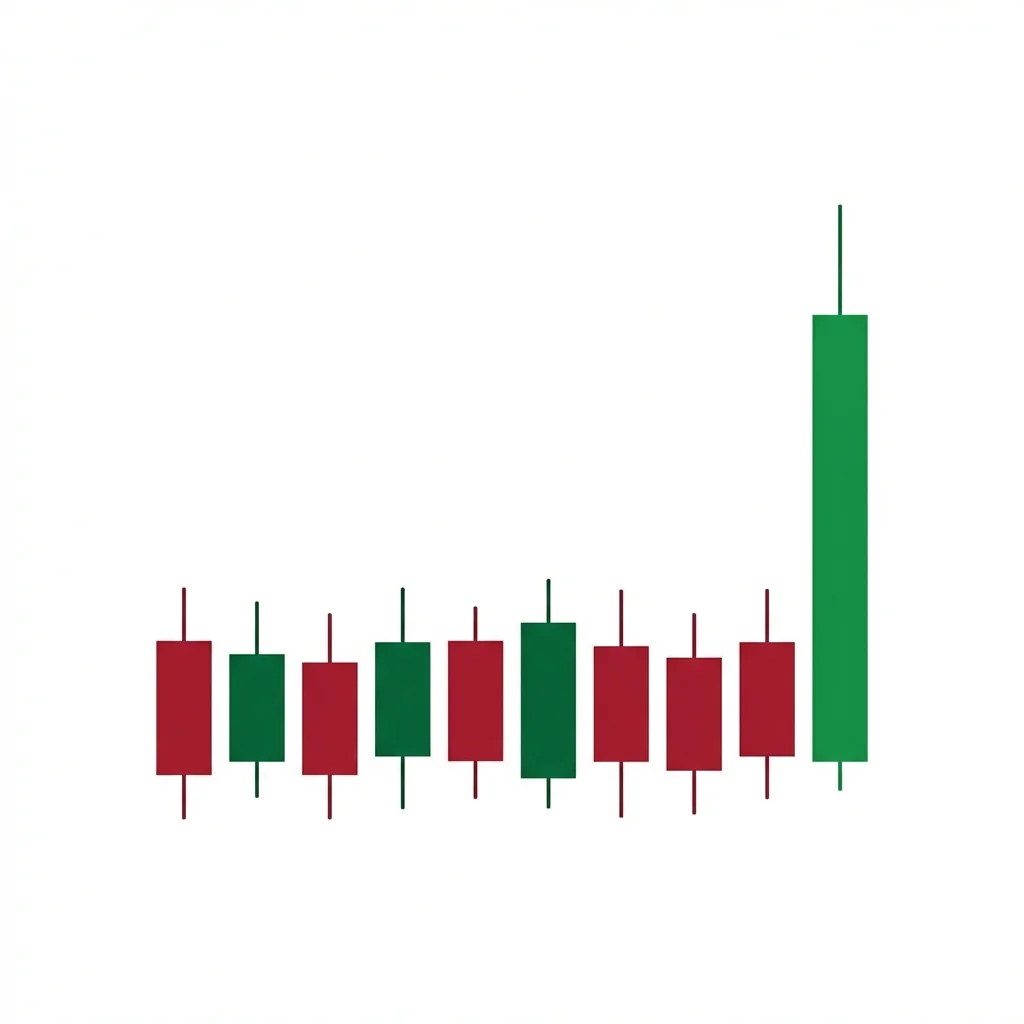
Bullish Rectangle Breakout
bullishContinuationModerate
The Bullish Rectangle Breakout is a continuation pattern where price consolidates between horizontal support and resistance before breaking above the upper boundary to resume the uptrend.

Bullish Rounding Bottom
bullishReversalHigh
The Bullish Rounding Bottom (Saucer Bottom) is a long-term reversal pattern that forms a U-shaped curve as selling pressure gradually gives way to buying pressure, signaling a major trend change from bearish to bullish.
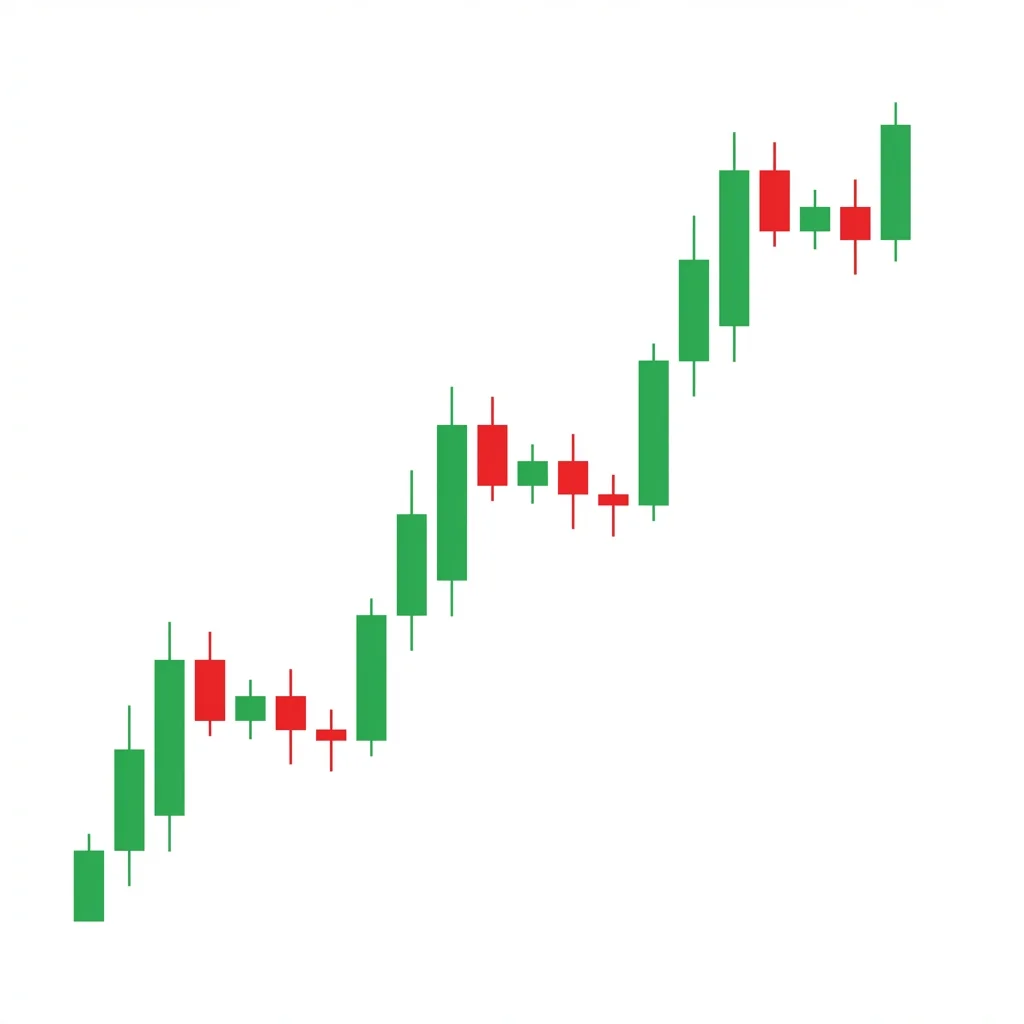
Bullish Staircase Up
bullishContinuationHigh
The Bullish Staircase Up is a trend continuation formation consisting of alternating impulse moves and consolidation periods, creating a step-like progression of higher highs and higher lows that confirms a healthy, sustainable uptrend.

Bullish Support Bounce
bullishBothModerate
The Bullish Support Bounce is one of the most fundamental trading patterns where price declines to a well-established support level and bounces higher, confirmed by bullish price action and volume at the support zone.
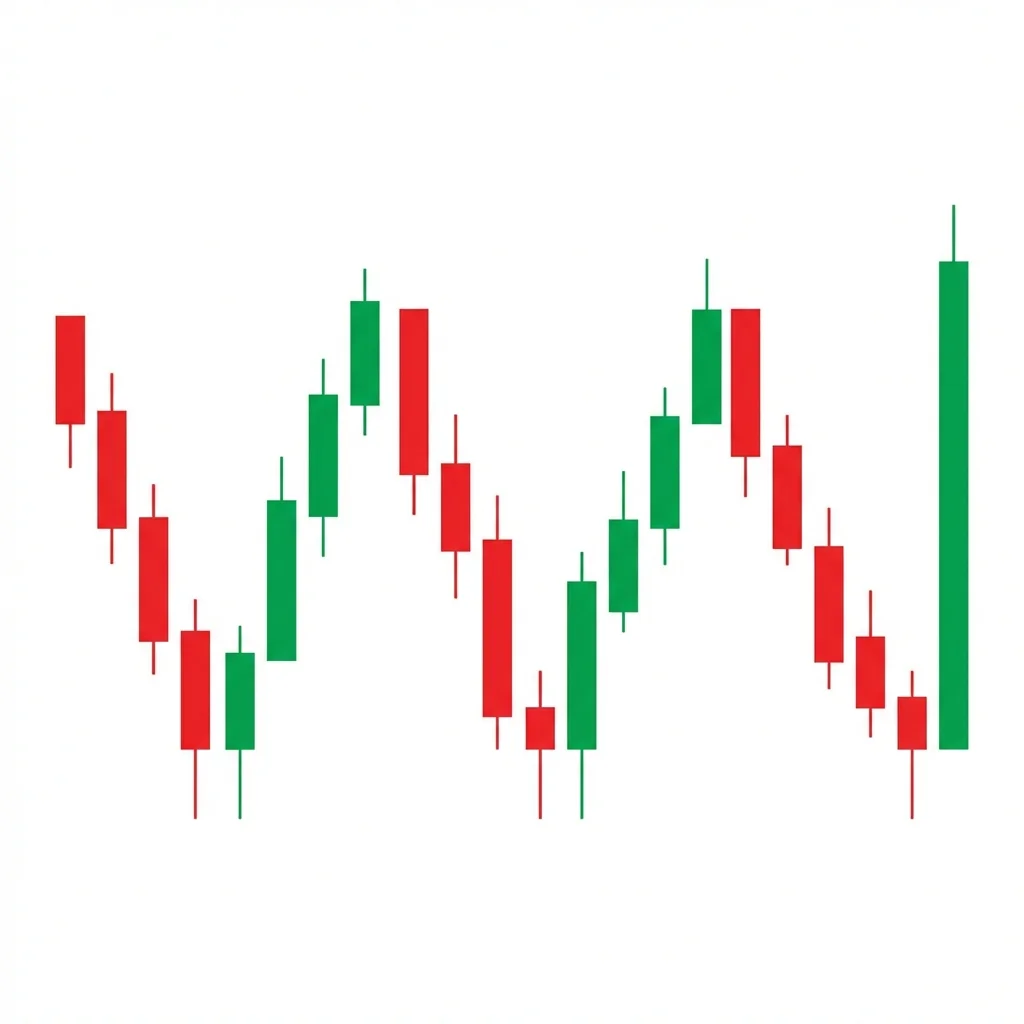
Bullish Triple Bottom
bullishReversalHigh
The Triple Bottom is a major reversal pattern featuring three distinct lows at approximately the same price level, separated by two intermediate peaks. The breakout above the neckline confirms the reversal and targets a measured move equal to the pattern height.
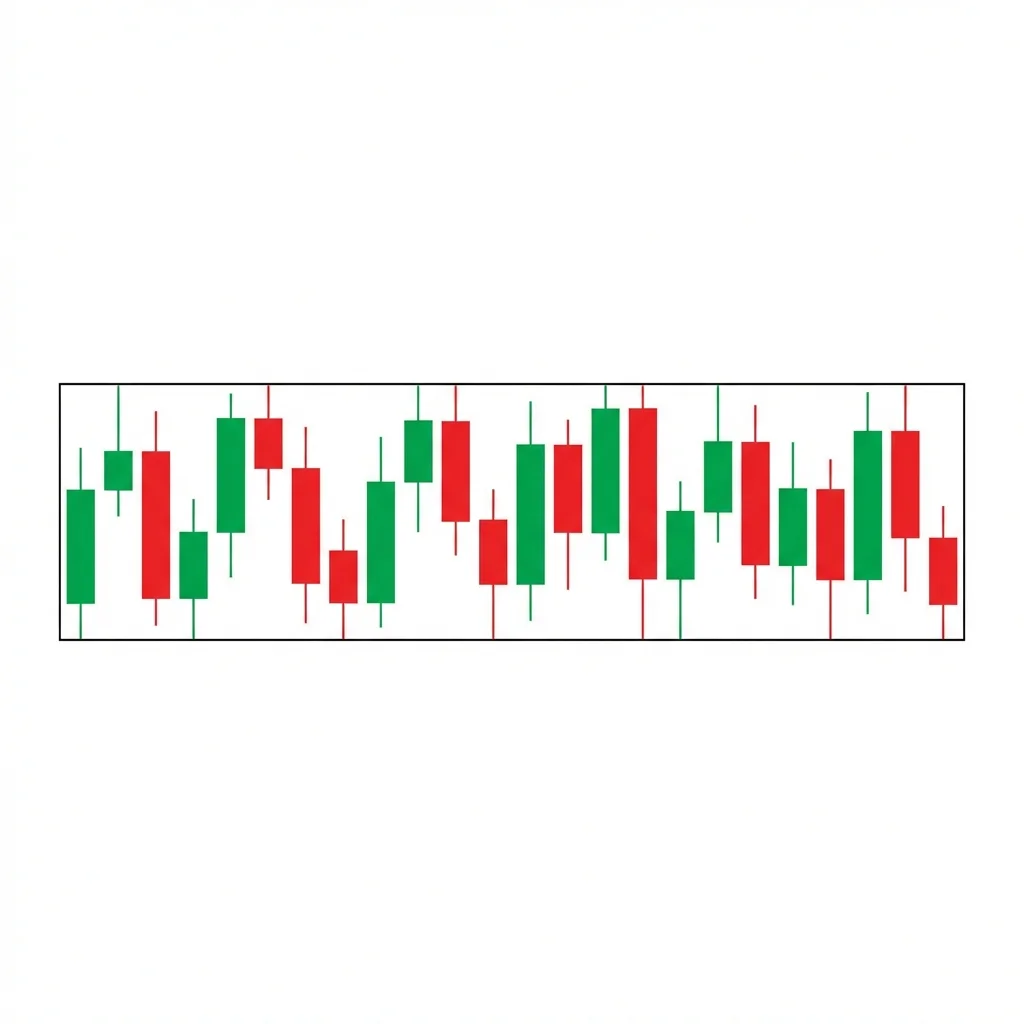
Rectangle
neutralIndecisionHigh
The Rectangle is a chart formation where price consolidates between parallel horizontal support and resistance levels, creating a box-like pattern that can break in either direction.
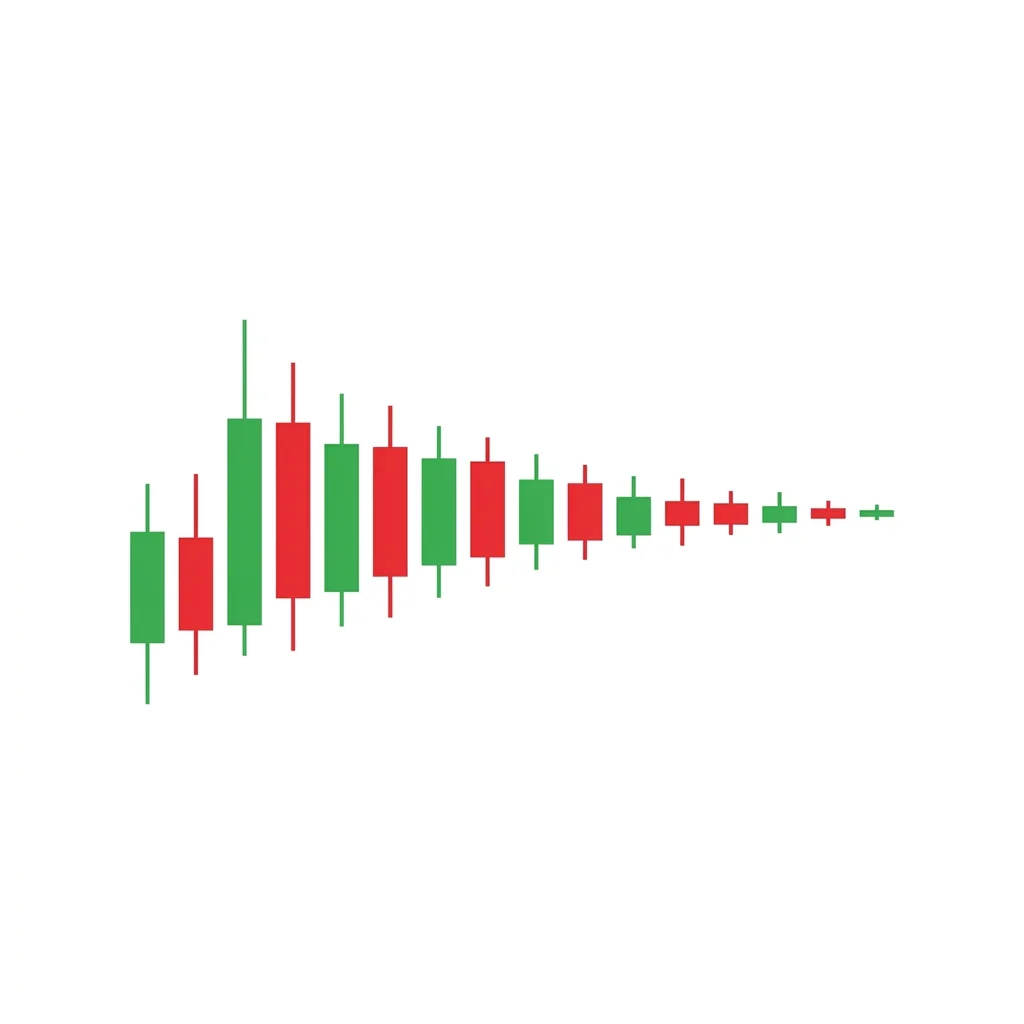
Squeeze Breakout
neutralIndecisionHigh
The Squeeze Breakout occurs when volatility compresses to extreme levels (tight Bollinger Bands or low ATR) before an explosive directional move, representing the market's transition from consolidation to trending.
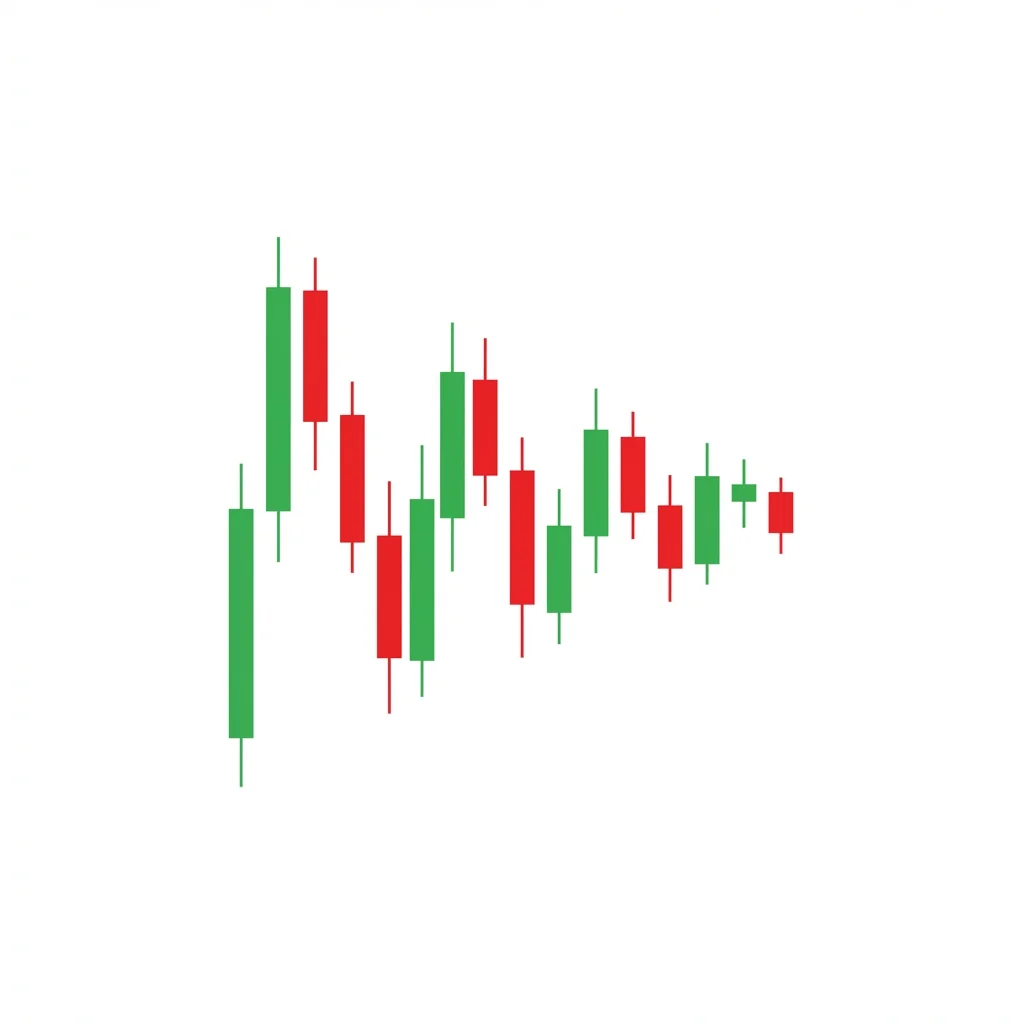
Symmetrical Triangle
neutralIndecisionHigh
The Symmetrical Triangle is a chart formation where converging trendlines of roughly equal slope create a coiling pattern, indicating a period of equilibrium that will resolve with an explosive breakout in either direction.
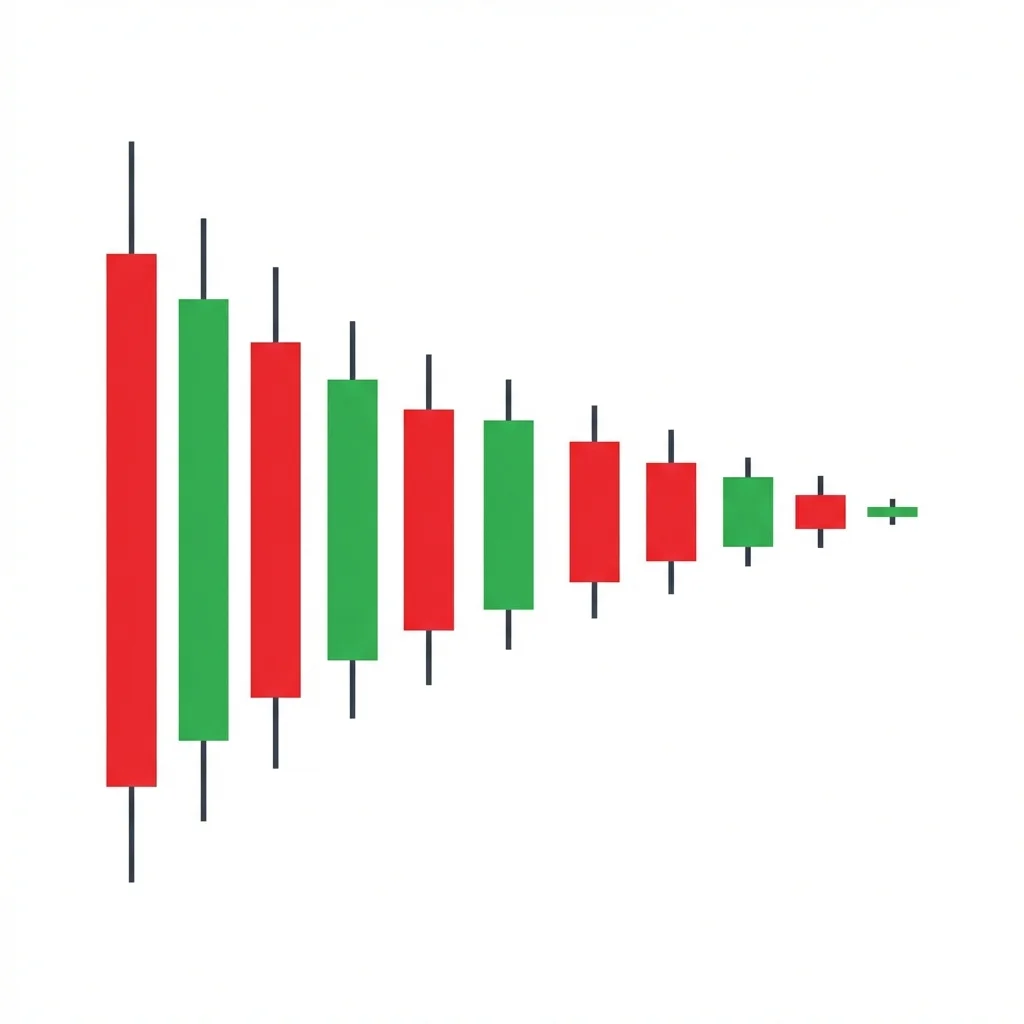
Volatility Contraction
neutralIndecisionHigh
The Volatility Contraction Pattern (VCP) shows progressively smaller price swings as ATR declines, signaling that the market is absorbing supply and preparing for a significant directional breakout.
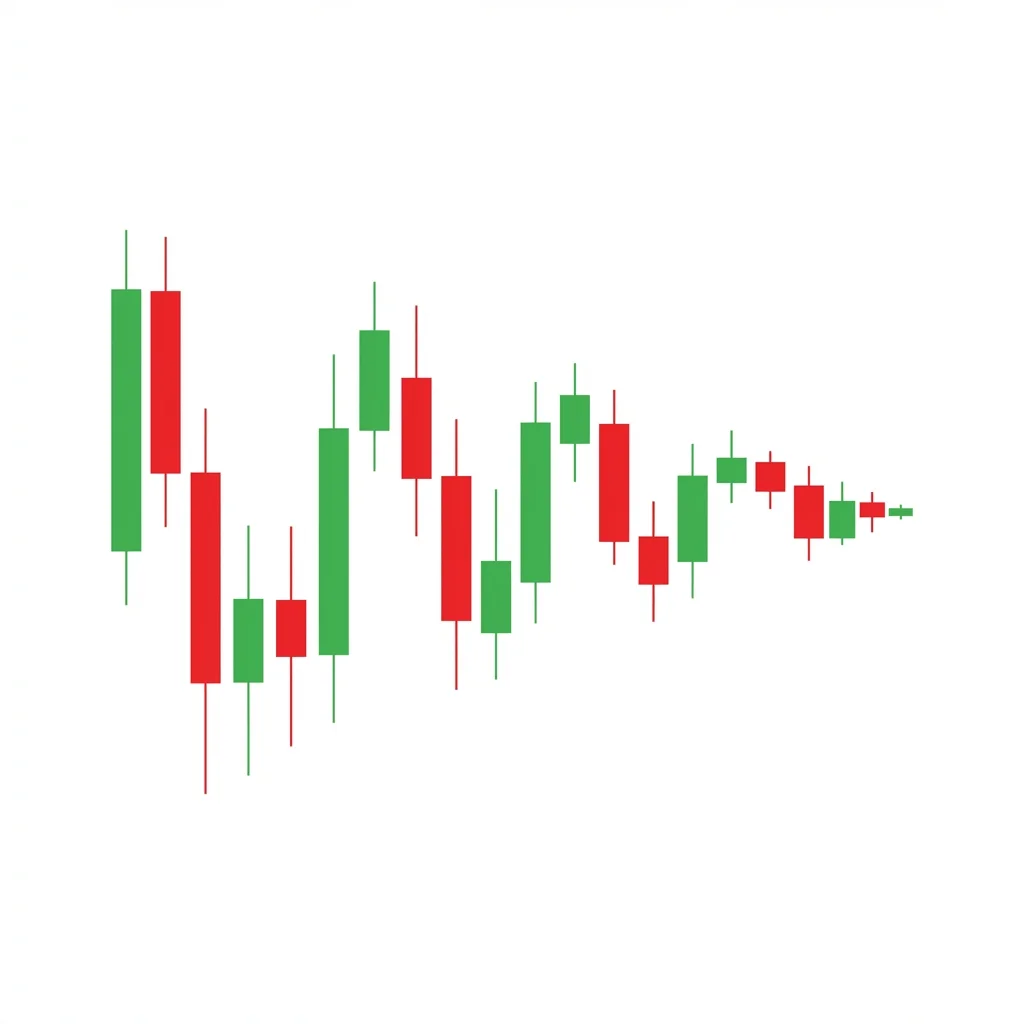
Wedge Apex
neutralIndecisionHigh
The Wedge Apex occurs when price reaches the convergence point of two trendlines that slope in the same direction, creating maximum compression that forces a breakout. The pattern is neutral at the apex because the breakout direction depends on context.
Smart Money(7)
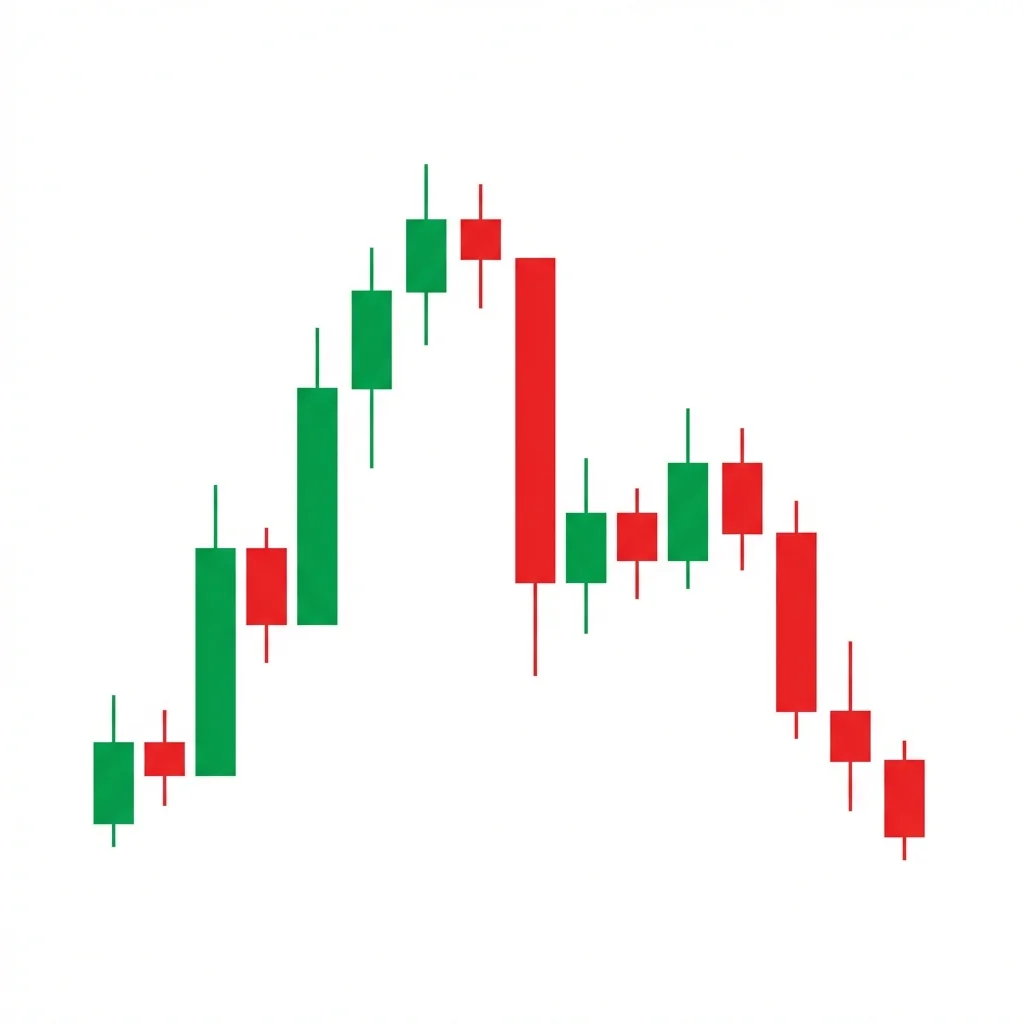
Bearish Market Structure Break
bearishReversalHigh
A bearish market structure break occurs when price in an uptrend breaks below a prior swing low, invalidating the series of higher highs and higher lows that defined the uptrend. It signals a potential trend reversal from bullish to bearish.
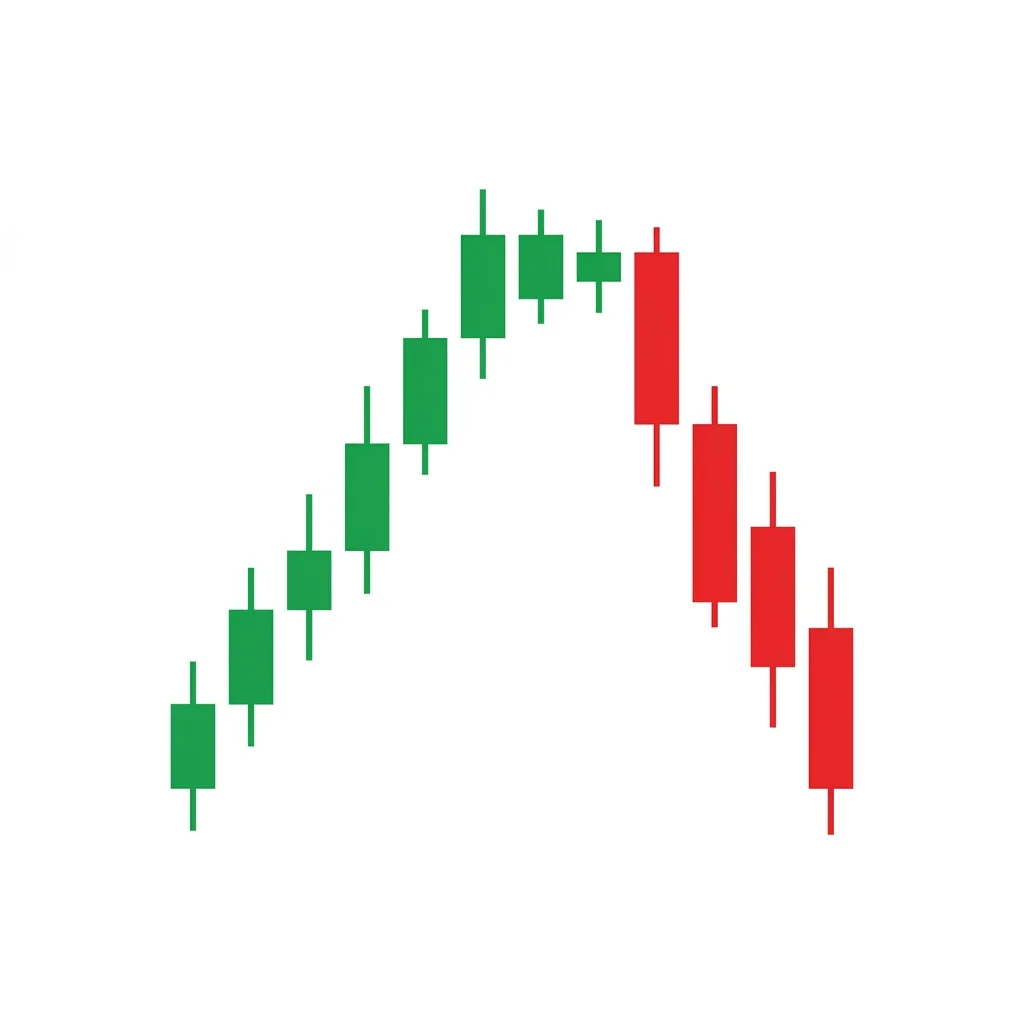
Bearish Order Block
bearishReversalHigh
A bearish order block is the last bullish candle before a significant bearish displacement, representing an area where institutional sellers placed large sell orders. When price returns to this zone, it often reverses downward as unfilled orders are executed.
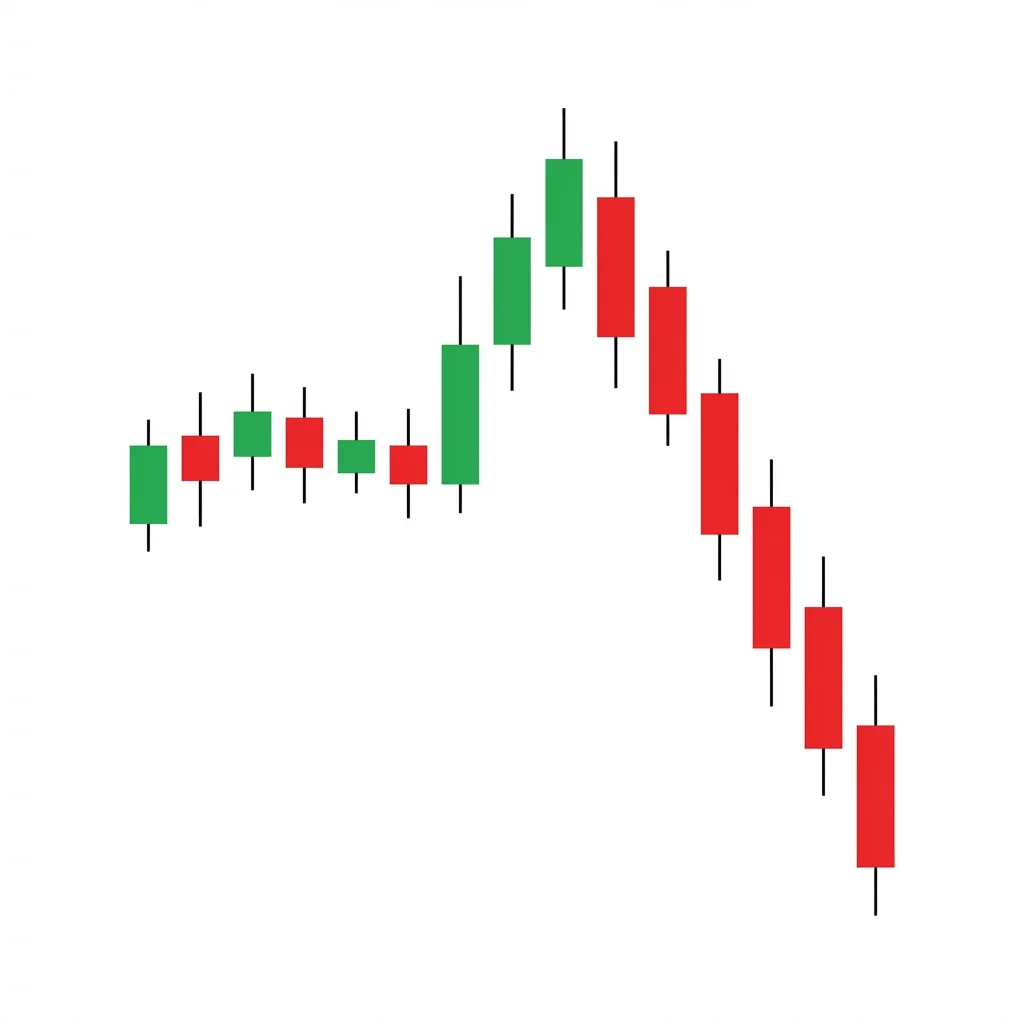
Bearish Power of Three
bearishReversalHigh
The bearish power of three (PO3) is a smart money concept describing a three-phase intraday process: accumulation (consolidation), manipulation (false breakout above the range), and distribution (sharp reversal downward). It represents how institutions engineer liquidity to fill sell orders.
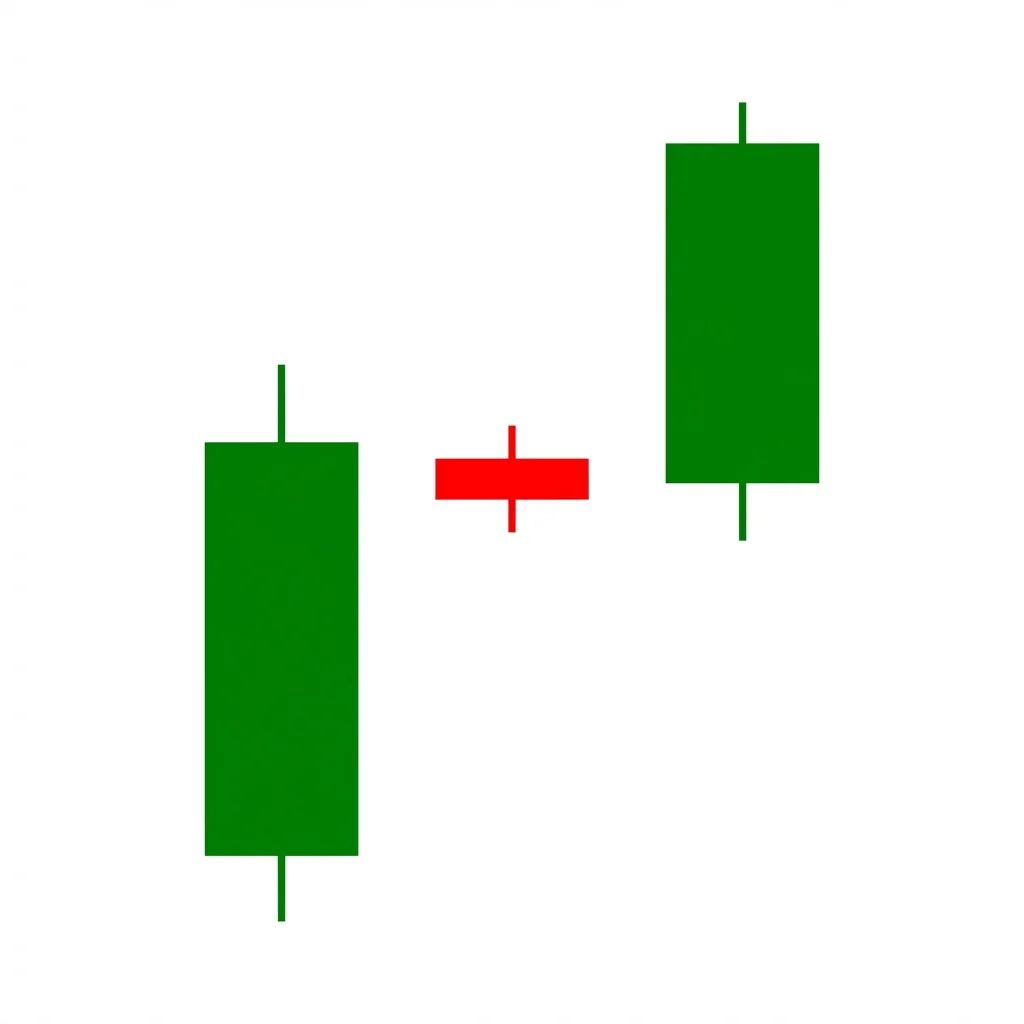
Bullish Fair Value Gap
bullishContinuationHigh
The Bullish Fair Value Gap (FVG) is a smart money concept identifying price imbalances where aggressive buying creates a gap between the first candle high and third candle low. Price often returns to this zone to fill the inefficiency before continuing higher.
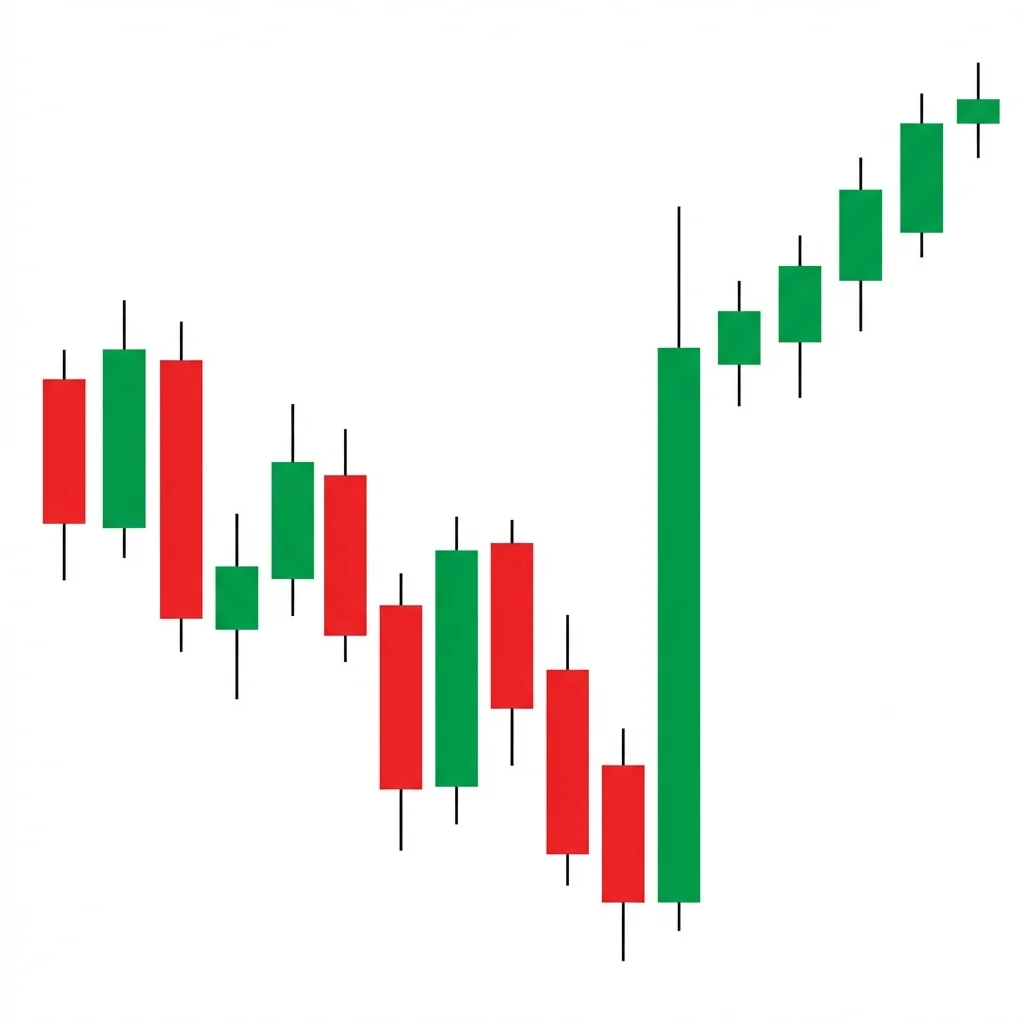
Bullish Market Structure Break
bullishReversalHigh
A Bullish Market Structure Break (MSB/BOS) occurs when price in a downtrend breaks above the most recent swing high, signaling that the series of lower highs has ended and a potential trend reversal is underway.
Bullish Order Block
bullishReversalHigh
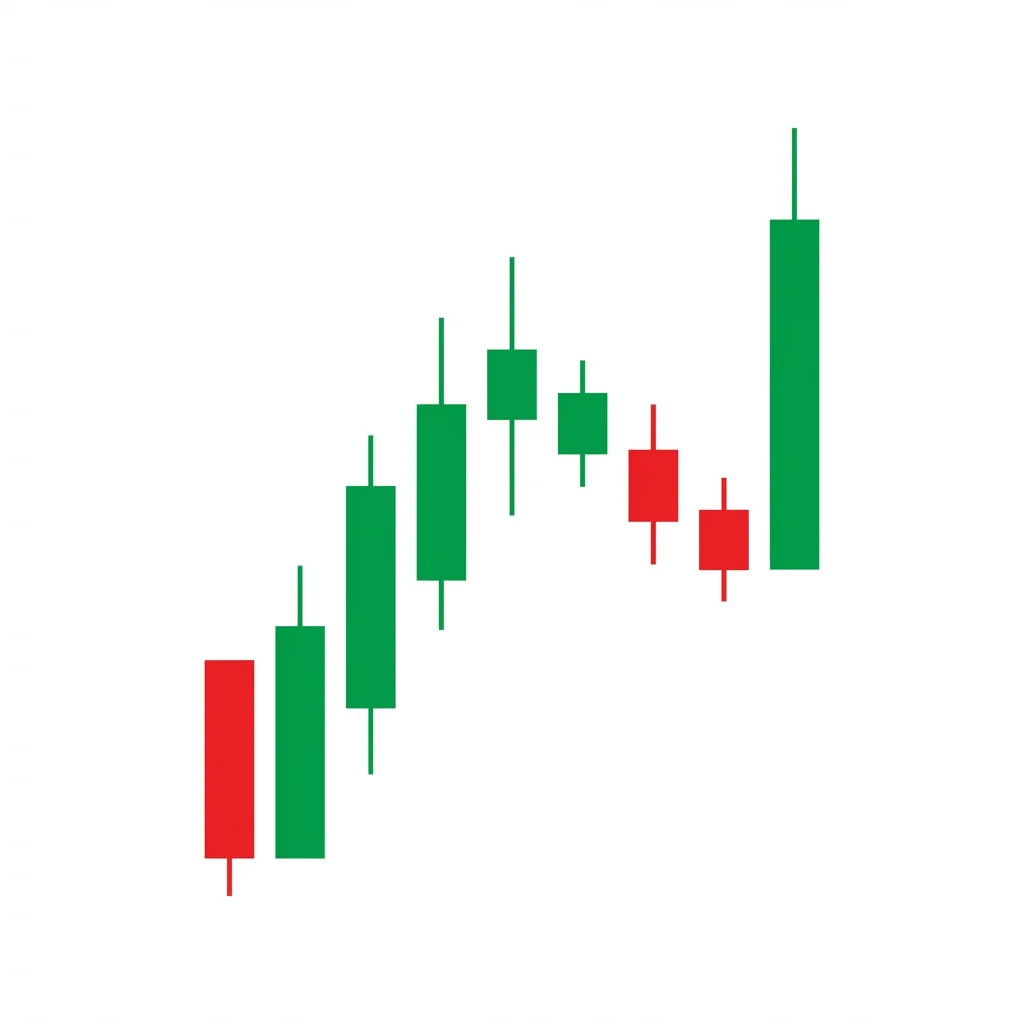
A Bullish Order Block is the last bearish candle before a strong upside displacement. It marks where institutional buying occurred, and when price returns to this zone, it often bounces as institutions defend their entry level.
Bullish Power of Three
bullishReversalHigh
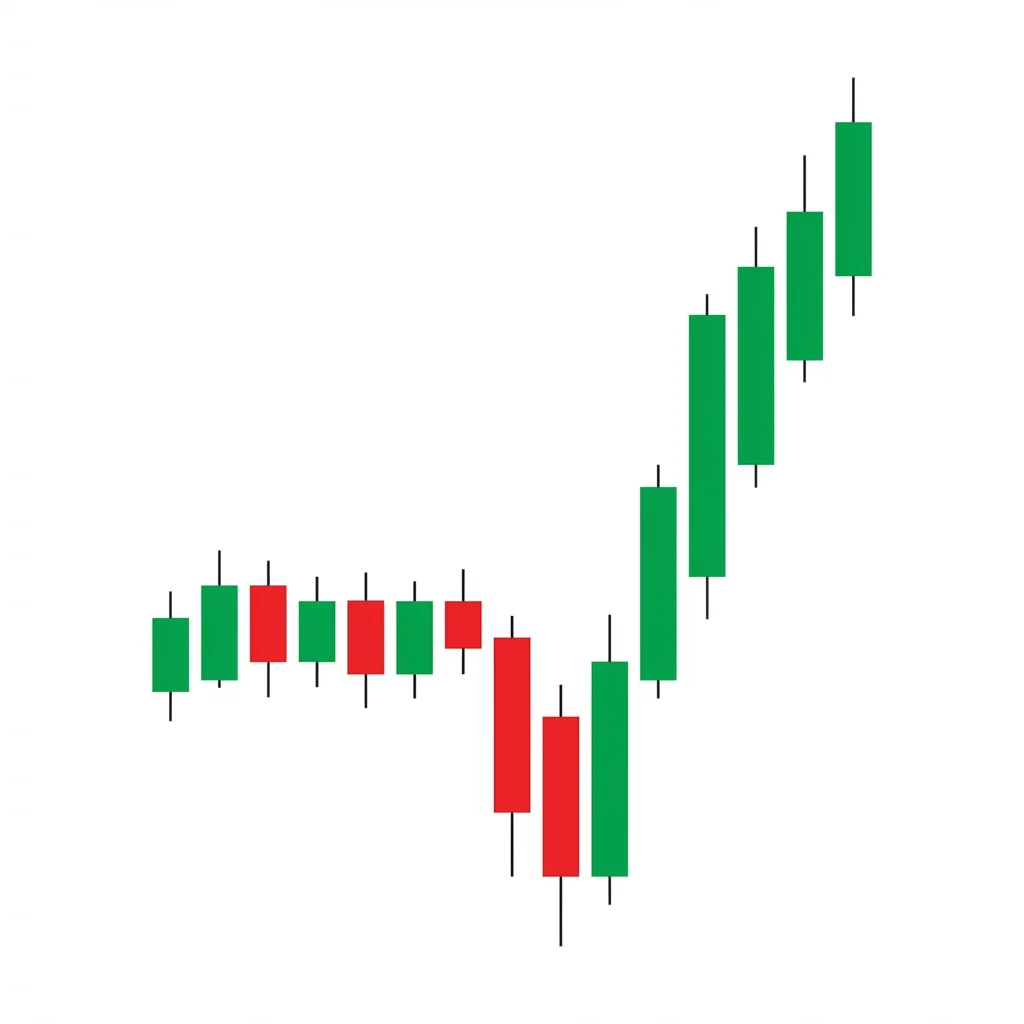
The Bullish Power of Three (AMD) is an ICT concept describing a three-phase market cycle: accumulation in a range, manipulation below the range to grab liquidity, followed by distribution as price rallies aggressively higher.
Gap Patterns(13)
Bearish Falling Window
bearishContinuationHigh
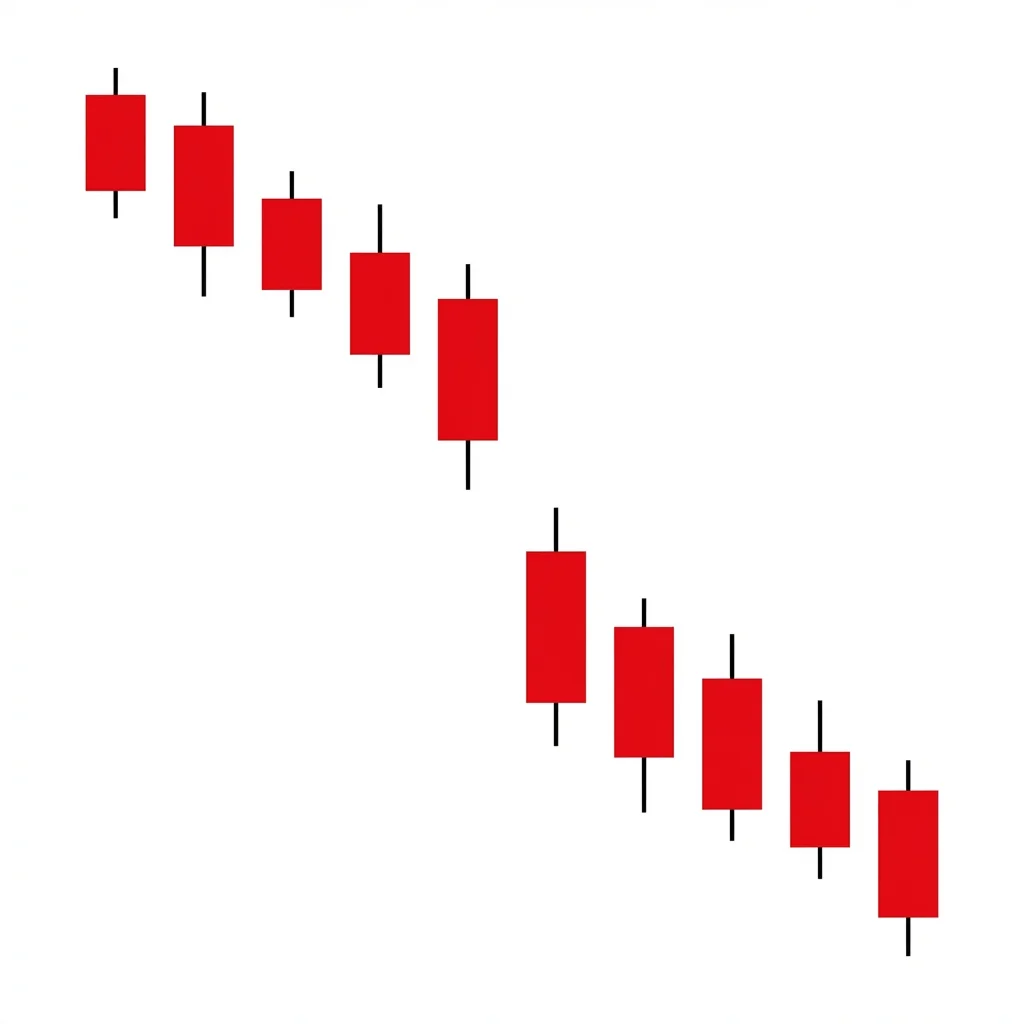
A falling window is a Japanese candlestick term for a gap down in price where the high of the current candle is below the low of the previous candle, signaling strong bearish continuation momentum.
Bearish Gap Fill Rejection
bearishContinuationHigh
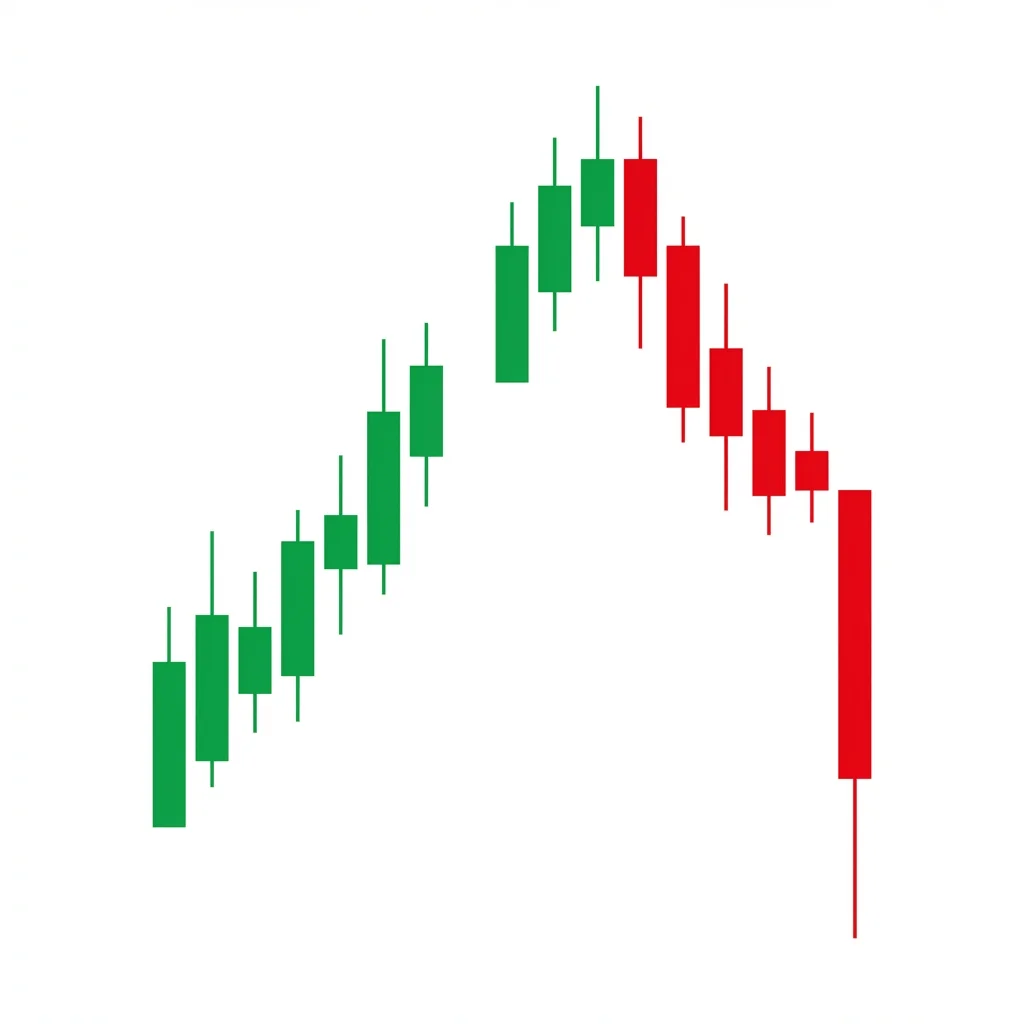
The bearish gap fill rejection occurs when price rallies to fill a prior gap down but is rejected at or within the gap zone, confirming the gap as resistance and signaling continuation of the downtrend.

Bearish Gap Momentum
bearishContinuationModerate
The bearish gap momentum pattern occurs when price gaps down on high volume and continues selling throughout the session without filling the gap, indicating powerful one-directional selling pressure.
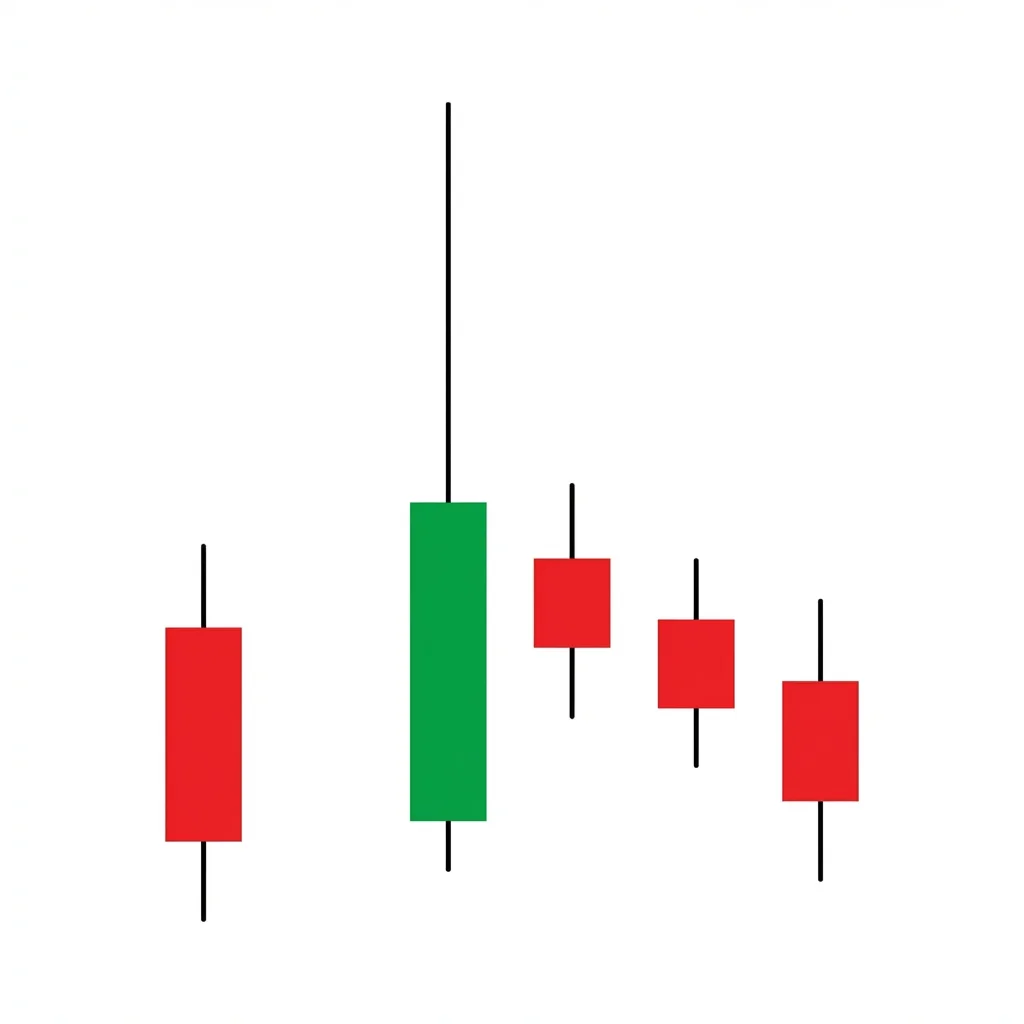
Bearish Gap Up Fade
bearishReversalModerate
The gap up fade occurs when price gaps higher at the open but fails to maintain the gains, reversing downward to fill the gap and often closing below the prior day's close. It signals that the gap lacked conviction.
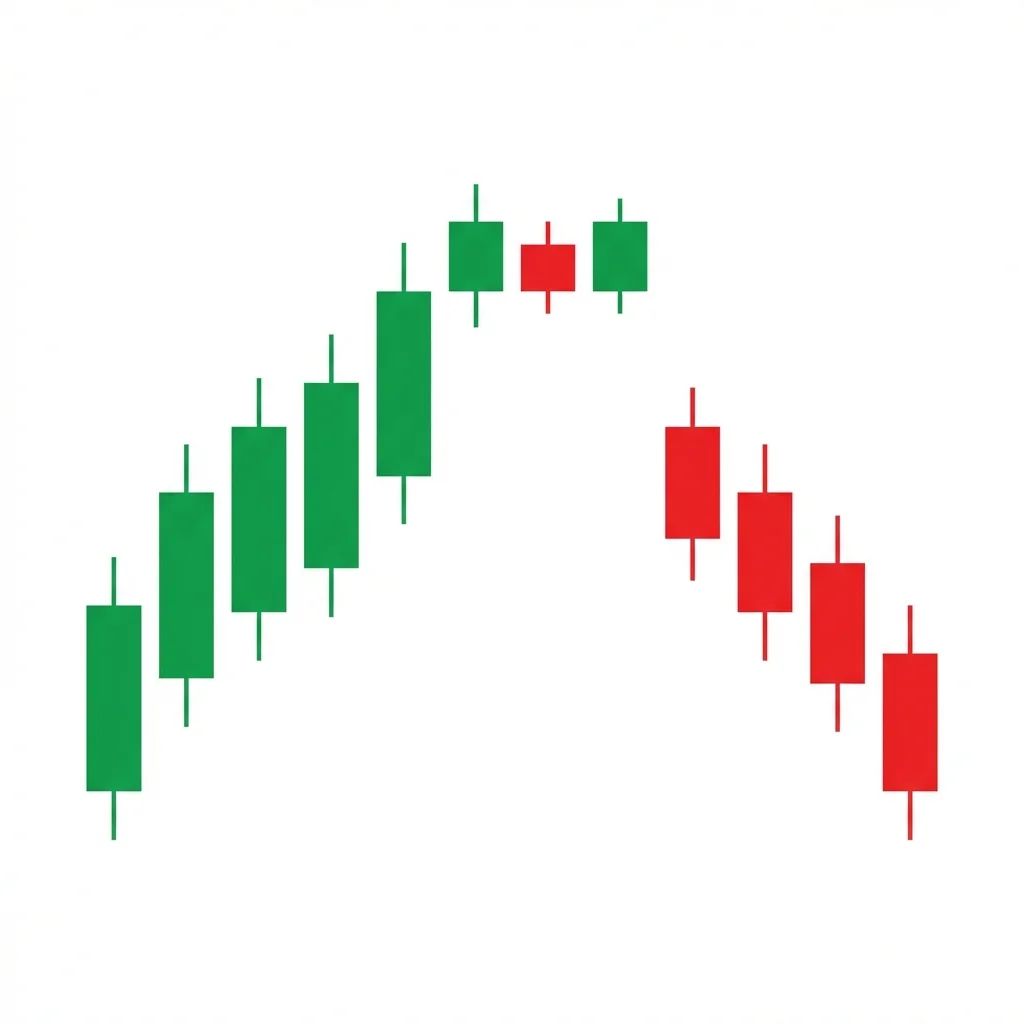
Bearish Island Reversal
bearishReversalVery High
The bearish island reversal is a powerful reversal pattern where price gaps up, trades briefly in an isolated range (the island), then gaps down, leaving the island completely separated by gaps on both sides. It signals a decisive sentiment shift.
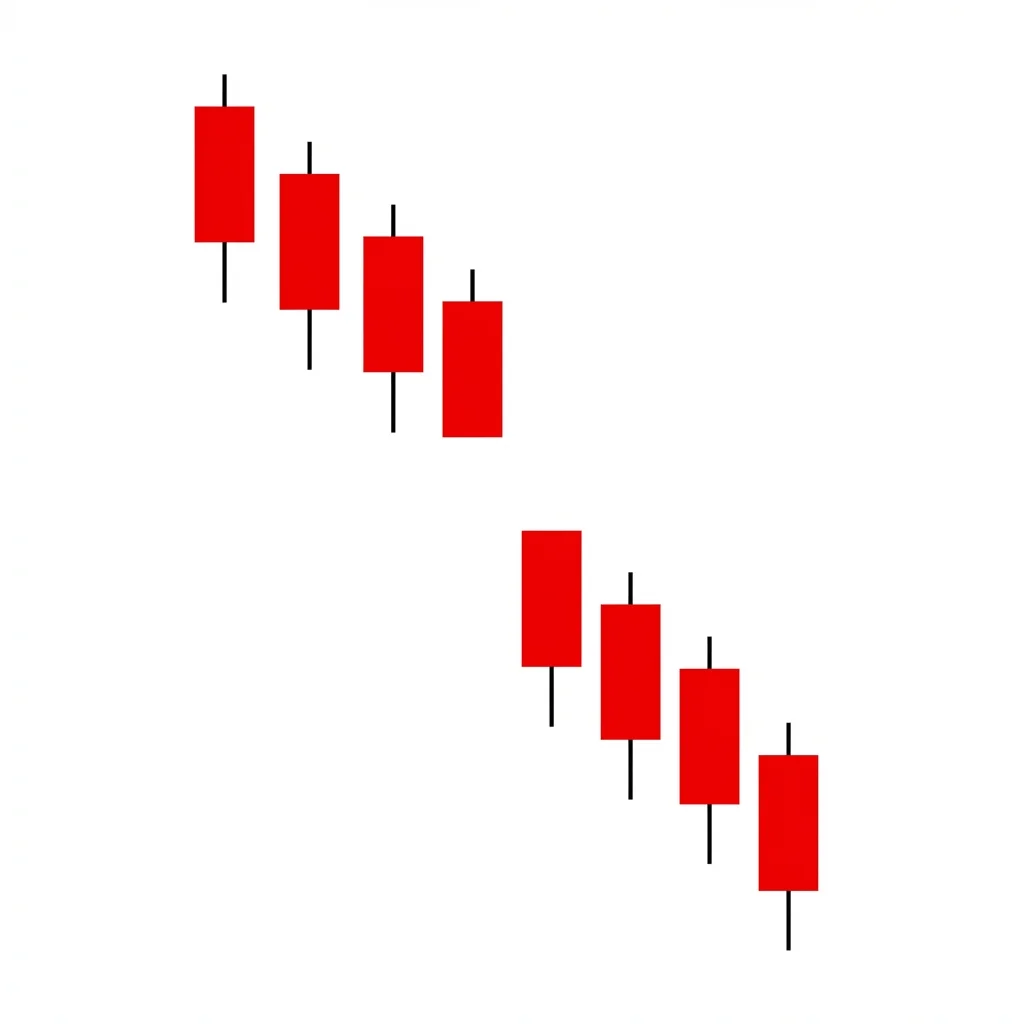
Bearish Runaway Gap
bearishContinuationHigh
A bearish runaway gap (or measuring gap) is a gap down that occurs in the middle of a strong downtrend, signaling acceleration of selling pressure. It often marks the midpoint of the total move, making it useful for projecting the ultimate price target.
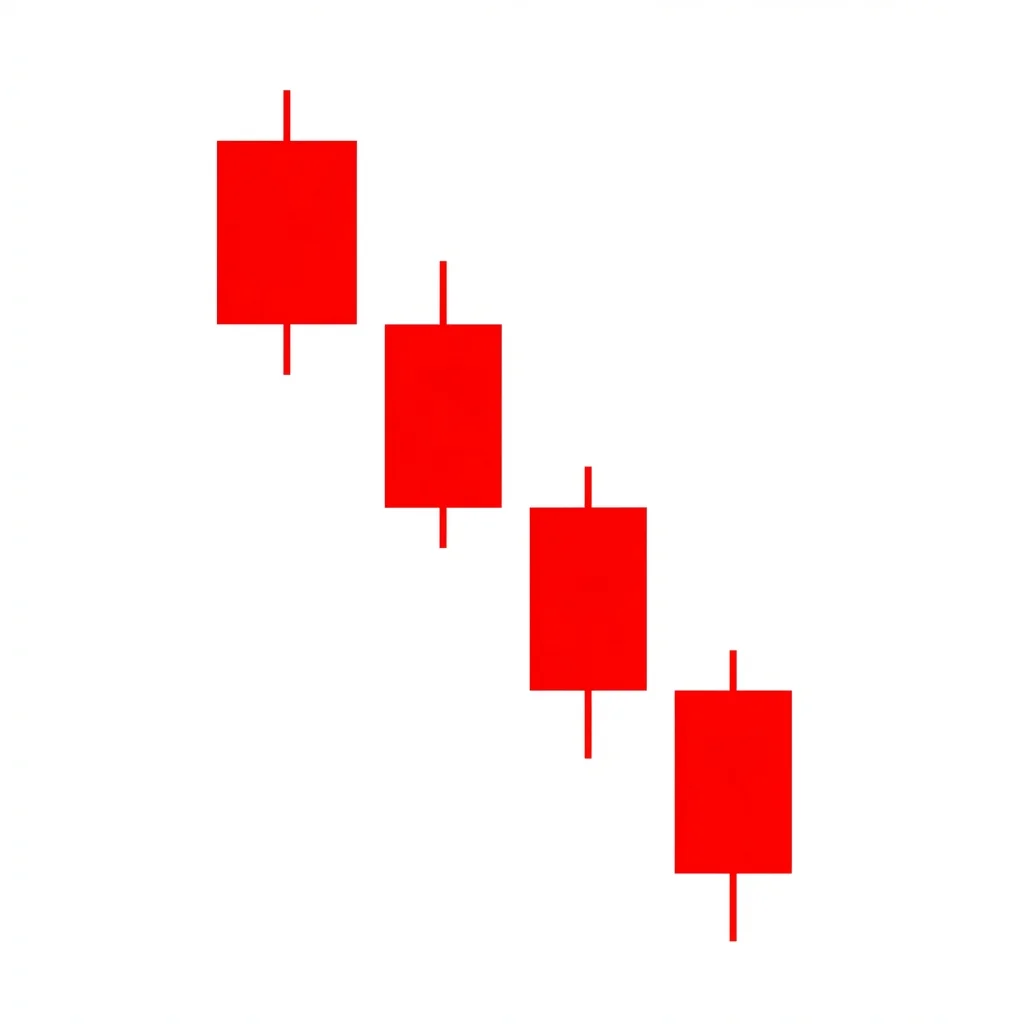
Bearish Three Gap Downs
bearishBothModerate
Three gap downs (San Ku) feature three consecutive downward gaps in a downtrend. While initially bearish, the third gap often signals selling exhaustion and a potential reversal. Traders must decide if the gaps represent momentum continuation or capitulation.
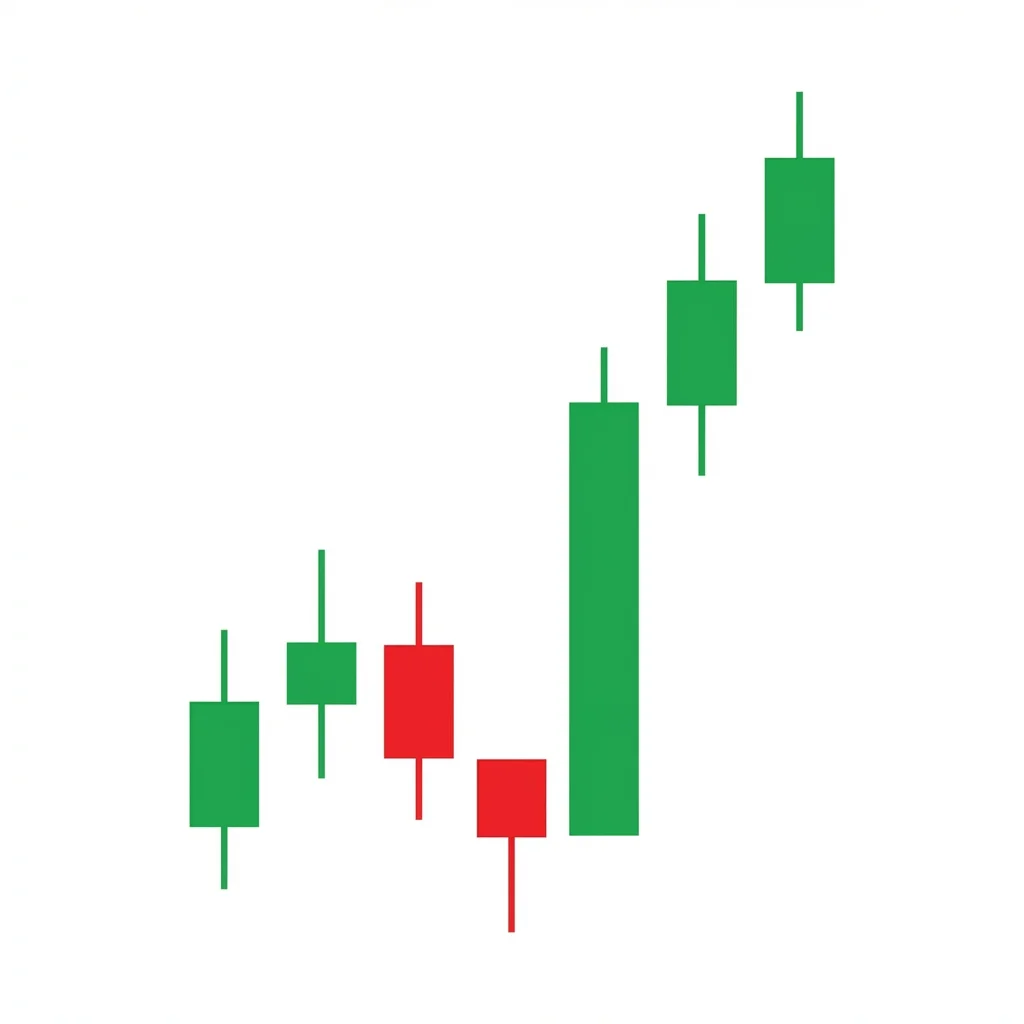
Bullish Gap and Go
bullishContinuationModerate
The Gap and Go occurs when price gaps up on a catalyst, and instead of filling the gap, continues higher as momentum buying drives the stock to new levels throughout the session.
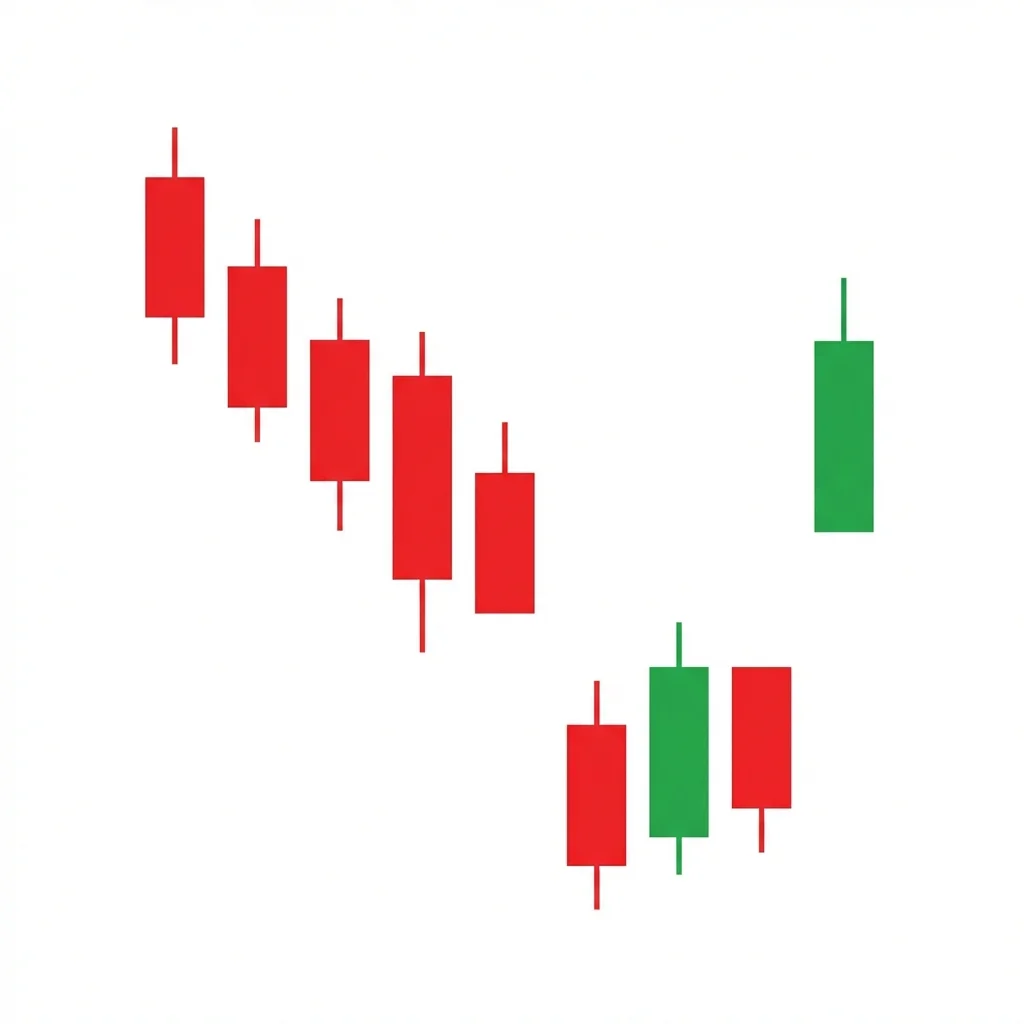
Bullish Island Reversal
bullishReversalHigh
The Bullish Island Reversal is a powerful gap-based reversal pattern where price gaps down to form an isolated cluster, then gaps back up, leaving behind an 'island' of price action that signals a dramatic shift in sentiment.
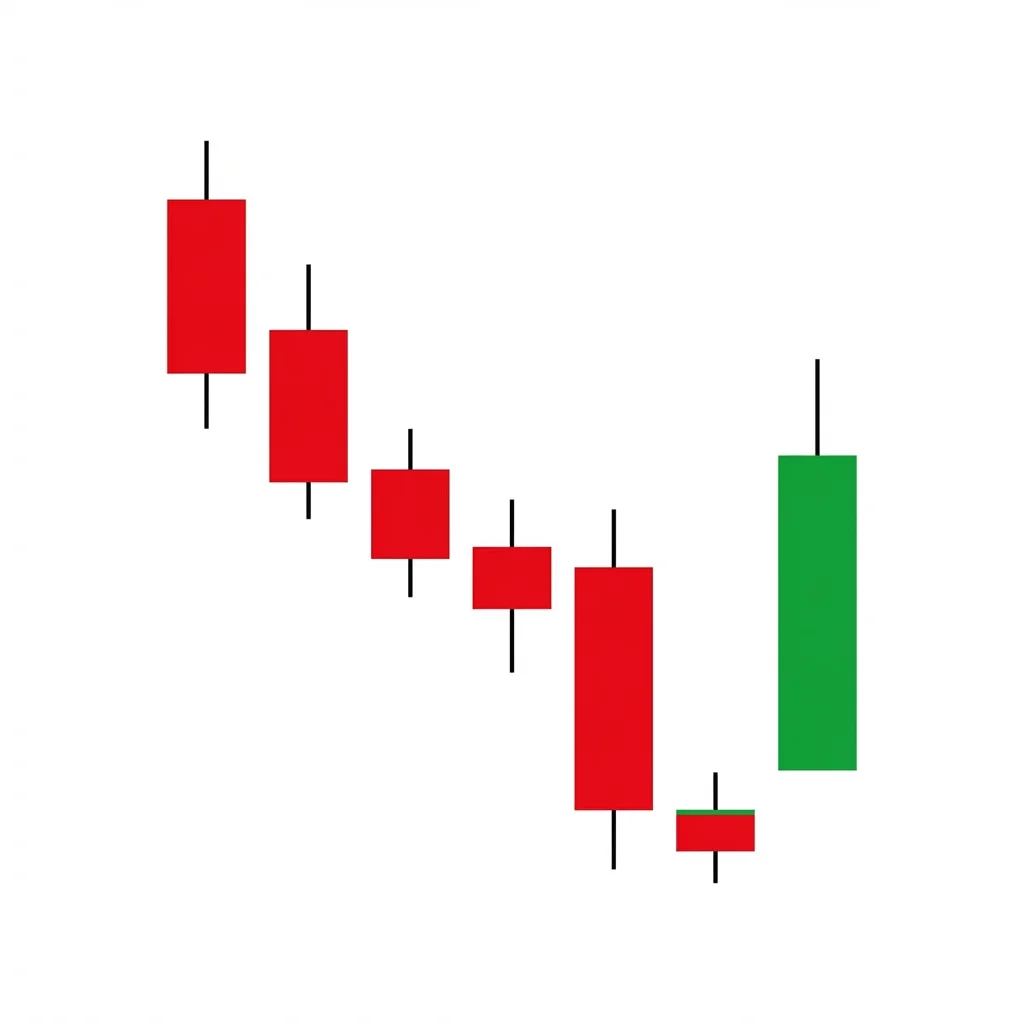
Bullish Morning Star Gap
bullishReversalVery High
The Morning Star Gap is an enhanced version of the Morning Star where the star candle is isolated by gaps on both sides, creating a more powerful reversal signal. This double-gap structure is essentially an island reversal within a morning star framework.
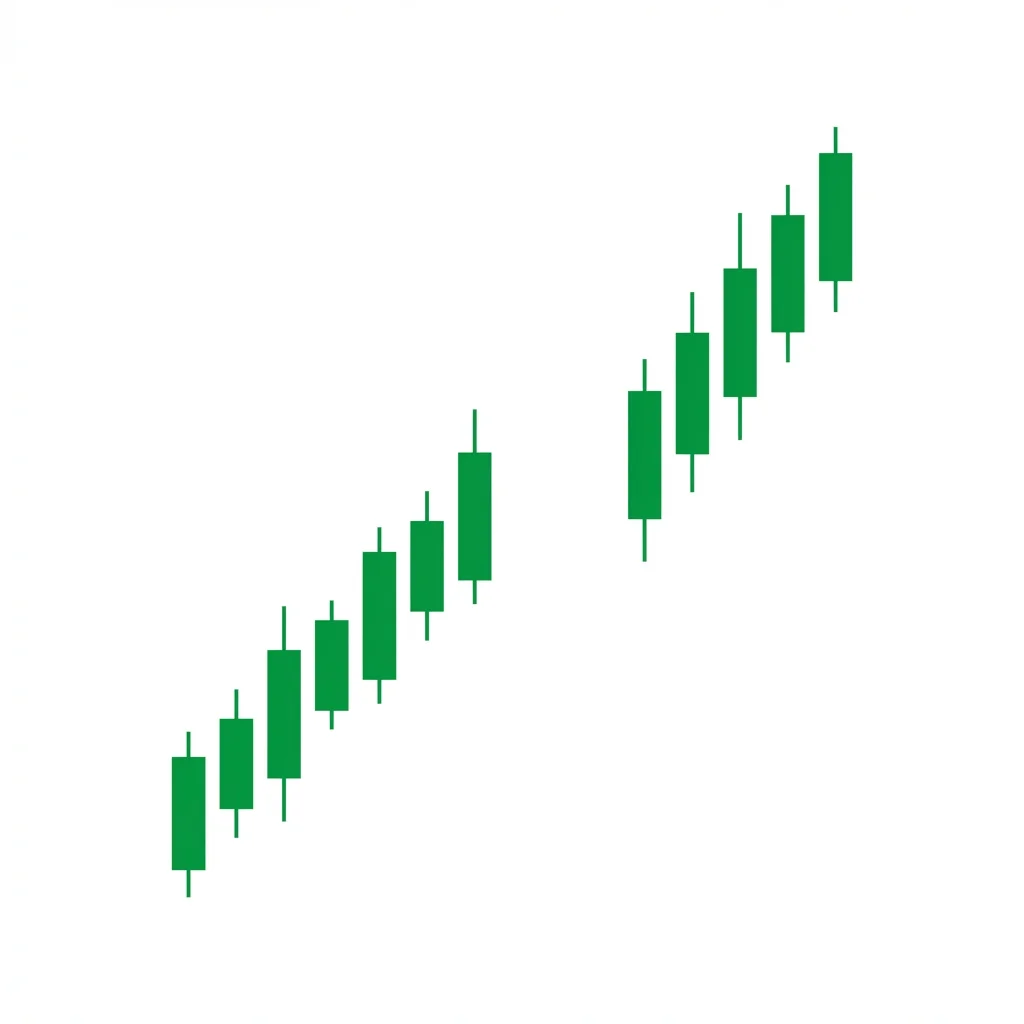
Bullish Rising Window
bullishContinuationModerate
The Bullish Rising Window is a gap-up pattern where the second candle's low is entirely above the first candle's high, creating a visible window (gap) that acts as future support and signals trend continuation.
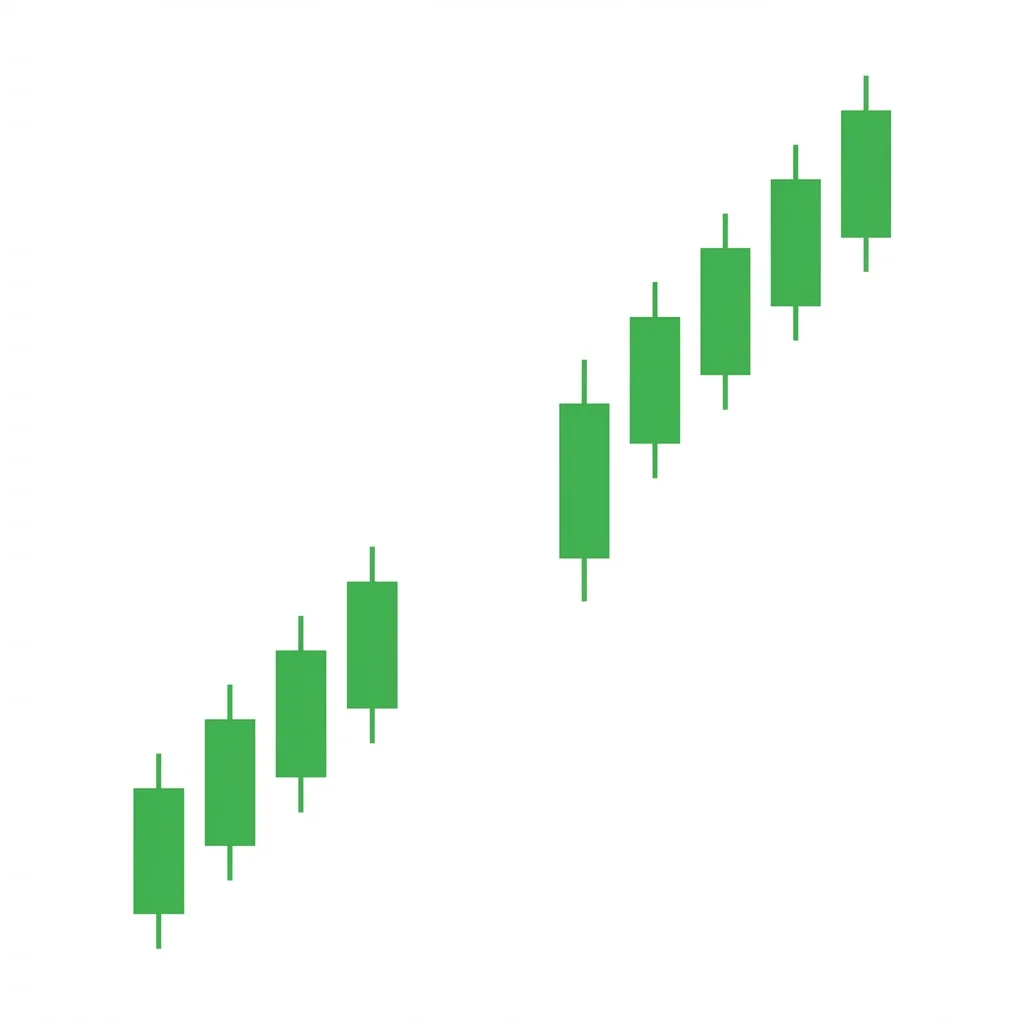
Bullish Runaway Gap
bullishContinuationHigh
The Bullish Runaway Gap (Measuring Gap) occurs in the middle of a strong uptrend, signaling that the trend has strong momentum and is likely to continue. It can also be used to project the trend's target — the distance from the trend start to the gap is projected above the gap.

Bullish Three Gap Ups
bullishBothModerate
Bullish Three Gap Ups (Sanku) features three consecutive rising windows in a strong uptrend. While initially bullish, Japanese tradition warns that the third gap often signals exhaustion, making this a dual-purpose pattern — continuation in the short term but a potential warning of an impending reversal.
Trap Patterns(4)
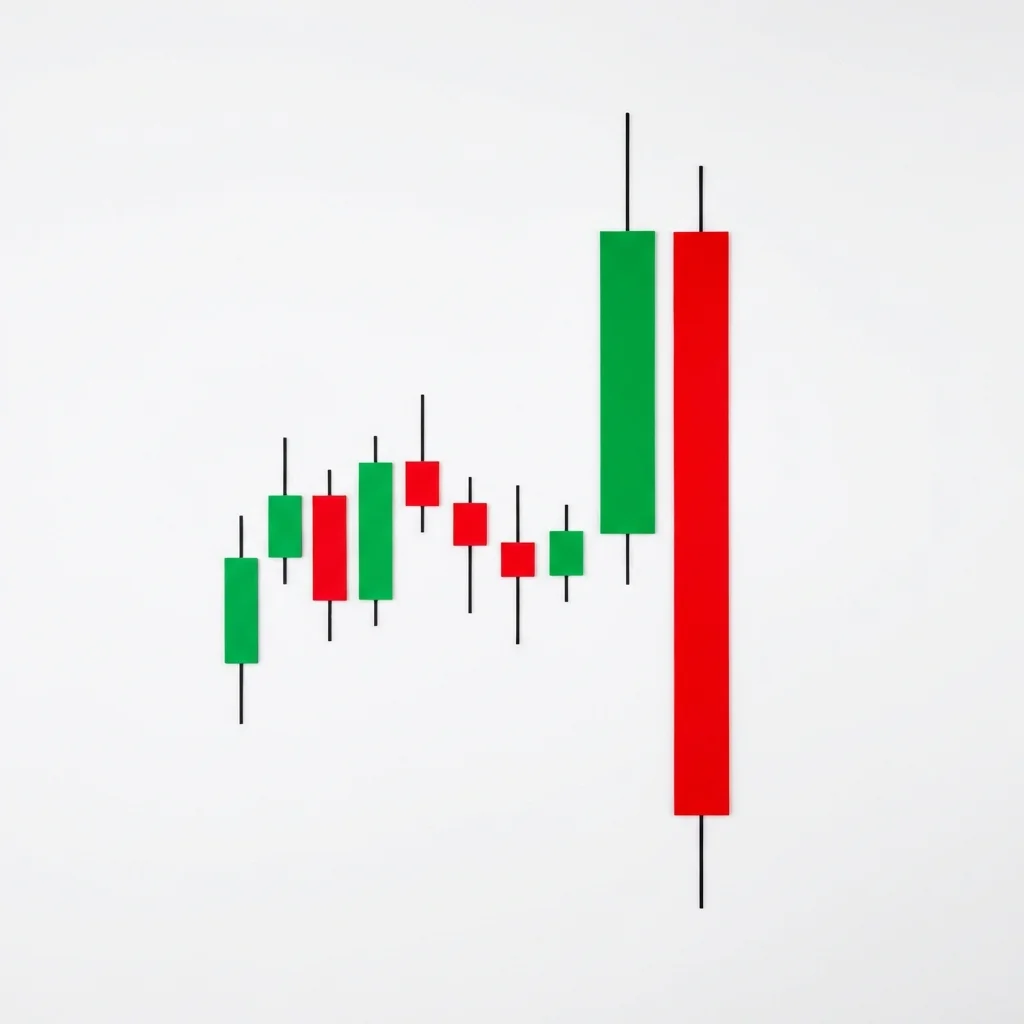
Bearish Bull Trap
bearishReversalHigh
A Bull Trap is a false breakout above resistance that lures buyers in before immediately reversing, trapping them at elevated prices and triggering a sharp sell-off as trapped longs are forced to exit.
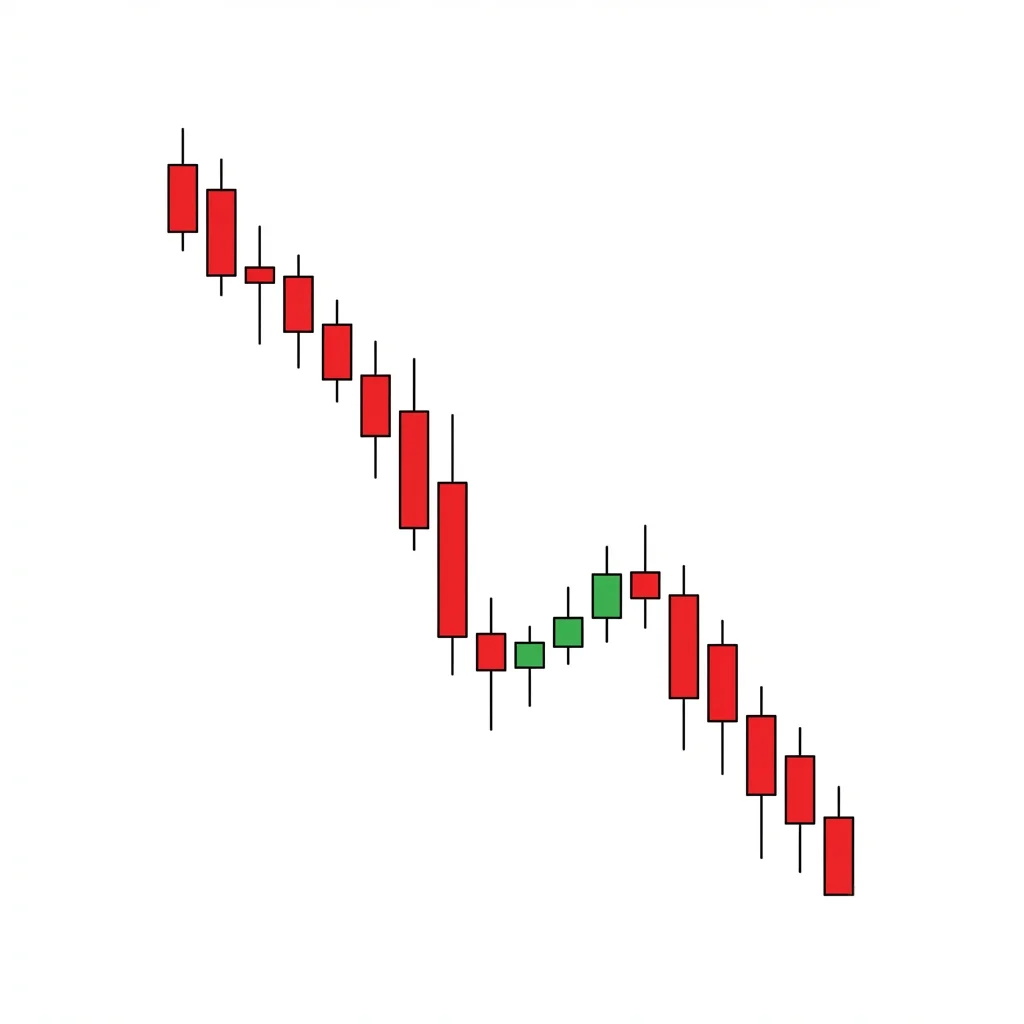
Bearish Dead Cat Bounce
bearishContinuationHigh
The Dead Cat Bounce is a brief, unsustainable rally in the midst of a larger decline. Named for the morbid Wall Street adage that 'even a dead cat will bounce if dropped from a great height,' the pattern traps buyers who mistake the bounce for a bottom.
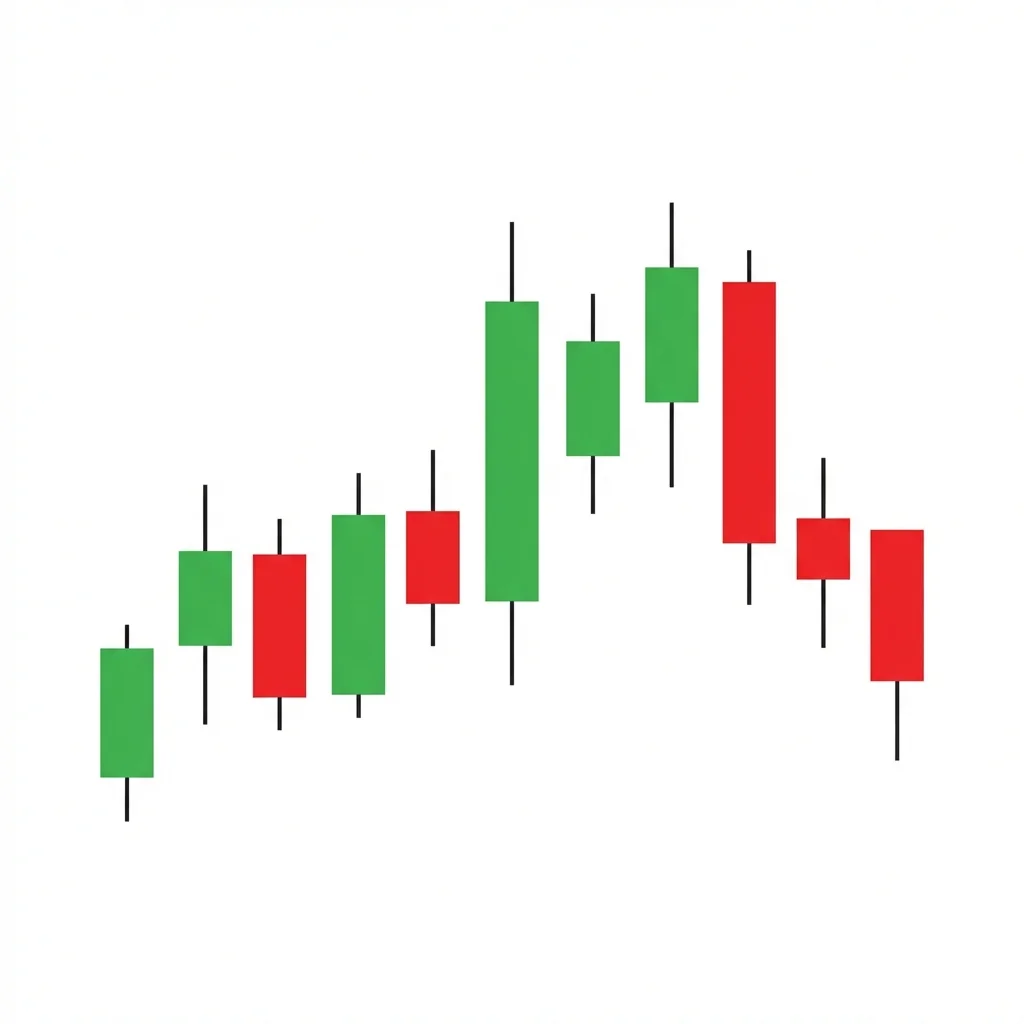
Bearish Hikkake
bearishReversalHigh
The bearish hikkake is a trap pattern where an inside bar is followed by a false upside breakout that quickly reverses, trapping buyers and triggering a selloff below the inside bar's low.
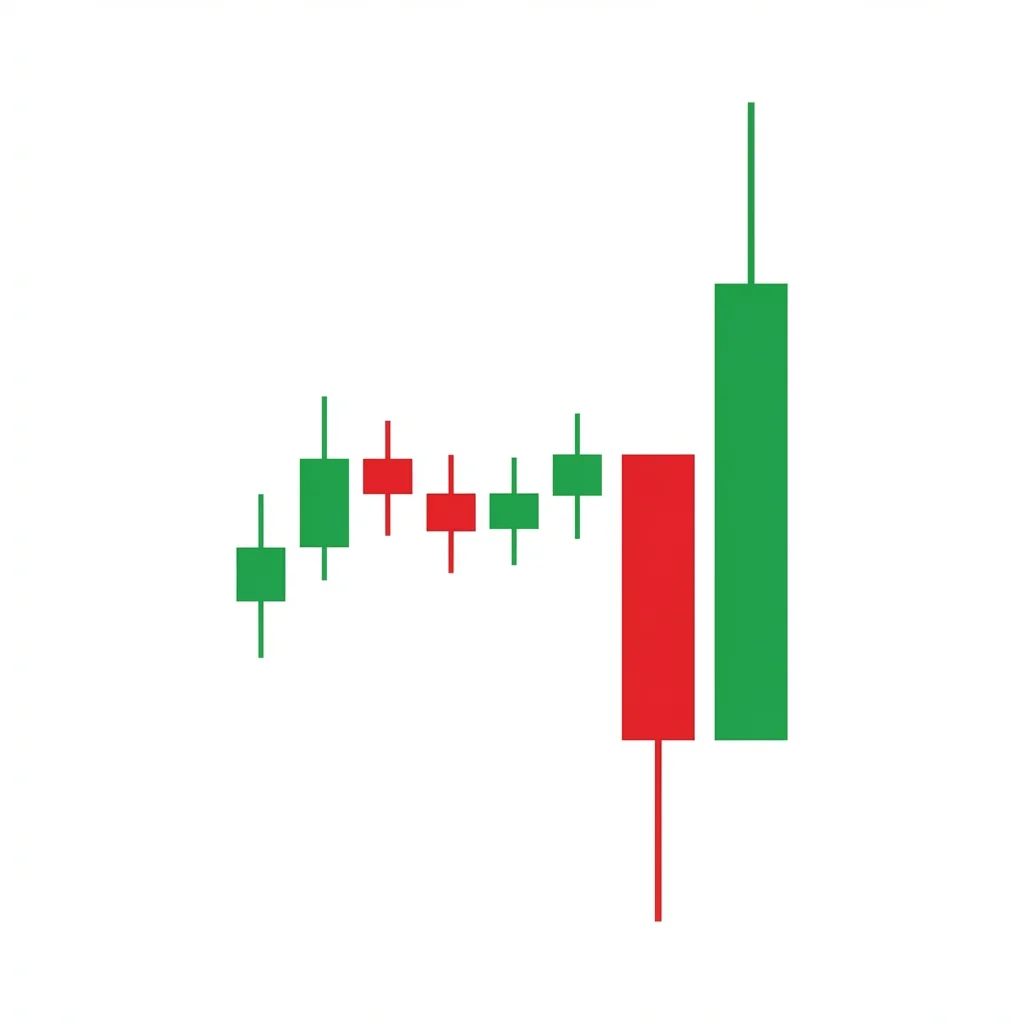
Bullish Bear Trap
bullishReversalHigh
A Bear Trap occurs when price breaks below a key support level, luring bears into short positions, only to reverse sharply higher. The trapped shorts are forced to cover, adding fuel to the bullish reversal.
Climax Patterns(4)
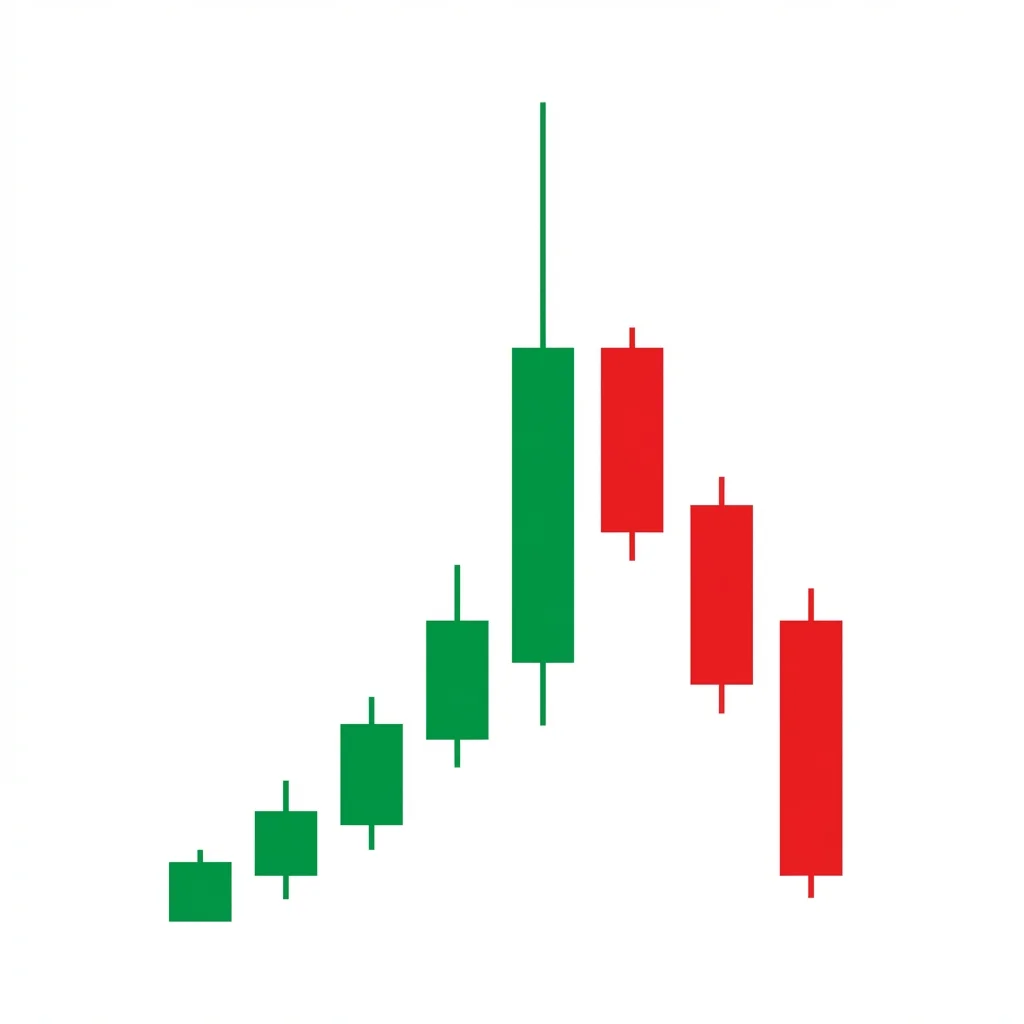
Bearish Buying Climax
bearishReversalHigh
The Buying Climax is a Wyckoff concept describing the final blow-off top where extreme volume and wide price spreads signal that all remaining demand has been absorbed, leaving the market vulnerable to a sharp reversal and the beginning of distribution.
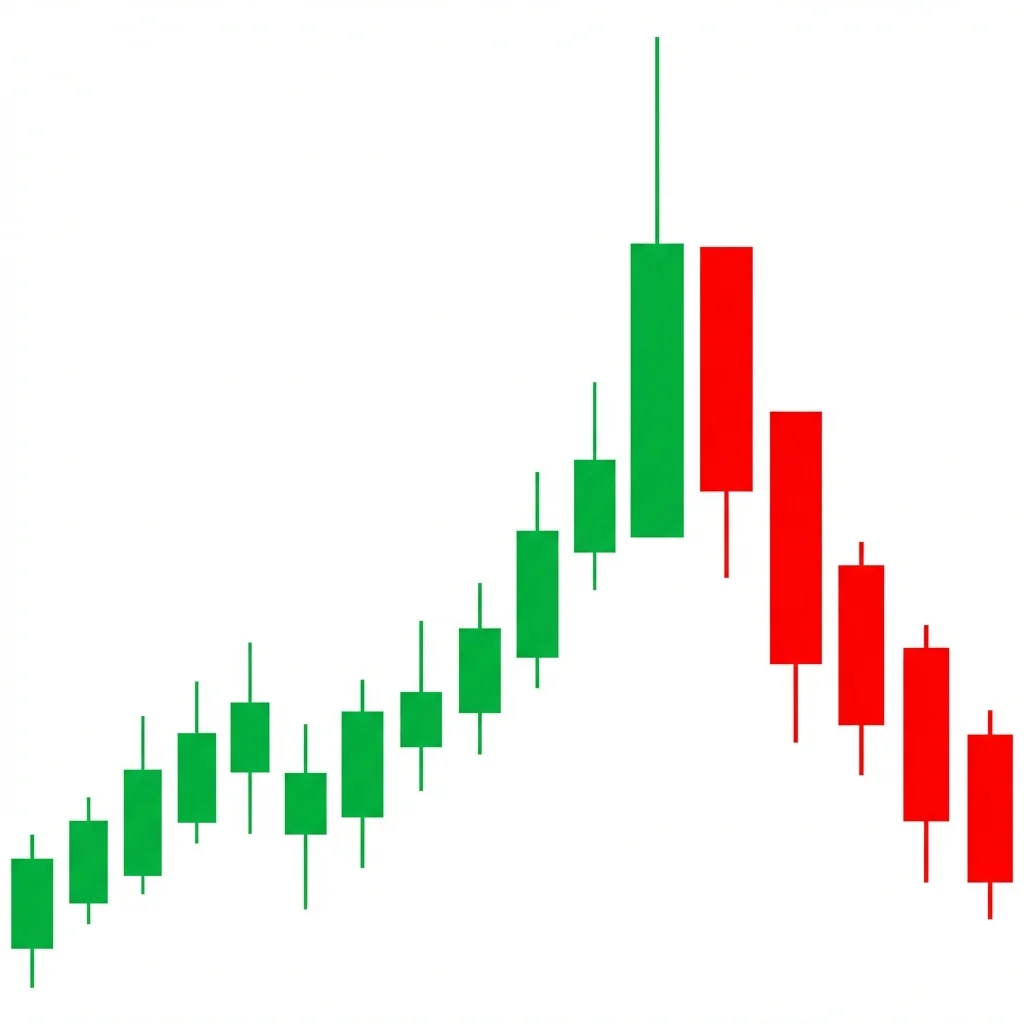
Bearish Climax Reversal
bearishReversalHigh
The Climax Reversal is a wide-range candle that forms at the top of an uptrend, opening strong and reversing to close near the low, signaling that selling pressure has overwhelmed buying and the trend may be exhausted.

Bullish Climax Reversal
bullishReversalHigh
The Bullish Climax Reversal occurs when extreme panic selling exhausts all remaining supply, creating a volume spike at the low that marks the turning point from bearish to bullish control.
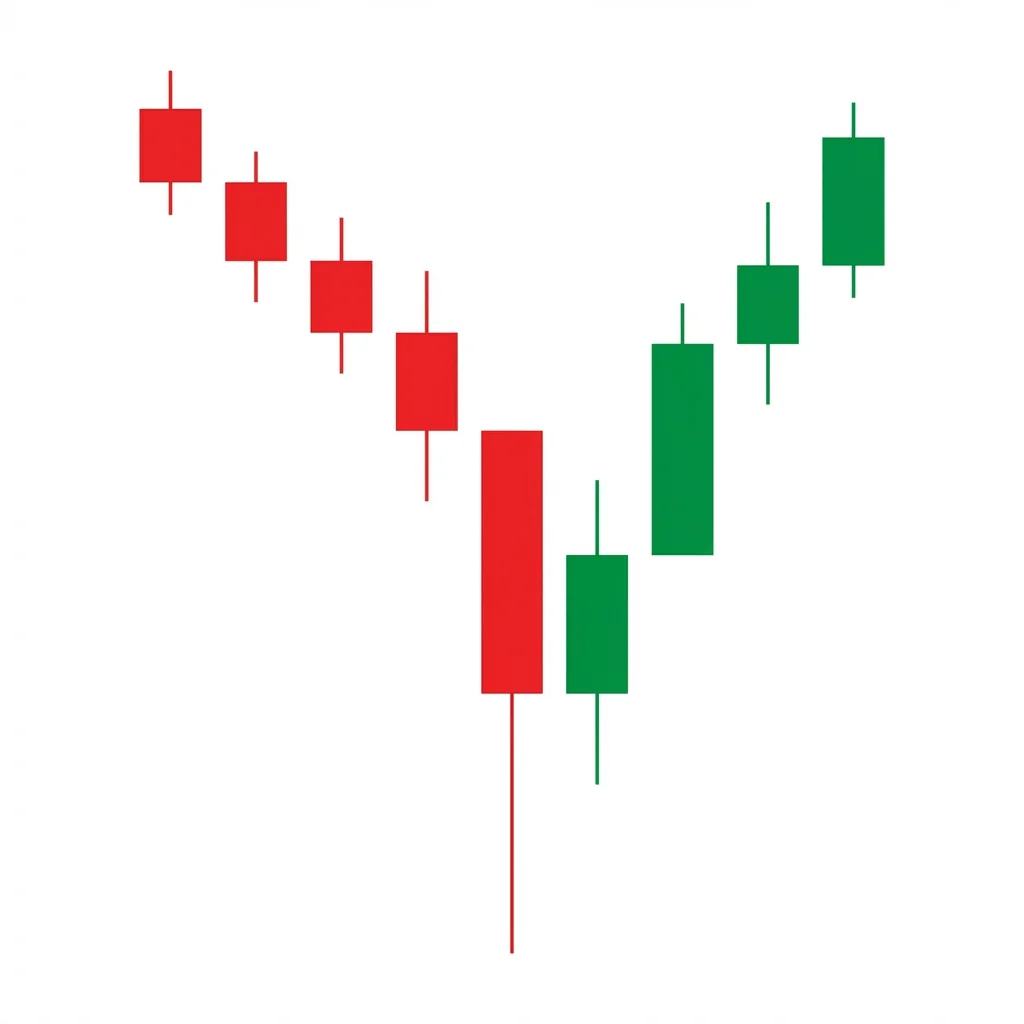
Bullish Selling Climax
bullishReversalHigh
The Bullish Selling Climax occurs when an extended downtrend reaches a point of maximum panic, producing a wide-range bearish candle on extraordinary volume. The exhaustion of selling pressure creates conditions for a sharp reversal as the last sellers capitulate.
Wyckoff(6)
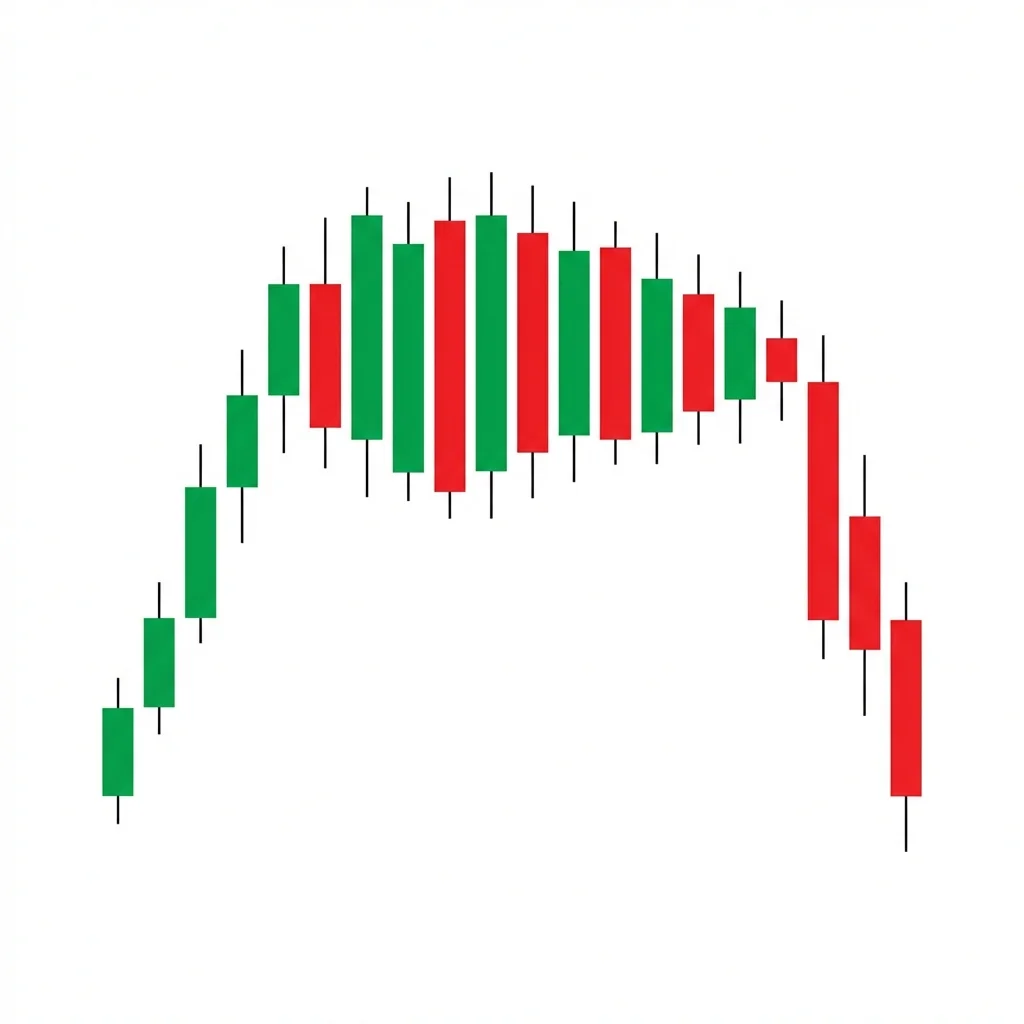
Bearish Distribution
bearishReversalVery High
The Distribution phase is a Wyckoff concept where institutional investors systematically sell (distribute) their holdings to the public within a trading range at a market top, before the subsequent markdown (decline) begins.
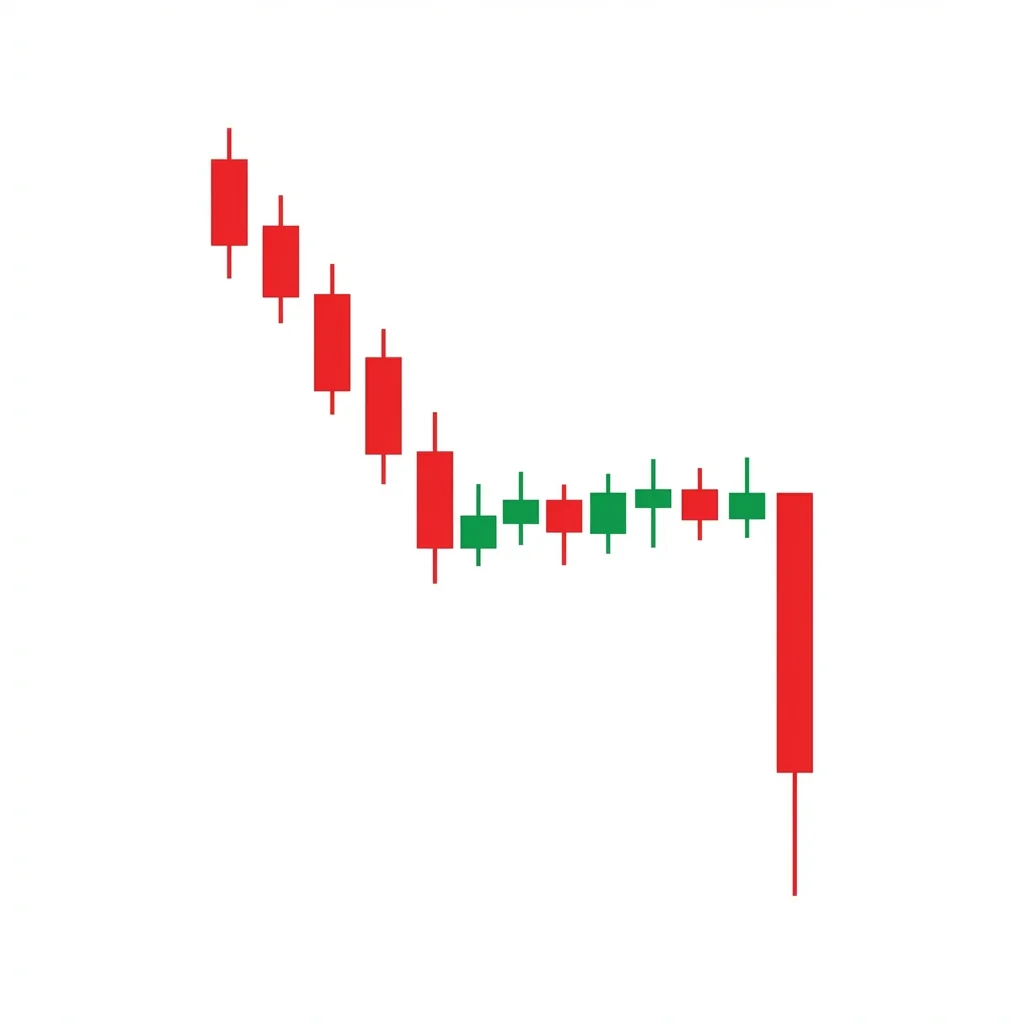
Bearish Redistribution
bearishContinuationHigh
Bearish redistribution is a Wyckoff concept describing a trading range that forms during a downtrend, where institutional sellers redistribute their remaining positions before the markdown resumes. It mirrors distribution but occurs mid-trend rather than at a top.
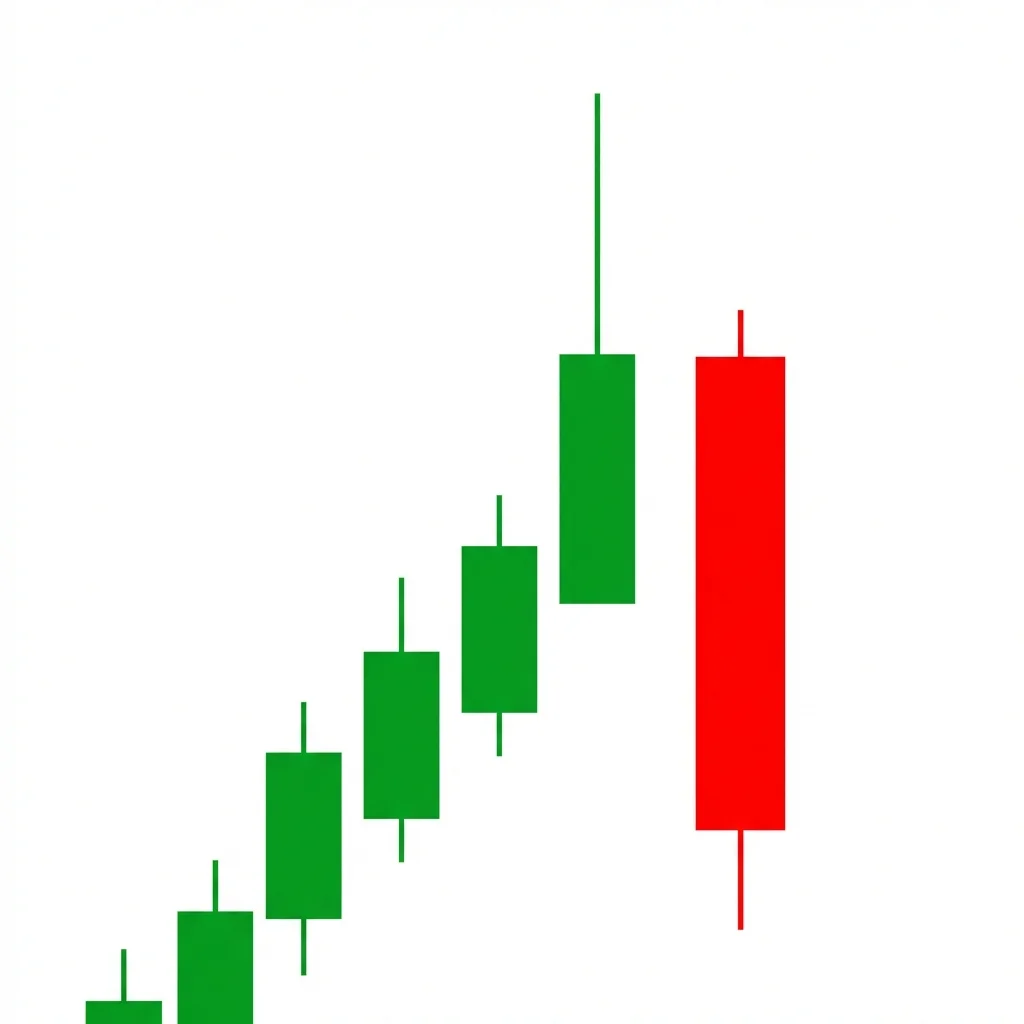
Bearish Upthrust
bearishReversalHigh
The bearish upthrust is a Wyckoff concept where price briefly breaks above a trading range's resistance before reversing sharply back inside. This false breakout traps breakout buyers and signals that institutional sellers are using the higher prices to distribute, leading to a subsequent decline.
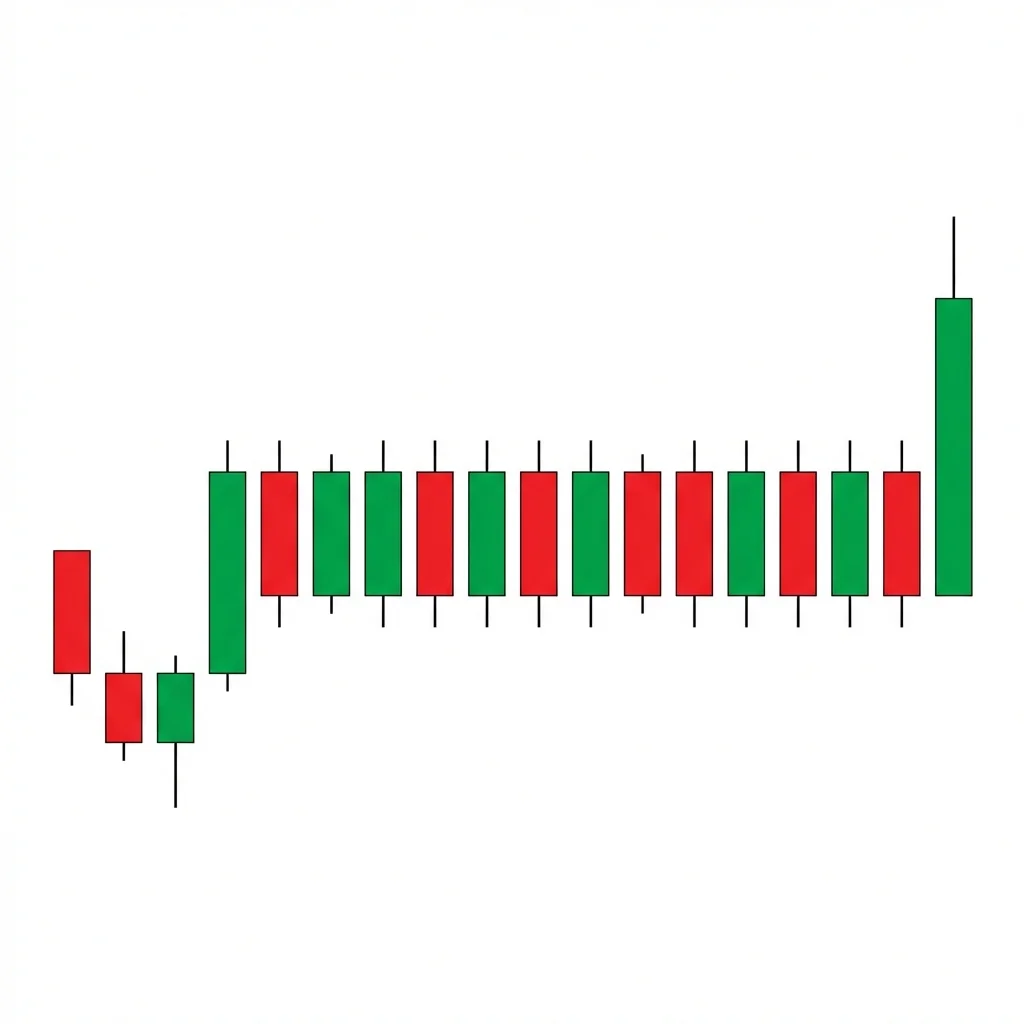
Bullish Accumulation
bullishReversalVery High
Bullish Accumulation is a Wyckoff-based pattern where institutional investors quietly build large positions over an extended period, creating a trading range before a powerful markup phase begins.
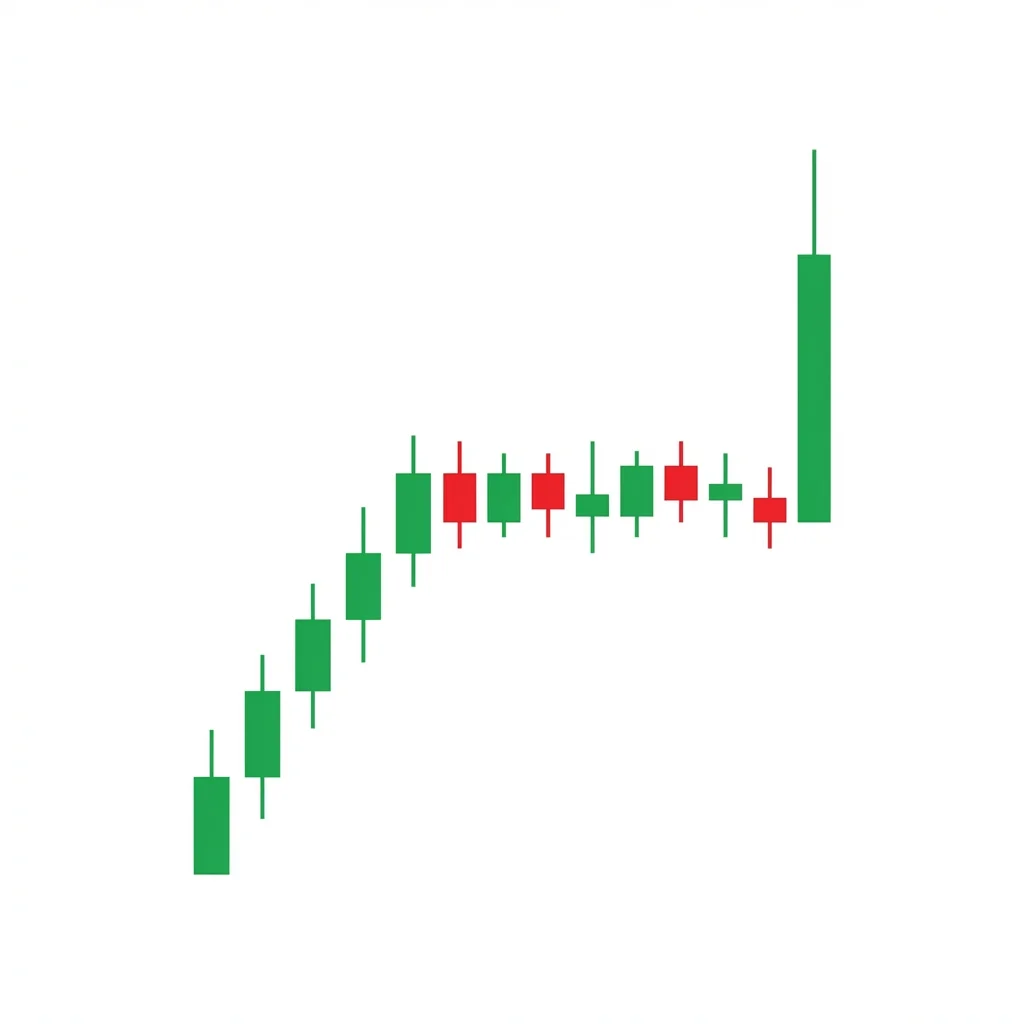
Bullish Reaccumulation
bullishContinuationHigh
Bullish Reaccumulation is a Wyckoff continuation pattern where institutions pause an uptrend to absorb supply and build additional positions within a trading range before continuing the markup phase.

Bullish Spring
bullishReversalHigh
The Bullish Spring is a Wyckoff pattern where price briefly breaks below trading range support to trigger stop losses, then immediately reverses back above support, trapping shorts and initiating a markup phase.